Vintage White Ceramic Christmas Tree Colors, Common to Rare
Green, white, white-and-gold, pink: which glaze sat in your mother's front window, and which colors are hardest to find today?
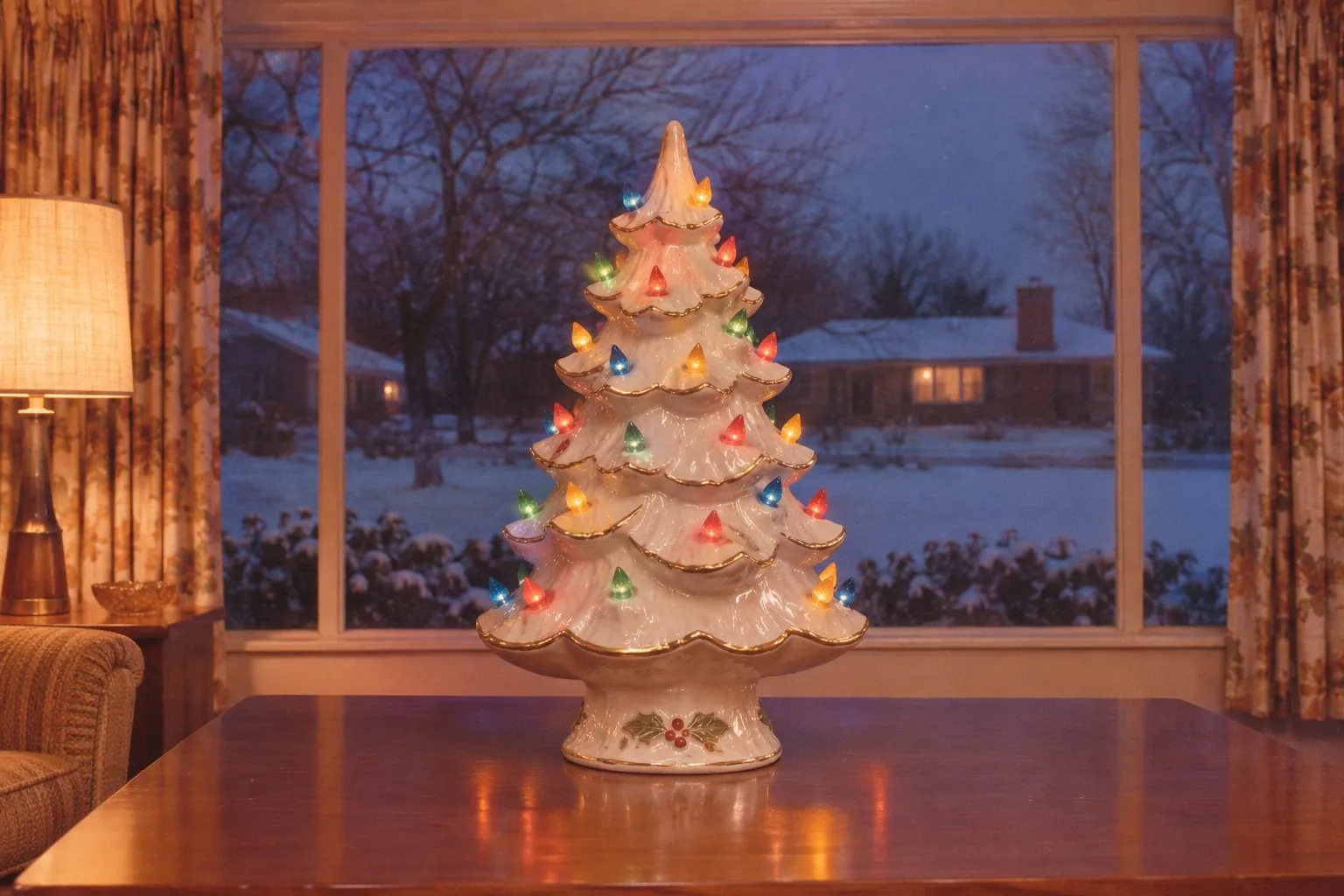
Vintage ceramic Christmas trees came mostly in green and white. White trees were often trimmed in gold, and fewer were glazed pink, yellow, red, blue or metallic silver. The hardest to find are the odd colors and the early trees with real glass bulbs. If you are hunting for a white ceramic Christmas tree, vintage ones are out there, but expect to find a lot of new copies mixed in with the real ones.
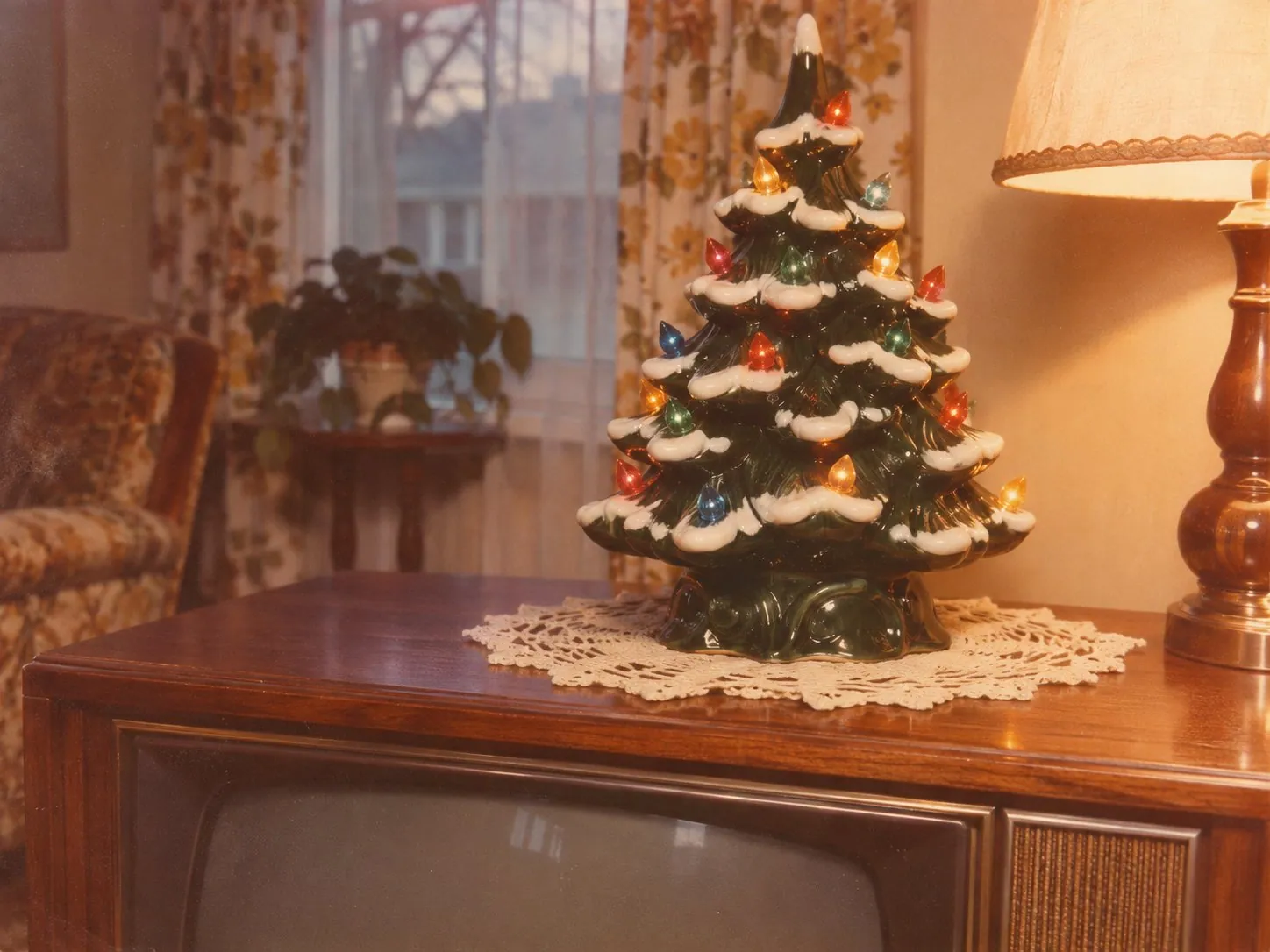
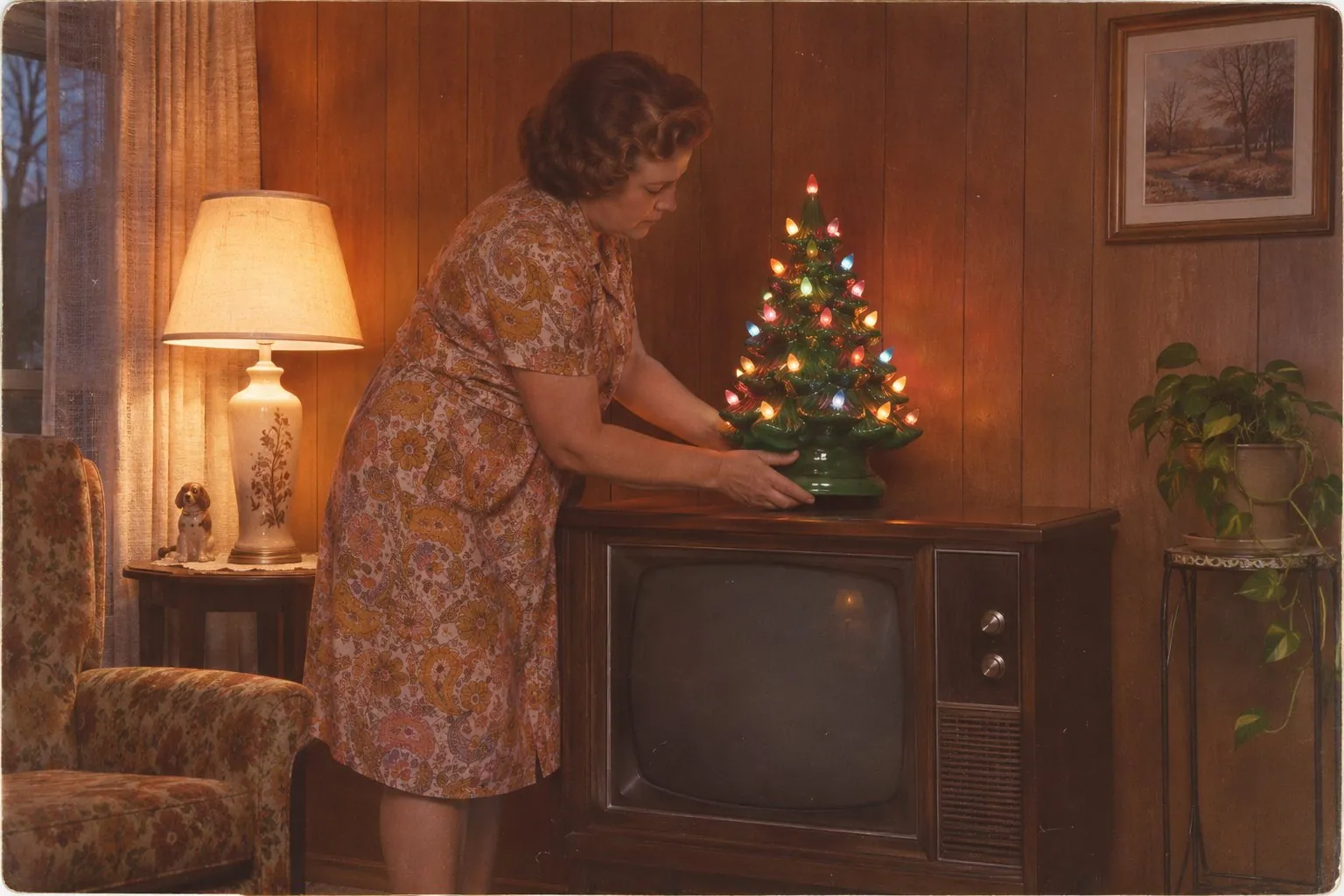
You probably remember one. It sat on top of the console TV, on an end table or in the front window, with dozens of little plastic lights glowing red, blue, yellow and green. In a lot of homes it was the first decoration out of the box after Thanksgiving.
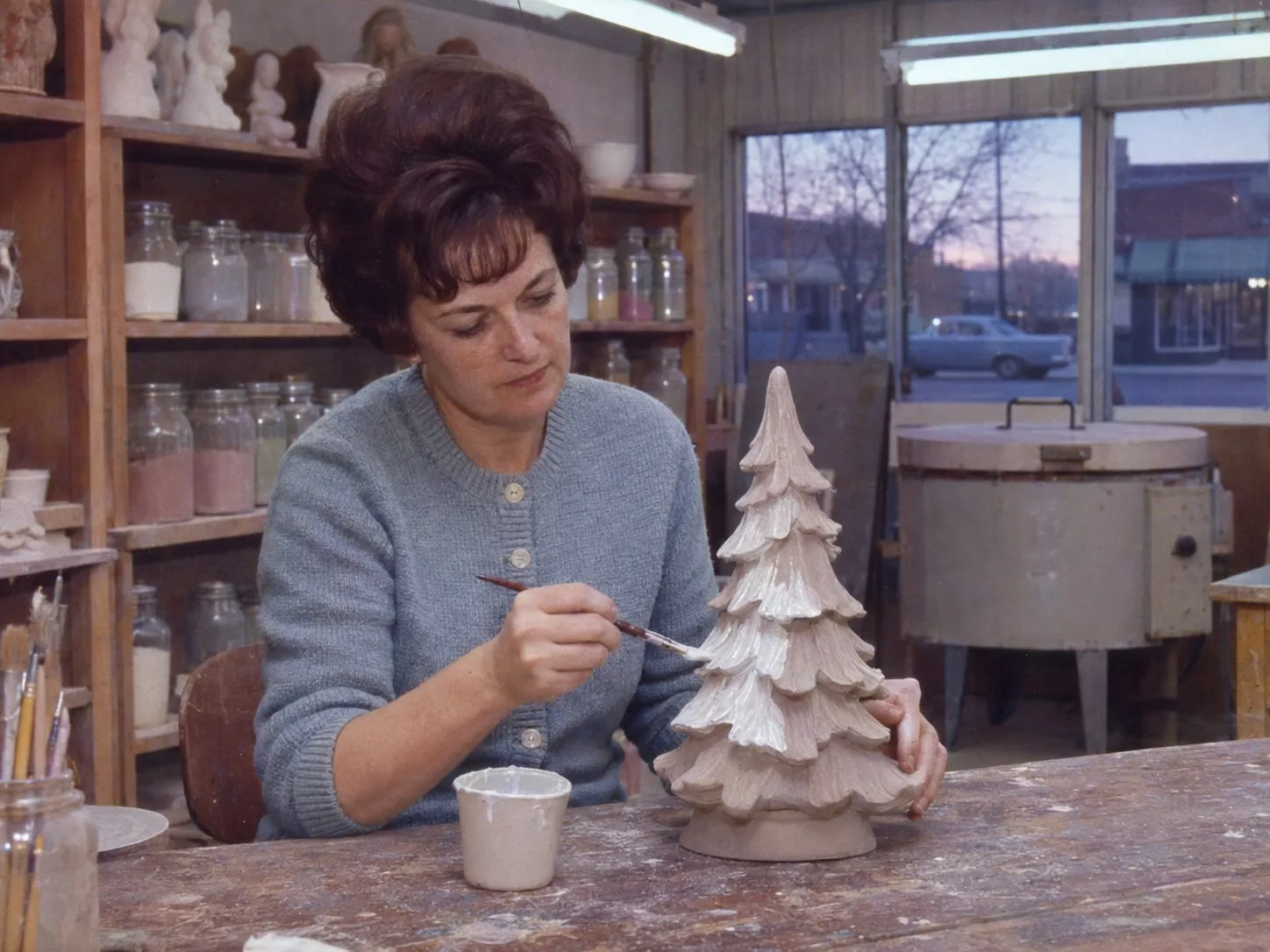
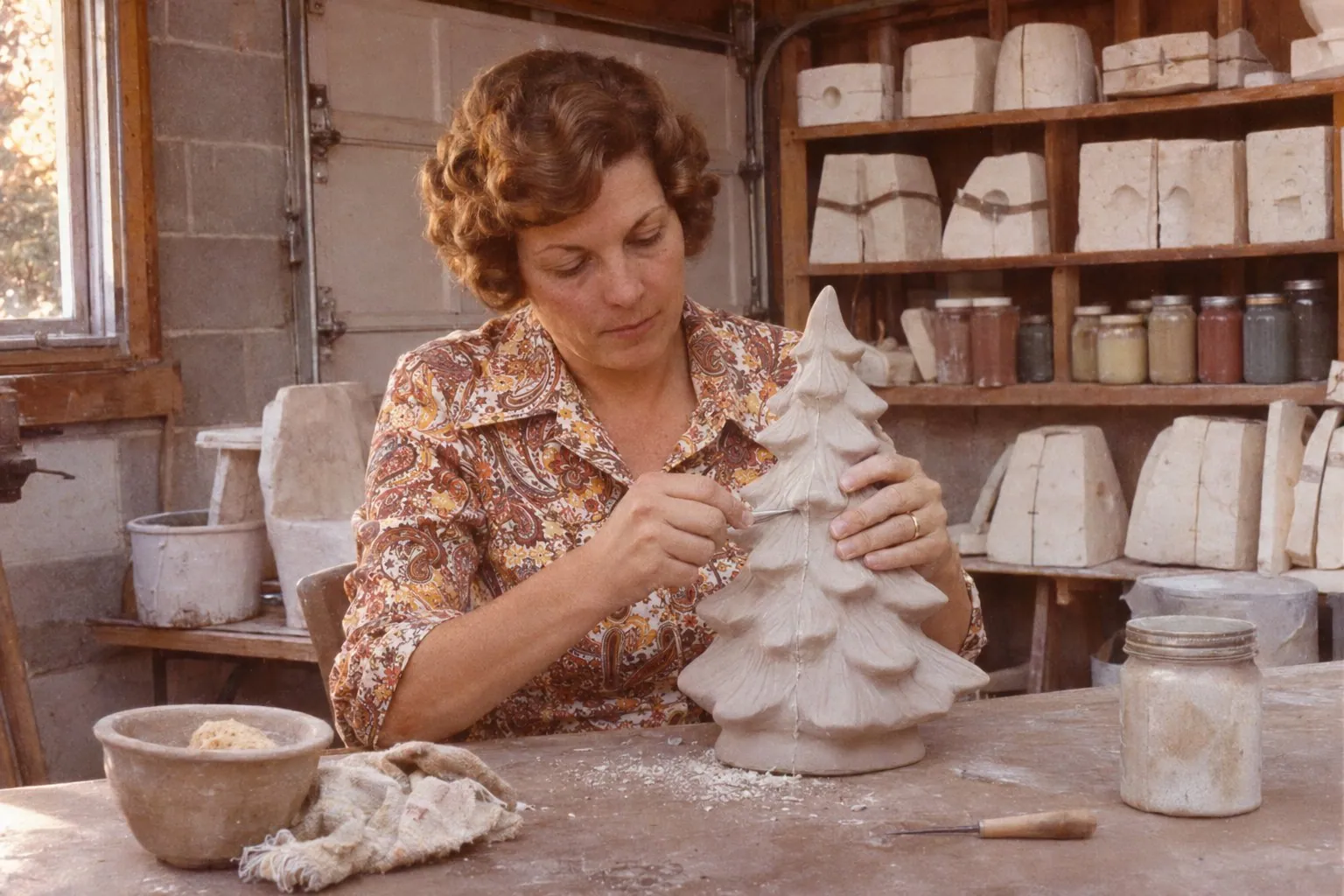
Most of these trees weren't bought in a store. Somebody made them by hand at the ceramics shop in town, and the color was whatever she picked off the glaze shelf.
Where these trees came from
Ceramic trees go back to the late 1940s, when private craftsmen made them one at a time. The big change came in 1958. That year Atlantic Mold put out its A-64 tree mold, one of the first commercial designs, and sold thousands of them to ceramic studios across the country.
Other mold makers soon offered trees of their own. Collectors look for the names Dogwood Ceramic Supply, Arnel's and Holland Mold. Holland Mold was founded in Trenton, New Jersey, in 1946 by Frank Hollendonner, an Austrian immigrant, and his brother Rudy. It sold molds to hobby shops, not finished pieces.
Thousands of ceramics shops opened across the U.S. in the second half of the 1960s. You may remember the smell of wet clay and the hum of the kiln in the back room. There were long tables, little jars of glaze and women working with fine brushes on a weeknight. A tree was usually the big project of the year, and many families gave them as Christmas gifts.
Read more: How the Old Color Wheel for a Christmas Tree Worked
The colors, era by era
Which color you got depended on when the tree was made and on what the shop had on its shelves. This is how the colors line up, from easiest to hardest to find.
| Color | When it was most common | How easy to find today |
|---|---|---|
| Green | 1958 through the 1970s | Easiest |
| White, often with snow | 1960s and 1970s | Common |
| White and gold | Mid-1960s through the 1970s | Fairly common |
| Pink, yellow, red | 1960s and 1970s | Hard |
| Blue, silver or other metallic | Scattered | Hardest as true vintage |
The green ceramic tree most families had
A vintage green ceramic Christmas tree is the one most people picture. Shades ran from deep forest green to a lighter olive. Many had white tips brushed on the branches to look like snow, and some had "flocking," a gritty white texture. A good number were painted with acrylic instead of glazed, so the finish can look flat rather than glossy.
Sometimes people search for an "antique green ceramic Christmas tree." Strictly speaking, almost none are antique. Dealers usually save that word for things 100 years old, and even the oldest commercial molds date from 1958. "Vintage" is the honest word.
What made a vintage white ceramic Christmas tree special
White was the dressy choice. A white tree looked frosty in a front window, and the colored lights stood out against it better than they did on green. Those are the trees people now search for as "retro white ceramic Christmas tree."
The white-and-gold tree went one step further. Hobby shops sold real gold overglaze, a liquid painted on after the first firing and then fired again at a low temperature. A steady hand traced gold along the edge of every branch or on the star. When you shop for a vintage white and gold ceramic Christmas tree, look closely at the gold. On older pieces it is often worn on the high points from years of handling, and it should show gently, not look sprayed on.
Pink, yellow, red and the rare ones
Trees were also made in yellow, red and even pink. Those took a little nerve in 1968, and fewer were made, so fewer survive. A pink tree fits right in with the aluminum trees and pink kitchens of the same years.
Be careful with silver. A silver ceramic Christmas tree is easy to find in stores now, and modern makers sell silver and gold finishes alongside green, white and pink. Vintage silver trees were done with metallic lusters too, but you see them far less often than the new ones.
How to tell a real one from a copy
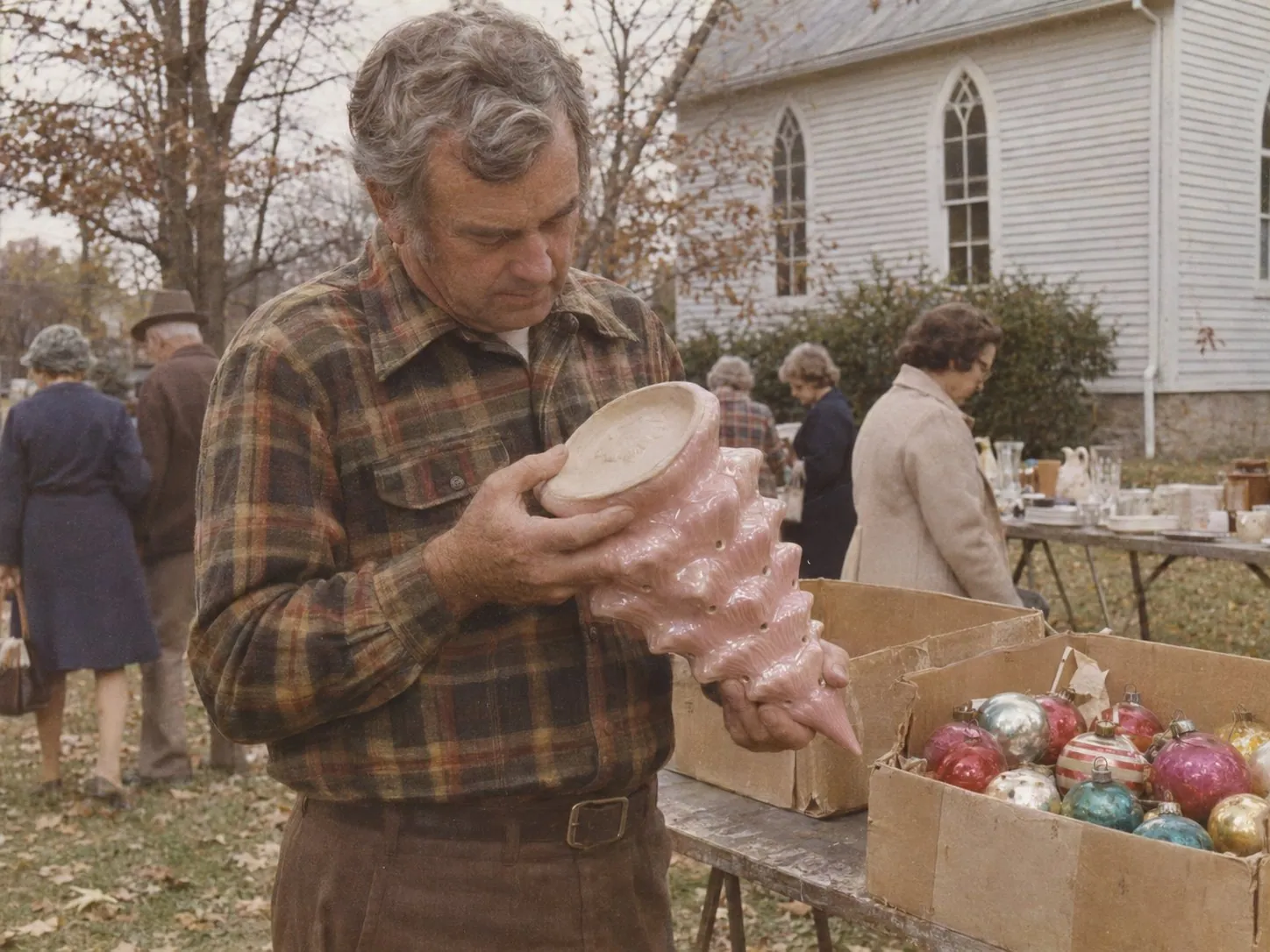
Start with the bottom of the tree. Most have a mold name and a year pressed into the clay. Don't let the year fool you. A tree stamped 1972 may have been poured in 2005, because the stamp shows when the mold was first issued. Atlantic closed in 1999 and sold its molds to other companies, so its designs are still being poured.
Then check these things:
- The bulbs. Older trees have small glass bulbs. Later ones, from the late 1970s on, have plastic pegs lit by one bulb inside. Collectors prize the glass-bulb trees most.
- The base. A matching ceramic base with a cord hole and an old cord points to an original.
- The handwork. Uneven snow, a few drips of glaze or a name and year written underneath in paint all point to a tree made in a hobby shop. Those inscriptions often date the tree better than the mold stamp does.
- The weight and finish. Factory-made new trees tend to be lighter and more even, and many use LED lights and an AC adapter.
What it cost then and what it's worth now
What a tree cost new depended on the shop. Most hobby shops charged separately for the greenware (the unfired clay tree), the glaze, the firing and the little lights. Prices changed from town to town, and very few price lists from those shops survive. That's why you won't find one fixed "original price" for these trees.
Today they sell for much more. Vintage tree author Bob Richter told TODAY that he sold several for $100 to $200 each, and other sales on eBay went for $100, $149 and $218. Mental Floss reported sales as high as $875. Prices climb in late November and December, then drop off after Christmas. Large trees, musical bases and spinning trees bring the most money.
Ceramic trees went out of style in the 1980s. After that, many sat in attics and basements, which is why so many are turning up again now. If your family still has one, look underneath before you sell it. Your mother's name might be painted there.
Frequently asked questions
What colors did vintage ceramic Christmas trees come in?
Most were green or white, many with white snow or gold trim. Fewer were glazed pink, yellow, red, blue or metallic silver, and those are much harder to find today.
Is my 1958 ceramic Christmas tree really from 1958?
Maybe not. The year under the tree is the mold's copyright date. Atlantic's 1958 mold was used for decades, and copies are still being poured from the old molds.
How much is a vintage white ceramic Christmas tree worth?
Most good examples sell in the $100 to $200 range in season. Large, musical or glass-bulb trees can go much higher. Chips, missing bulbs and a missing base all lower the price.
Are white and gold ceramic Christmas trees vintage?
Many are. Hobby shops sold real gold overglaze in the 1960s and 1970s. But white-and-gold is also a popular new style, so check the mold stamp, the bulbs and the base before you assume a tree is old.
Who made the first ceramic Christmas trees?
Private craftsmen made them in the late 1940s. Atlantic Mold copyrighted one of the first commercial tree molds, the A-64, in 1958.
Sources
- Video: History of vintage ceramic Christmas trees, The American Ceramic Society
- A Christmas Comeback, Our State magazine
- Are vintage ceramic Christmas trees worth a lot of money?, TODAY
- Vintage ceramic Christmas trees, Greensburg Daily News
- Your old ceramic Christmas tree could be worth hundreds of dollars, 10News San Diego
- Those Old Ceramic Christmas Trees In Your Attic Are Worth Hundreds of Dollars Today, Mental Floss
Related Stories
Love a trip down memory lane?
Get a fun quiz every morning. Free · One email a day · Unsubscribe anytime