Ceramic Christmas Tree Mold: How the Old Trees Were Made
Liquid clay, a plaster mold, a kiln and a bag of tiny plastic bulbs: here's how the glowing tabletop tree got made, and how to make one now.
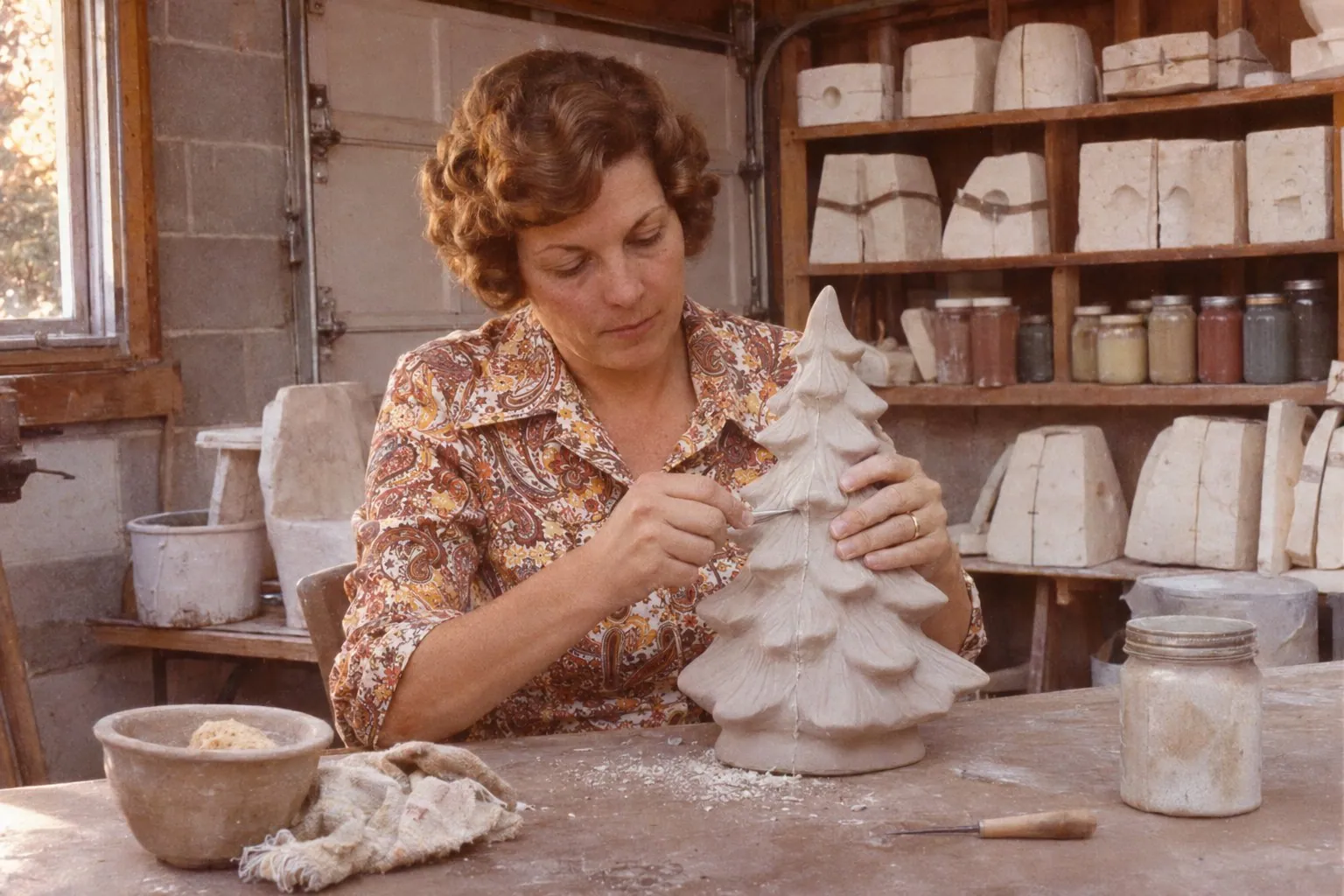
To make a ceramic Christmas tree from a mold, you pour liquid clay called slip into a plaster ceramic Christmas tree mold, wait for a clay shell to form against the walls, then pour out the extra and lift out the tree. After that you clean the seams, drill the light holes, fire it, glaze it, fire it again and push in the little plastic bulbs.
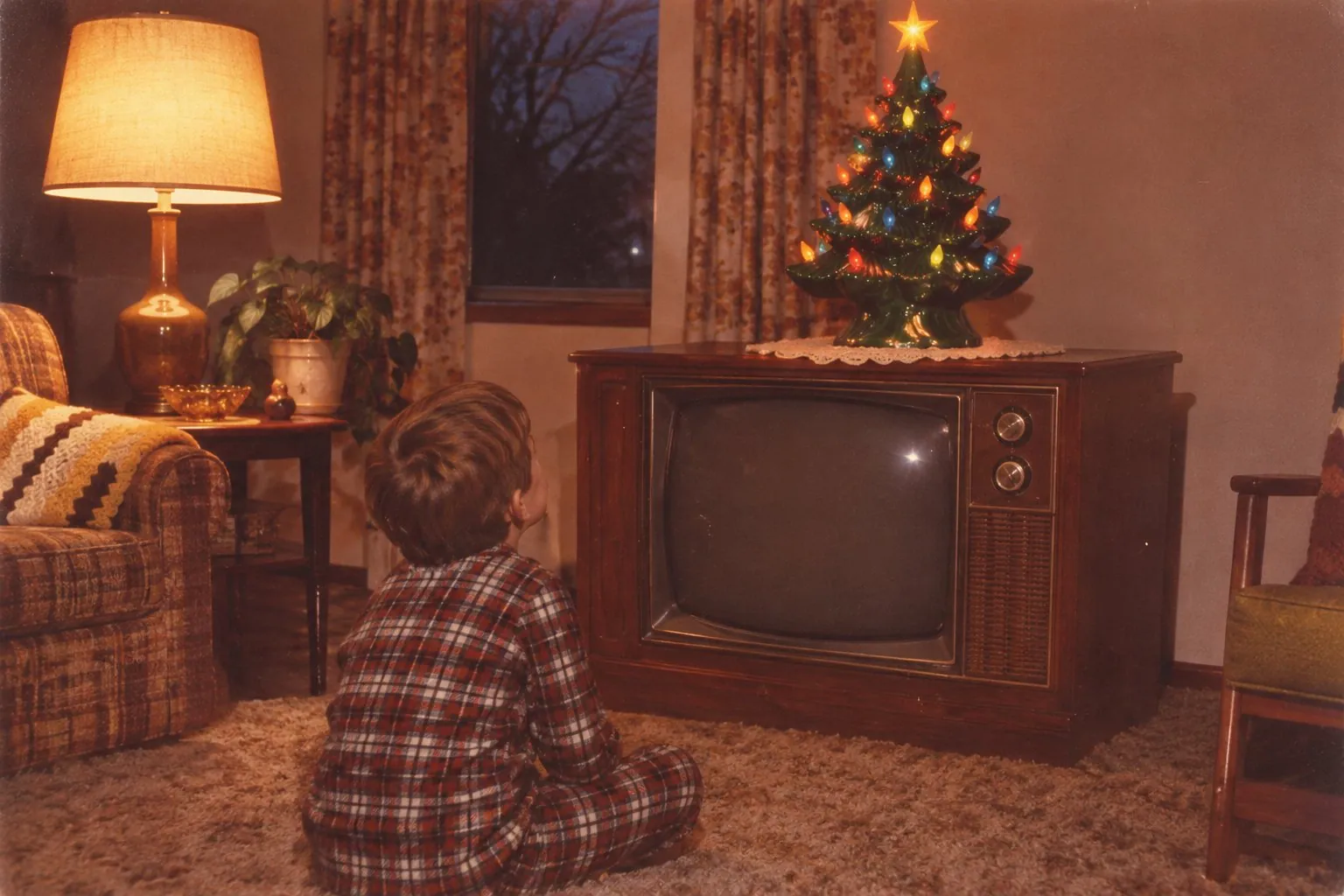
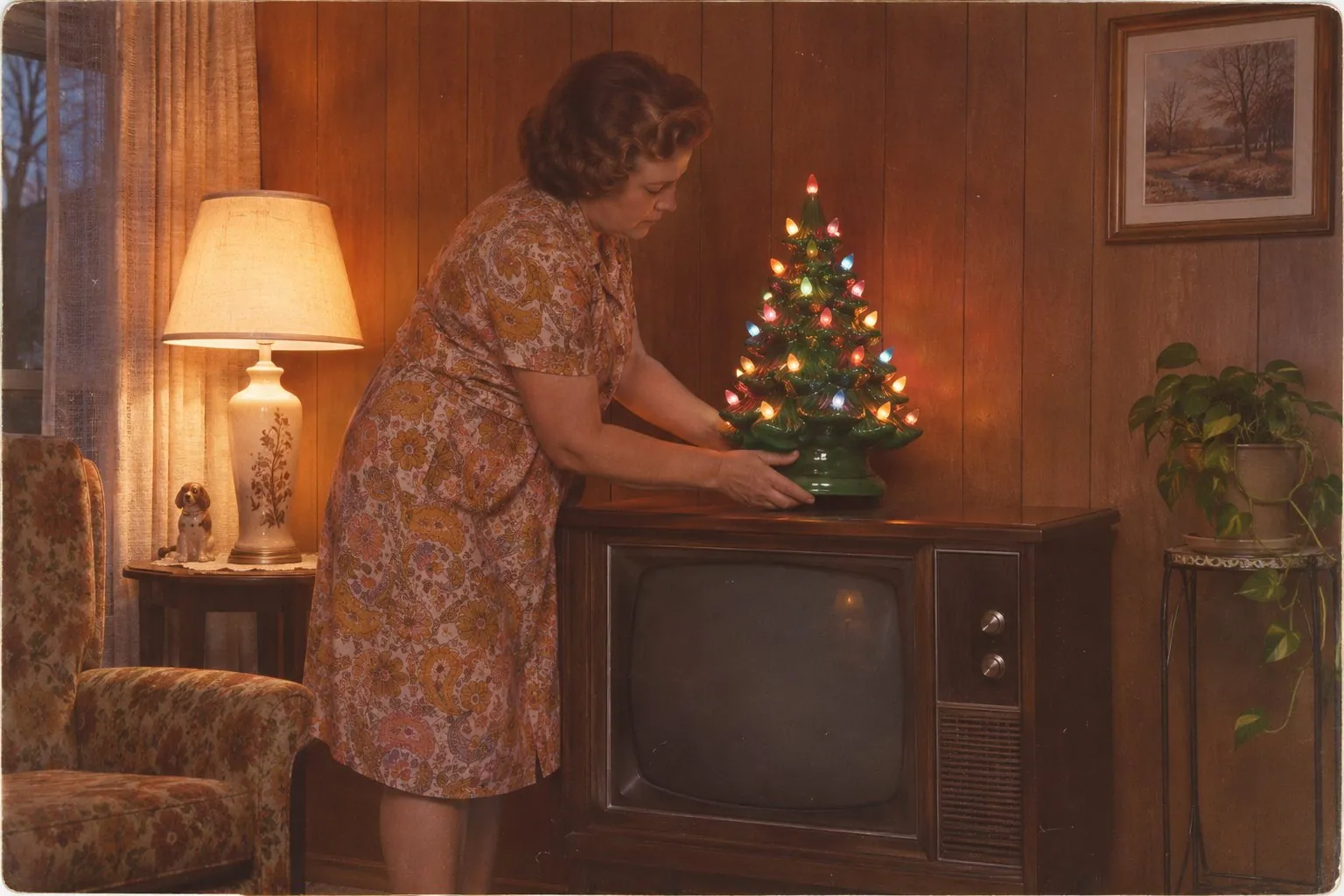
You probably remember the result better than the steps. It sat on the end table or the console TV from Thanksgiving to New Year's, lit by one bulb in the base, its colored pegs glowing like hard candy.
In a lot of towns, the steps happened in somebody's garage or basement, at long tables run by a woman with a kiln and a sign out by the mailbox. Here's how she walked her students through it.
Where the trees came from
The American Ceramic Society says ceramic trees first appeared in the 1940s. The same article credits the Atlantic Mold Company with copyrighting one of the first tree designs, the A-64, in 1958.
The Society also cites author Sarah Archer, who wrote a book on how the modern Christmas came about. She traces homemade Christmas projects back to the Great Depression of the 1930s. By the 1960s and '70s, the article says, craft shops were holding workshops where people made their own trees from mass-produced molds.
Atlantic wasn't the only maker. Our State magazine names Dogwood Ceramic Supply, Arnels and Holland Mold too. It notes that these companies stamped the year the mold was made, not the year your tree came out of the kiln.
Read more: How the Old Color Wheel for a Christmas Tree Worked
Pouring the slip
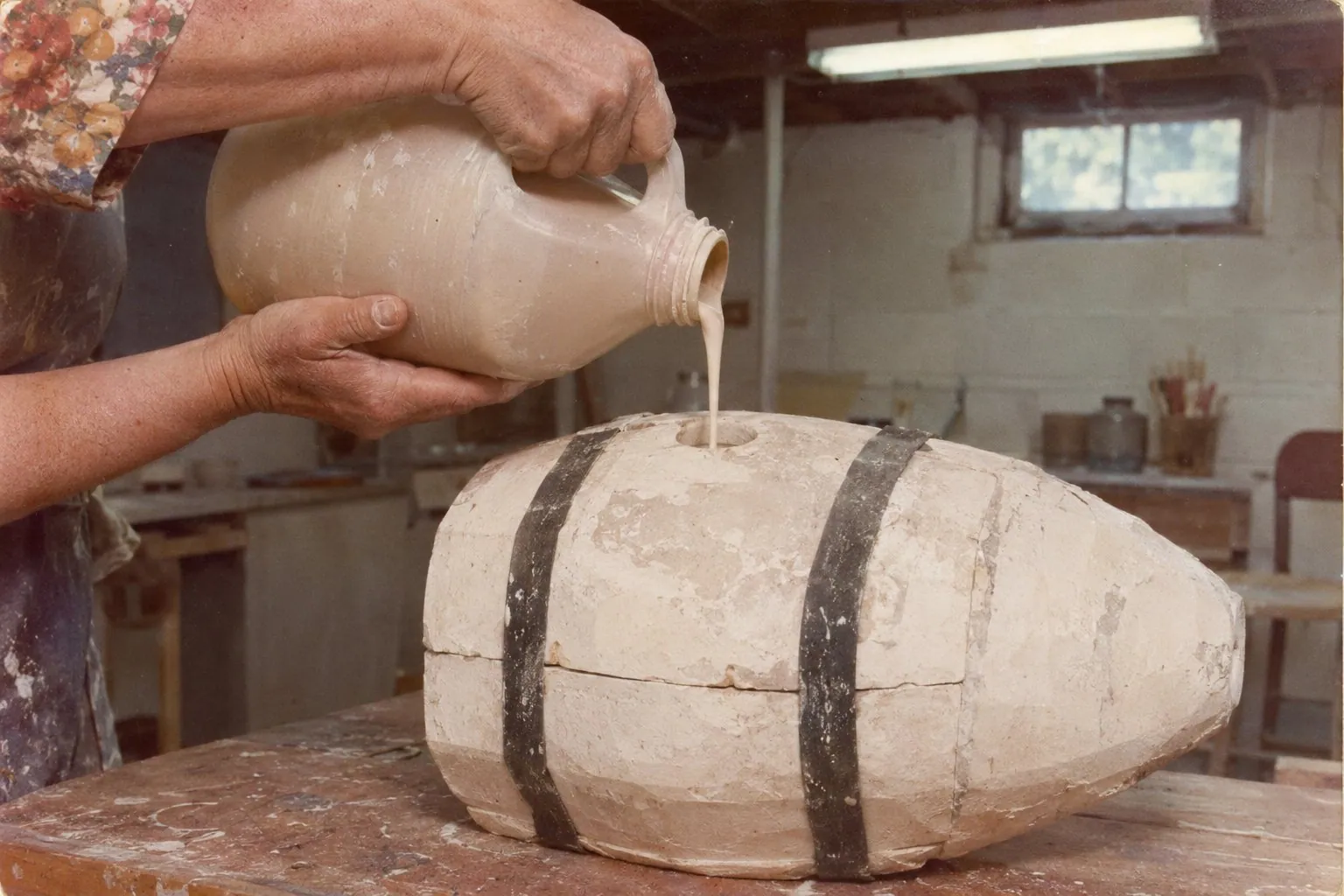
If you went along to class, the first thing you noticed was the smell of wet clay. The mold itself was a heavy block of white plaster in several pieces, held together with thick rubber bands or straps.
The teacher would tip the mold slightly and pour slip in slowly and steadily through the opening at the bottom, called the pour gate. Then she'd stand it upright and fill it to the top. A how-to page from Old American Ceramics says to check the level after 3 to 4 minutes and top it up if it settles.
The plaster soaks water out of the slip, so a firm layer of clay builds up against the walls. When that layer was thick enough, the extra slip went back into the jug, and the mold sat upside down to drain.
Opening the mold
This was the nervous part. After the clay firmed up (about 45 minutes, according to the same Old American Ceramics guide), the straps came off and the halves were pulled apart. What came out was greenware: unfired clay, about as strong as a dry sugar cookie.

Cleaning and drilling the tree
You probably remember the cleaning more than anything. Every cast tree had a thin seam line where the mold pieces met. Students shaved it off with a small cleaning tool, then smoothed it over with a damp sponge.
Then came drilling. Tree molds had little marks at the branch tips where the lights would go. One at a time, students twisted out a small hole at each mark with a hand tool. Press too hard and a branch tip snapped off, and in many classes you heard about it from the teacher.
Some students added "snow" or brushed the branch tips a second color. Everyone worked slowly, because a crack in the greenware stays a crack after firing.
Firing, glazing and firing again
Once the greenware was bone dry, the teacher loaded it into the kiln. That first firing turns soft clay into hard, chalky bisque. The Old American Ceramics guide recommends a slow firing to cone 04, about 1,940°F.
Back at the table, students brushed on glaze. Green was the old standby, but you also saw white, gold and pearly finishes. Glaze looks dull and chalky in the jar, so first-timers never quite believed their tree would come out shiny.
A second, cooler glaze firing melted it into a glassy coat. Opening the kiln the next week was the best part of the whole class.
The lights go in
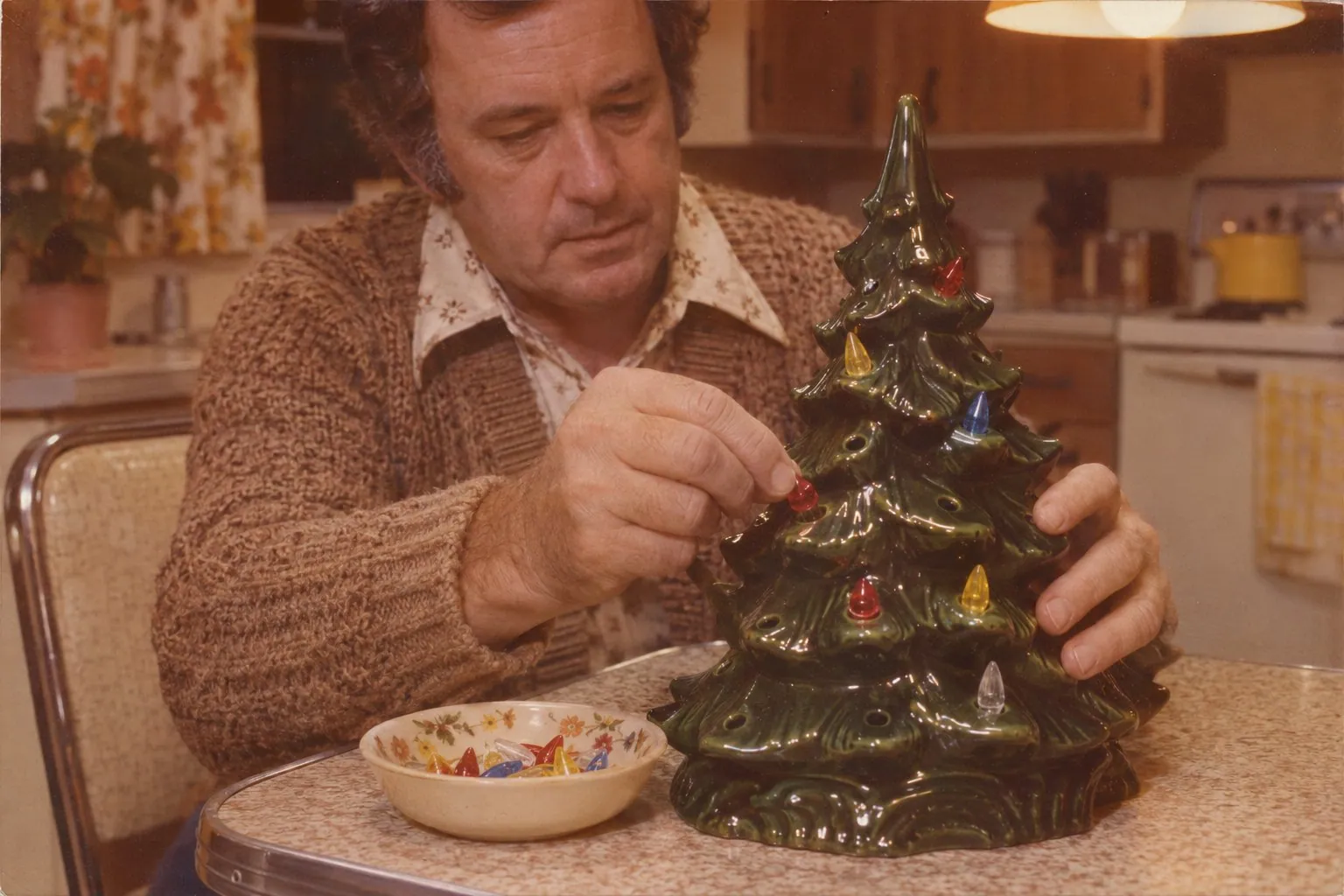
Last came the bulbs: little plastic pegs in red, green, yellow, blue and clear, with a star for the top. Some people glued them in and some just pressed them into the holes. A hollow base held a single light bulb on a cord, and that one bulb lit every peg on the tree.
If you made one yourself, you probably remember plugging it in for the first time and spotting right away which pegs had popped loose.
Using a ceramic Christmas tree mold today
The good news is that the old design never went away. Atlantic Mold closed in 1999 and sold its molds to other companies, 10News reported, and that's why trees in this style are still being made.
You have three ways to go:
- Paint one at a studio. Many paint-your-own studios hold holiday tree classes. They sell you a tree that's already cast, you glaze it, and they fire it.
- Buy greenware or bisque and finish it. You skip the pouring but still clean, glaze and fire. You'll need a kiln, or a shop that will fire your piece for a fee.
- Pour your own. Buy a tree mold, a jug of low-fire casting slip and a bag of light pegs. Follow the same steps above: pour, drain, open, clean, drill, bisque fire, glaze, glaze fire.
For the base, use a lamp kit with a modern UL-listed cord, not the brittle cord from Grandma's tree. Keep the bulb small so the base doesn't get hot.
What the old ones are worth
Collectors went looking for the old trees once people grew nostalgic for the ones they remembered. Jack Gorham, manager of Collector's Antique Mall in Asheboro, North Carolina, told Our State that the trees fell out of fashion for around 25 years.
Now they're back. "In my 30-plus years of being in this business, ceramic trees are one of the major modern items that draw so many people in," Gorham told the magazine. He said the rarest trees can bring hundreds of dollars.
The trees have caught on in Canada too. A woman named Bennett, interviewed by CBC News in Saskatoon, said original vintage trees are hard to find and only a few people still have the old molds.
Frequently asked questions
What does the year on the bottom of my ceramic tree mean?
It is usually the year the mold design was copyrighted, not the year your tree was made. Atlantic Mold's 1958 date shows up on trees cast decades later, according to the American Ceramic Society.
Who made the vintage ceramic Christmas tree molds?
Atlantic Mold copyrighted one of the first tree designs, the A-64, in 1958. Our State magazine also names Dogwood Ceramic Supply, Arnels and Holland Mold.
Is a vintage handmade ceramic Christmas tree worth anything?
It depends on condition, size and rarity. Our State quoted antiques mall manager Jack Gorham saying the rarest trees can bring hundreds of dollars. A family tree with missing pegs is usually worth more to you than to a buyer.
Can you still buy a ceramic Christmas tree mold?
Yes. When Atlantic Mold closed in 1999, it sold its molds to other companies, 10News reported, and trees in that style are still cast today. Ceramic supply houses and hobby studios are the places to ask.
Sources
- Video: History of vintage ceramic Christmas trees, The American Ceramic Society, 2020
- A Christmas Comeback, Our State magazine, 2022
- How much is your old ceramic Christmas tree worth?, 10News San Diego, 2022
- Ceramic Christmas trees make a comeback, CBC News, 2021
Related Stories

Love a trip down memory lane?
Get a fun quiz every morning. Free · One email a day · Unsubscribe anytime