Vintage Bubble Christmas Lights: How They Worked
Grandma's bubble lights boiled at bath-water heat. Here's the trick, the 1946 launch, the patent fight and what old sets bring today.
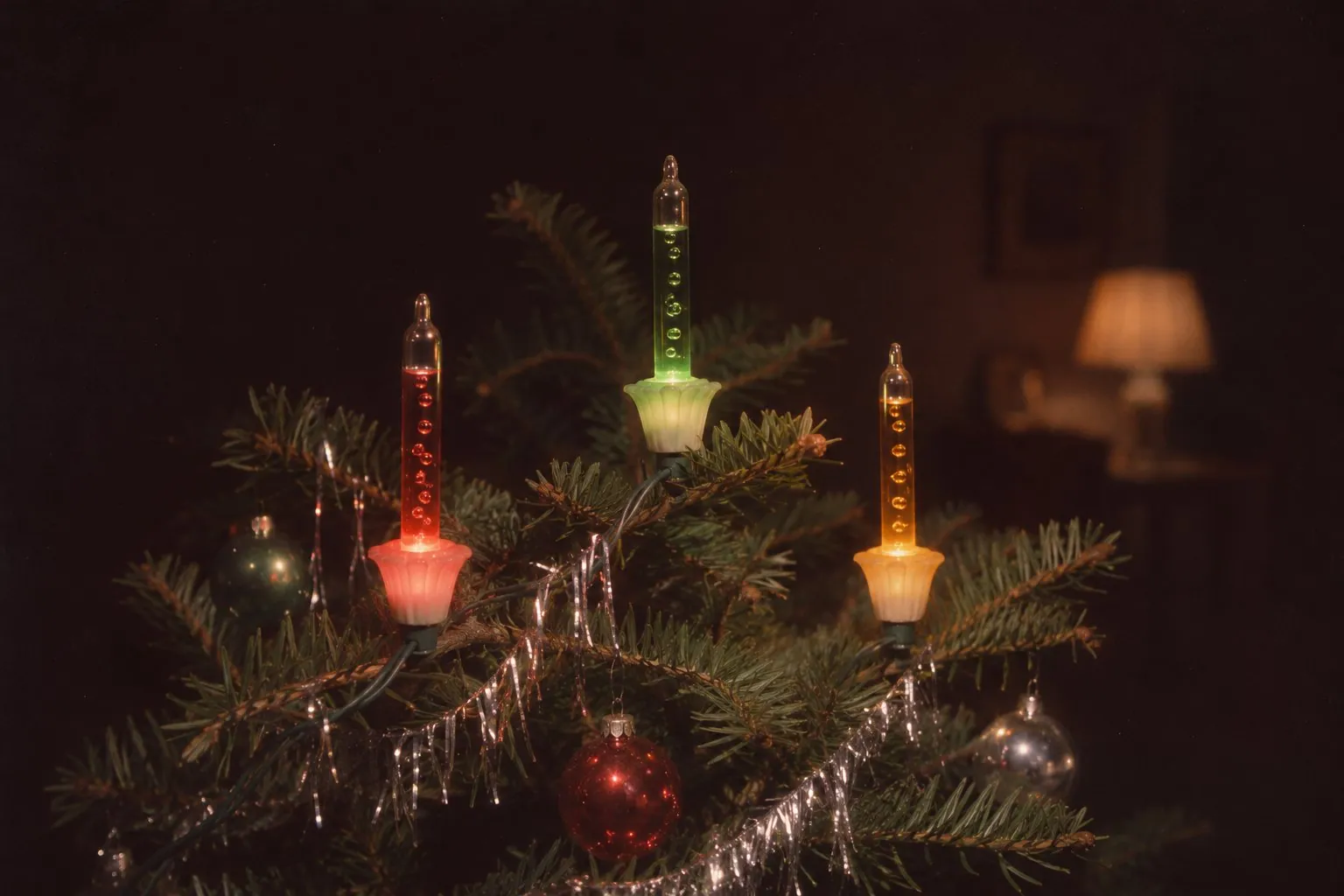
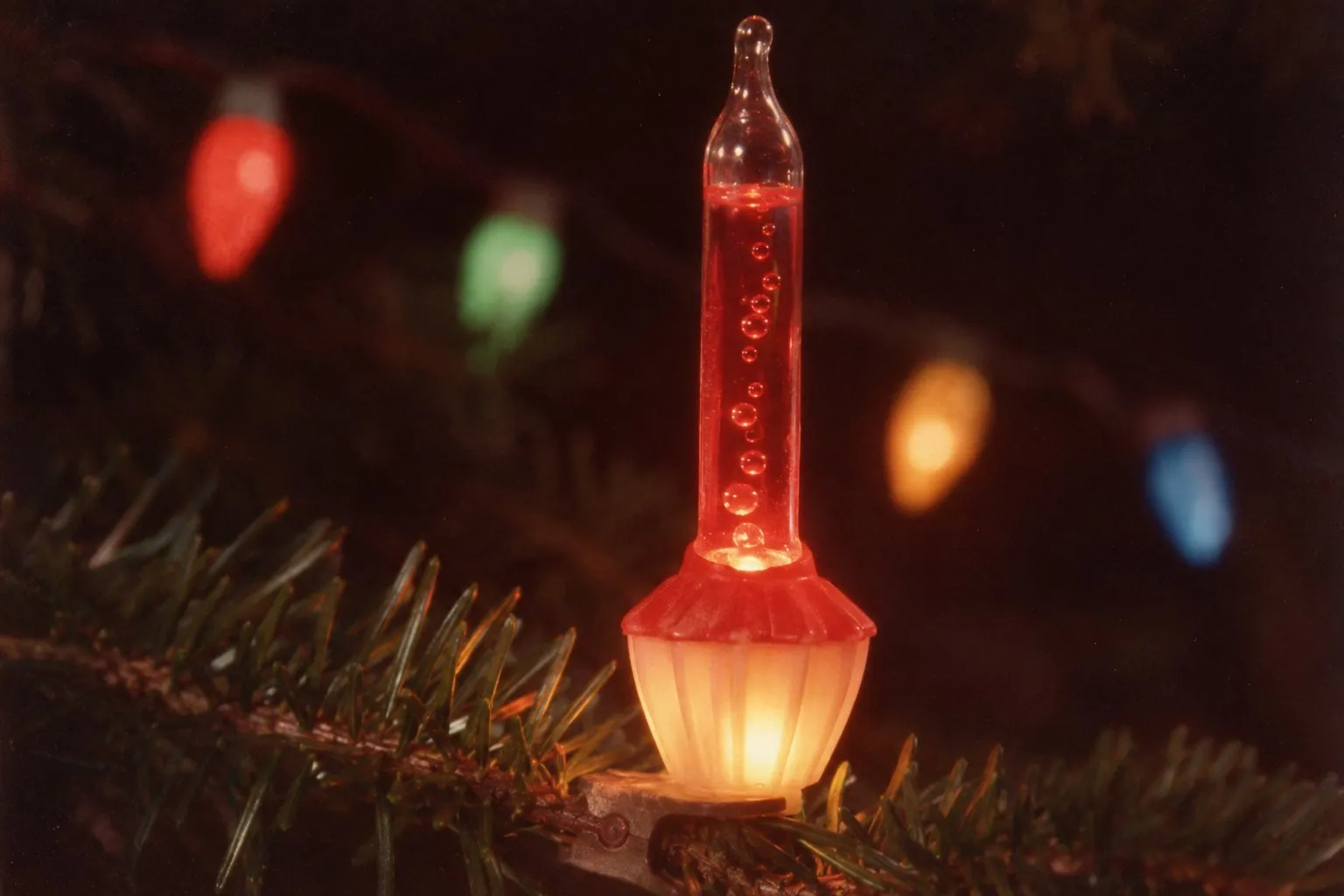
Vintage bubble Christmas lights were candle-shaped tree lights with a small sealed glass tube of colored liquid standing on top of an ordinary bulb. The bulb warmed the liquid, usually methylene chloride, which boils at only about 103°F, so a stream of bubbles rose up the tube for as long as the set stayed plugged in.
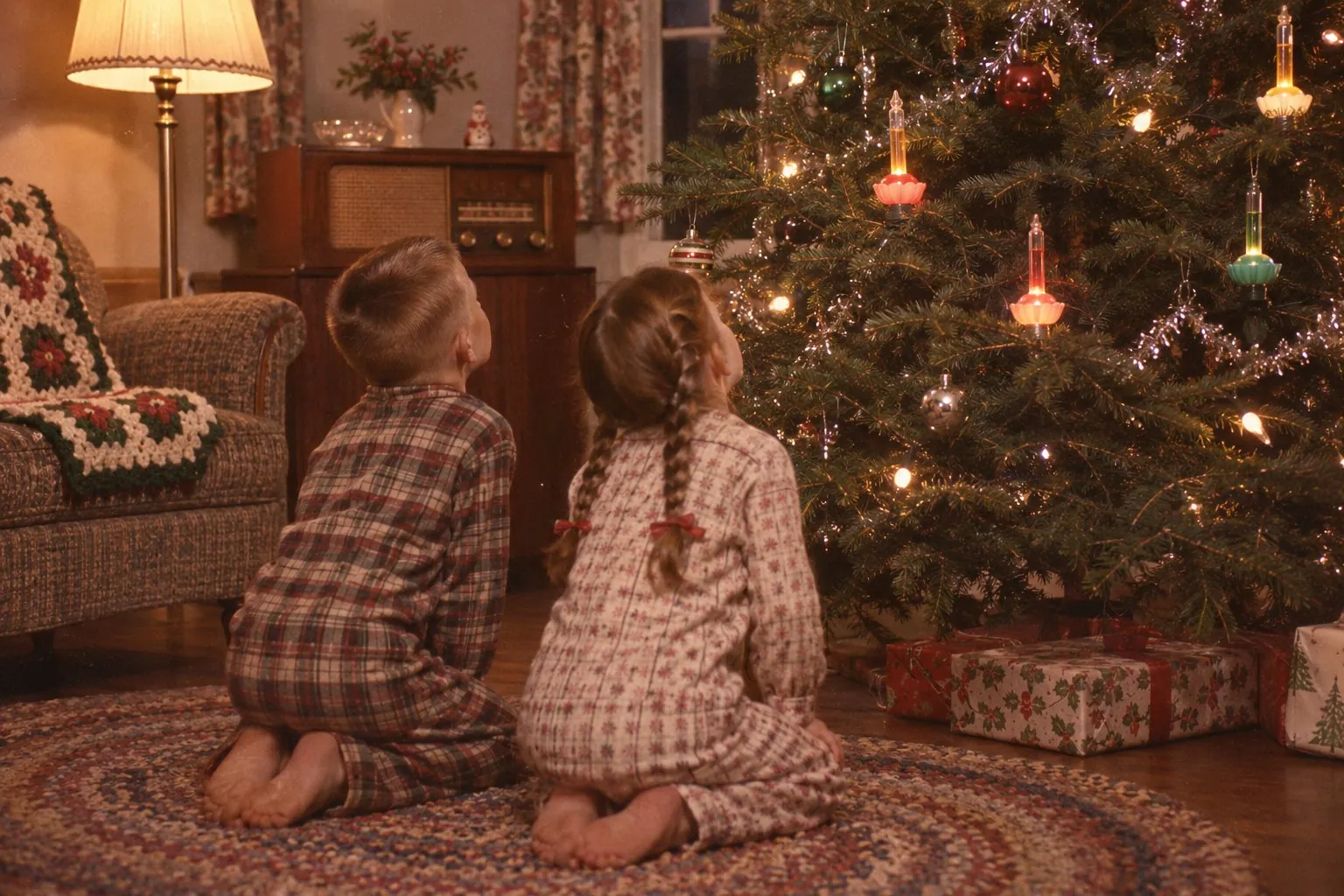
You probably remember the waiting. Dad plugged in the string, the bulbs glowed, and for a few minutes nothing happened. Then one light near the bottom of the tree started to fizz, then another, and the kids started guessing which slowpoke would be last.
Bubble lights came out right after the war and stayed on family trees through the 1950s and '60s. Here is where they came from, how the trick works, how to spot an old one and what they bring today.
Where bubble lights came from
The idea goes back to Carl Otis. On November 27, 1935, he filed a patent for what he simply called "Display," a bubbling tabletop sign, according to the collector history site Old Christmas Tree Lights. NOMA Electric Corporation, the big name in American Christmas lights, bought his patents and hired him to keep developing the bubbling lights, the site says.
NOMA paid Otis a royalty of 3 cents for every light it made, Old Christmas Tree Lights reports. In 1946 money, that is about 48 cents today. The site adds that Bubble-Lites became NOMA's best sellers.
Collectors still argue over the first year on sale, 1945 or 1946, the same site notes. The 1946 sets came in what collectors call a "book style" box, with an inside flap showing a little girl smiling at the lights.
The patent fight
Success brought rivals. When the Raylite company made bubble lights of its own, it countered with an earlier patent by Phillip Rosenblatt, No. 2,278,383, granted March 31, 1942, ahead of Otis' patent of September 4, 1945, Old Christmas Tree Lights recounts. One court order in the dispute was dated December 23, 1946.
For a time, Raylite made its bubble lights with oil and pumice instead, eHow reports.
Read more: How the Old Color Wheel for a Christmas Tree Worked
How the bubbling trick works
Water boils at 212°F. Methylene chloride boils at about 103°F, barely warmer than a hot bath. That low boiling point is the whole secret, as eHow explains.
The little bulb in the base heats the bottom of the tube. The liquid there boils, and bubbles of vapor climb toward the top, where the glass is cooler. Up there the vapor turns back into liquid and runs down to be heated again. The bulb shines up through the whole column, so the bubbles sparkle.
That is why the wait felt so long on a cold December night. The tube had to warm up first. A stubborn light sometimes needed a gentle tap. After long storage the fluid can separate, and a light shake or tap helps it mix, eHow advises.
A word of caution
That fluid is not harmless. Methylene chloride can cause serious poisoning if it is swallowed, breathed in or spilled on the skin, because the body turns it into carbon monoxide, the National Capital Poison Center warns. Keep cracked tubes away from grandchildren and pets.
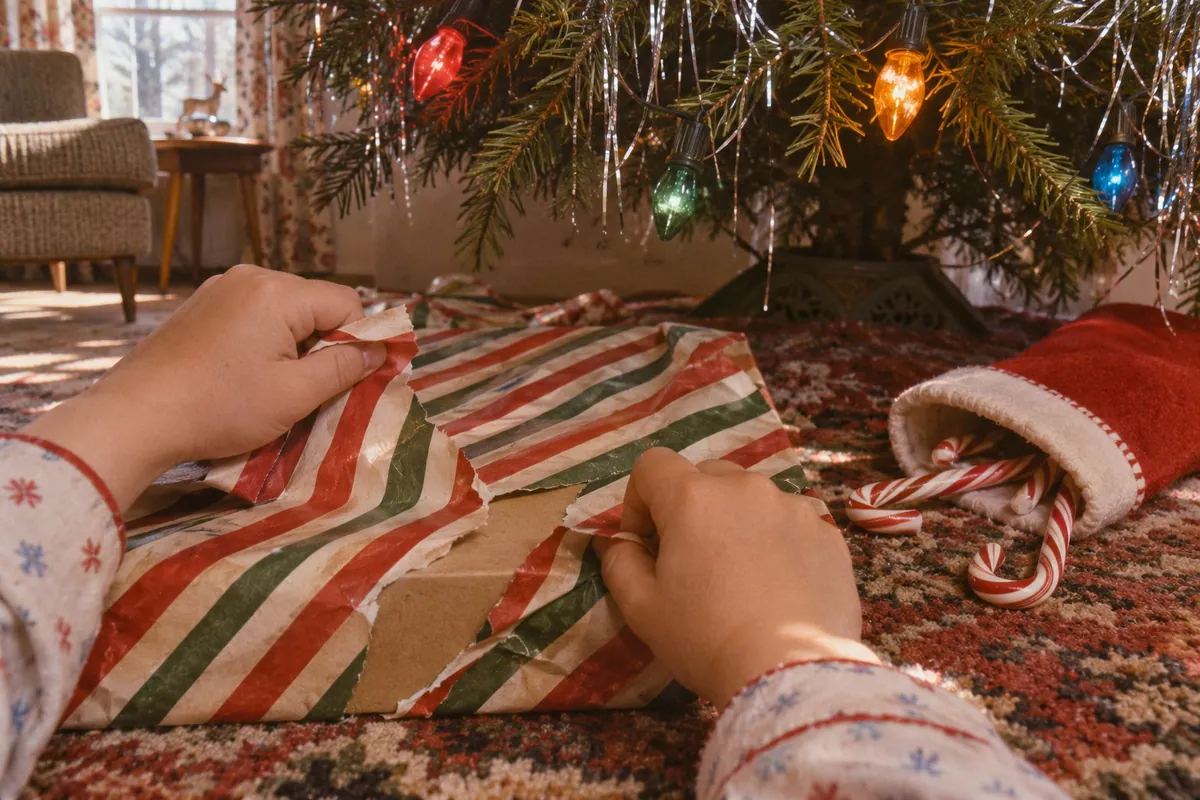
Spotting real vintage bubble Christmas lights
Antique bubble lights were sold under several brand names. In the listings we checked, the old brands included NOMA, Glolite, Paramount and Royalites. An original box with a set number is the best clue, such as NOMA's set of nine, No. 509, or the Glolite set No. 608.
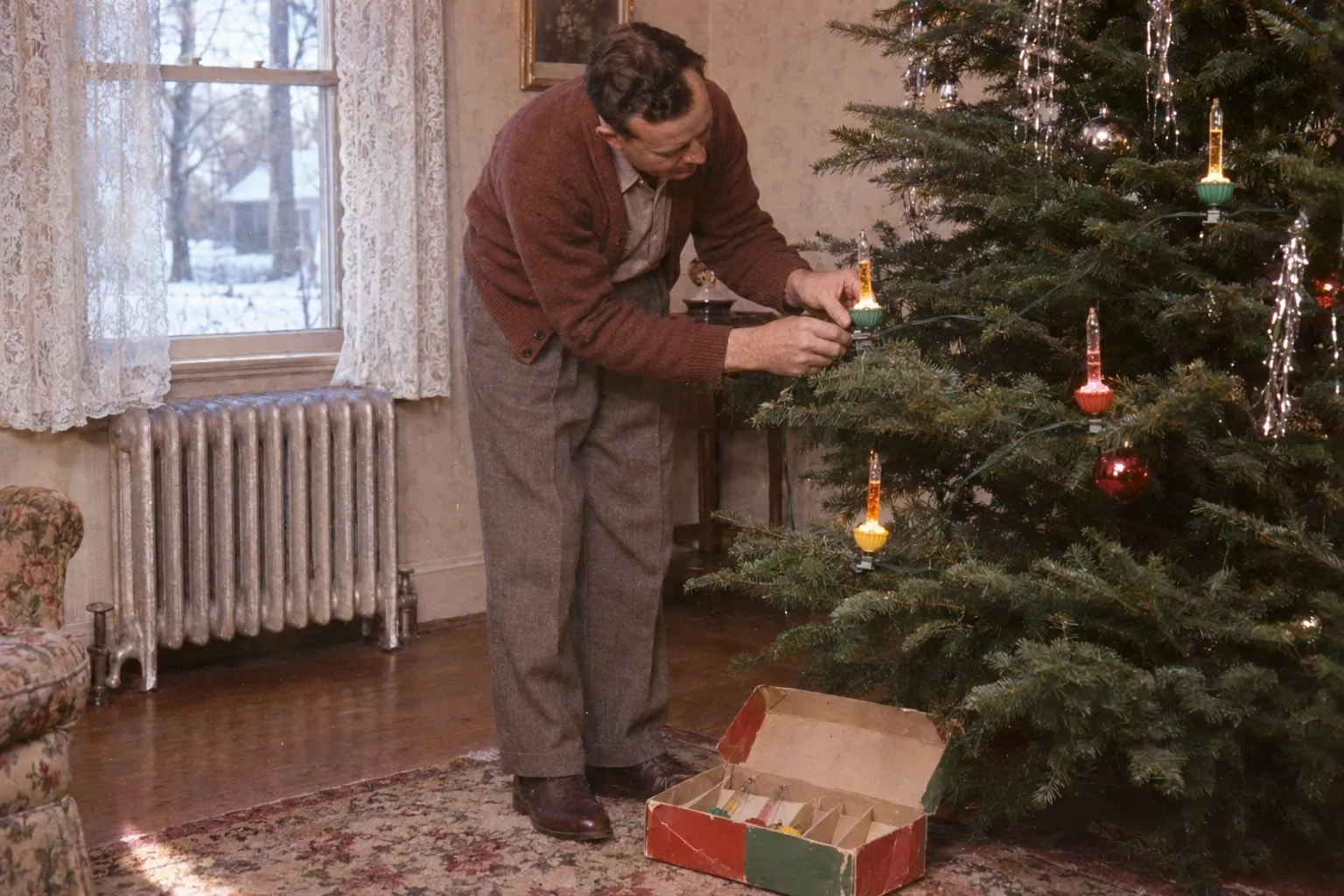
Look at how the set is built, too. Each bubble light screws in like its own bulb, so you can replace one without replacing the whole string. The strings were also generally wired so one dead light did not black out the rest, eHow notes. Real old ones show their age: worn bases, faded paint and boxes softened by decades in the attic.
Sellers call some colors hard to find. One listing for a 1940s Glolite set described its purple and green tubes as rare. That is a seller's claim, not a count, so take it with a grain of salt.
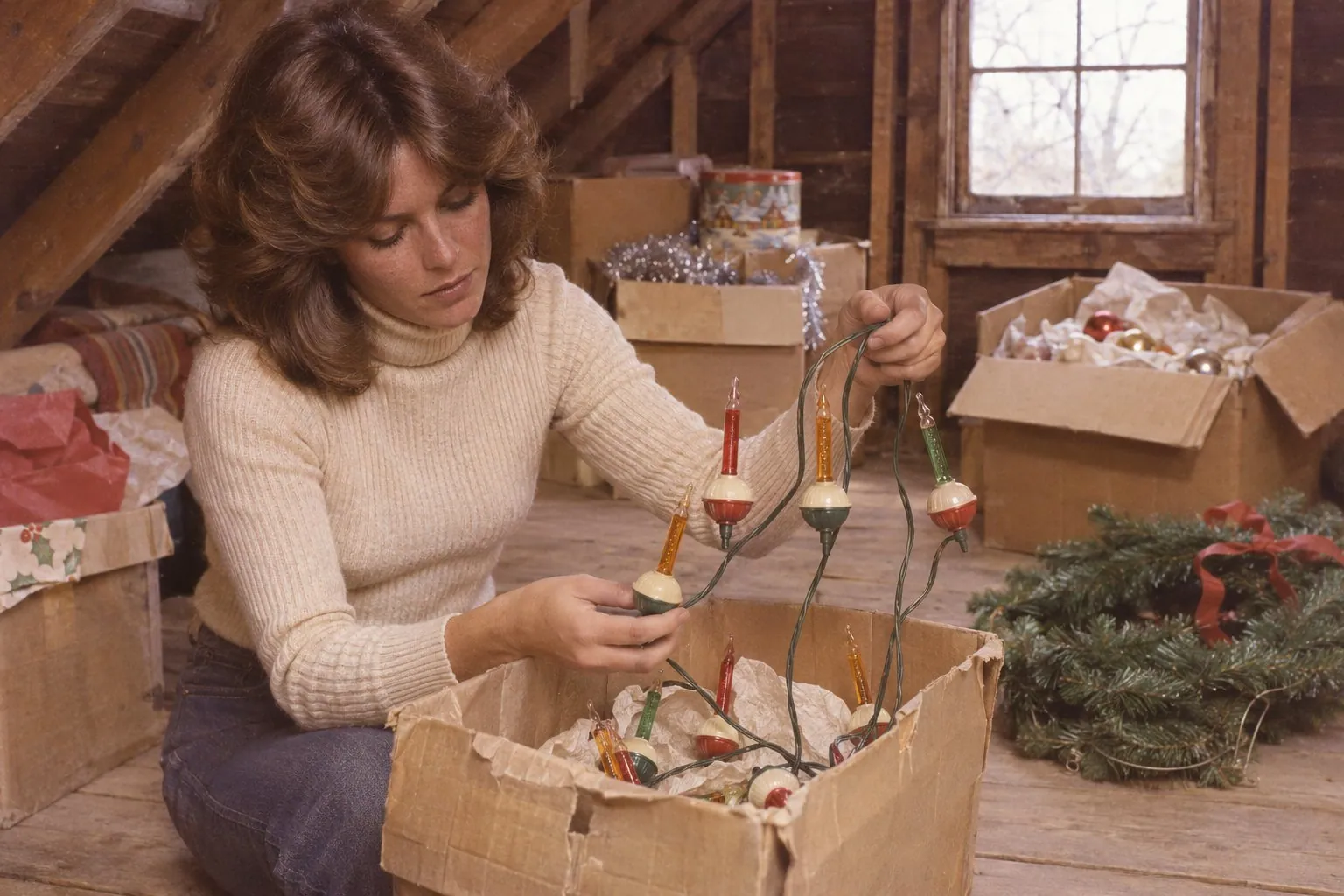
What they cost new and what they're worth now
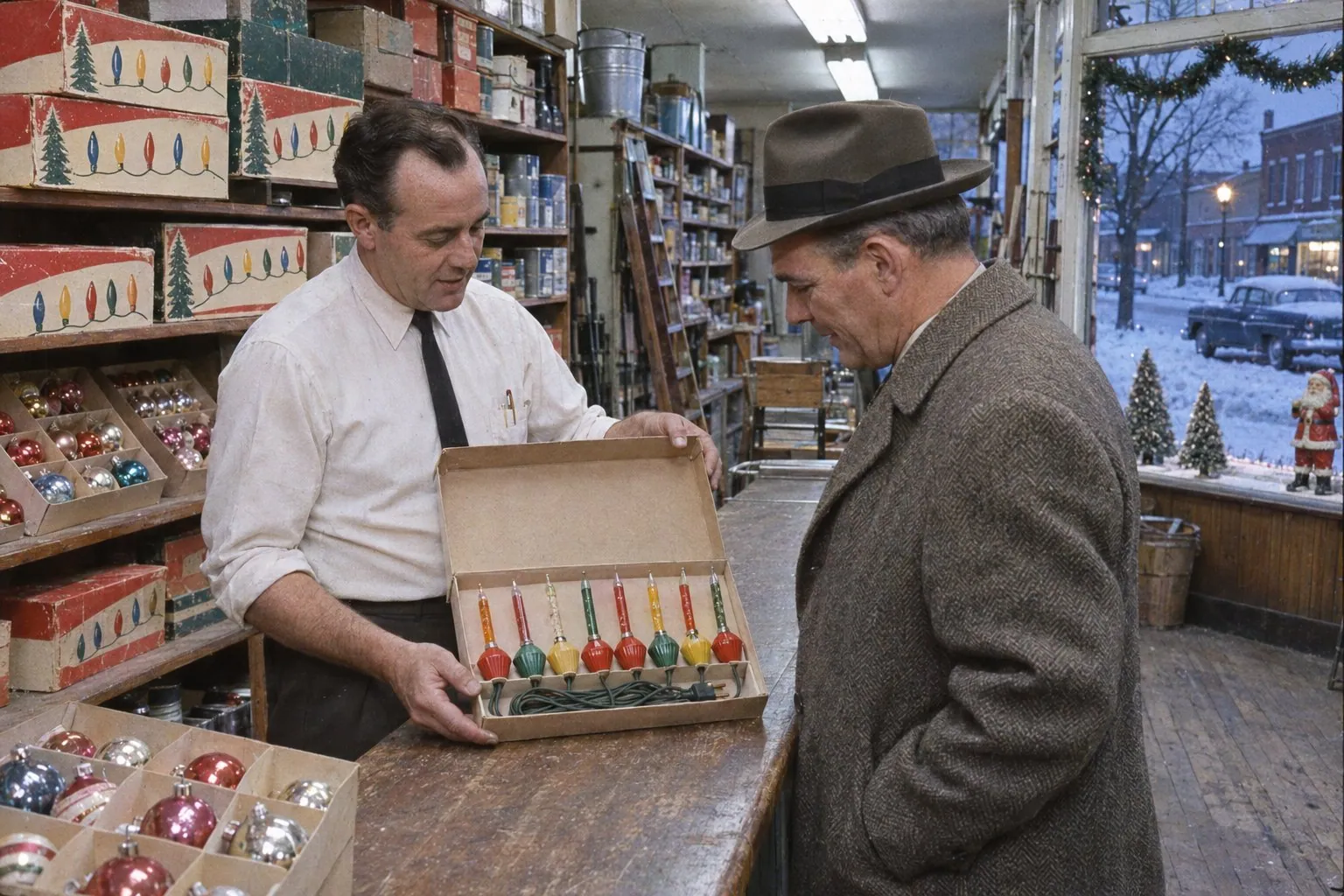
Store prices for a boxed set varied by town, store and set size. We could not find a 1946 price tag we trust enough to print. Below is the one firm 1946 number we have, plus what a dollar from those years is worth now.
| Then | Today (BLS CPI, 2024 dollars) |
|---|---|
| 3-cent royalty per light, 1946 | about 48 cents |
| $1 spent in 1946 | about $16.10 |
| $1 spent in 1950 | about $13.00 |
| $1 spent in 1955 | about $11.70 |
| $1 spent in 1960 | about $10.60 |
Today a good boxed set is a real collectible. On Etsy, a working 1940s NOMA set of nine, No. 509, in its original box was listed at $147. Another boxed NOMA set of nine was marked down to $136 from $170, and a single Royalites Crown bubble light was listed at $66.09. These were asking prices when we checked, not sale prices.
Other bubble lights you might remember
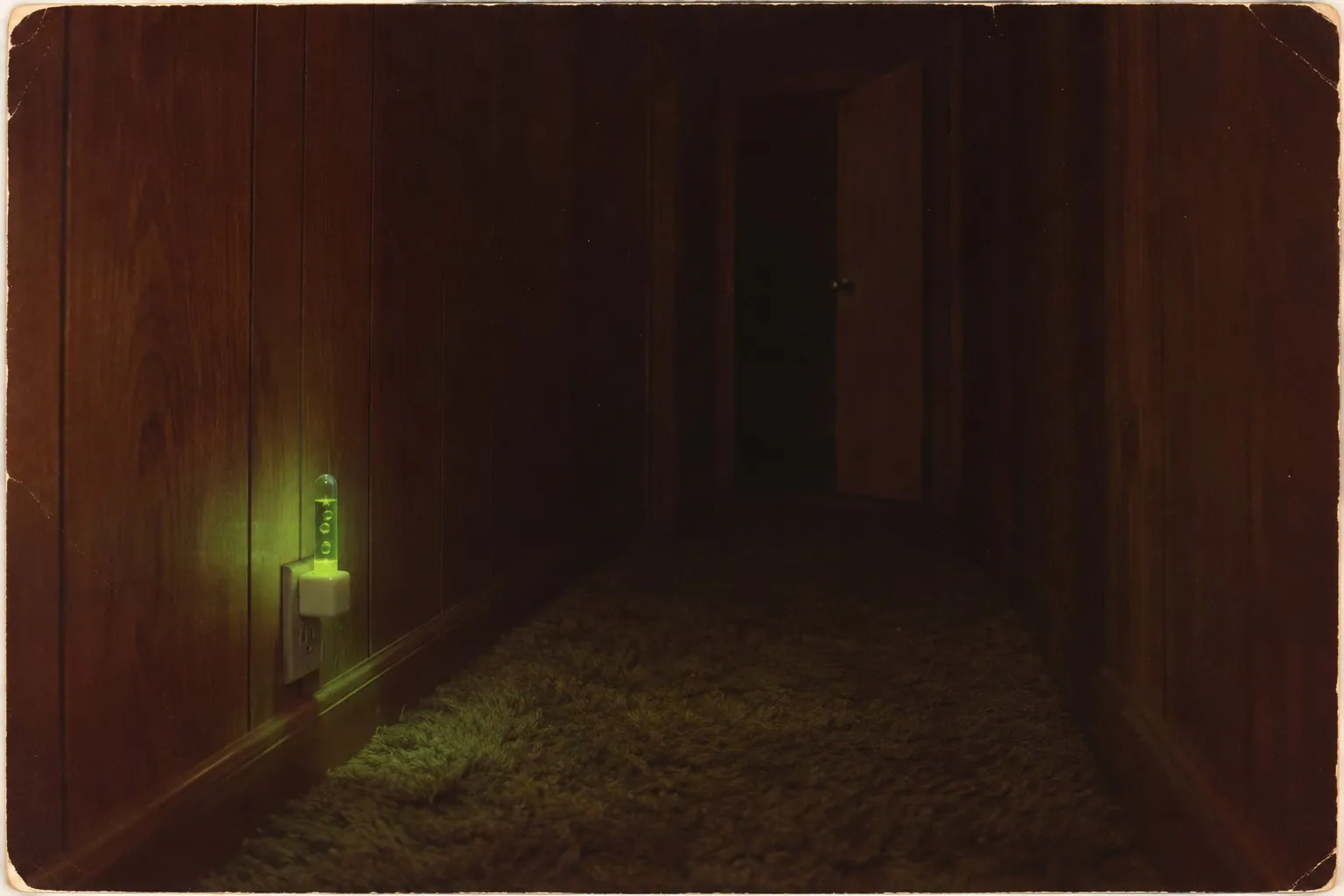
Vintage bubble night light
Plug-in bubble night lights put one bubbling tube on a small wall base. Many you see now are newer than they look. One Christmas-tree bubble night light sold as vintage, the Roman "Bubblers," dates from 2002, its Etsy listing shows. The National Capital Poison Center's warning mentions a toddler who was found with a broken bubble night light.
Shiny Brite bubble lights
Shiny Brite was the glass-ornament brand whose boxes sat on many closet shelves. As far as we found, the old company was known for ornaments, not lights. Bubble lights sold under the Shiny Brite name today are new sets from Christopher Radko's revival of the brand.
Vintage bubble light replacement bulbs
Old sets came in more than one size, and listings label them C6 or C7. New replacement bubble lights are mostly sold for C7 sockets with the E12 candelabra screw base. Check your old socket against the new base before you buy, and never put a cracked old tube back on the string.
Frequently asked questions
When were bubble lights invented?
Carl Otis filed his first bubbling-display patent on November 27, 1935, and NOMA had Bubble-Lites on sale by 1946, according to Old Christmas Tree Lights. Some collectors say 1945.
Why won't my vintage bubble lights bubble?
Give them time, especially in a cold room. If one still won't bubble, a gentle tap can mix fluid that separated in storage, eHow advises. If the bulb itself is dark, it will never bubble.
Are antique bubble lights safe to use?
Check the cords and keep the tubes whole. The fluid is usually methylene chloride, which the National Capital Poison Center says the body turns into carbon monoxide if it is swallowed or absorbed.
How much are vintage bubble lights worth?
Boxed 1940s NOMA sets of nine were listed on Etsy at $136 to $147 when we checked. Single lights were listed for less. Working sets in their original boxes bring the most.
Sources
- History of Bubble Lights, Old Christmas Tree Lights (collector history site), undated
- Bubble lights: The hazards of nostalgia, National Capital Poison Center, undated
- How Do Bubble Lights Work?, eHow, undated
- Why Do Bubble Lights Stop Bubbling?, eHow, undated
- CPI Inflation Calculator, U.S. Bureau of Labor Statistics, 2024
Related Stories
Love a trip down memory lane?
Get a fun quiz every morning. Free · One email a day · Unsubscribe anytime