Vintage Ceramic Christmas Decorations We All Had
The glowing ceramic tree, the Santa mug, the gumdrop tree: here are the holiday pieces that sat on end tables and TV sets when you were growing up.
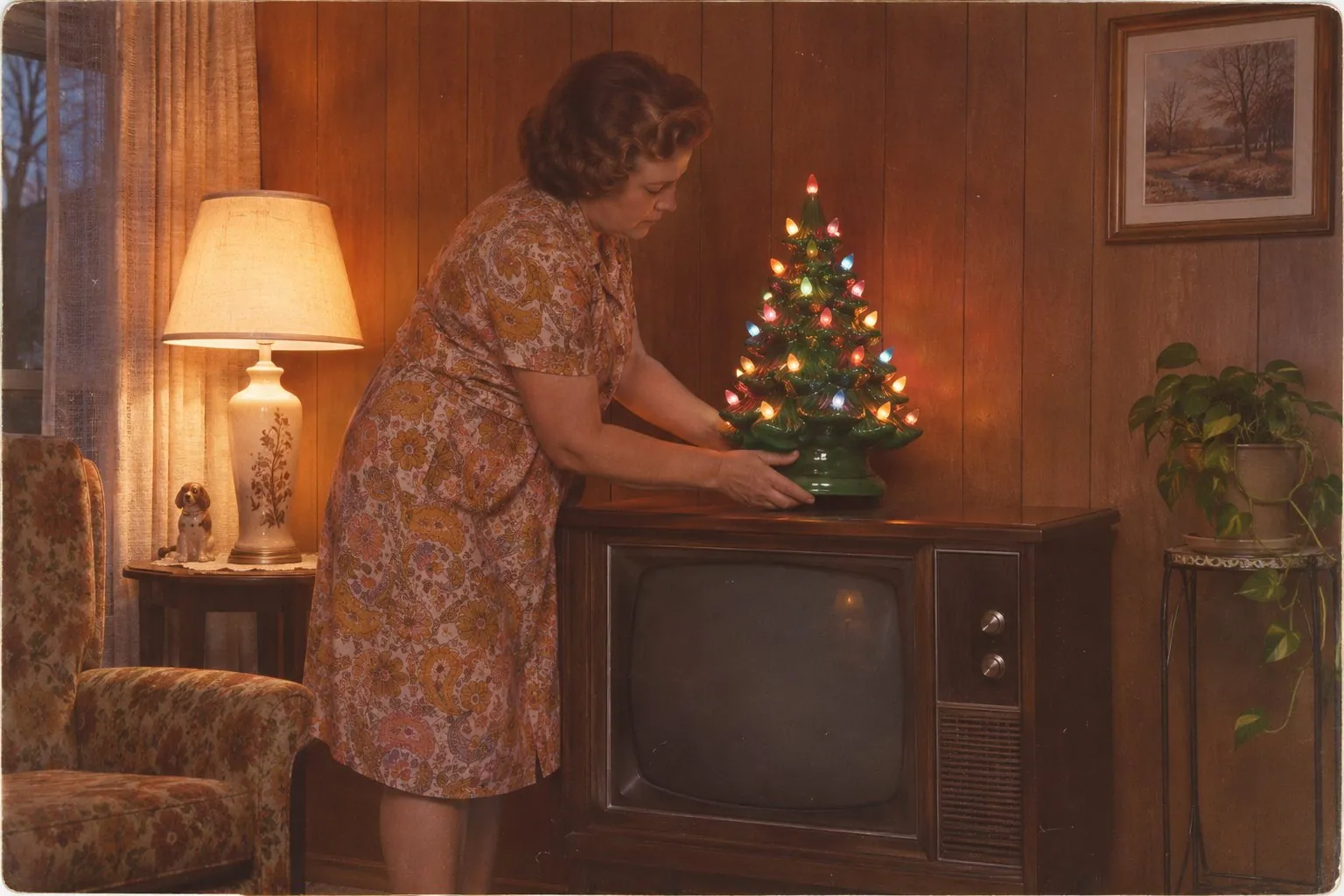
If you grew up in the 1960s and '70s, the vintage ceramic Christmas decorations in your house probably included a glowing ceramic tree with little plastic bulbs, a ceramic Santa mug or cookie jar, a lit ceramic wreath and maybe a gumdrop tree or a nativity set. Most of these were poured from mass-produced molds and hand-painted by mothers, aunts and grandmothers at the neighborhood ceramics shop. That is why ceramic Christmas vintage pieces still turn up in so many attics.
You probably remember the tree best. It came out of a box lined with newspaper, went on top of the console TV or the end table, and stayed lit every night until New Year's.
Here is what most of us had, grouped the way it all sat around the house, with the stories collectors still tell about it.
How the vintage ceramic Christmas tree got into your living room
The ceramic tree goes back further than most people think. Ceramic Christmas trees "first started showing up in the 1940s," the American Ceramic Society reports. Those early ones were made in small numbers by individual artists, and some had tiny electric bulbs that each lit up on their own.
The tree most of us knew came later, once mold companies got involved. The American Ceramic Society says the Atlantic Mold Company is credited with copyrighting one of the first ceramic Christmas tree designs, the A-64, in 1958. Other mold makers followed with their own versions.
The same article cites author Sarah Archer, who wrote a book on how the modern American Christmas took shape. She traces do-it-yourself Christmas projects back to the Great Depression of the 1930s. The habit stuck, even after the postwar years made store-bought decorations easy to get.
Read more: How the Old Color Wheel for a Christmas Tree Worked
The ceramic shop down the street
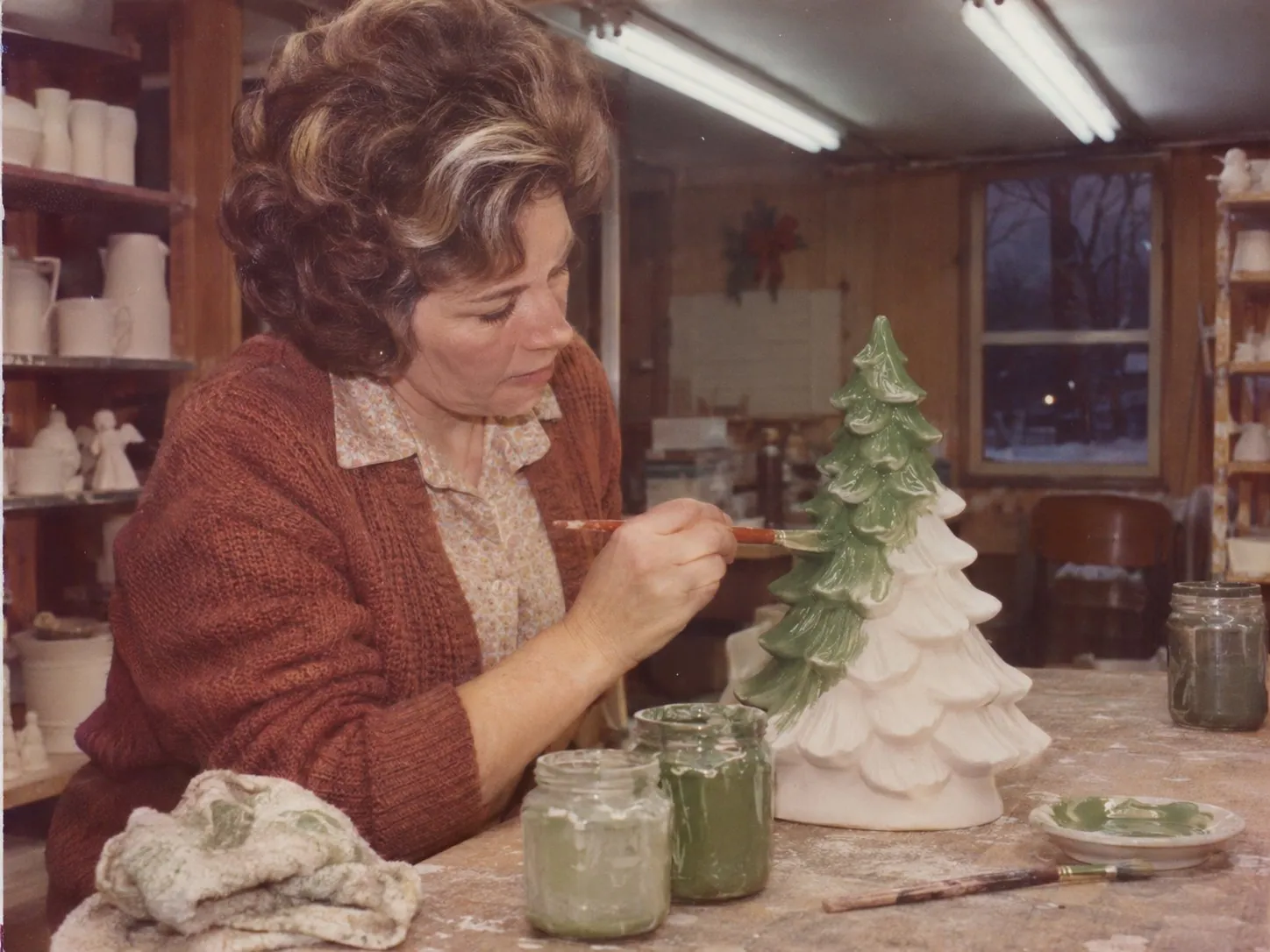
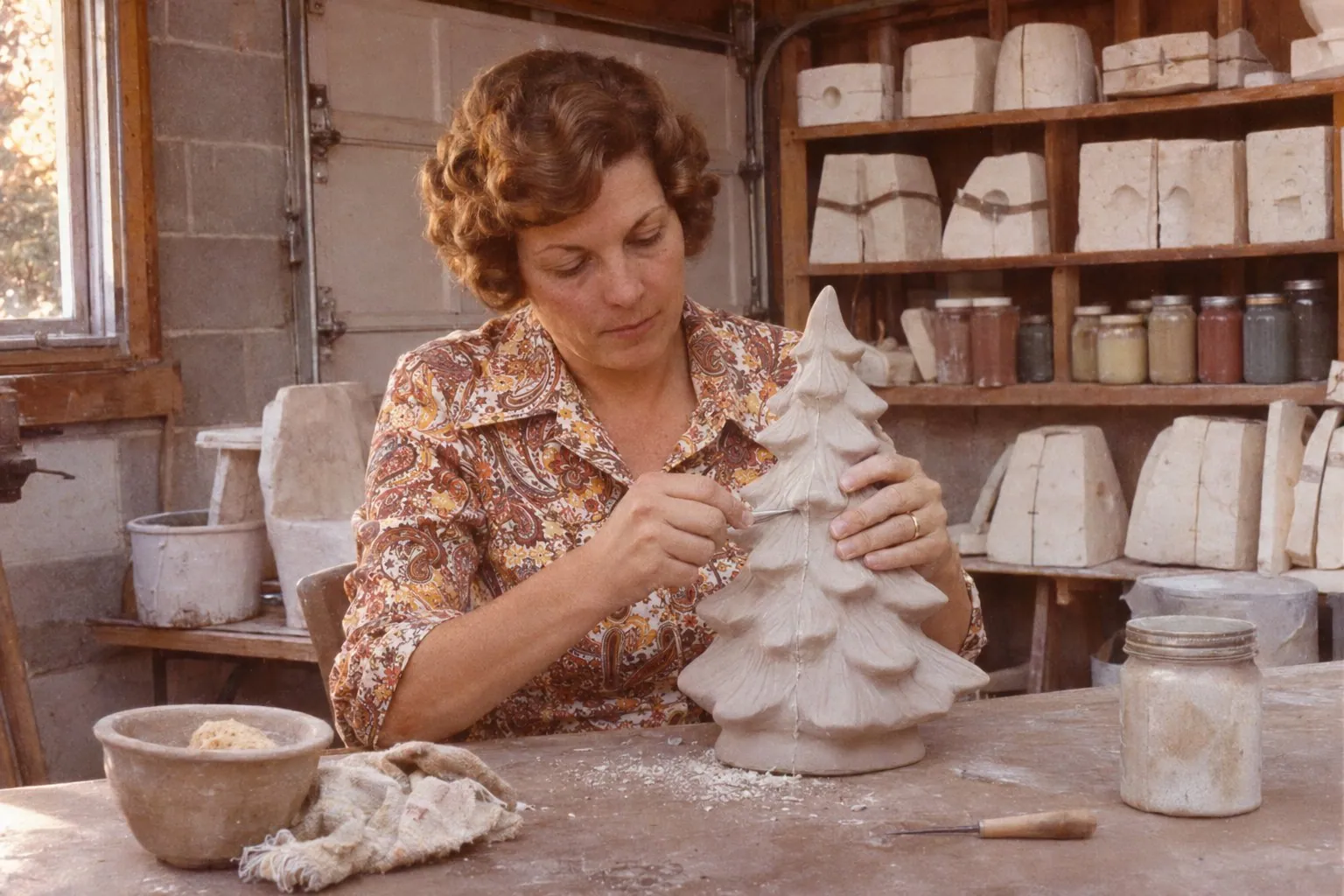
Most of the trees didn't come from a department store. In the '60s and '70s, craft shops held workshops where people made their own ceramic Christmas trees from mass-produced molds, the American Ceramic Society notes.
You may remember how it worked, even if you only went along for the ride. The shop poured liquid clay into the mold, and you got back a chalky, unfired tree called greenware. Someone in your family scraped off the seam lines with a little tool, brushed on the glaze, and left it for the shop to fire in the kiln.
The tree came back hard and shiny a week or so later. Green was the usual color. White trees, gold-tipped trees and "snow-tipped" trees with white glaze on the branch ends were common too.
The shop also sold everything else you needed, including the plastic lights, the star for the top and the cord and bulb for the base. If you did one tree, you probably did a second one for a grandmother or a neighbor.

Light-up trees and those little plastic bulbs
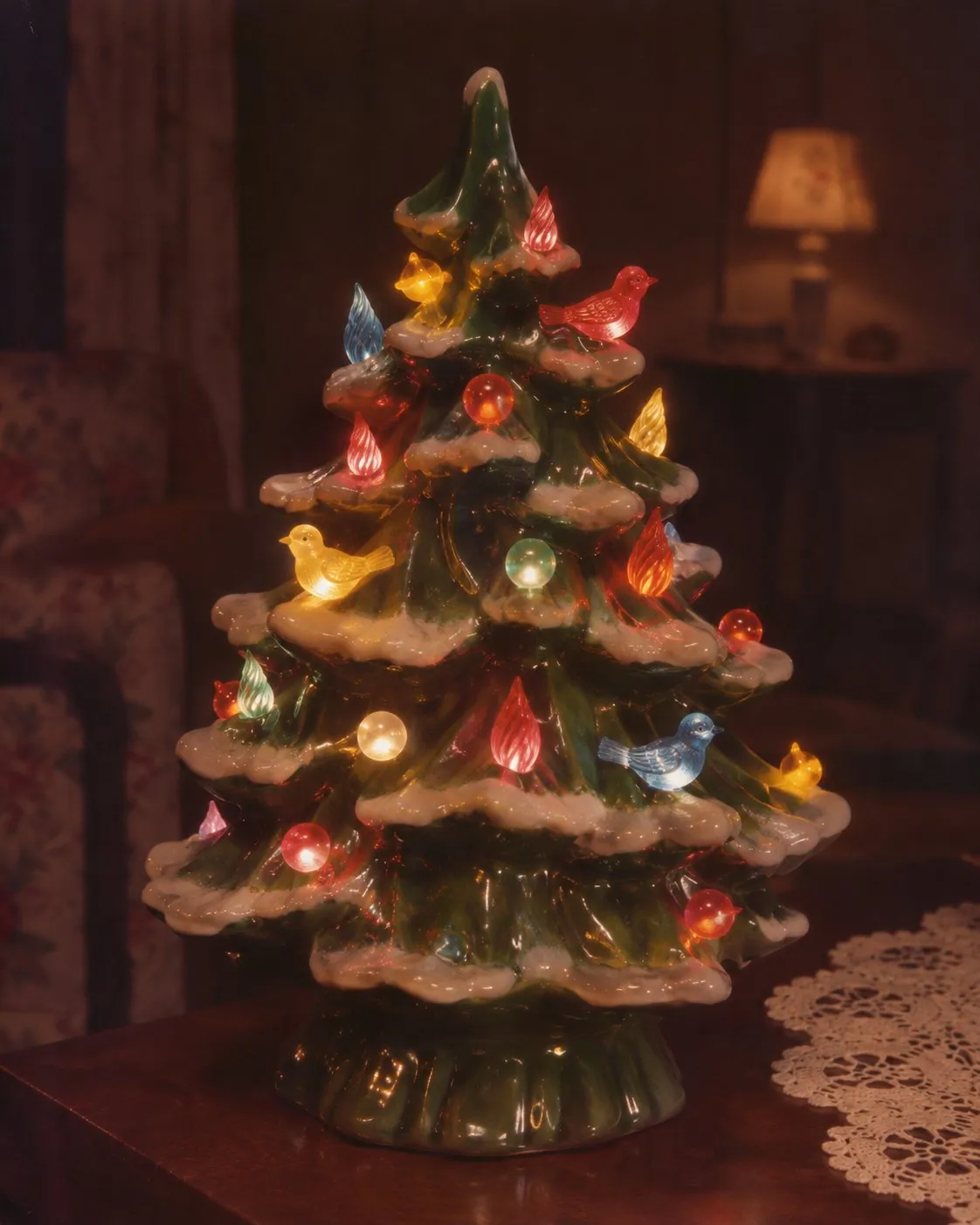
The lit ceramic tree became a retro Christmas favorite because of how it glowed. Later trees replaced the tiny individual bulbs with one bulb inside that lit all the colorful plastic "bulbs" from within, the American Ceramic Society explains.
Those little lights are what everyone remembers. You pushed each one into a hole in the branches. Some were round, some were twisted like a flame, and some were shaped like tiny birds or stars. A few always went missing under the couch by the next December.
You may also remember the warm-dust smell when the bulb had been on for an hour and the ceramic heated up. Some trees sat on a base with a wind-up music box that turned the tree slowly while it played a carol.
The trees came in sizes from a few inches tall up to big ones that took over a whole end table. Small versions with a light inside were sometimes hung or set on a shelf like an ornament.
Glowing wreaths and gumdrop trees
The light-up ceramic wreath
The same shops that poured trees also poured wreaths. A vintage ceramic light-up Christmas wreath worked just like the tree, with a hollow ceramic ring, holes for the plastic lights and a bulb behind it. It usually hung in a window or leaned on the mantel, and you could see it from the street on a dark December evening.
Many had a glazed red bow at the bottom, and some had a candle shape or a little scene in the middle. Like the trees, they were mostly painted by hand, so no two came out exactly the same.
The gumdrop tree
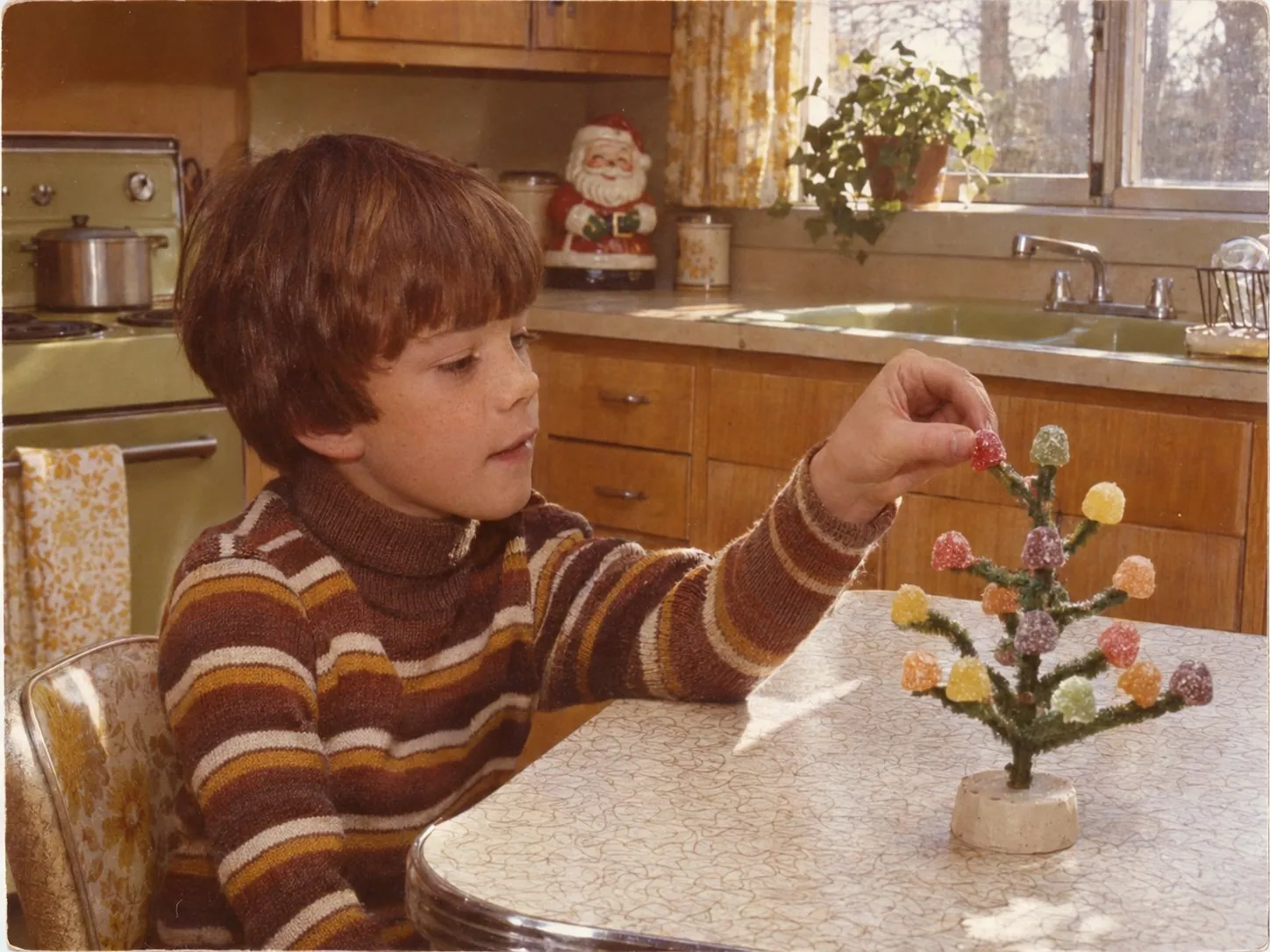
The gumdrop tree was a different kind of tree. Instead of lights, it held candy. Many were made of wire or plastic with spikes you pushed the gumdrops onto, and ceramic versions turned up too. Kids were told not to eat them until Christmas, and usually ate them anyway.
If your house had one, it probably sat on the kitchen table or the buffet, close enough for a quick grab on the way through.
Santas, angels and the rest of the shelf
Once the tree was out, the rest of the ceramic came out with it. You probably had at least a few of these:
- Santa mugs. A round-faced Santa mug for cocoa or eggnog, often in a set of four or six.
- Santa cookie jars. Santa's head or a full Santa, with a lid that clinked every time someone reached in.
- Angels. Small angels holding candles or with a month or a name on them, often from Japan with a gold-foil sticker. Napco and Lefton are two of the importer names collectors look for.
- Candle holders and planters. Santas, reindeer and snowmen with a hole for a candle or a spot for a poinsettia.
- Nativity sets. Poured and painted at the same shops as the trees, often a few figures a year until the set was finished.
Holt Howard is another name you may find on the bottom of a Christmas piece, especially on the grinning Santas from those years. Look at the base: a company name, a "Japan" stamp or a sticker tells you a lot.
Why the old ceramic trees are back
For years, many of these trees sat in boxes. Our State magazine linked the fade to changing taste, as the bright colors of the '80s gave way to the earth tones of the '90s. Now mid-century ceramic trees are popular again, turning up in attics, antiques shops and on eBay.
One collector in that story, Stacy Smith of Greensboro, North Carolina, has 15 ceramic trees in her home. Her collection began after her husband's grandmother died, when she found a ceramic tree with lights on the tips while going through her belongings. "I just pounced on it," she told Our State.
If you're checking your own, the same Our State article says Atlantic Mold put a stamped date on the bottom of its trees. Companies like Atlantic, Dogwood Ceramic Supply, Arnels and Holland Mold stamped the year the mold was made, not the year the tree was poured. A tree marked "1958" could easily have been made in 1975.
Glass ornaments from those years are well remembered too. The Smithsonian's National Museum of American History keeps a glass-and-metal Christmas ornament made in Tucson, Arizona, in 1962. Still, for many families, the ceramic tree made at the corner shop was the decoration that felt like it belonged to them.
Frequently asked questions
When were vintage ceramic Christmas trees made?
Ceramic Christmas trees first appeared in the 1940s, according to the American Ceramic Society. They were at their most popular in the 1960s and '70s, when craft shops held workshops using mass-produced molds. One of the first copyrighted molds was Atlantic's A-64 in 1958.
How can I tell how old my ceramic Christmas tree is?
Turn it over and look for a mold company name and a year. Our State notes that companies like Atlantic and Holland Mold stamped the year the mold was made, not when your tree was poured. The tree itself may be years newer than the date.
What is a ceramic gumdrop Christmas tree?
It's a tabletop tree made to hold gumdrops instead of lights. Many gumdrop trees were wire or plastic with spikes for the candy, and ceramic versions were made too. Most sat in the kitchen within easy reach.
Were there light-up ceramic Christmas wreaths too?
Yes. Ceramic shops poured wreaths that worked like the trees, with plastic lights pushed into holes and a bulb behind them. Most were painted by hand, often with a red bow at the bottom.
What lit up the little bulbs on a ceramic tree?
On later trees, one light bulb inside the base lit all the plastic bulbs from within, the American Ceramic Society explains. The earliest handmade trees sometimes had tiny electric bulbs that each lit up on their own.
Sources
- Video: History of vintage ceramic Christmas trees, The American Ceramic Society, 2020
- A Christmas Comeback, Our State magazine, 2022
- Christmas Tree Ornament, Smithsonian National Museum of American History
Related Stories
Love a trip down memory lane?
Get a fun quiz every morning. Free · One email a day · Unsubscribe anytime