Vintage NOMA Bubble Lights: Biscuit Base, Boxes and History
The glass candles that bubbled on your family's tree had an inventor, a court fight and a puffy little base collectors still hunt for.
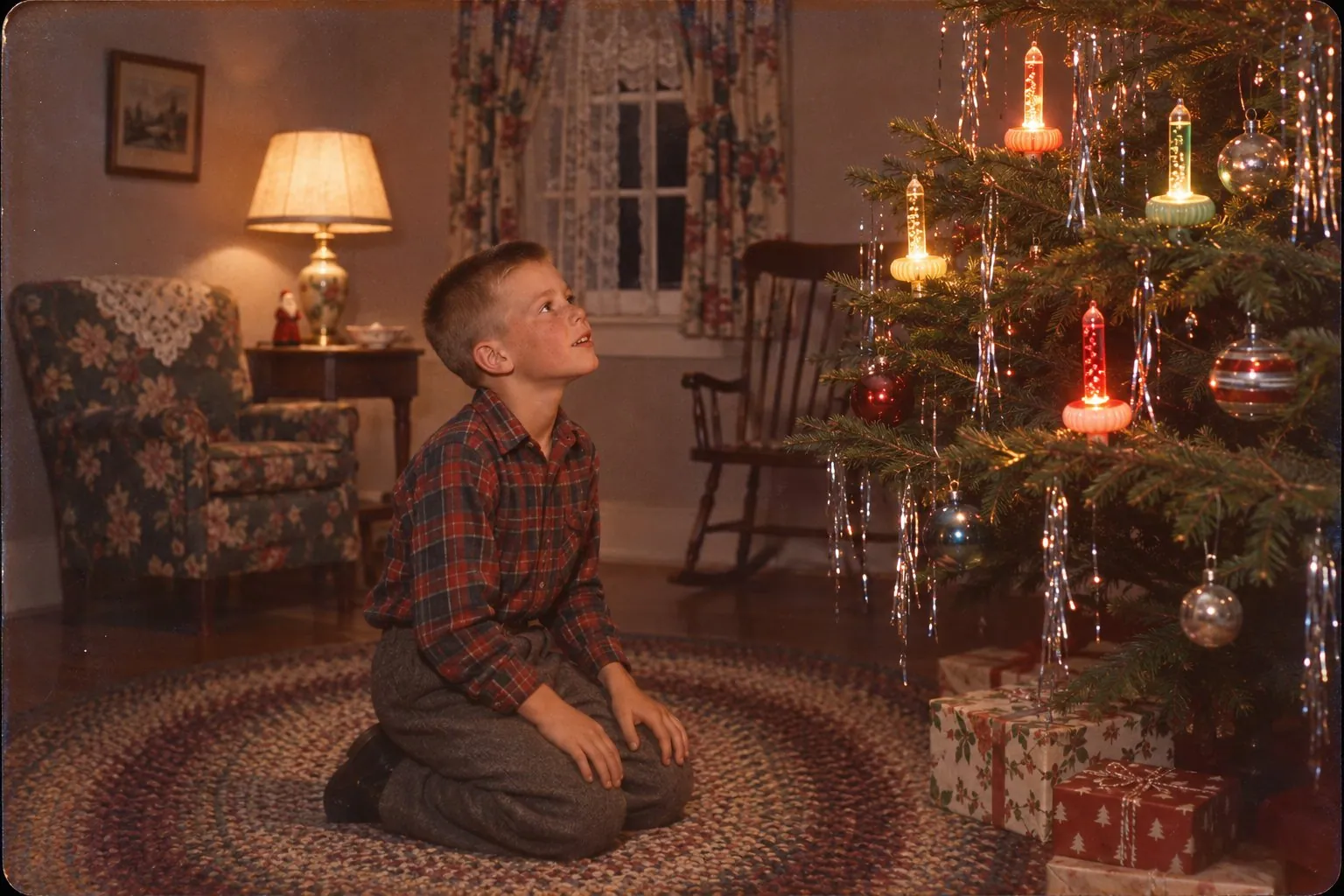
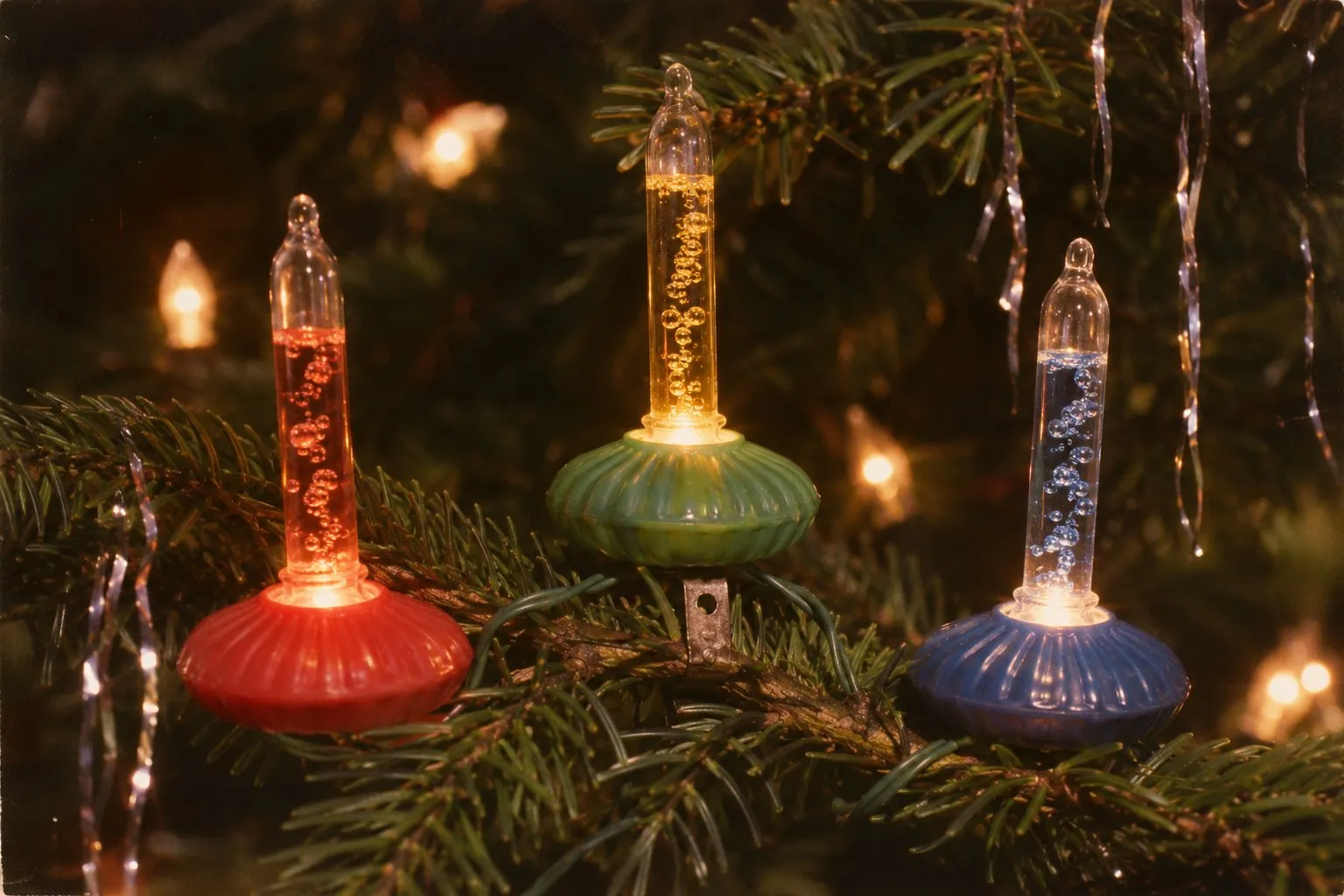
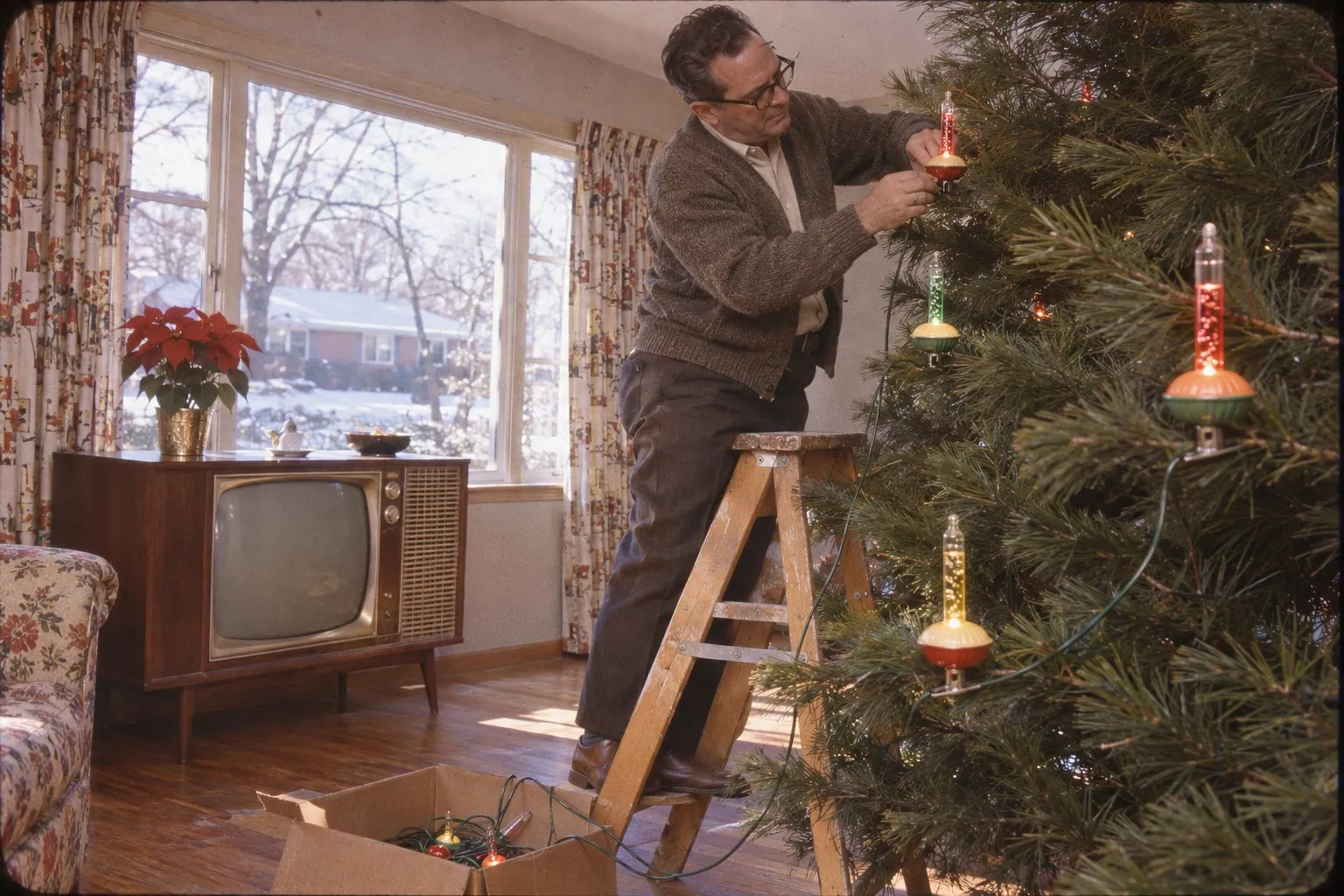
NOMA bubble lights are the candle-shaped Christmas tree lights with a liquid-filled glass tube that starts to bubble once the bulb underneath warms it. NOMA Electric started selling them in 1946. To spot a vintage NOMA set, look for the round, puffy "biscuit" plastic base (or the flatter "saucer" base from 1948), the NOMA name on the box, and, on the very first lights, small metal clips holding the two halves of the base together.
You probably remember the wait. Somebody plugged in the string, and for a few minutes nothing happened. Then one tube started to fizz, then another, until the whole tree was bubbling. Here's where vintage NOMA bubble lights came from and how to tell the real ones at a flea market or in Dad's old ornament box.
The company behind the name
NOMA started as an alphabet name. In 1925 a group of lighting makers formed the National Outfit Manufacturer's Association, a trade group and not yet a company, according to the collector history site OldChristmasTreeLights.com. Reports of how many firms joined run from 13 to 15, that same history says.
Late in 1926 the members merged into one business, NOMA Electric Corporation. It sold lights under the NOMA name for the first time at Christmas 1927, the site notes. Morris Propp, whose Chicago company was one of the merger partners, became NOMA's president in 1929.
By the time you were a kid, NOMA was the big name on the store shelf. The company's own list of "firsts" includes the safety fuse plug, which is still in use, along with Berry Bead light holders and bubble lights, according to the site's NOMA timeline.
Read more: Ben Cooper Costumes: Who Dressed America's Trick-or-Treaters
The accountant who invented them
The bubble light didn't start in a lab. It came from Carl Otis, an accountant at Montgomery Ward, who had already been working on bubbling display signs, OldChristmasTreeLights.com reports. He filed for a patent on a bubbling sign on November 27, 1935.
He filed his Christmas tree version, called an "Ornamental Illuminating Device," in November 1941. It was granted on July 4, 1944, as patent No. 2,353,063, the same history says. A second patent with improvements was granted September 4, 1945. NOMA bought the rights to both and hired Otis to keep working on the lights.
The war held everything up. Wartime restrictions and material shortages kept NOMA from selling the lights until after World War II, the site's patent listings explain. Most collectors date the first big sales to 1946. Some argue for 1945, and a few think a handful of test lights may have gone out as early as fall 1942.
The 1946 rush and the court fight
The lights caught on fast. In 1946 NOMA's Bubble Lites were "THE thing to have for a properly decorated tree," as the collectors at OldChristmasTreeLights.com put it. The first box opened like a book and held 9 lights, plus a cord and clips.
NOMA didn't keep the field to itself for long. A court order dated December 23, 1946, cleared a competitor, Raylite, to make bubble lights, and Raylite put its own on sale in 1947, the bubble light history reports. The court threw out Otis's last patent because an earlier bubbling-sign patent by Philip Rosenblatt came first.
Other brands rushed in right after that. Paramount sold "bubbling lights" first called Kristal Snow Animated Candles. Royal called its version "Sparkling Royalites" to keep clear of NOMA's patents. Even so, NOMA's lights stayed the best sellers of all the bubbling lights, and millions were made up into the 1970s, according to the same collector history.
How to spot vintage NOMA bubble lights
You can't always go by the box, since lights got mixed up over 30 Christmases. Here's what to check on the lights themselves.
Look at the base shape
- Biscuit: a round, puffy base, shaped about like a baking-powder biscuit. This is the shape most people mean by NOMA biscuit bubble lights.
- Saucer: a flatter, wider base. NOMA switched to it in 1948 and went back to the biscuit in 1949, according to the NOMA timeline. A saucer base therefore points to about 1948.
Check for metal clips
The very first NOMA biscuit lights are easy to spot because small metal clips at the vent holes hold the two base halves together, OldChristmasTreeLights.com notes. Later bases went without them.
Peek inside the tube
The earliest tubes had a small glass slug inside to help start the bubbles and spread them out. Later tubes used a chemical blob instead, the collector site explains. You can find both kinds in NOMA tubes.
Know the boxes
The 1946 "book style" box is the one collectors want most. NOMA also sold replacement lights, with a box shown in its 1948 catalog, and from 1948 it offered a multiple-wired bubble light outfit, according to the site's 1940–1950 page.
What a set cost back then
Store prices for a set changed with the year, the store and the number of lights. We couldn't confirm a price from a catalog or newspaper ad of the time, so we're not giving one. One figure from those years is on record: what the inventor got paid.
NOMA agreed to pay Otis a royalty of 3 cents for each light it made, the bubble light history reports. Here's what that comes to at 1946 prices, the first big selling year, using the U.S. Bureau of Labor Statistics CPI:
| Item | Then (1946) | About today |
|---|---|---|
| Otis's royalty on one light | 3 cents | 48 cents |
| His royalty on a 9-light box | 27 cents | $4.35 |
A nickel-and-dime royalty looks small, but that's millions of lights. The 1946 court ruling cut it short, though.
What became of NOMA
In 1953 NOMA turned its Christmas light business into a separate company, NOMA Lites Incorporated, to set it apart from the other products it made, the NOMA timeline says. In 1966 NOMA, still the biggest Christmas lighting company in the world, filed for bankruptcy, according to the site's lighting timeline.
Today NOMA lives on only as a trademark. That's why the old biscuit lights from the '40s, '50s and '60s still turn up on so many trees each December.
Frequently asked questions
What are NOMA biscuit bubble lights?
They're NOMA's classic bubble lights with the round, puffy plastic base that collectors call a "biscuit." NOMA used that shape from 1946, except in 1948, when it tried a flatter saucer base, according to OldChristmasTreeLights.com.
How can I tell if my vintage NOMA Christmas bubble lights are early ones?
Look for small metal clips holding the base halves together, which marks the very first biscuit lights. A glass slug inside the tube also points to an early light. A 9-light "book style" box is the 1946 packaging.
When did NOMA start selling bubble lights?
Most collectors say 1946, after World War II held up production. Some argue for 1945. Carl Otis's patent was granted July 4, 1944.
Why do the lights take a few minutes to start bubbling on a vintage NOMA bubble light Christmas tree?
The bulb in the base has to heat the liquid in the tube first. The tubes held methylene chloride, which boils at a low temperature. Once it's warm enough, the bubbles keep going as long as the light stays on.
Sources
- History of Bubble Lights, OldChristmasTreeLights.com
- The NOMA Story, page 2, OldChristmasTreeLights.com
- Noma Story Page 2: The National Outfit Manufacturer's Association, OldChristmasTreeLights.com
- Patents, Page 4, OldChristmasTreeLights.com
- Lighting Outfits: 1940–1950, Page 2, OldChristmasTreeLights.com
- Consumer Price Index inflation figures, U.S. Bureau of Labor Statistics, 2024
Related Stories
Love a trip down memory lane?
Get a fun quiz every morning. Free · One email a day · Unsubscribe anytime