Ben Cooper Costumes: Who Dressed America's Trick-or-Treaters
The boxed plastic mask, the crinkly smock, the cellophane window: here's how Ben Cooper got started, why it closed, and what the costumes are worth now.
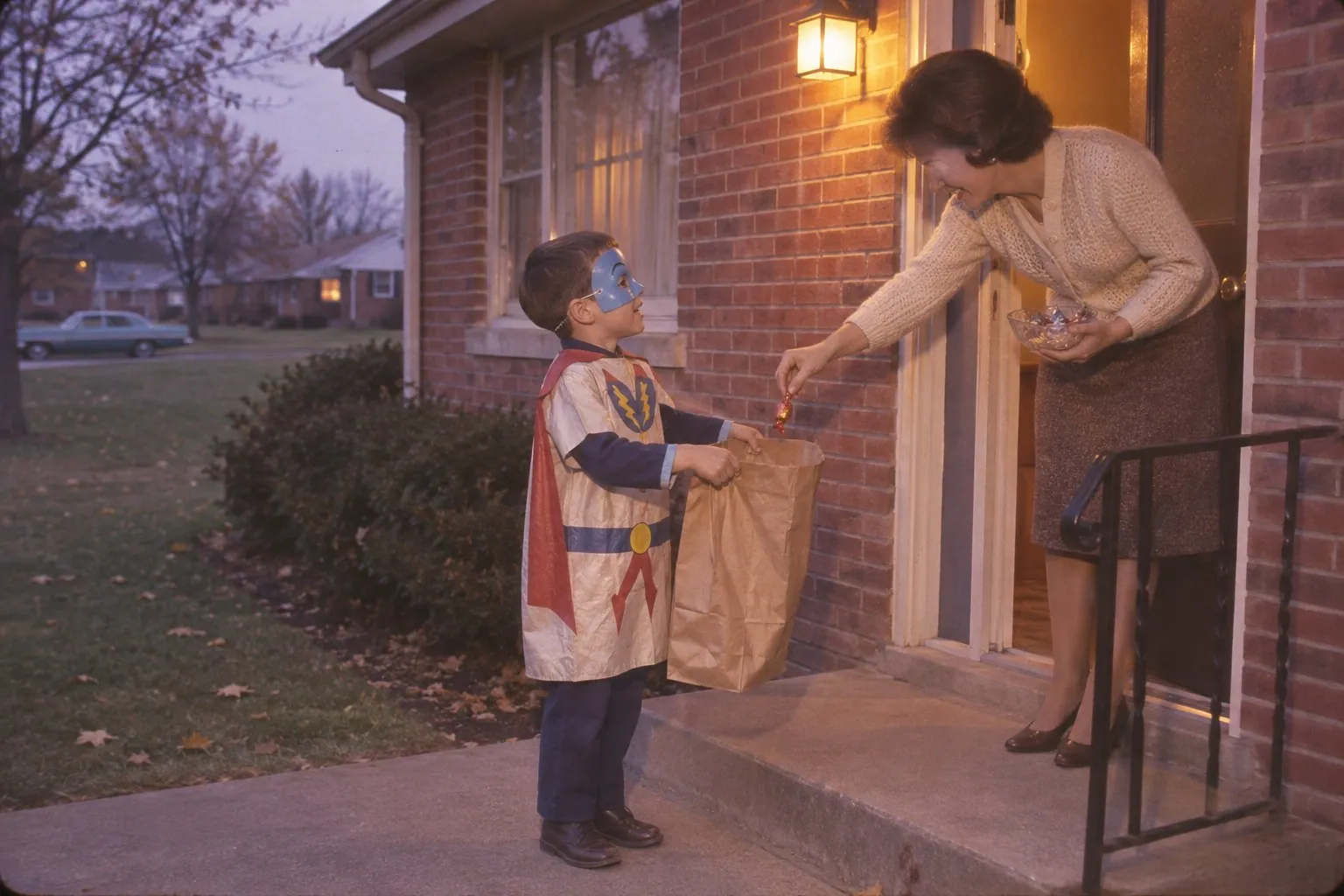
Ben Cooper was a Brooklyn company, founded in 1937, that made the cheap boxed Halloween costumes millions of American kids wore door to door. After years of shrinking sales in the 1980s it went through bankruptcy, moved south, and closed in the early 1990s. Ben Cooper costumes now sell mostly to collectors.
If you grew up between Eisenhower and Carter, you probably owned one. Remember the thin plastic face held on with a skinny elastic band? It went slick with your breath by the third house. The suit crackled when you walked, and you could read your character's name printed right across the chest.
This is the story of that company: where it came from, what made its costumes look the way they did, and what they sell for today.
How a Brooklyn shop took over Halloween
Ben Cooper started the business in Brooklyn in 1937. The Depression was still on, and Halloween was turning into a bigger holiday for families. The firm took its final name, Ben Cooper, Inc., when it was incorporated in 1942.
From the start, the company's edge was licensing. Other firms sold plain witches and skeletons. Ben Cooper paid to put famous characters in a box, so a kid could be a cartoon star or a TV hero for the price of a movie ticket and some popcorn.
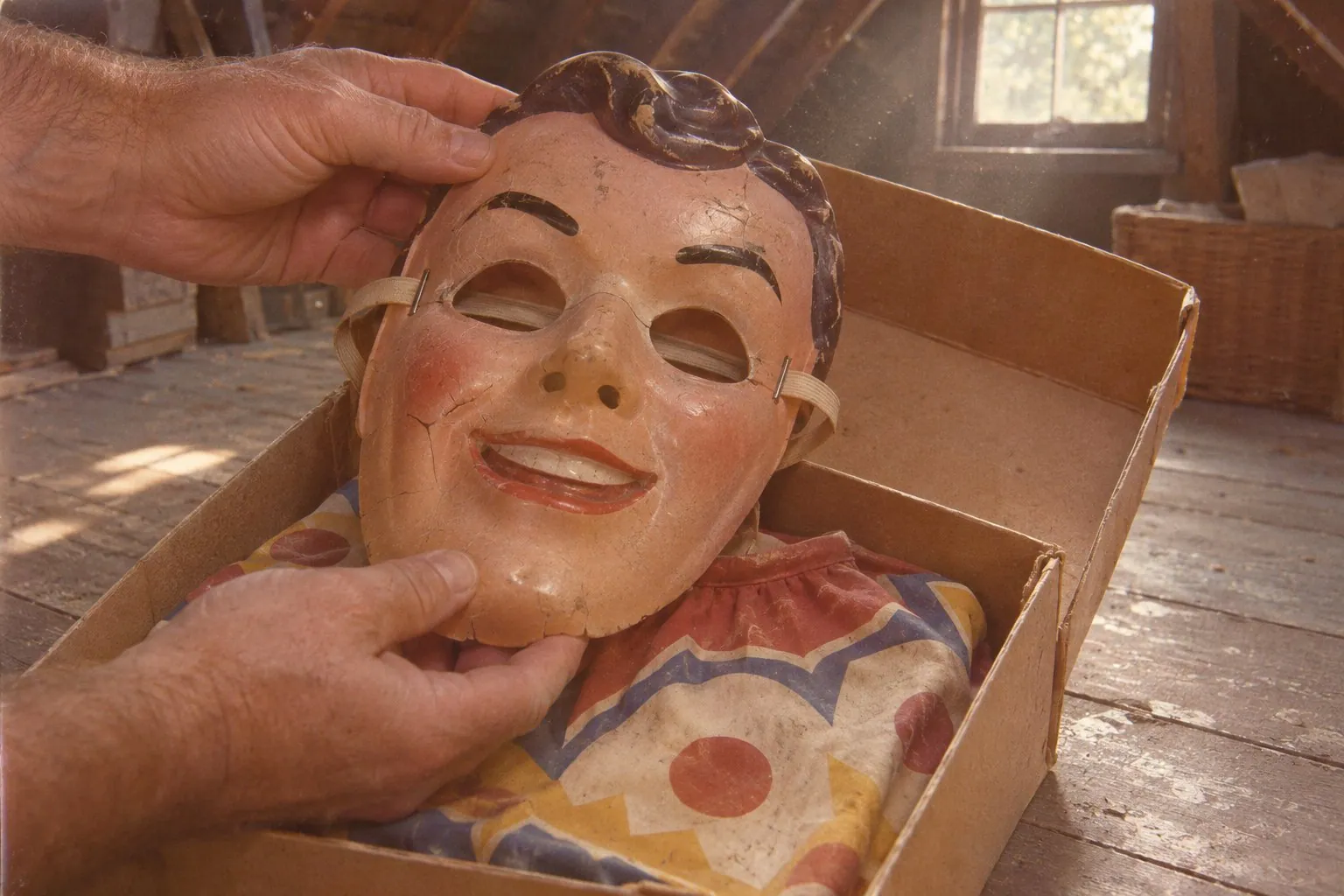
The costumes were built to be cheap. The mask was molded from thin plastic, with eye holes, a slot at the mouth, and two staples holding the elastic. The suit was a one-piece smock or jumpsuit of rayon or, later, vinyl-like material. It tied in the back and wasn't meant to last past November 1.
What one cost back then
Collector histories of the company put a typical boxed costume at about $1.25 around 1950. That's roughly $16 in today's money (1950 price × 13.0, U.S. Bureau of Labor Statistics CPI). Prices changed by store and year, but for most families it was an easy weekend buy.
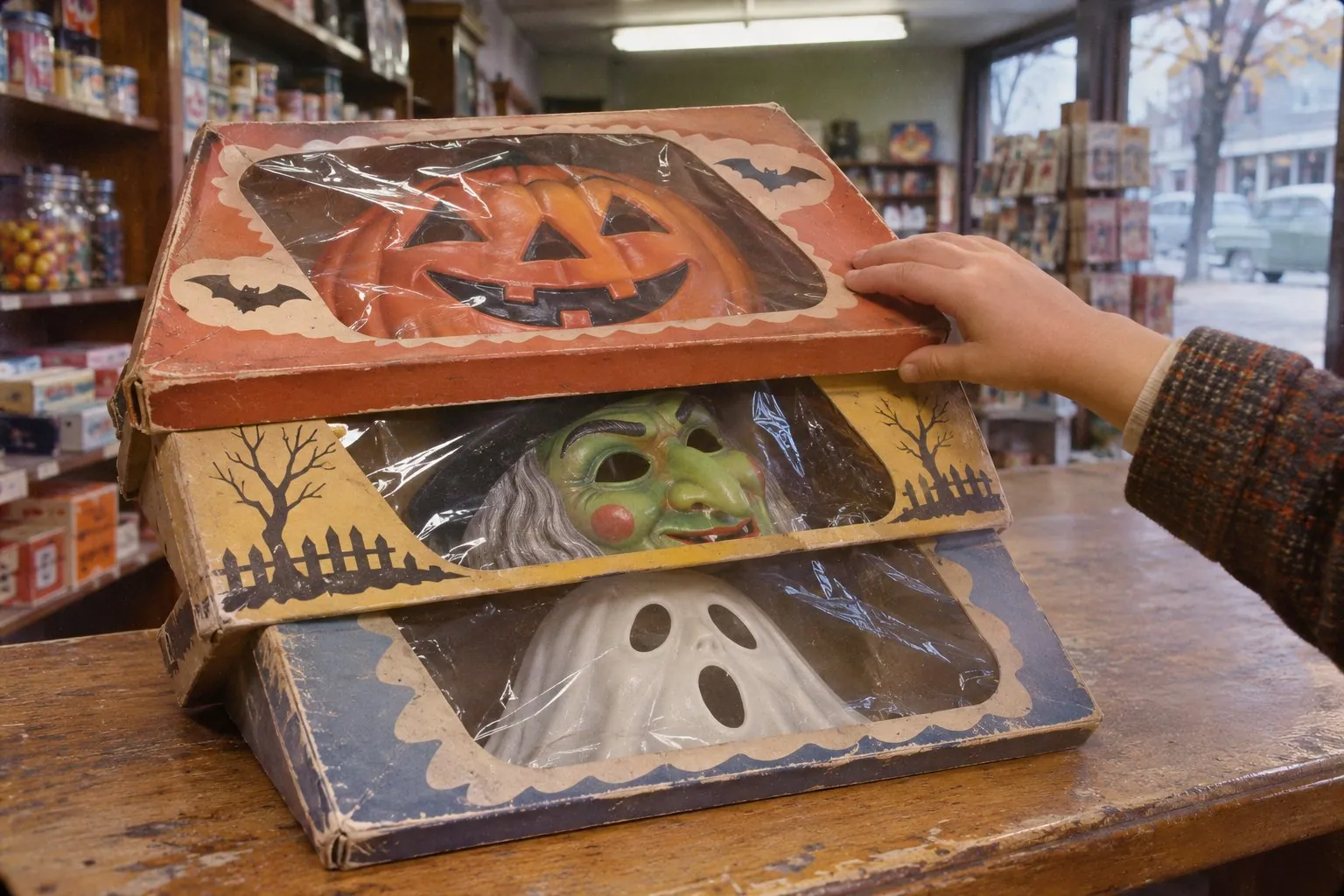
You likely found yours in a dime store or department store in October. The boxes were stacked high, each with a cellophane window showing the mask's face. Those boxes were half the fun of picking one.
Read more: Halloween Costumes of the '70s: What Kids Really Wore
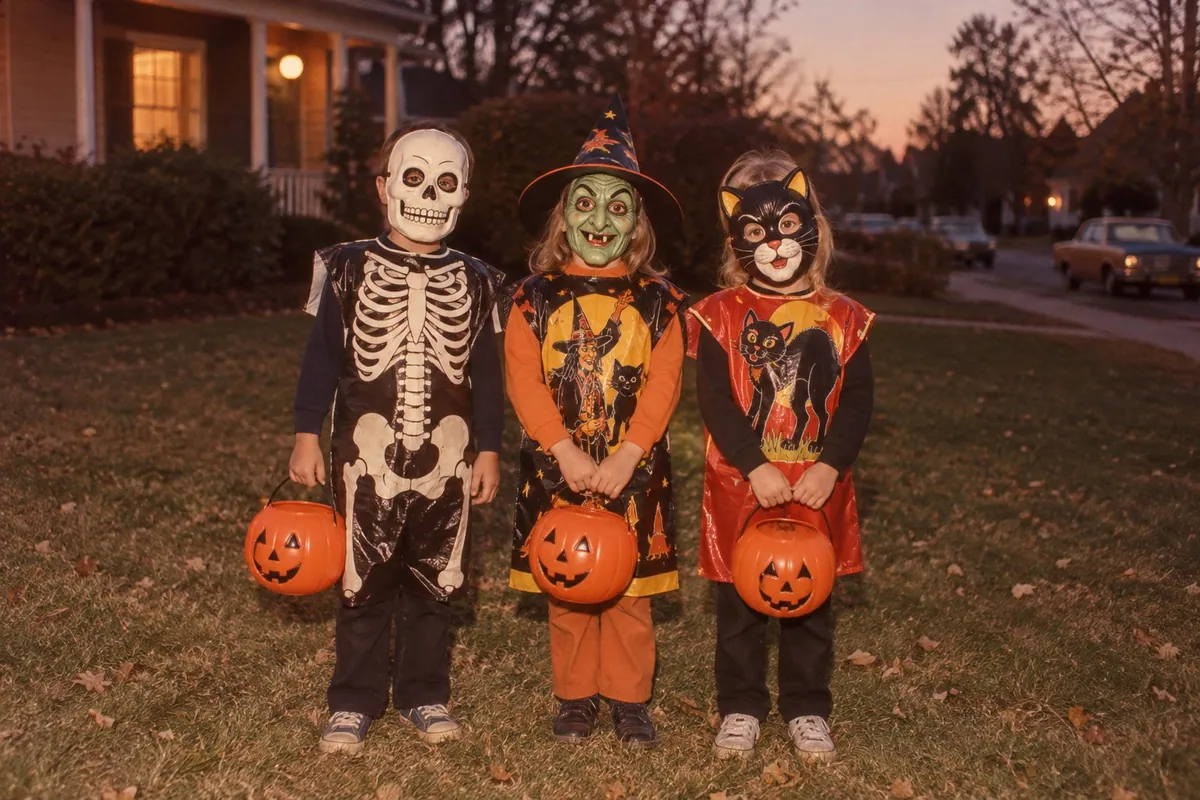
In the '60s and '70s, which company made boxed costumes with plastic masks?
Ben Cooper costumes in the 1960s and '70s
The 1960s were when the company's licensing really paid off. When the Batman TV series hit in 1966, caped crusaders turned up on porches all over the country, and Ben Cooper was there to sell them the outfit. Television characters, cartoon animals and comic-book heroes filled the shelves next to the old standbys: ghosts, devils, pirates and princesses.
Not everything came in a box. Plenty of kids still wore a bedsheet with eye holes or Dad's old hat and a burnt-cork beard. A store-bought Ben Cooper costume felt like the real thing, even when the mask cracked at the chin.
Ben Cooper had competitors. Collegeville, a Pennsylvania company, sold boxed costumes in the same style, and so did Halco in Pittsburgh. If your mask came with a smock, it could have come from any of them. Look at the box to be sure.
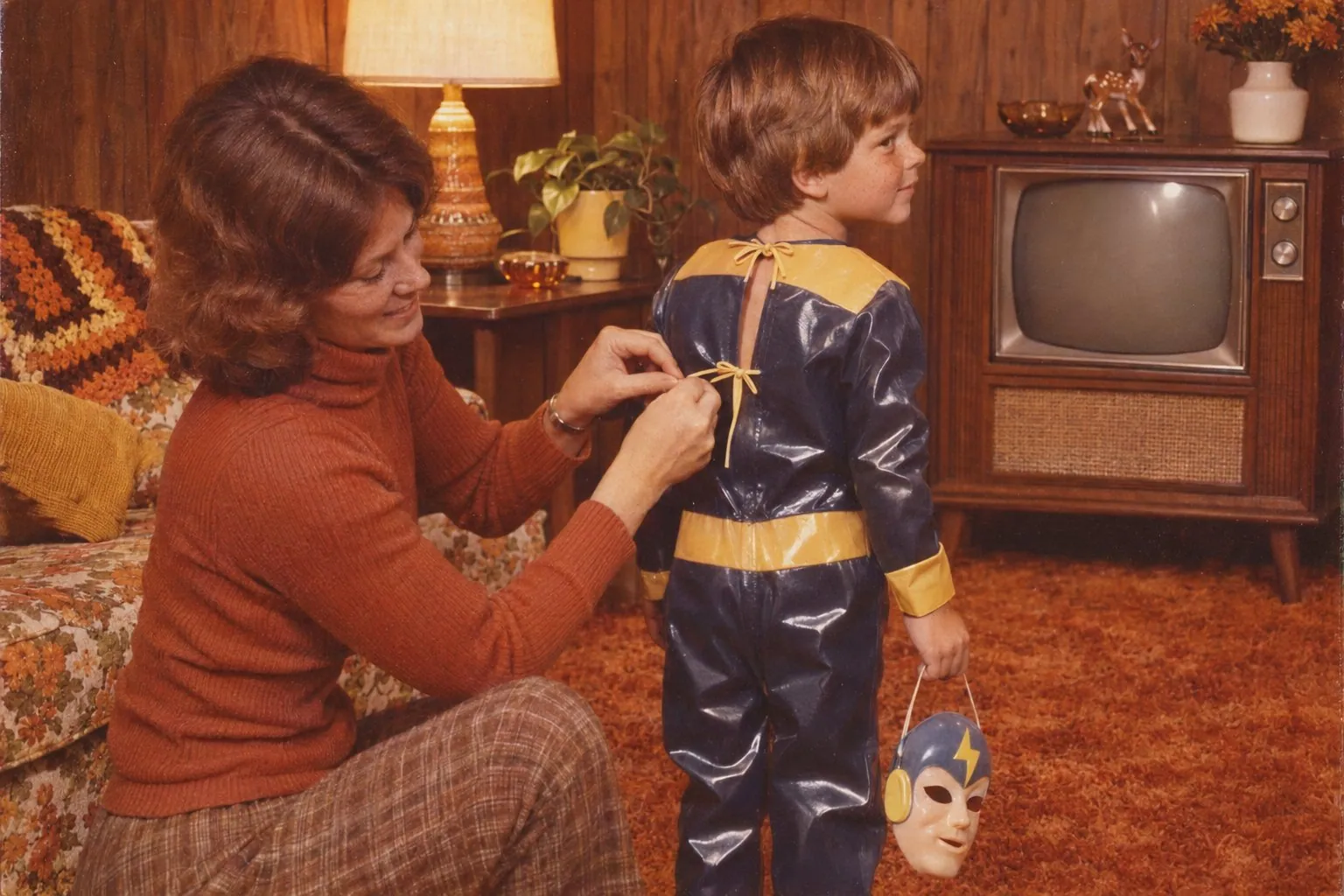
By the 1970s the lineup followed whatever kids were watching. After Star Wars opened in 1977, Ben Cooper put out Darth Vader, C-3PO and Stormtrooper masks, and they went fast. In 1979 Ben Cooper was still the largest Halloween costume company in the country.
The 1980s: the hits and the scare
The early 1980s looked good on paper. Licensed costumes from the Star Wars sequels and Saturday-morning cartoons kept the factories busy, and those boxed outfits are what many younger collectors remember.
Then came the fall of 1982. Seven people in the Chicago area died after taking Tylenol capsules that had been laced with cyanide. That October, many parents kept their kids home or sent them only to houses of people they knew. Fear about tampered treats cut into Halloween spending, and costume makers felt it.
The company recovered for a while later in the decade, but the business was changing. Cheaper imports kept arriving. Grown-ups were starting to spend money on their own costumes, and the flimsy smock-and-mask look started to seem dated. Ben Cooper went through bankruptcy and moved operations to Greensboro, North Carolina, in 1991. By 1992 the company that had dressed Halloween for half a century was gone. Its name ended up with another costume company.
How to tell if you have a real one
If a costume turns up in the attic or at an estate sale, a few signs point to a genuine Ben Cooper:
- The box. Ben Cooper costumes came in printed boxes with a cellophane window, with the company name on the box. Boxes were usually thrown away, which is why a surviving one matters so much.
- The copyright line. Licensed costumes usually carry a small printed notice for the character's owner, such as a studio or comics publisher, often with a year. That year helps date it.
- The mask. Look for thin, molded plastic, a stapled elastic band, and air holes at the nostrils and mouth.
- The suit. A printed one-piece smock or jumpsuit that ties in the back, often with the character's name or picture across the front.
- Fabric labels. Congress passed the Flammable Fabrics Act in 1953. Later costumes often carry a note about flame resistance.
What they're worth to collectors
Collectors don't have one set price. The biggest factors are the character, the box, and the condition. A complete costume in its original box, with the mask uncracked and the suit unworn, sells for far more than a loose mask. Characters with lasting fan bases, like Star Wars, superheroes and classic monsters, attract the most buyers.
If you're trying to put a number on one, check completed sales, not asking prices. Many listings never sell. Photographer Phyllis Galembo's 2002 book Dressed for Thrills: 100 Years of Halloween Costumes and Masquerade (Harry N. Abrams) is a good place to see how these mass-made costumes fit into the longer history of Halloween dress.
Plenty of people who wore them say the smell is what they remember most. Open an old box and you'll get a whiff of warm plastic and dime-store cardboard.
Frequently asked questions
What happened to Ben Cooper Halloween costumes?
The company had trouble through the 1980s as Halloween spending fell after the 1982 Tylenol poisonings and cheaper competition grew. It went through bankruptcy, moved to Greensboro, North Carolina, in 1991, and closed by 1992.
When did Ben Cooper start making costumes?
Ben Cooper started the business in Brooklyn, New York, in 1937. It was incorporated as Ben Cooper, Inc. in 1942.
How much did a Ben Cooper costume cost in the 1950s?
Collector histories put a typical boxed costume at about $1.25 around 1950. That's roughly $16 in today's money using the U.S. Bureau of Labor Statistics CPI. Prices varied by store and year.
Are Ben Cooper vintage costumes worth money?
Some are, especially complete costumes in the original box with popular licensed characters like Star Wars figures or superheroes. Loose, worn or cracked masks usually sell for much less. Check completed sales for real prices.
Were Collegeville and Ben Cooper the same company?
No. Collegeville was a separate Pennsylvania company that made boxed costumes in a similar style. Check the box or the printing on the costume to tell them apart.
Sources
- CPI Inflation Calculator and Consumer Price Index tables, U.S. Bureau of Labor Statistics, 2024
- Dressed for Thrills: 100 Years of Halloween Costumes and Masquerade, Phyllis Galembo, Harry N. Abrams, 2002
- Flammable Fabrics Act of 1953, U.S. Congress, 1953
Related Stories
Love a trip down memory lane?
Get a fun quiz every morning. Free · One email a day · Unsubscribe anytime