Halloween Costumes of the '70s: What Kids Really Wore
From Ben Cooper's crinkly vinyl smocks to a hobo in Dad's old coat, here's what your block looked like on Halloween night in the '70s.
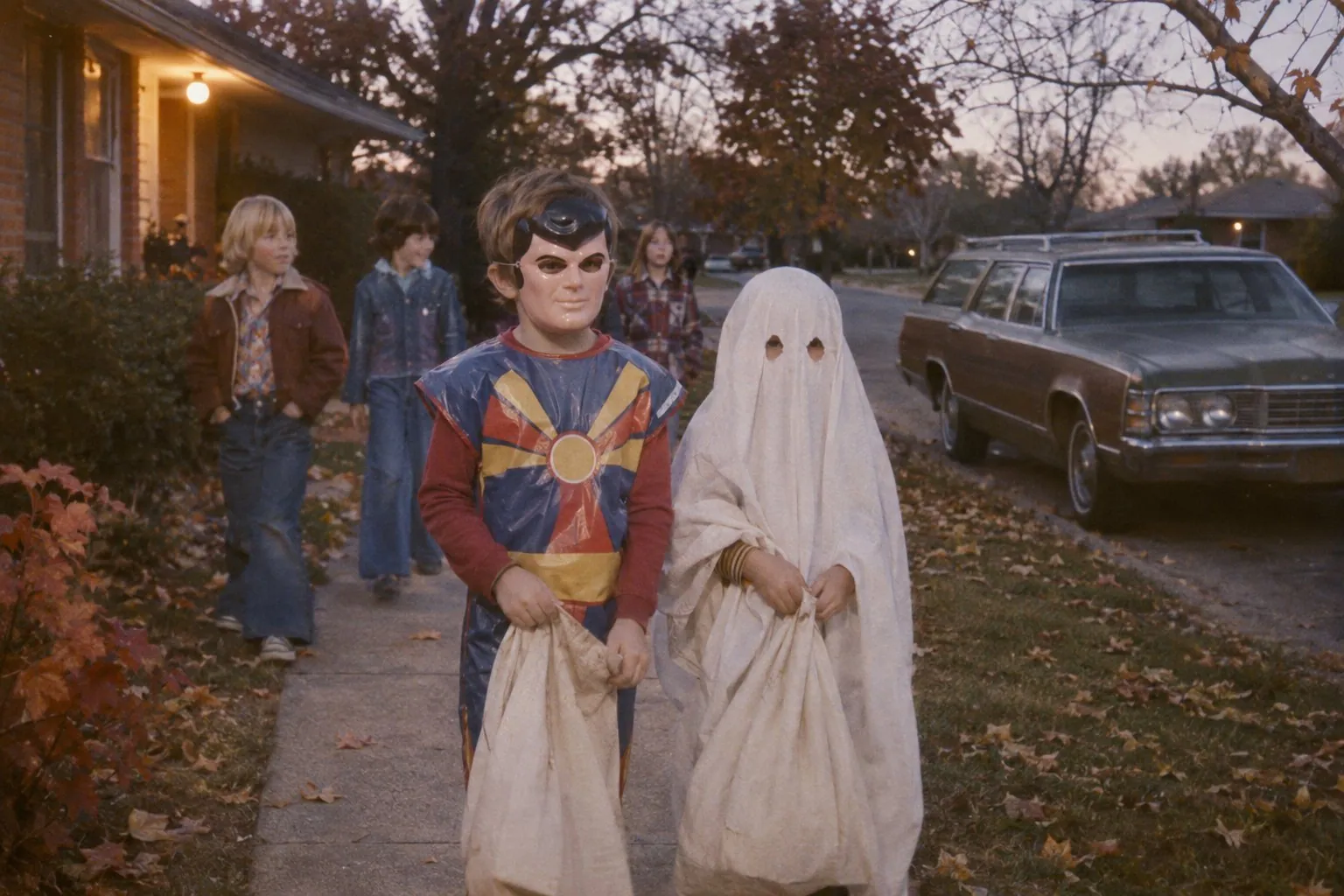
The most popular Halloween costumes of the '70s came boxed from the store: a thin plastic mask and a printed vinyl smock showing Batman, Superman, Spider-Man, a Planet of the Apes character, a devil or a witch. Next to those kids walked the homemade ones, like a ghost cut from an old bedsheet or a hobo in Dad's worn-out coat with a burnt-cork beard.
You probably remember both. Maybe you got the boxed Batman one year, and your little brother went out in the family's oldest sheet. This is a look back at those '70s Halloween costumes, what they cost, and why collectors want them now.
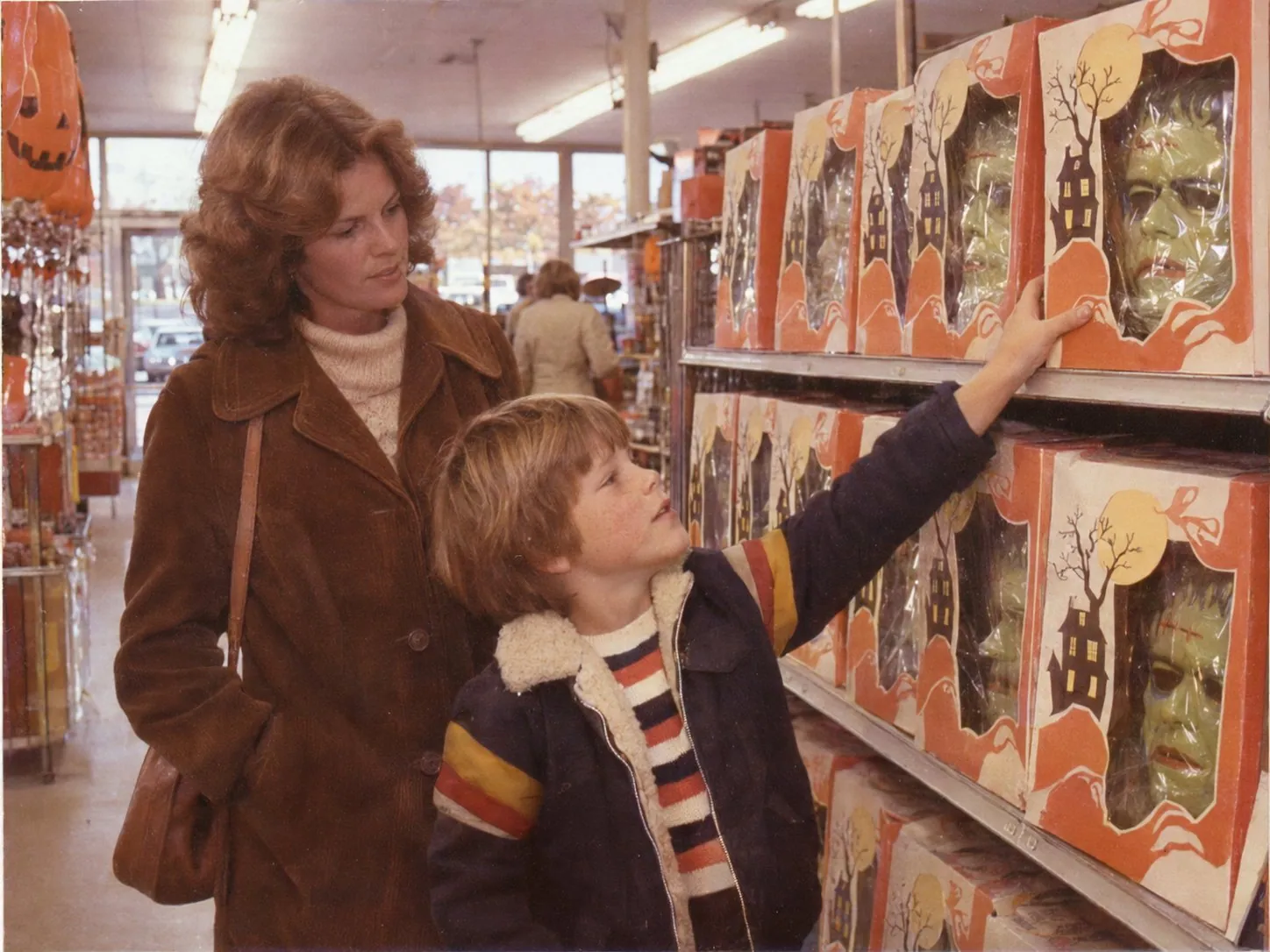
Who made all those boxed costumes
Two companies filled most store shelves. A 1974 newspaper report, reprinted by Click Americana, said Collegeville of Collegeville, Pennsylvania, and Ben Cooper Inc. of New York made most of the Halloween costumes sold that year.
Ben Cooper of Brooklyn
Ben Cooper used to make costumes for the stage. He started his Halloween company in Red Hook, Brooklyn, in 1937, the Bowery Boys New York history site reports. By the 1960s, the company had between 70 and 80 percent of the market, and by 1979 it was the largest Halloween costume company in the country, Slate reported.
Collegeville and Halco
Collegeville was the big rival. According to The Hustle, Ben Cooper and Collegeville competed for licenses to TV shows, comic books and movies instead of just turning out ghosts and witches. The same article says a third maker, Halco, sold its business and left Halloween long before the other two.
Read more: Ben Cooper Costumes: Who Dressed America's Trick-or-Treaters
The Halloween costumes of the '70s, one by one
This list isn't ranked, because there are no reliable sales figures for each costume. It mixes characters named in the 1974 newspaper report and in the companies' licenses with the homemade costumes most families put together themselves.
Superheroes
Batman and Superman were on the 1974 list from Click Americana. Spider-Man had been in the Ben Cooper line since 1963, according to a column on Ben Cooper costumes at HHJ Online. The cape was usually printed onto the smock, so it never flapped behind you the way it did on TV.
TV and movie characters
Ben Cooper added Planet of the Apes characters Caesar, Lisa and Warrior in 1974, along with Star Trek and Kung Fu, Click Americana's reprint shows. Slate notes that the company even made costumes for Welcome Back, Kotter and Laverne & Shirley, which weren't kids' shows. Collegeville's 1976 catalog sold a Jaws shark, The Hustle reported. Boxed Darth Vader costumes are printed with a 1977 copyright date, as this eBay listing shows.
Monsters, devils and witches
The old standbys never went away. Ben Cooper sold a Universal Frankenstein Monster in a box dated 1973, and the red devil with little plastic horns showed up somewhere in most neighborhoods.
The sheet ghost
This was the cheapest costume there was. Mom gave you a sheet she wouldn't miss, somebody cut two eye holes with the kitchen scissors, and you spent the night tripping on the hem and turning your head to see out.
The hobo
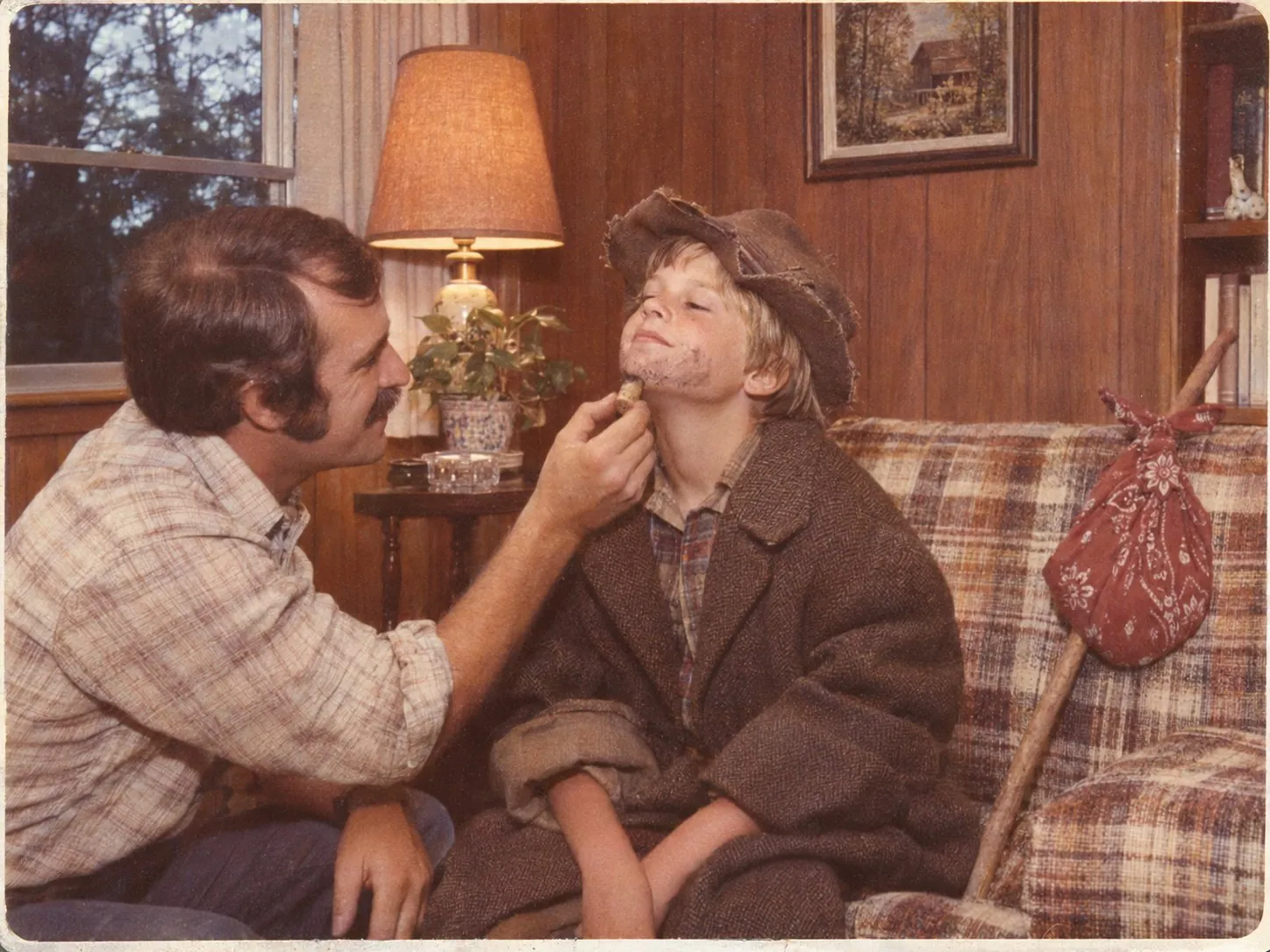
You put on Dad's old coat with the sleeves rolled up, added a hat that was too big, and tied a bandana to a stick for a bindle. A cork held over a match, or a smear of Mom's eyebrow pencil, gave you a beard. It cost nothing, and you could see where you were going.
1970s plastic Halloween costumes: what it was like to wear one
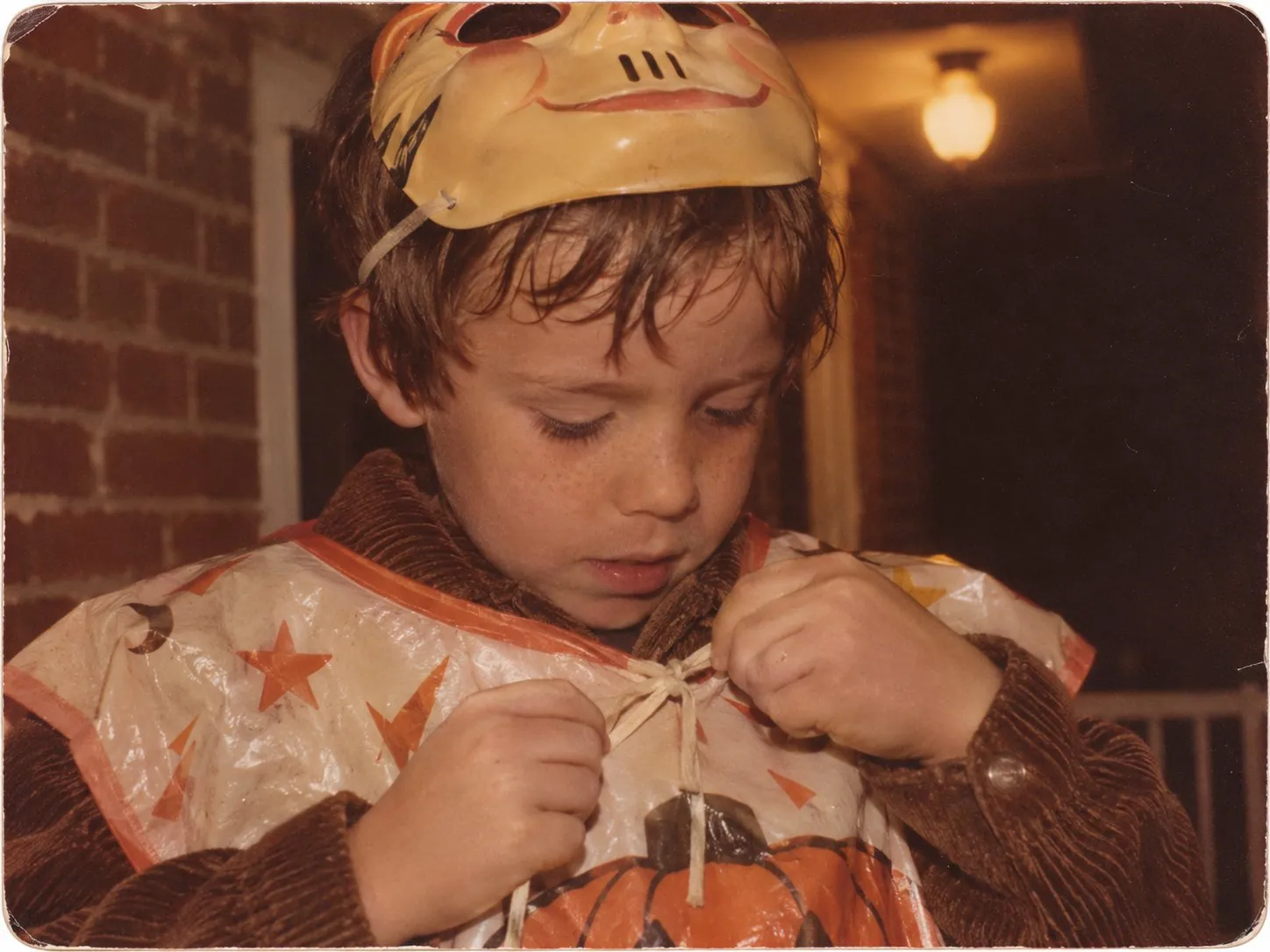
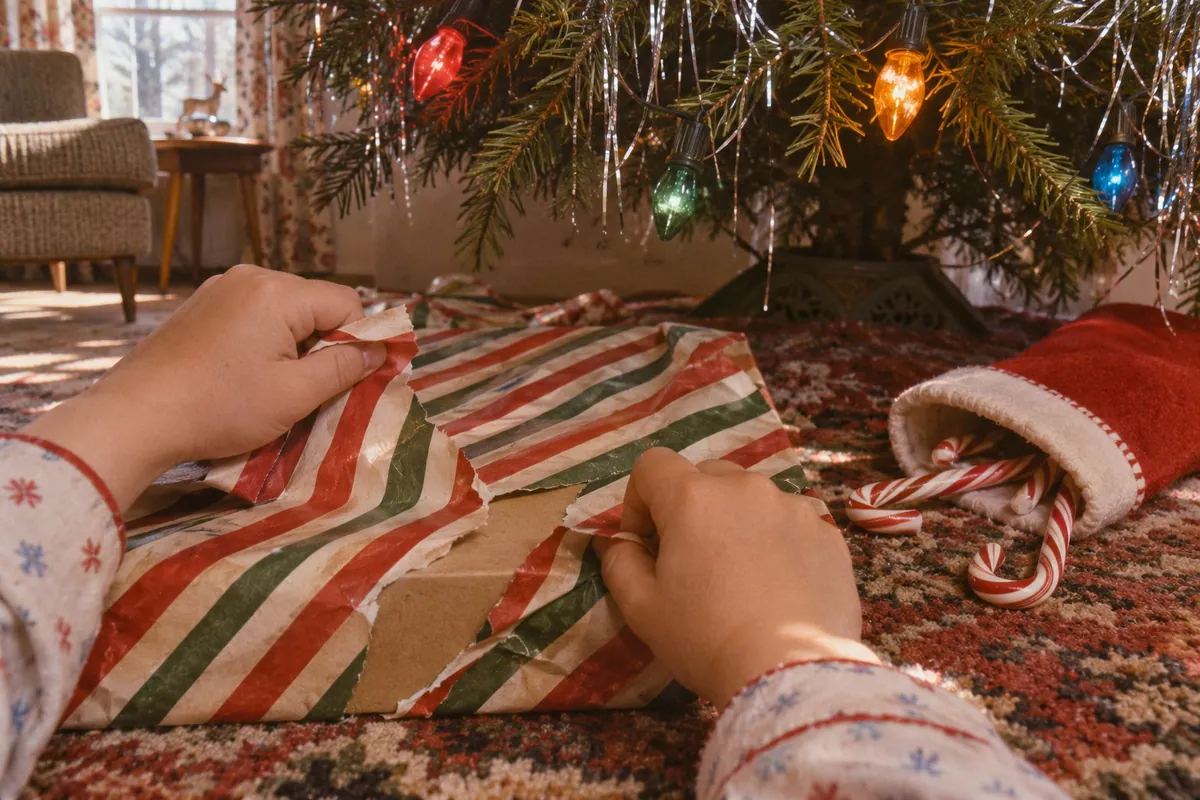
The Hustle describes the standard boxed costume as a plastic mask and a vinyl smock. The smock tied at the back of the neck and crinkled every time you moved. If you wore it over a winter coat, as many Northern kids had to, Superman looked a little lumpy.
The mask is what most people remember. It was held on by a thin elastic band stapled at the sides, and the band either pinched or snapped. Your breath made the inside damp within a block, and the eye holes never quite lined up with your eyes. The smell of a Ben Cooper mask is a vivid memory for a lot of people, RetroFan magazine said in an interview with the Cooper family reprinted by 13th Dimension.
New York historians Greg Young and Tom Meyers of the Bowery Boys put it well. Ben Cooper is fondly remembered, they wrote, "even if nobody will ever admit to being very comfortable wearing the nostalgic, plastic garb."
Candy bags, UNICEF boxes and dime-store extras
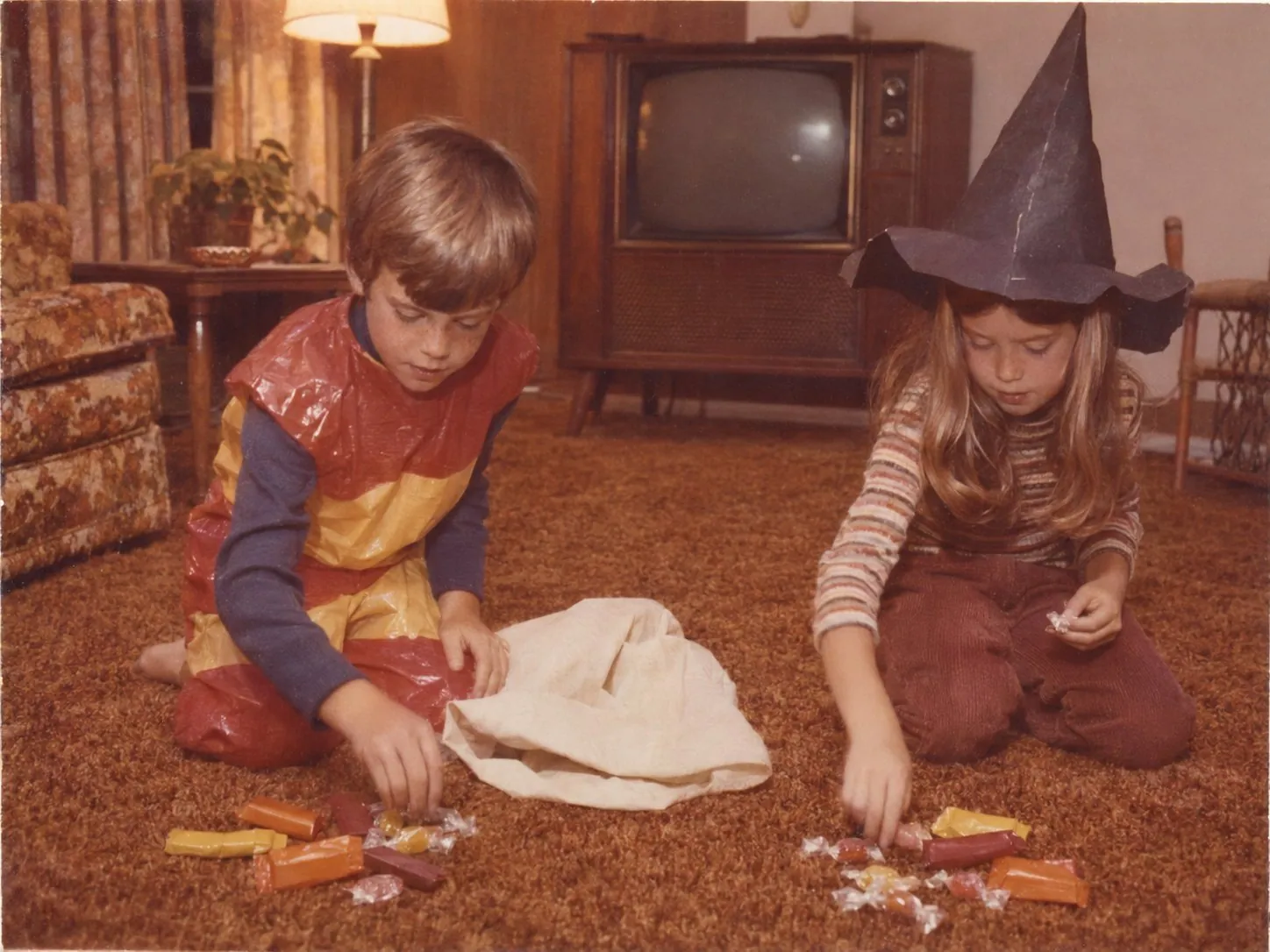
Your candy bag was usually a pillowcase, a grocery sack or a plastic pumpkin. Some kids also carried the small orange UNICEF box and came home with pennies rattling in it.
The dime store sold more than costumes in October. Next to the boxed costumes were cheap little novelties that were half costume and half candy, and kids grabbed them at the checkout for a few cents.
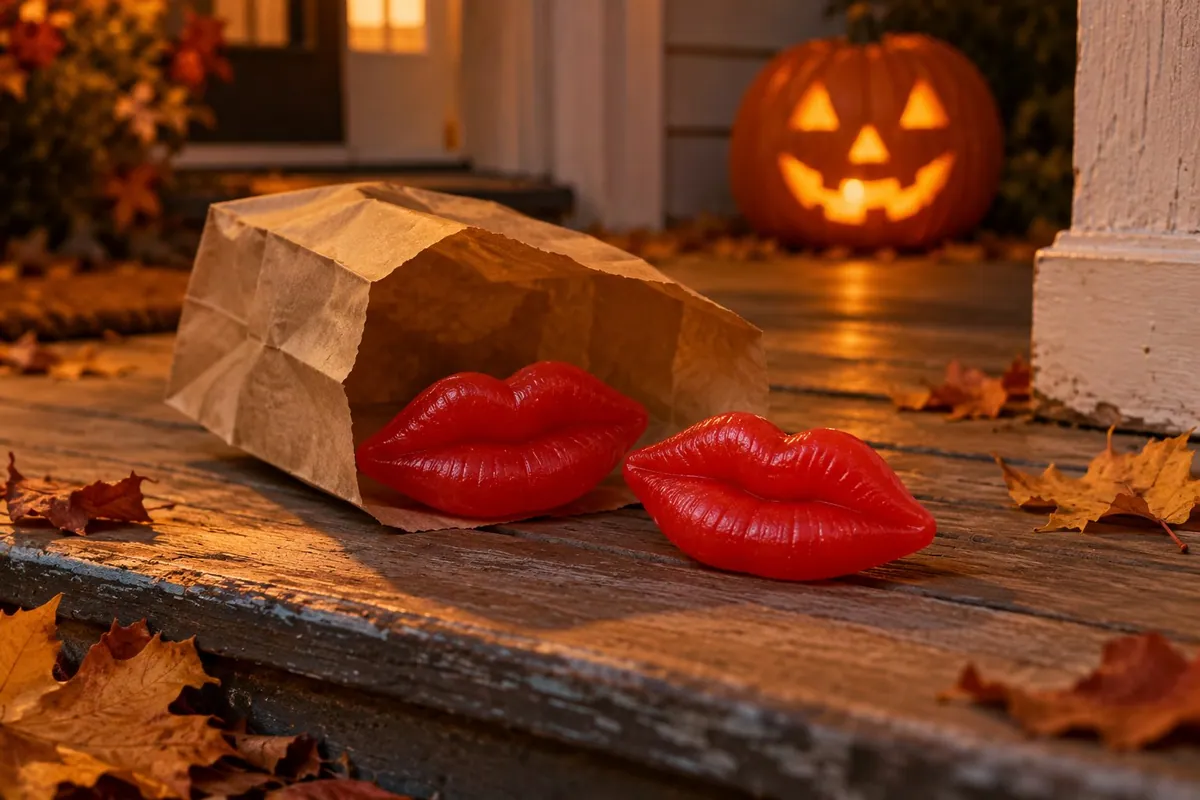
Kids wore these for a laugh, then chewed them like gum. What Halloween novelty is this?
How to tell a real '70s costume
People who search for vintage or retro Halloween costumes from the 1970s often turn up reproductions. An original usually has these signs:
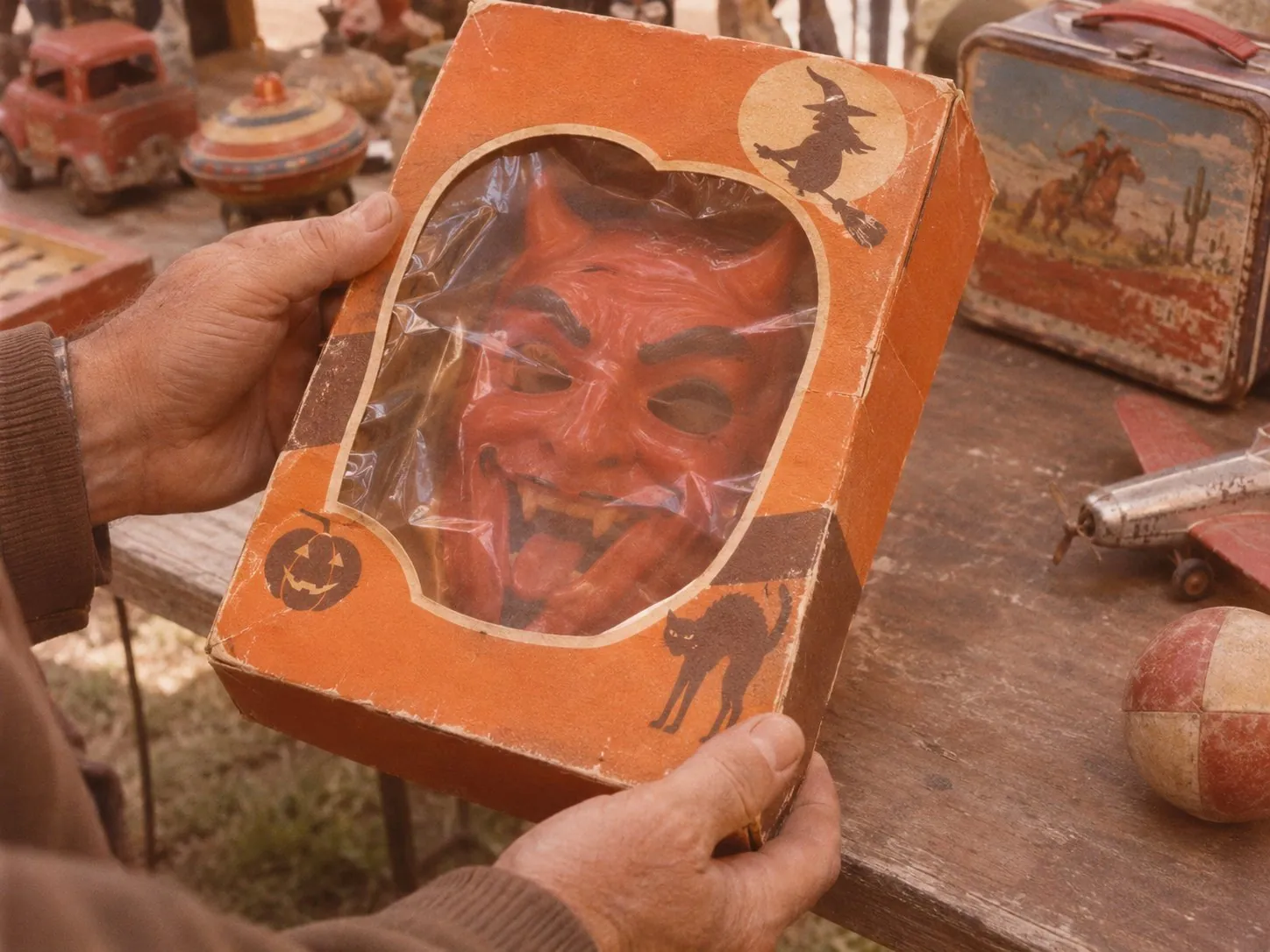
- The box. It's thin cardboard, often with a cutout window showing the mask. It's printed with the maker's name, a copyright year and a child's size such as Small 4-6, Medium 8-10 or Large 12-14.
- The mask. It's thin molded plastic with small breathing slits and an elastic band stapled at the sides. Many have a few cracks around the eyes or nose.
- The smock. It's thin vinyl or fabric with the character printed on the front, often with the name in big letters, and ties at the neck.
- Reissues. Rubie's took over the Ben Cooper name after 1991 and has sold new "Ben Cooper" masks, so look for the old copyright date on the box and the mask.
What they cost then and what they're worth now
The costumes were cheap. The HHJ Online column says many cost about $1.25 in the '60s, roughly $11 to $13 in today's money. In the '70s, prices varied by store and by year, and a costume at the dime store usually cost less than the same one at a department store.
Today, the same HHJ Online column puts most of them at $50 to $150, depending on the character. A complete costume in the original box sells for more than a loose mask. Monster costumes from the early '70s and rare TV tie-ins are often listed at the high end or above it. A cracked mask or missing smock brings the value down quickly.
Frequently asked questions
What Halloween costumes were popular in the 1970s?
Boxed costumes of Batman, Superman, Spider-Man, Star Trek characters, Planet of the Apes characters, monsters, devils and witches sold well, mostly from Ben Cooper and Collegeville. Homemade sheet ghosts, hobos, pirates and cowboys were just as common.
Who made the plastic Halloween costumes in the '70s?
Most were made by Ben Cooper of Brooklyn and Collegeville of Pennsylvania, according to a 1974 newspaper report reprinted by Click Americana. Halco was an earlier competitor that left the business before them.
How much is a vintage 1970s Ben Cooper costume worth?
The HHJ Online column puts most of them at $50 to $150, depending on the character. A complete costume in its original box is worth more than a loose mask.
What are easy 1970s Halloween costume ideas?
The homemade standbys are still the easiest. Try a sheet ghost, a hobo in an oversized coat with a bindle, or a pirate with a bandana and an eye patch.
Are Ben Cooper costumes still made?
The original company went bankrupt and became part of Rubie's in 1991, the Bowery Boys report. Rubie's has sold reissues under the Ben Cooper name, so check the copyright date before you assume a costume is old.
Sources
- How Ben Cooper Changed Halloween Forever, Slate, 2013
- The Plastic Faces of Ben Cooper, Brooklyn King of Masks, The Bowery Boys: New York City History, 2010
- Vintage Halloween masks & costumes at the drugstore in the 60s & 70s, Click Americana, reprinting a 1974 newspaper report
- The families that made Halloween costumes a big business, The Hustle
- Behind the Halloween Mask: The Groovy History of Ben Cooper, 13th Dimension, reprinting RetroFan magazine
- Ben Cooper costumes, HHJ Online
Related Stories
Love a trip down memory lane?
Get a fun quiz every morning. Free · One email a day · Unsubscribe anytime