70's Christmas Ornaments: Glass, Satin and the First Hallmarks
The shiny balls, the thread-wrapped satin ones and the 1973 yarn Santas. These are the ornaments that hung on your tree.
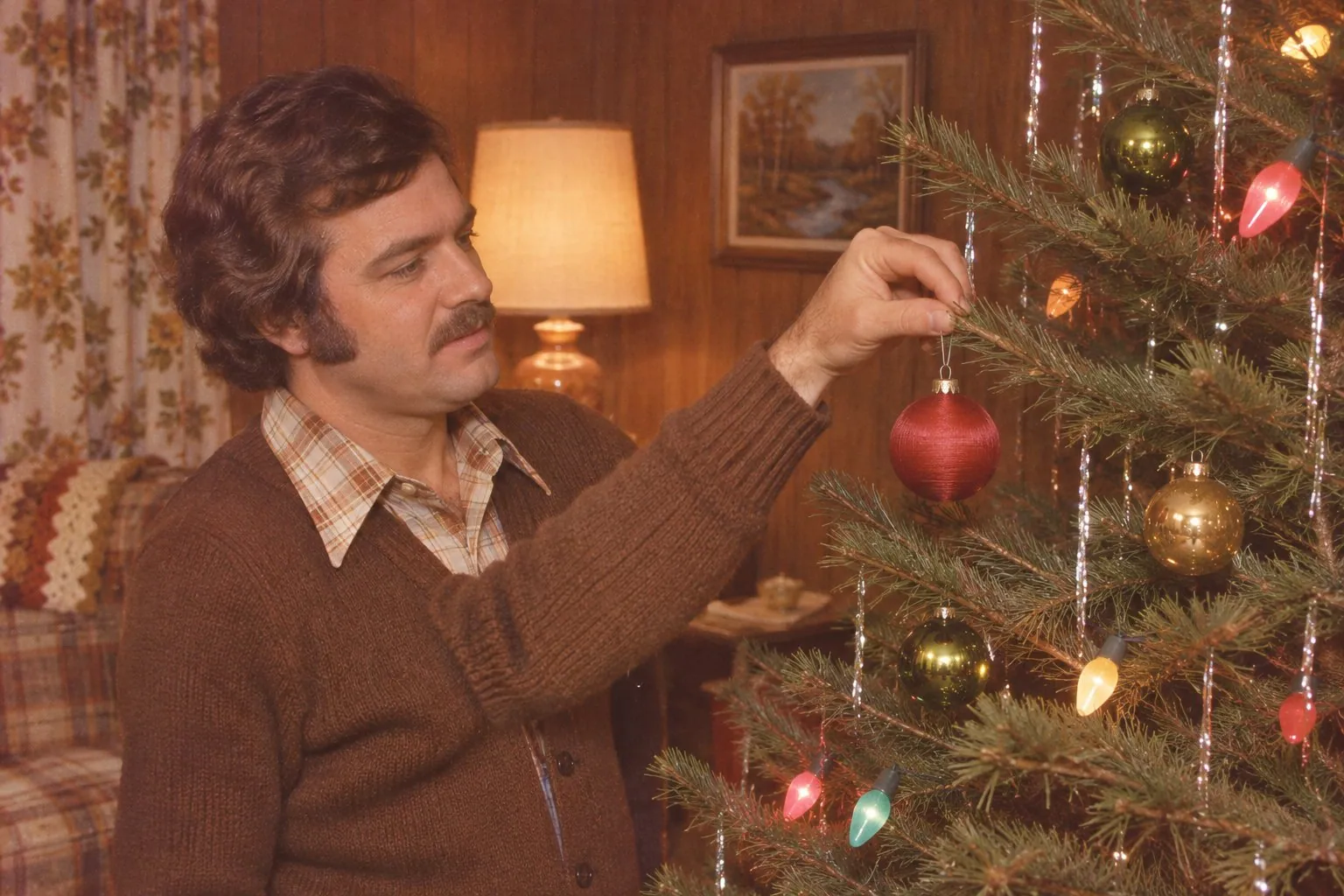
What Christmas ornaments were popular in the 1970s? Most American trees had colored glass baubles, satin thread-wrapped balls, homemade felt and bead pieces, and, after 1973, the first Hallmark Keepsake ornaments. Those were the 70's Christmas ornaments most families hung, usually alongside a few older glass ones handed down from the '50s.
You probably remember the box under the stairs or up in the attic. The cardboard dividers were soft from years of use, and a few balls always came out broken. Somebody got the job of sweeping up the glass.
Below is a rundown by type. It isn't a ranking. We grouped the ornaments by what they were made of and roughly when they showed up on American trees during the decade.
The glass baubles that came out first
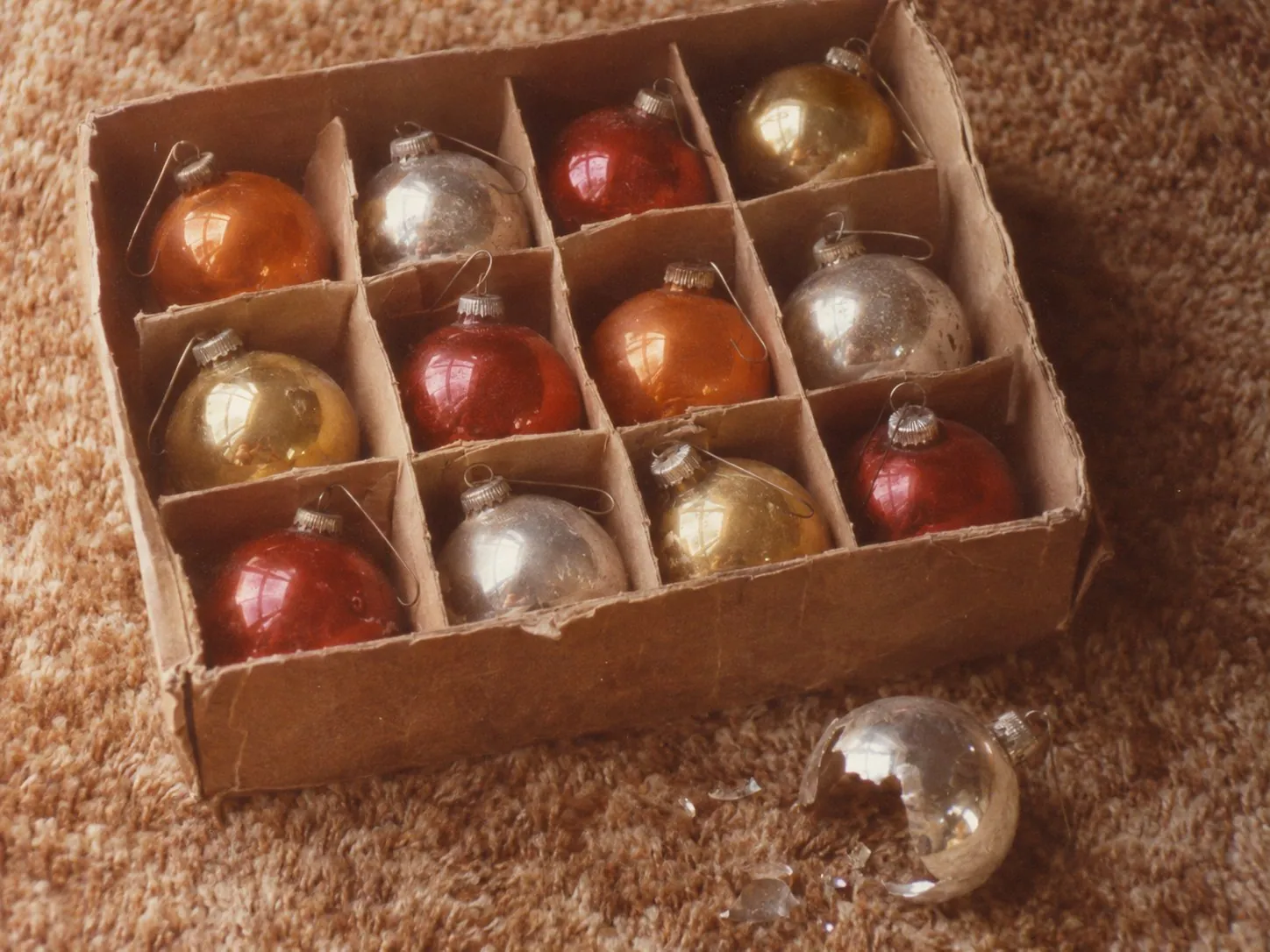
Glass balls were the old guard. A lot of families in the '70s were still hanging Shiny-Brite balls from the '40s and '50s, with their worn stripes and little metal caps stamped "Made in U.S.A."
New glass came in thin cardboard boxes of a dozen from Woolworth's, Kresge, W.T. Grant and the grocery store. The colors were the ones you'd see on a kitchen appliance of the time: avocado green, harvest gold, burnt orange, plus the usual red, silver and blue.
Why so many of them broke
The 1970s glass ornaments were very thin. If one rolled off a branch onto a hardwood floor, it popped and left a mess of silver flakes. The wire hooks didn't help, because they bent, slipped, and let a ball drop at the worst moment.
The ones that lasted are now sold as vintage Christmas ornaments from the 1970s. Collectors look for the original boxes most of all, since a clean box with the store's price sticker can matter more than the balls inside it.
Read more: Ben Cooper Costumes: Who Dressed America's Trick-or-Treaters
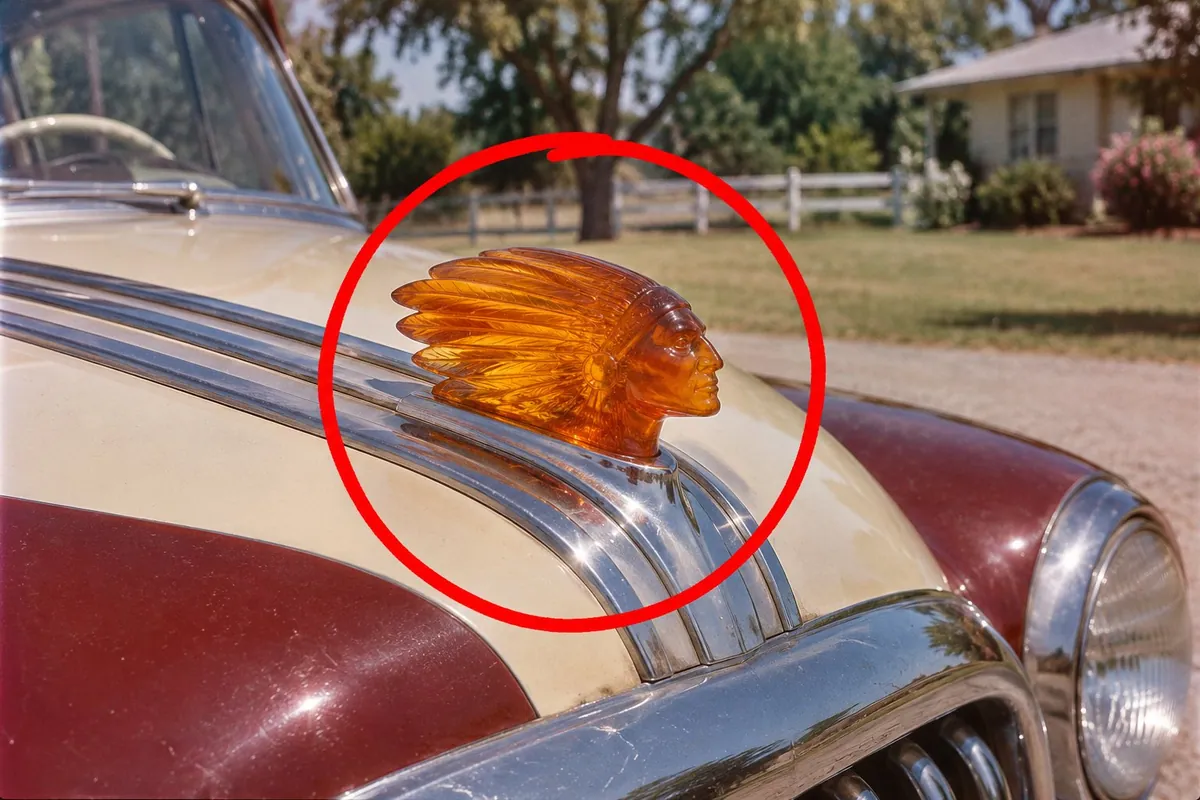
What did THIS hood ornament on a 1950s Pontiac do when the headlights came on?
Satin balls and the thread that came loose
If your mother had a tree in the '70s, she probably had satin balls. They were made by winding shiny rayon or cotton thread around a foam or paper core, and they came in bright pinks, blues, golds and reds.
They had one big selling point: they didn't break. A cat could knock one off, a toddler could throw one, and it still went back on the tree. That made them the safe choice for the bottom branches.
You may also remember what happened over time. The thread snagged on a branch and unwound, and a ball that had been sitting near a hot C7 bulb faded on one side. People kept them anyway. Plenty of readers still have a few with a loose strand, and they turn the bad side toward the wall.
The sequin-and-pin kind
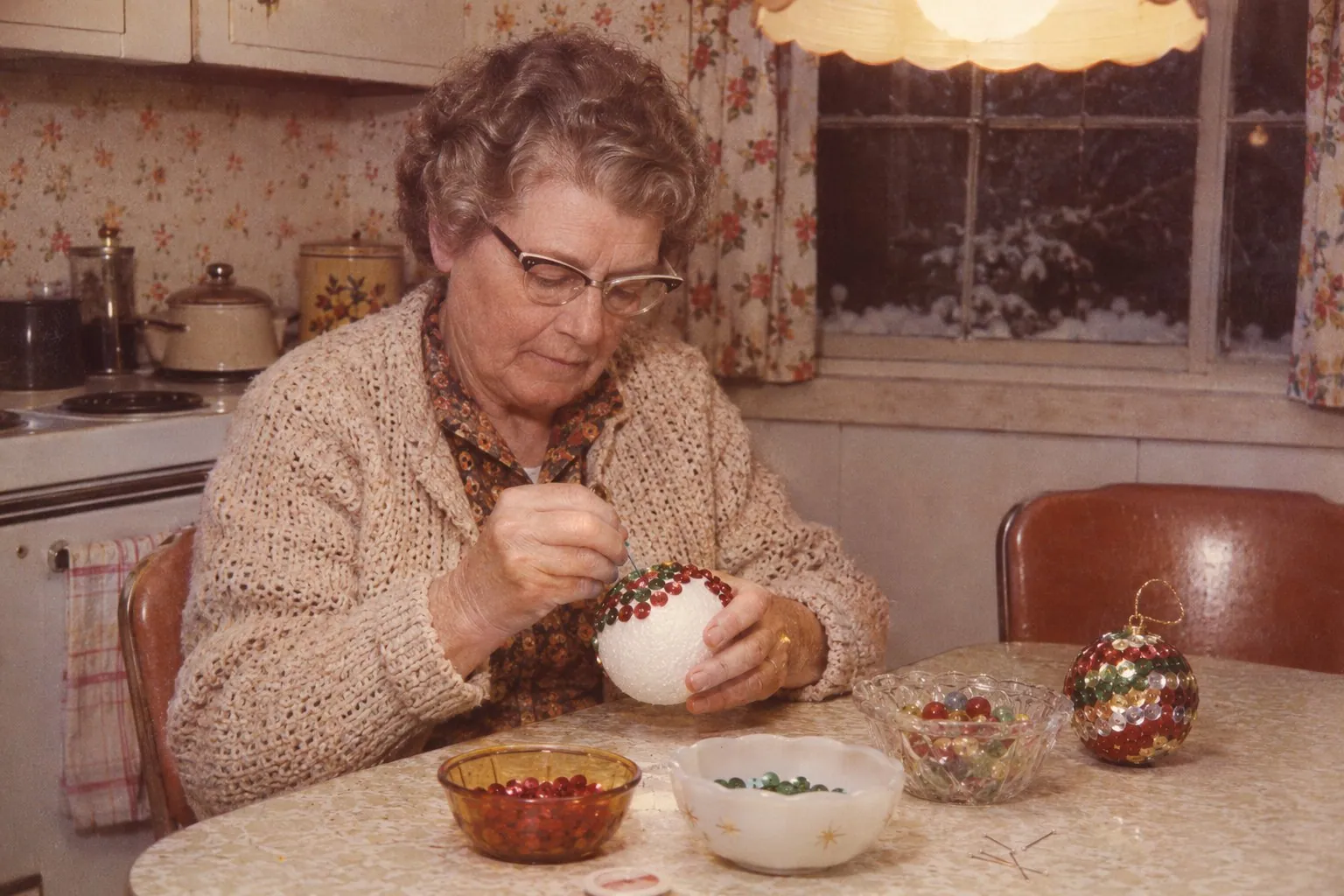
There was also the homemade version. You took a foam ball, a box of straight pins, a bag of sequins and beads, and spent a winter evening pushing them in one at a time. Craft stores and dime stores sold kits for it, and a lot of grandmothers made a full set for every child in the family.
These 1970s Christmas baubles were heavy. They pulled branches down, so they usually went on the sturdy limbs near the trunk.
Felt, yarn and the things you made at the kitchen table
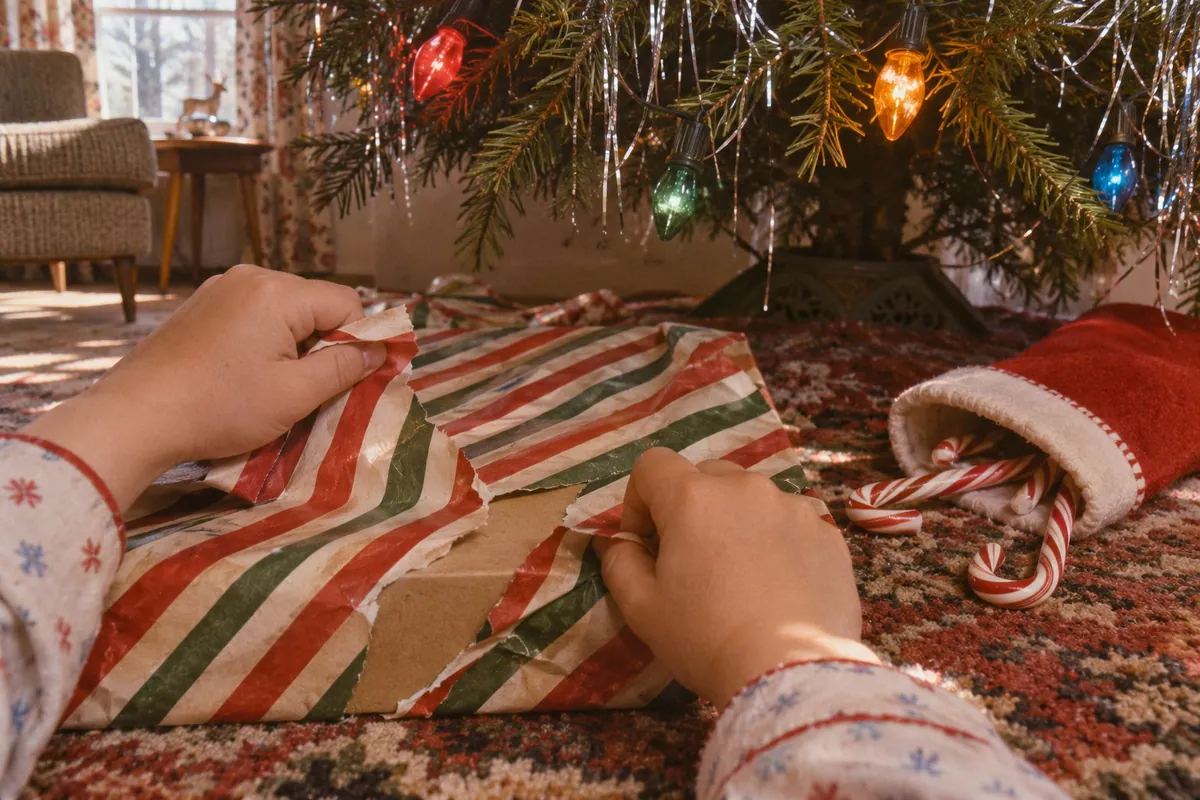
The '70s were a big decade for crafts, and that showed on the tree. Families made felt Santas with glued-on cotton beards, clothespin reindeer, and God's eyes made by wrapping yarn around two popsicle sticks.
Schools added to the pile. Kids came home with paper chains, macaroni stars sprayed gold, and handprints pressed into baked salt dough. Lots of parents still hang one of those, even though it's crumbling at the edges.
Other 1970s Christmas tree decorations filled in the space between ornaments:
- Tinsel icicles in long silver strands. The heavy lead-foil kind was dropped in the early '70s over health worries and replaced by lighter plastic tinsel that clung to your sweater.
- Glass garland and shiny plastic bead strings looped from branch to branch.
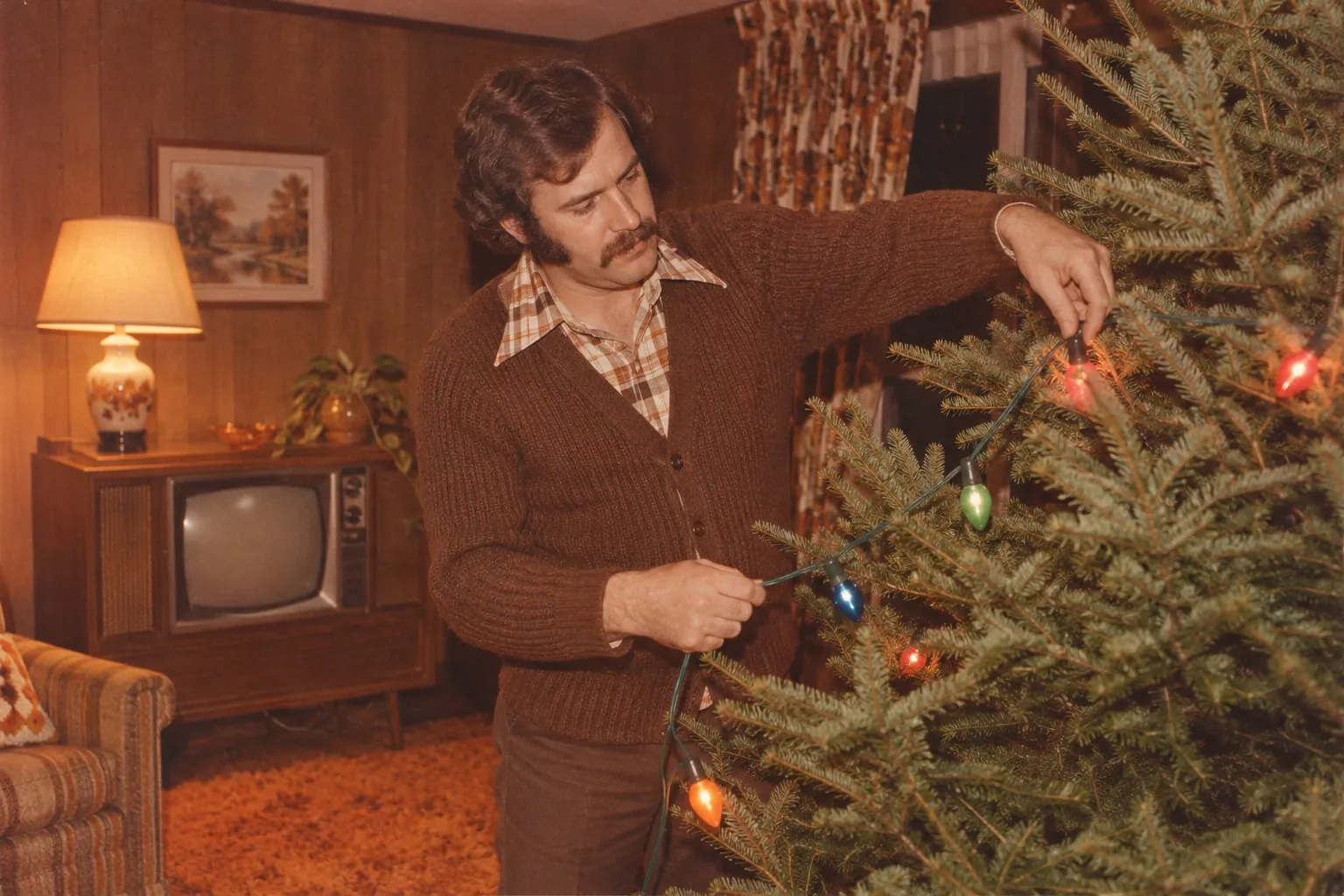
- C7 and C9 bulbs, the big ones that got hot, with the newer mini "fairy" lights starting to show up as the decade went on.
- Ceramic trees with little plastic bulbs, often made in a ceramics class. Strictly speaking these weren't tree decorations, but they sat on plenty of end tables.
The first Hallmark ornaments of 1973
This is the part collectors talk about most. In 1973 Hallmark, the Kansas City greeting card company, tried selling ornaments of its own. Its company history counts 18 in that first line: 6 glass balls and 12 small figures made of yarn.
The yarn ornaments were soft little characters with felt faces. The set included Mr. and Mrs. Santa, Mr. and Mrs. Snowman, an angel, an elf, a soldier, and a few choir children and carolers. Each one had a loop of yarn for hanging. Because they couldn't shatter, they ended up on a lot of children's trees.
The Little Red Riding Hood ornament
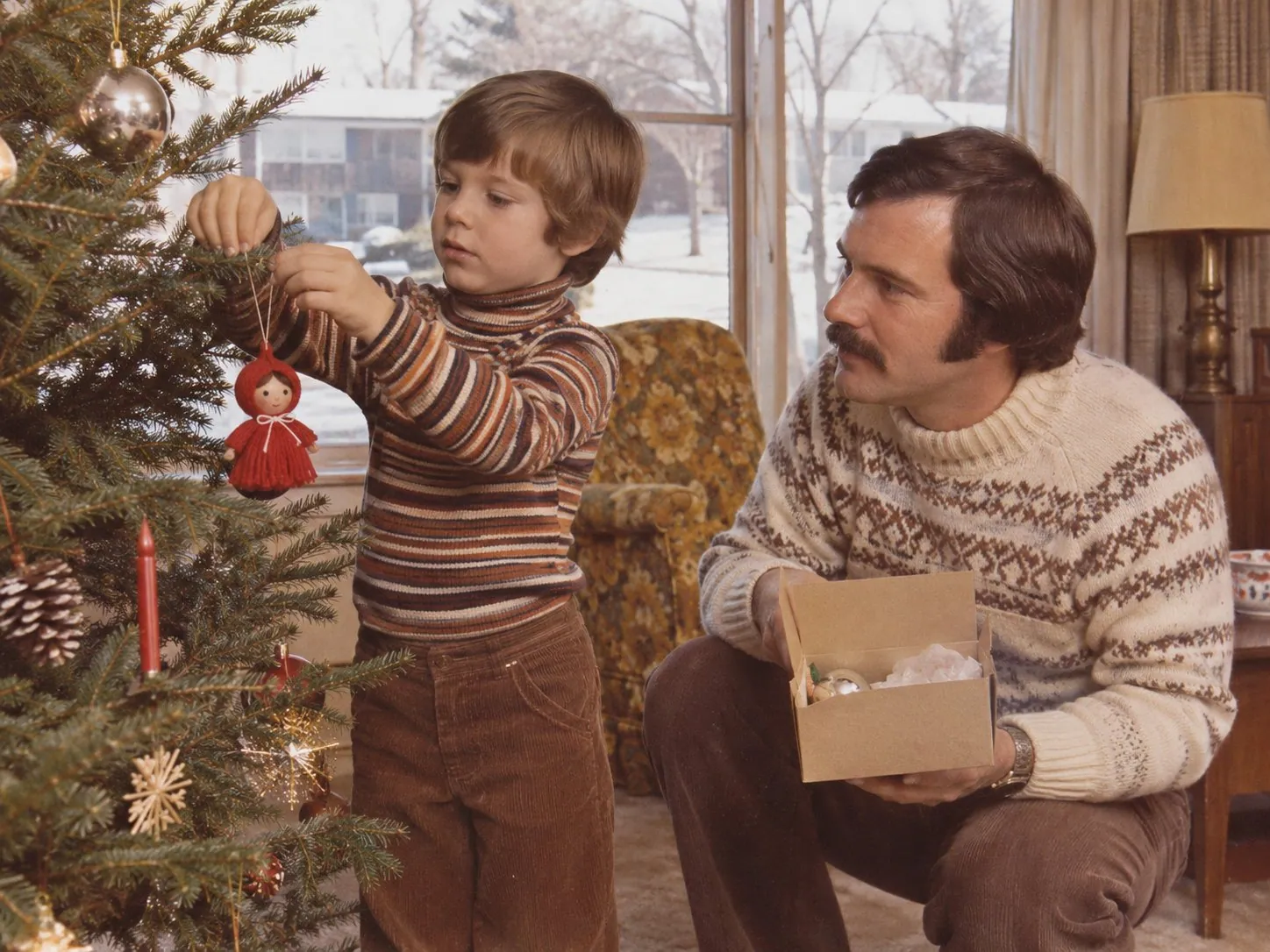
The Hallmark Little Red Riding Hood ornament is one of those 1973 yarn figures. She has a red hood and cape, yarn hair and a tiny basket. You'll often see her listed with the 1973 Hallmark ornaments in collector price guides, such as the guides on Hallmark ornaments written by collector and author Clara Johnson Scroggins.
The yarn ones turn up at estate sales more often than you'd guess, because nobody threw them out. They did get dusty and squashed, though. If yours still has a full, rounded body and both felt eyes, it held up better than most.
The glass balls with pictures on them
The six glass balls of 1973 were printed with artwork, which was new for a tree ornament. The best known shows Betsey Clark's wide-eyed children. That ball started a Betsey Clark series that Hallmark kept going for years.
Most of these balls had the year printed on them, and that's how families started treating ornaments as keepsakes. A dated ball tells you which Christmas it came from.
How the Hallmark line grew through the decade
After 1973, Hallmark brought out new designs every fall. The 1976 line included the company's first "Baby's First Christmas" ornament. For a lot of families that's when the tradition began of giving each child an ornament every year.
The line soon added satin balls with printed designs, small figures and more series. Families began buying one each fall and writing the name and year on the box.
These Hallmark ornaments from the 1970s are why so many people today own a box of dated pieces from every year of their childhood. If your parents kept that habit, you can probably still line them up in order.
The ones you still have
Ask around and you'll find most people kept just a handful. Maybe it's a faded satin ball, one yarn Mrs. Santa, a glass ball with "1974" on it, or a felt star your sister made in second grade.
They aren't worth much money. Ordinary 1970s satin and glass balls usually sell for a few dollars, and only the early Hallmark pieces in clean boxes get serious attention from collectors. But you can't put a price on the one you hung yourself every December from the time you were tall enough to reach the tree.
If you're packing them up this year, wrap the glass ones in tissue rather than newspaper, because newsprint ink can rub off on them. Keep the yarn ones in a box of their own so nothing heavy flattens them.
Frequently asked questions
What Christmas ornaments were popular in the 1970s?
Colored glass balls, satin thread-wrapped balls, homemade felt and sequin ornaments, and tinsel were on most trees. Starting in 1973, Hallmark's Keepsake ornaments joined them, first as yarn figures and printed glass balls.
When did Hallmark start making Christmas ornaments?
Hallmark brought out its first Keepsake Ornaments in 1973. Its company history counts 18 in that first line: 6 glass balls and 12 yarn figures.
Is the Hallmark Little Red Riding Hood ornament from 1973?
Yes. Little Red Riding Hood was one of the 12 yarn ornaments in Hallmark's first Keepsake line in 1973. She wears a red hood and carries a small basket.
Are vintage Christmas ornaments from the 1970s worth anything?
Most ordinary 1970s glass and satin balls sell for very little. The early Hallmark pieces, especially from 1973 and in their original boxes, interest collectors most, but condition matters a great deal.
Why did satin ornaments come unraveled?
They were made by winding thread around a foam or paper core. Over the years the thread snagged on branches or dried out near hot bulbs, and it started to loosen.
Sources
- Hallmark Keepsake Ornaments company history, Hallmark Cards, Inc.
- Clara Johnson Scroggins, Hallmark Keepsake Ornaments: A Collector's Guide, 1973–1993
- Hallmark Keepsake Ornament Club, Hallmark Cards, Inc., founded 1987
Related Stories
Love a trip down memory lane?
Get a fun quiz every morning. Free · One email a day · Unsubscribe anytime