Vintage Ceramic Christmas Trees: Mom's Light-Up Tree
It started as a lump of greenware at the ceramics shop and ended up glowing on top of the console TV. Here's the story of the tree you remember.
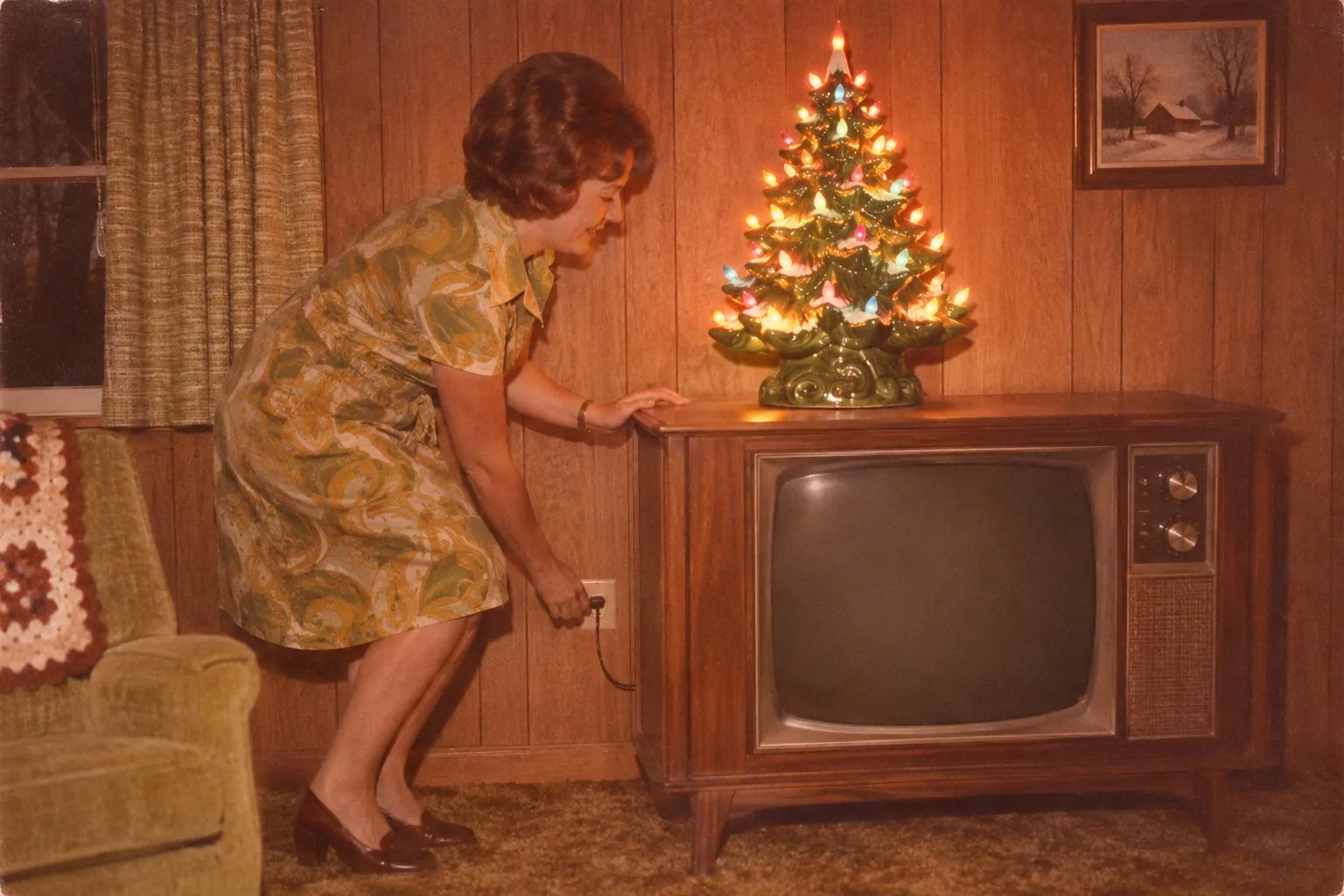
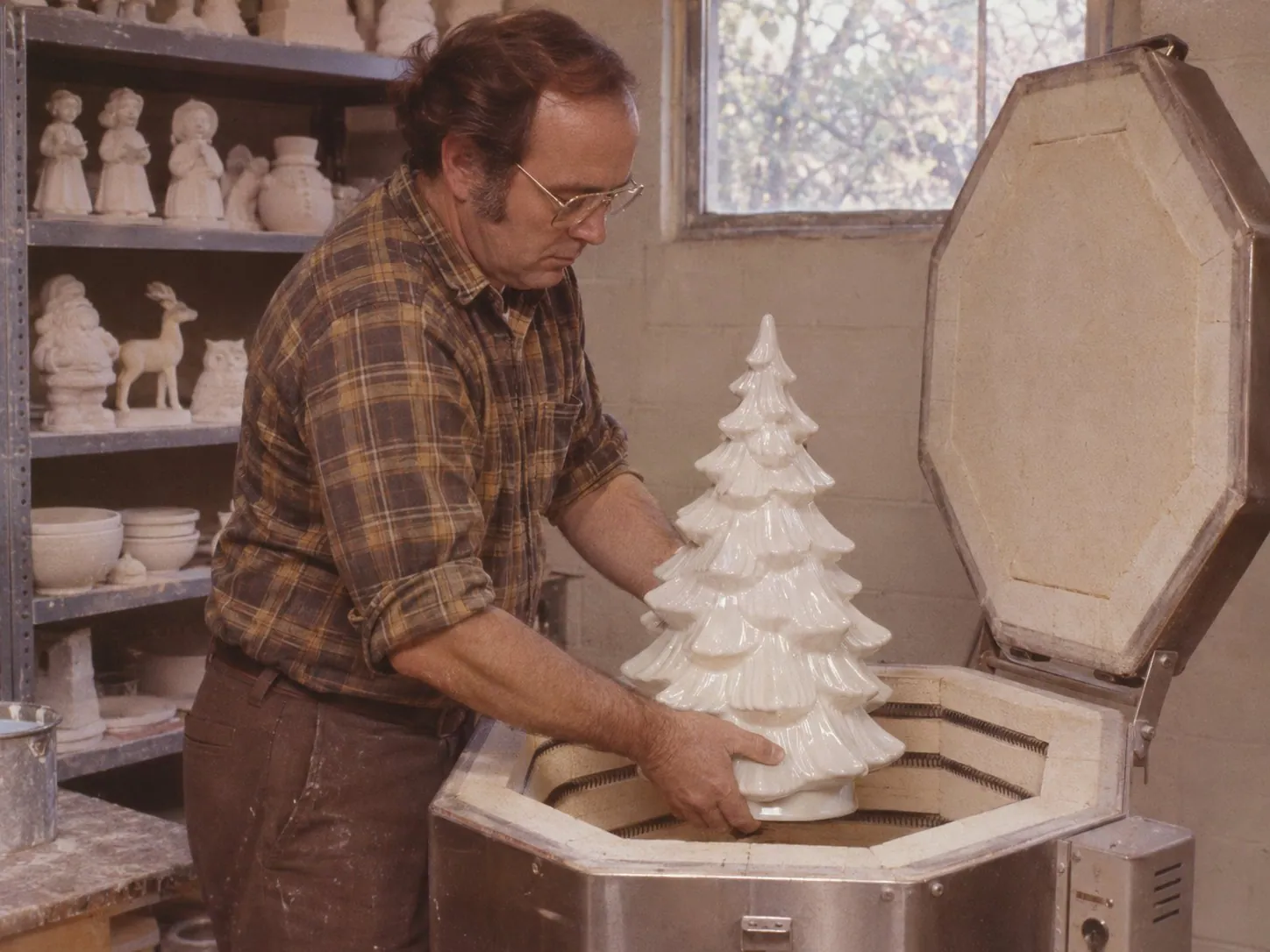
A vintage ceramic Christmas tree is a tabletop tree cast from a hobby mold, painted or glazed by hand and lit by a bulb in its base, so dozens of small plastic "lights" glow. Most commercial trees were 17 to 24 inches tall, Weekly View reports. Most vintage ceramic Christmas trees came out of neighborhood ceramics shops and classes in the late 1960s and '70s, where someone (very often Mom) cleaned the raw clay tree, glazed it and had it fired in the shop's kiln.
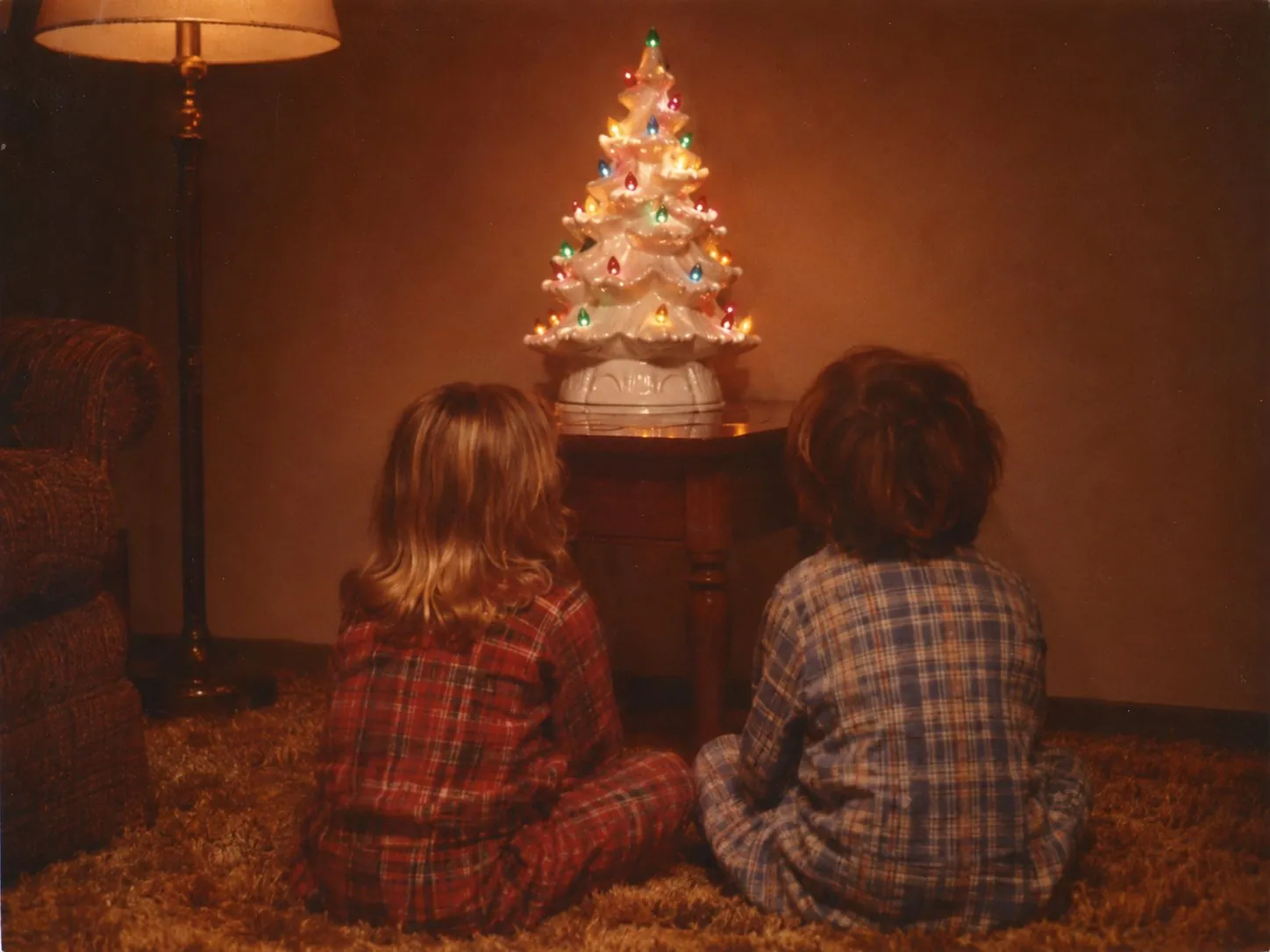
You probably remember the day it came home. Maybe it was wrapped in newspaper in a grocery sack. Then there was the evening somebody turned off the lamps and plugged it in for the first time.
Nobody in your house called it "retro." It was just the tree, and it came out of its box every December for the next 30 years.
Where the trees came from
Ceramic trees go back further than most people think. The American Ceramic Society says they first appeared in the 1940s. Weekly View says the earliest ones were made in the late 1940s by individual craftsmen.
The shape became popular once it could be made from a mold. The American Ceramic Society credits the Atlantic Mold Company with copyrighting one of the first ceramic tree designs, the A-64, in 1958. Atlantic sold thousands of those molds to studios around the country.
Other mold makers soon came out with trees of their own. Weekly View names Holland Mold, Arnel's and Dogwood Ceramic Supply among them. That's why your aunt's tree and your neighbor's tree might look almost the same. They may have been poured from the same design in shops hundreds of miles apart.
Read more: How the Old Color Wheel for a Christmas Tree Worked
Ceramics night at the shop
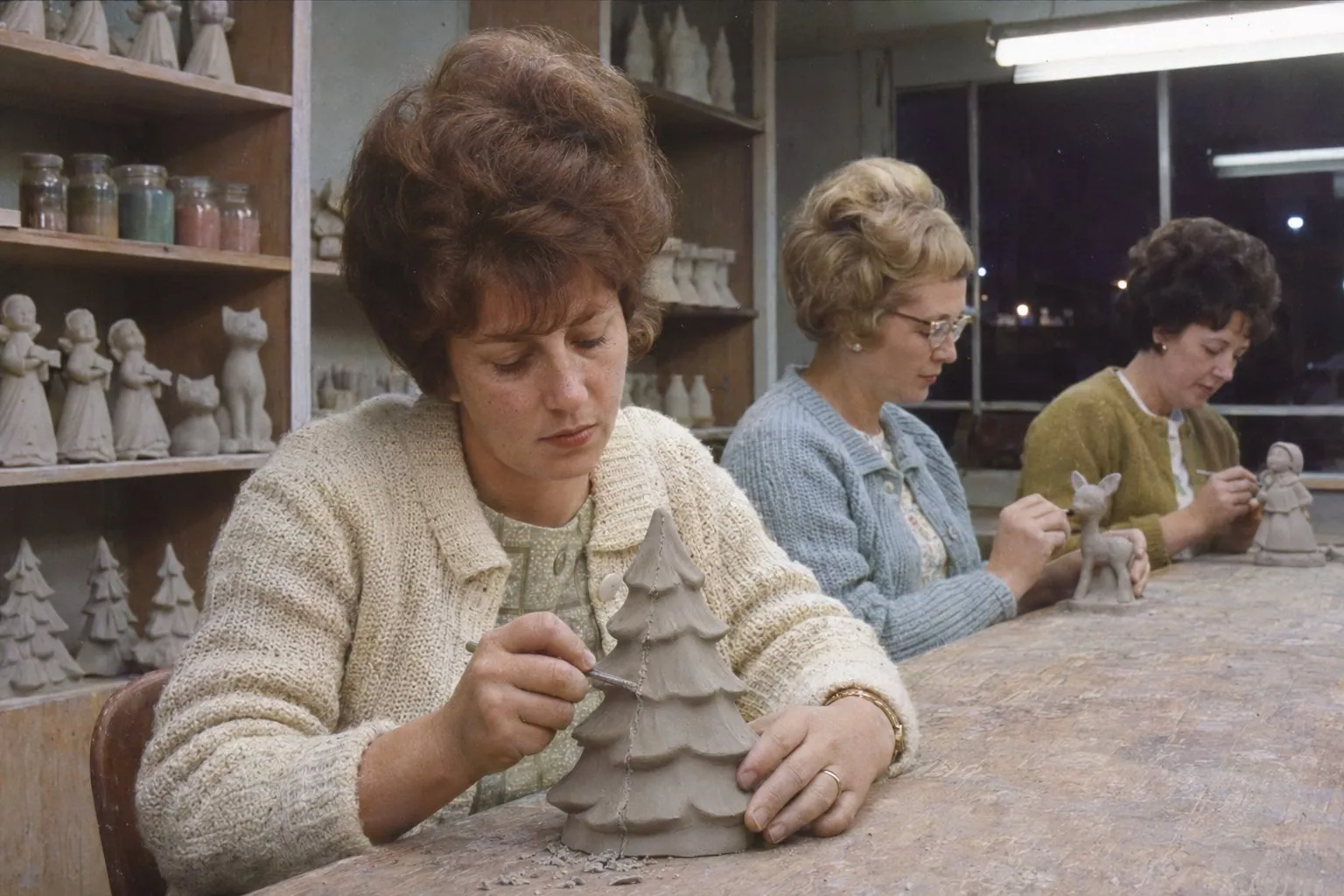
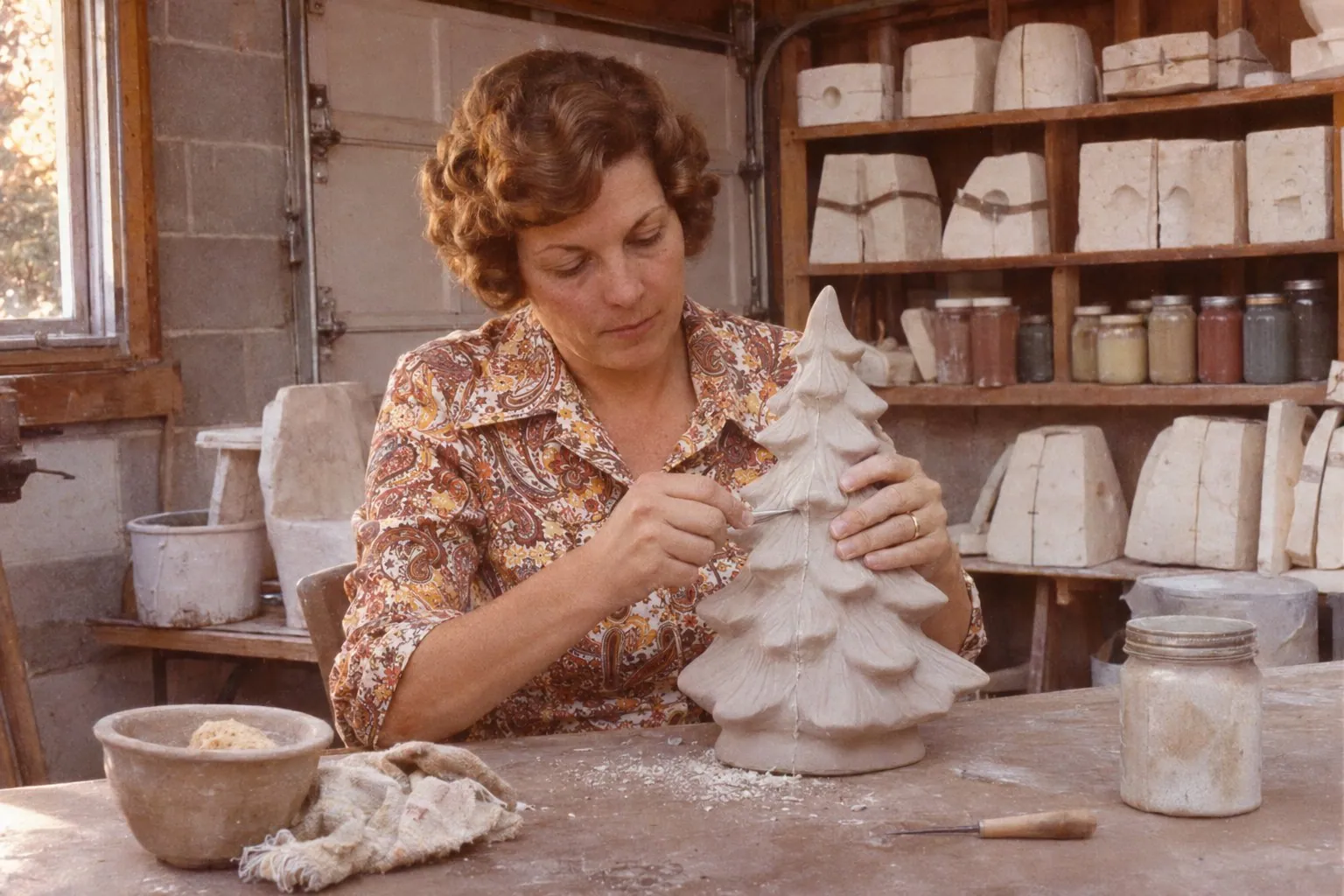
The real boom came in the second half of the 1960s. That's when thousands of ceramics shops opened across the country, according to Weekly View. In many towns the shop was a storefront or a converted garage. It had long tables, shelves of greenware and a kiln humming in the back room.
You probably remember the chalky dust and the little cleaning tools for scraping off the mold seams. Next came the jars of glaze lined up on the shelf. The tree went into the kiln, and a week later it came back hard, shiny and deep green, or white with snowy tips.
Some of the work happened at home. Talking to Salon in 2020, one source remembered the "ceramics parties" of the '60s and '70s. Guests gathered around greenware, and the pieces were fired and painted later. Holiday versions of those parties turned out Santas, nativity sets and trees.
Plugging in the lights
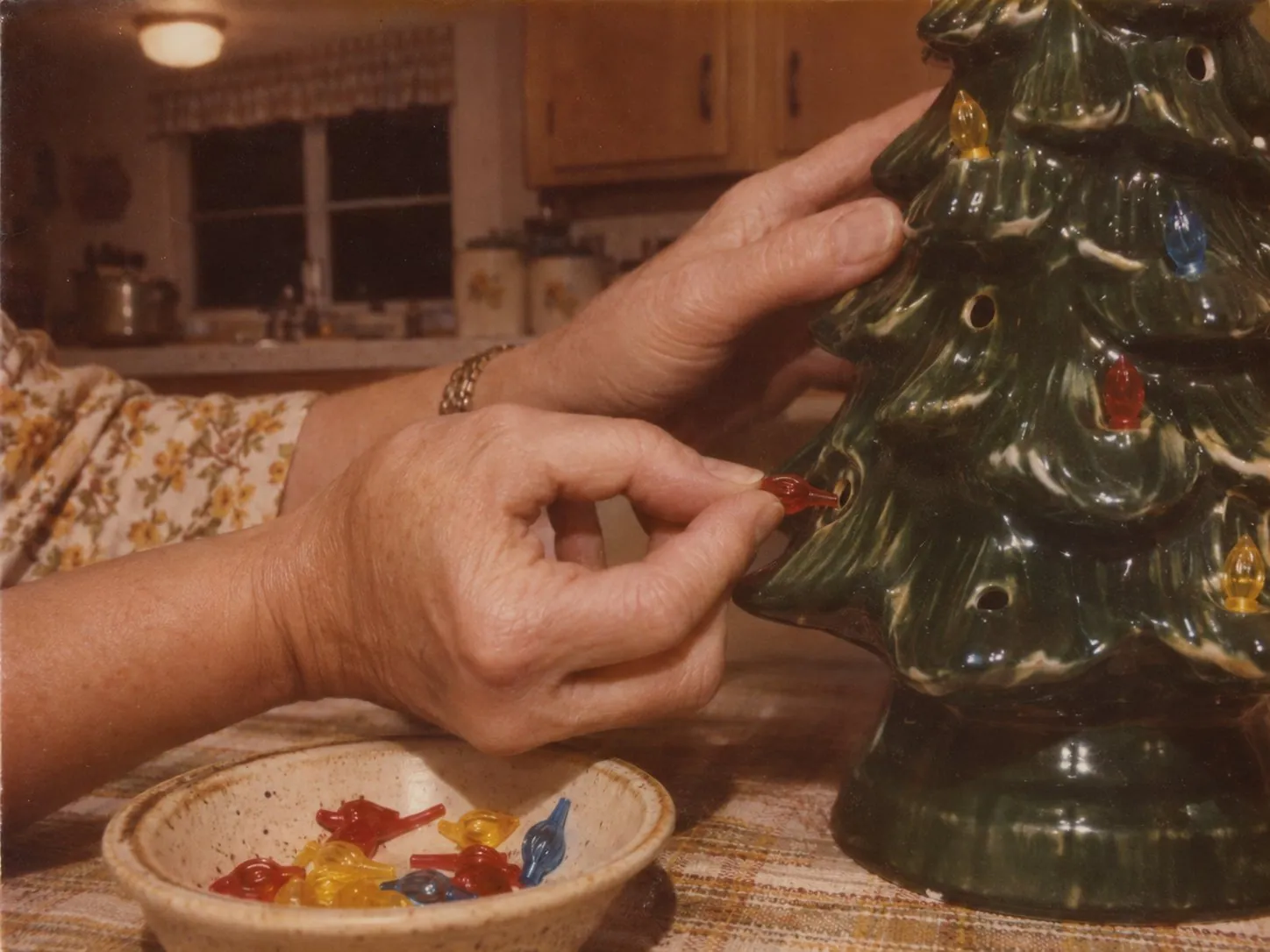
The lights were the whole point. Early trees had tiny lights that each lit on its own, and older trees used glass bulbs while newer ones used plastic, Weekly View says. The American Ceramic Society says cheaper plastics and better lighting are what replaced the old individually lit bulbs.
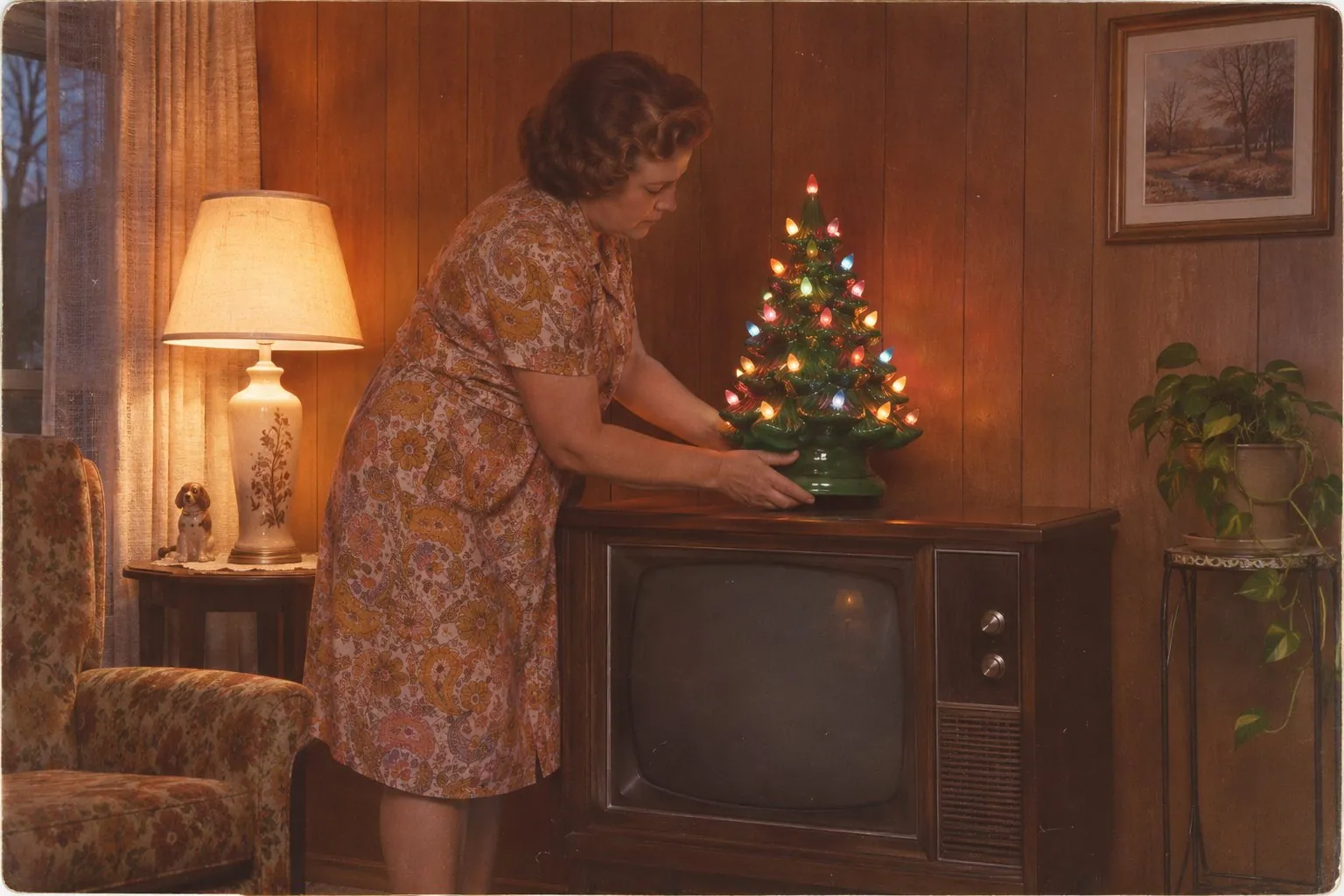
On the trees most of us remember, a bulb in the base lit the hollow tree from inside. Every hole in the clay held a colored plastic "bulb" that glowed. Pushing them in one at a time took a whole evening, and a few always ended up under the couch.
Some trees had little plastic birds or a star on top. Some sat on a base that turned while a music box played. TODAY Home mentions a '70s musical tree listed on eBay for $144.
Where the tree sat
On a lot of the trees we've seen photographed in homes, it sat on the television. Vintage lifestyle expert Bob Richter told TODAY Home that people set them on top of the TV "back when the TV was a piece of furniture." Others sat on the end table, the mantel or the window sill, where the neighbors could see them.
How to tell a real vintage ceramic Christmas tree
Start by turning it over. Factory trees sometimes have a model number on the bottom, and hobby trees were often scratched with the date they were fired, Weekly View says. A name and a year in Mom's handwriting is about as good a record as you'll get.
Then look at the lights. Glass bulbs point to an older tree, and plastic ones to a newer tree, according to Weekly View. A hand-glazed finish with small drips, uneven snow and a few crooked bulbs is a good sign that a real person made it in a real shop.
Be careful with the date, though. Because Atlantic kept selling the A-64, the company itself warns that a given tree could have been made in 1958 "or just last week by your local studio," as the American Ceramic Society quotes it. The mold alone can't tell you the year.
Ready-made trees changed the picture too. By the 1990s, ready-made ceramics from Japan and China had taken over the market, the American Ceramic Society says. Weekly View notes that from the mid-1990s on, most ceramic trees sold in the U.S. were imported.
What makes one rare
Most of the trees still around date from the late 1960s through the late 1970s, Weekly View says, so a plain green tree is common. Collectors look harder at the trees that don't fit that pattern. That includes the late-1940s trees made by individual craftsmen, before the commercial molds.
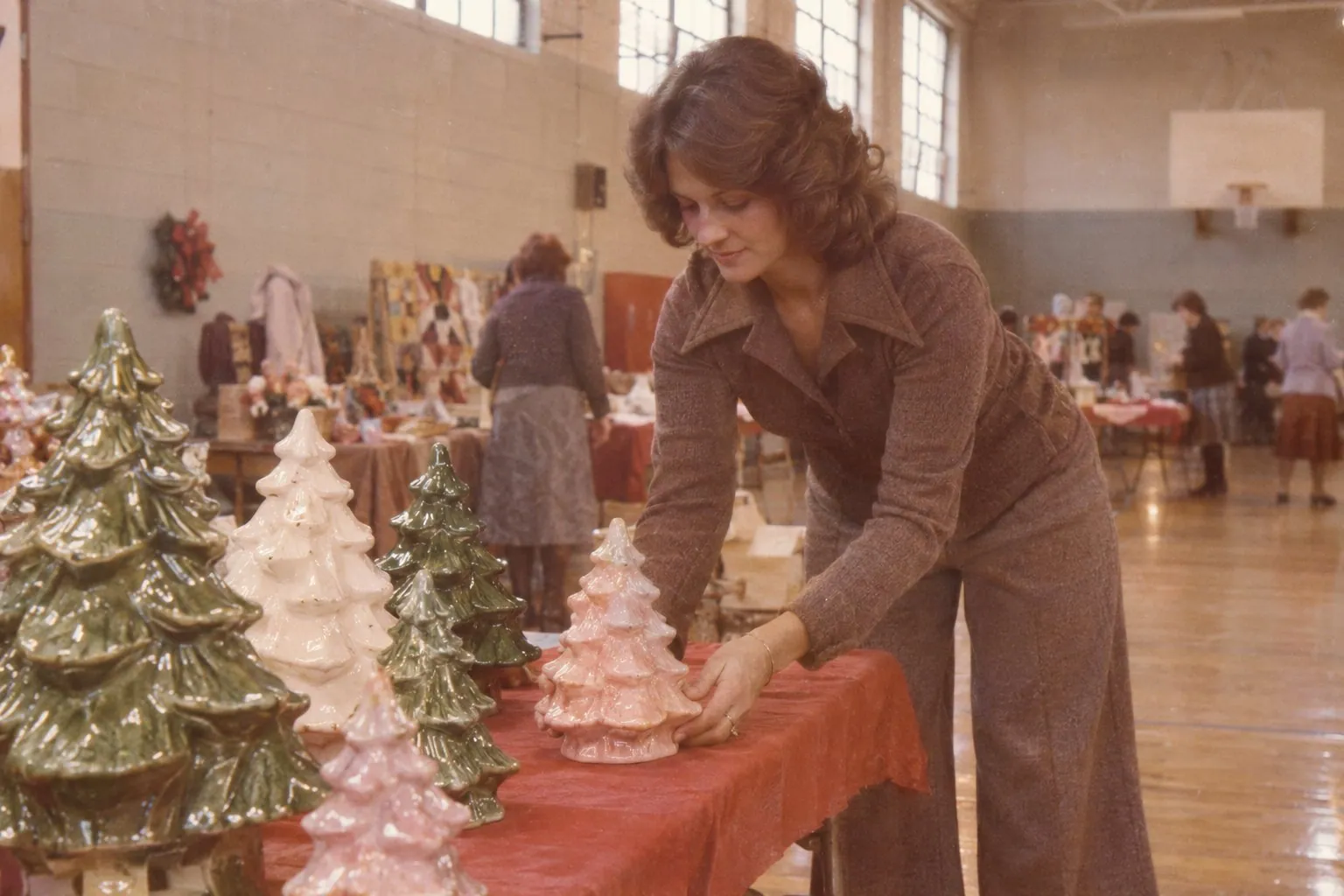
Color matters too. Trees came in green and white but also yellow, red and even pink, according to Weekly View. The unusual colors turn up less often. Early trees with glass bulbs, and musical or rotating bases that still work, also draw extra interest.
What it cost then, and what it's worth now
Here's the honest answer on the original price: it varied. Usually you paid the shop separately for the greenware, the glazes, the firing and the lights and base. Prices differed from shop to shop and year to year. We haven't found a reliable price list from the period, so we won't guess at a number.
Today's prices are easier to find, though they swing widely. TODAY Home reported a 1978 tree offered on eBay for $245, which is an asking price, not a confirmed sale. Salon described a writer who found her ceramic tree on Facebook Marketplace for $50 in 2020.
Bob Richter's advice to TODAY Home was to wait until closer to the holidays to sell. His explanation for why buyers pay at all: "You're buying the memory."
Why the trees came back
The trees faded in the 1980s, but people didn't throw them out. Now the ones made in your mother's ceramics class are in demand again.
In New Brunswick, Canada, a couple who once ran a ceramics studio in the 1980s now restores old trees. The Globe and Mail reported people lining up for hours to buy trees made in the 1960s, '70s and '80s. Mr. Ahern told the paper the trees bring back "a memory of their mother or their grandmother."
Frequently asked questions
Is an old ceramic Christmas tree an antique?
Not in the usual dealer sense, where "antique" means about 100 years old. Even the earliest ceramic trees date only to the 1940s, so "vintage" is the right word. That holds even for the late-1940s trees that collectors prize most.
Can you still get the lights for an antique ceramic Christmas tree?
Yes. Replacement plastic bulbs, stars and bases with cords are still made, because new ceramic trees are still produced every holiday season. Before you plug in an old tree, check the cord and socket. A cracked cord from 1972 isn't worth the risk.
Are vintage 1970s ceramic Christmas trees worth money?
Some are, but most aren't worth a fortune. TODAY Home reported asking prices of $245 for a 1978 tree and $144 for a musical '70s tree on eBay. Salon described a $50 find on Facebook Marketplace. Condition, color, working lights and a music box all make a difference.
What is the rarest ceramic Christmas tree?
No production records exist that would let anyone rank them. Collectors generally look for late-1940s craftsman trees, early trees with glass bulbs, and unusual colors like yellow, red or pink, which Weekly View lists among the colors made.
How can I tell how old my ceramic tree is?
Look underneath for a model number from a mold company or a date scratched into the clay before firing. Glass bulbs suggest an older tree. Popular molds stayed in use for decades, so the shape alone won't date it.
Sources
- Video: History of vintage ceramic Christmas trees, The American Ceramic Society, 2021
- Vintage Ceramic Christmas Trees, Weekly View, 2017
- Are vintage ceramic Christmas trees worth a lot of money?, TODAY Home
- The ceramic Christmas tree is back! Why the retro holiday decoration is everywhere this year, Salon, 2020
- Porcelain Christmas trees were popularized in the 1970s. A Moncton couple is bringing them back, The Globe and Mail, 2021
Related Stories
Love a trip down memory lane?
Get a fun quiz every morning. Free · One email a day · Unsubscribe anytime