Vintage Ceramic Christmas Tree With Snow, Birds and Music
Snow-tipped, bird-lit, music-box and nightlight trees: here's every kind of glowing ceramic tree from your family's holiday table, and how to read one today.
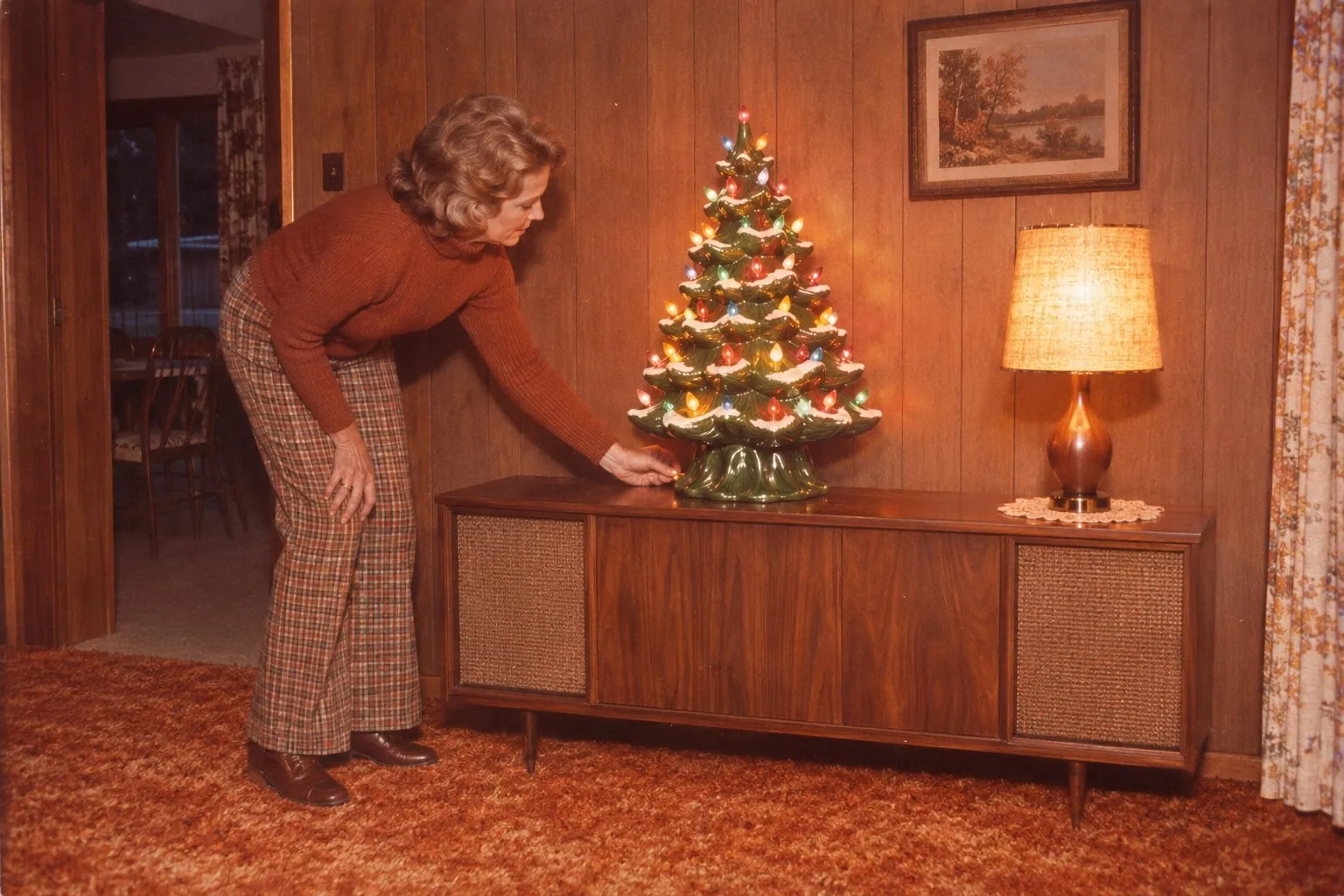
The vintage ceramic Christmas tree came in more styles than most people remember. There were snow-tipped trees, trees with little plastic birds where the bulbs went, trees on wind-up music-box bases, trees with tiny mice in the branches, thick "lava" glazed trees, and sizes running from a nightlight up to a lamp-sized tree.
If you grew up in the '60s or '70s, there's a good chance one of them sat on your mother's end table or the top of the console TV. You probably remember the warm smell of the bulb heating the clay and the little clicks as someone pushed the plastic lights back into their holes.
This is a rundown of every kind collectors look for today, from the vintage ceramic Christmas tree with snow to the ones that played a carol.
How these trees ended up in so many living rooms
According to the American Ceramic Society, ceramic Christmas trees started appearing in the 1940s. Those early trees were handmade on a small scale, and some had tiny electric bulbs that lit one by one. Then mold companies started making Christmas tree designs. The Atlantic Mold Company copyrighted one of the first in 1958, Our State magazine reported.
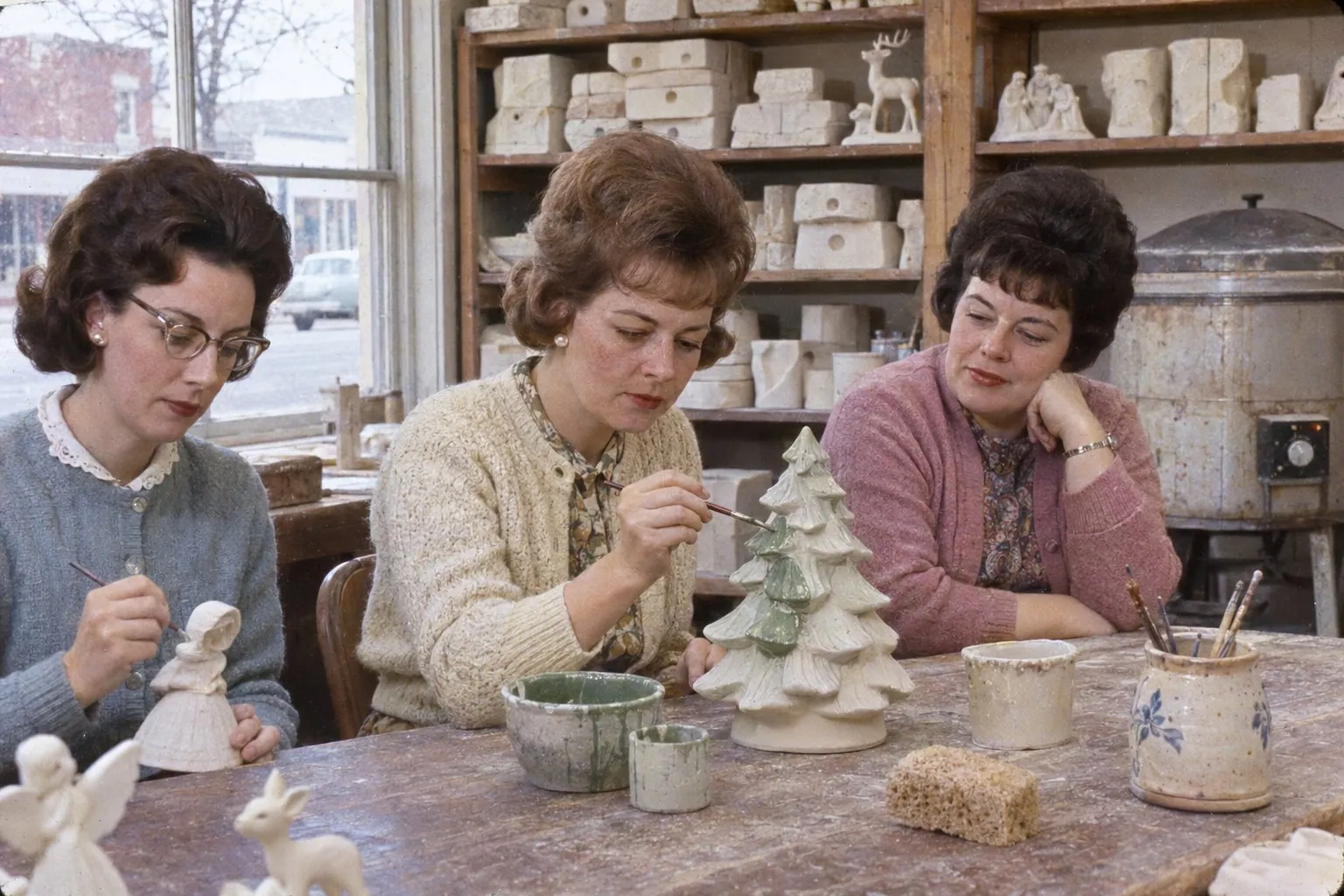
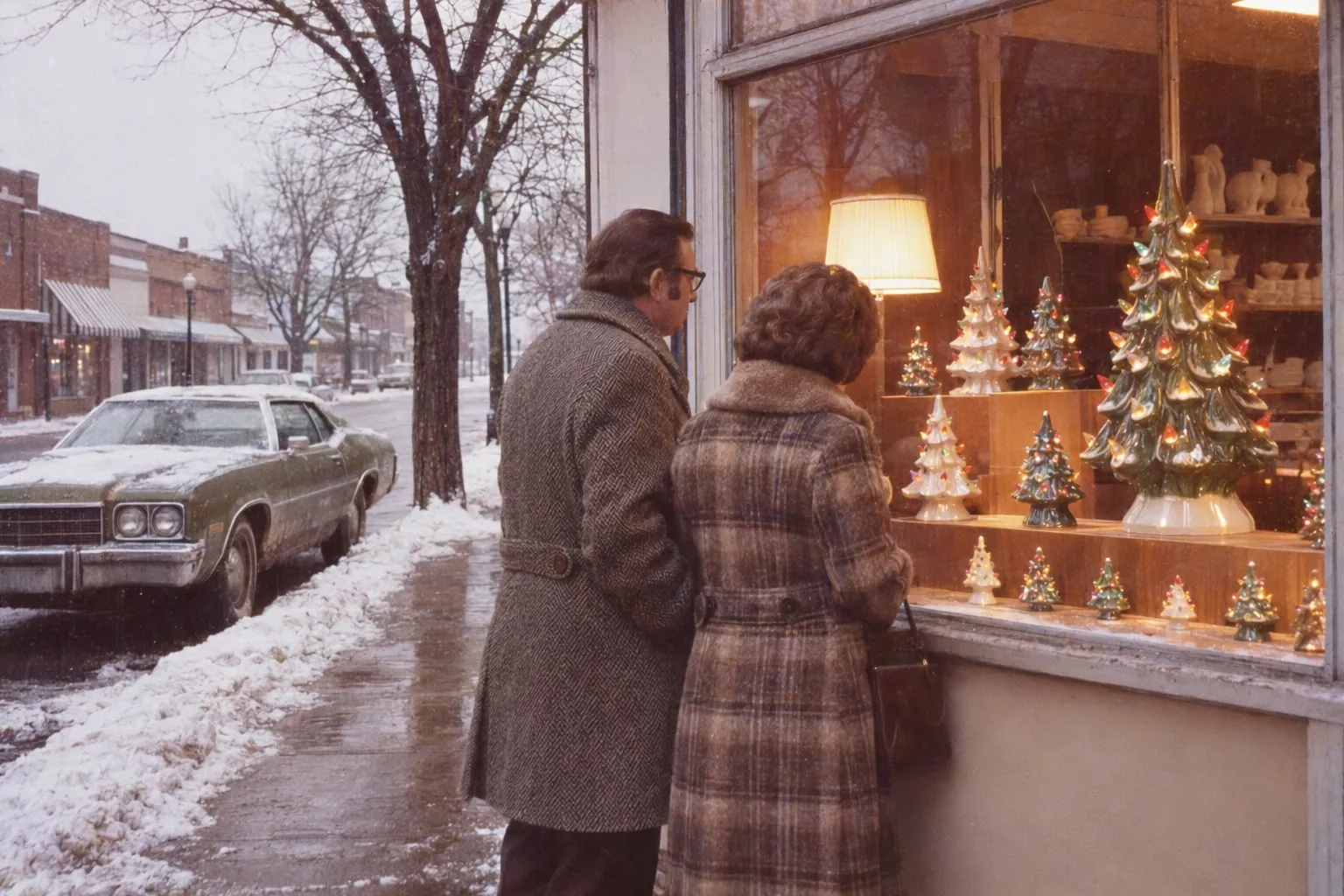
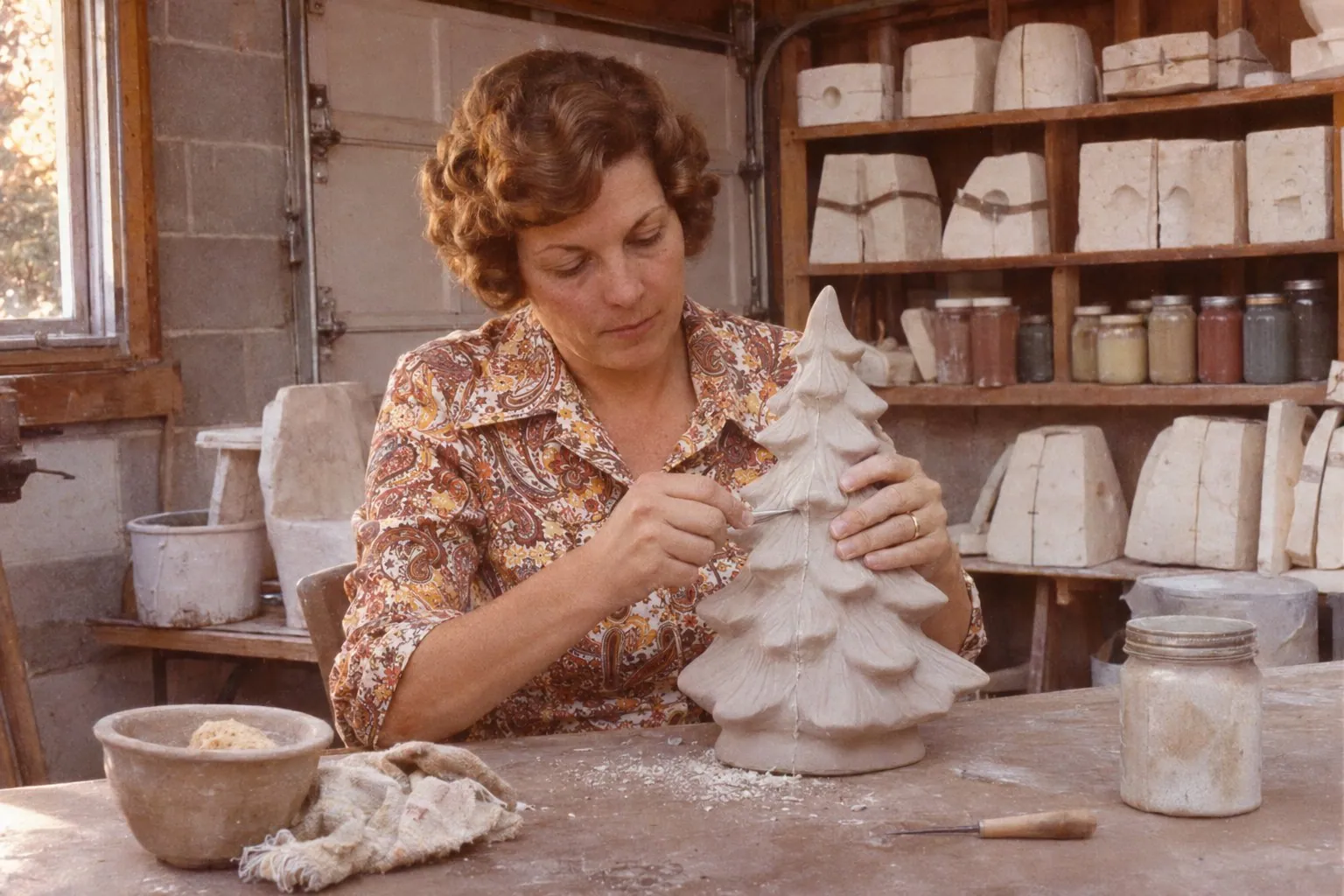
What really spread them was the neighborhood ceramics shop. The American Ceramic Society says craft shops in the 1960s and '70s held workshops where people built their own trees from mass-produced molds. Over the same years, better plastics brought a new kind of tree. Instead of every bulb lighting on its own, a single bulb inside lit all the colored plastic pegs.
A man named Bulleit keeps a collection of old molds and helps customers match trees to blurry family photos. He told Salon in 2020 that people in the '60s and '70s threw "ceramics parties" the way they threw garden parties. That explains why so many trees look alike. Thousands of mothers, aunts and grandmothers poured the same few molds and then painted them their own way.
Read more: How the Old Color Wheel for a Christmas Tree Worked
The vintage ceramic Christmas tree with snow
The look most people picture first is a green tree with white tips on every branch. Ada Bennett described the classic tabletop tree to CBC News in 2021. She said these trees "usually have snow on the edges of each branch."
The snow wasn't all the same. Some hobbyists brushed white glaze along the tips before firing. Others went back after firing and dabbed on a gritty white finish or paint, which is why some trees feel rough. Bennett also told CBC that all-white trees are especially sought after, and some collectors hunt for frosted trees in white, pink or gold.
Bird lights and the other little bulbs
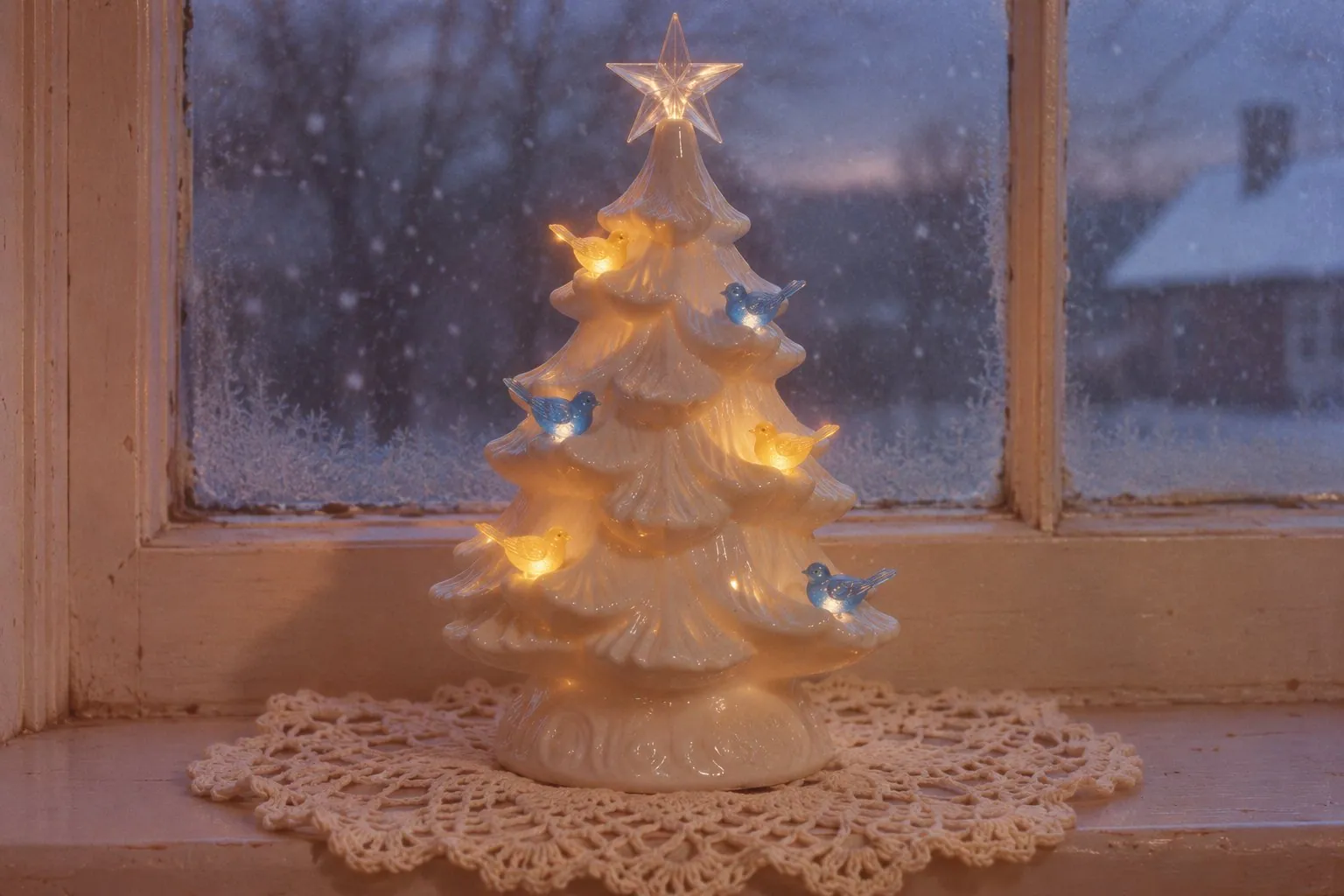
The plain round pegs came in red, green, yellow, blue and clear. Many trees also had a plastic star on top that lit up like the rest. Some families went further and swapped the round pegs for tiny plastic birds with their beaks pointing out from the branches.
A vintage ceramic Christmas tree with bird lights looks different from one with plain pegs, especially a white tree with blue or mixed-color birds. Birds weren't the only shape. There were also flame-shaped pegs, and people mixed sets as old ones got lost. If the tree you inherited has a few odd pegs, someone probably replaced them one Christmas years ago.
Some trees had real sculpted birds instead. Molds put cardinals or songbirds right on the boughs, and they were painted red or blue during class. Collectors searching for a vintage ceramic Christmas tree with birds usually mean one of these two kinds, so it's worth checking which one a seller has.
The trees that played a tune
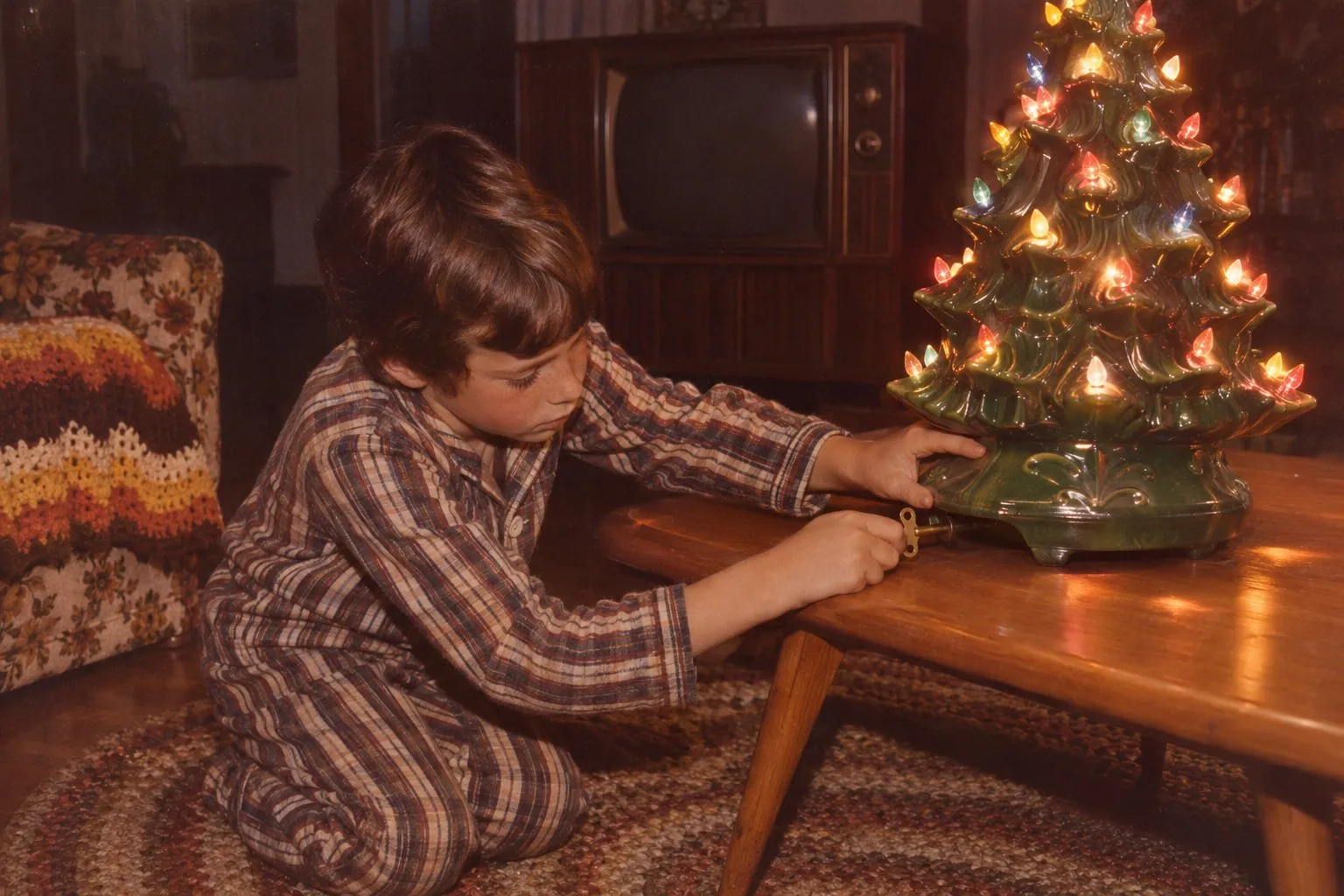
Some of the most loved ceramic trees had a ceramic Christmas tree music box hidden in the base. You wound a key underneath, and a carol played while the tree glowed. Some bases also turned the tree slowly. For a kid lying on the carpet, that was the best part of the decorations.
Music-box trees took more work, since the base needed room for the works. They show up less often today than the plain lighted kind. If you find a vintage ceramic Christmas tree with music box base, wind it gently before buying. A dead movement can sometimes be swapped out, but a working one is worth more.
Mice, lava glazes and other odd ones
Not every tree was serious. Some molds had small mice peeking out from the branches or sitting at the base. A vintage ceramic Christmas tree with mice came out a little different each time, since each painter chose the colors for the mice, their ears and any tiny gifts they held.
Then there's the vintage ceramic lava Christmas tree. Collectors use the name loosely for trees covered in a thick, bubbly glaze that looks like cooled lava, often in the browns, oranges and avocado greens that were everywhere in '70s kitchens. Others use it for heavy drip glazes that ran down the branches in the kiln. Because the glaze changed from one firing to the next, no two came out exactly alike.
You'll also find trees in bright blue, purple, pink or metallic gold. These were usually somebody's own paint choice, not a factory color.
From nightlight to lamp size
Sizes ran from palm-sized to big enough to light a room. These are rough groupings, not official sizes:
- Nightlights and minis: small trees, often only a few inches high, made to plug into the wall or sit on a nightstand. A vintage Christmas tree nightlight glowing in the hallway is a common memory.
- Tabletop: the middle size that went on end tables, mantels and TV tops.
- Large: a large vintage ceramic Christmas tree could stand well over a foot and a half tall with a separate base. The bigger the tree, the more pegs to lose, and the more likely the clay cracked over the years.
Size also changed the bulbs, since bigger trees used bigger pegs. Measure the holes before you order a replacement set.
Read the bottom before you buy
Turn any tree over and look for a name and a year. Our State reported that Atlantic, Dogwood Ceramic Supply, Arnels and Holland Mold stamped the year the mold was made, not the year your tree was poured. A "1958" mark could be on a tree made long after that.
Then check the base, the cord and the socket. CBC News reported in 2021 that even trees with cracked bases were listed for $200 on Facebook Marketplace in Saskatoon. Prices vary a lot depending on condition, color and where you're buying.
Lots of people start with one tree that matters to them. Stacy Smith of Greensboro, North Carolina, told Our State that her collection of 15 trees started with one she found while going through her husband's late grandmother's things. A Golden, Colorado, woman named Hawn told Salon she's fairly sure her family's tree was made in a class at a ceramics shop owned by her mother's best friend.
Frequently asked questions
How old is my ceramic Christmas tree if it says 1958 on the bottom?
Not necessarily from 1958. Our State reported that companies like Atlantic Mold stamped the year the mold was made, so the tree itself could be from years or even decades later.
Did ceramic Christmas trees come with music boxes?
Yes, some did. Certain bases held a wind-up movement that played a carol, and some also turned the tree. They turn up less often than the standard lighted trees.
What are the bird lights on a ceramic Christmas tree?
They are small plastic bird-shaped pegs that go in the holes instead of round bulbs, and they glow from one lamp inside. They're especially popular on white trees.
What is a vintage ceramic lava Christmas tree?
Collectors use the name for trees with a thick, bubbly or drippy glaze that looks like lava, often in '70s earth tones. The term is loose, so ask the seller for close-up photos.
Where were most vintage ceramic trees made?
Mostly in local ceramics shops and classes. The American Ceramic Society says craft shops in the 1960s and '70s held workshops where people made trees from mass-produced molds.
Sources
- Video: History of vintage ceramic Christmas trees, The American Ceramic Society, 2021
- A Christmas Comeback, Our State magazine, 2023
- Ceramic Christmas trees make a comeback, CBC News, 2021
- The ceramic Christmas tree is back! Why the retro holiday decoration is everywhere this year, Salon, 2020
Related Stories
Love a trip down memory lane?
Get a fun quiz every morning. Free · One email a day · Unsubscribe anytime