Christmas and Holidays in the 1950s, '60s and '70s
From aluminum trees to the Sears Wish Book and Rudolph on NBC, here is how the holidays looked, sounded and smelled when you were a kid.
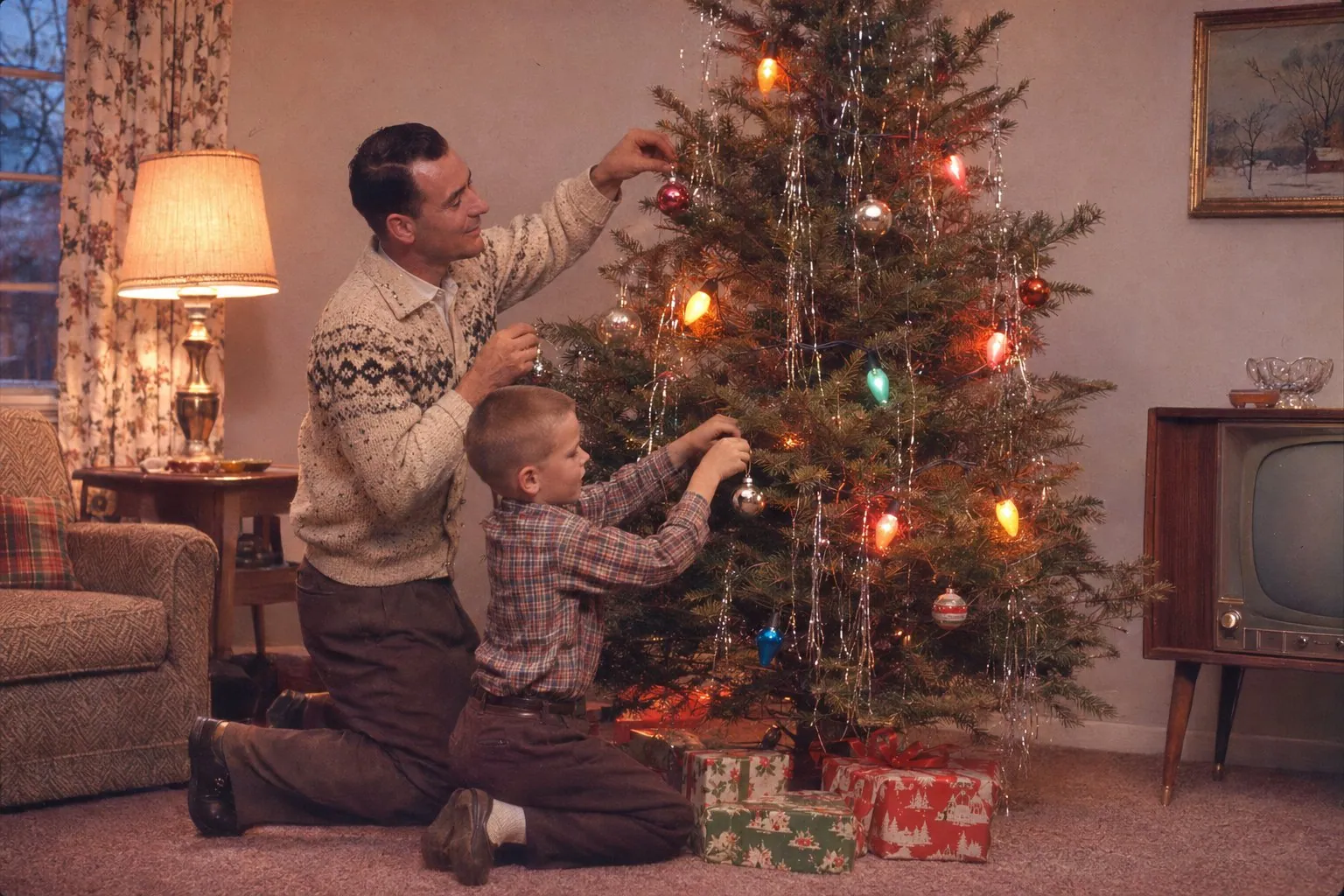
You probably remember when the season started. It wasn't the first snow. It was the day the Christmas catalog landed on the porch, heavy as a phone book, and you and your brother fought over who got it first.
After that it was one thing after another. The tree went up, the TV specials came on, and the same records played on the hi-fi every night. Then the year rolled on into Easter baskets, Fourth of July sparklers, Halloween masks and the Thanksgiving parade.
This page is the front door to our Christmas and Holidays section. Each part below gives you a quick look at one topic, so you can pick the one you want to dig into.
The tree in the front window
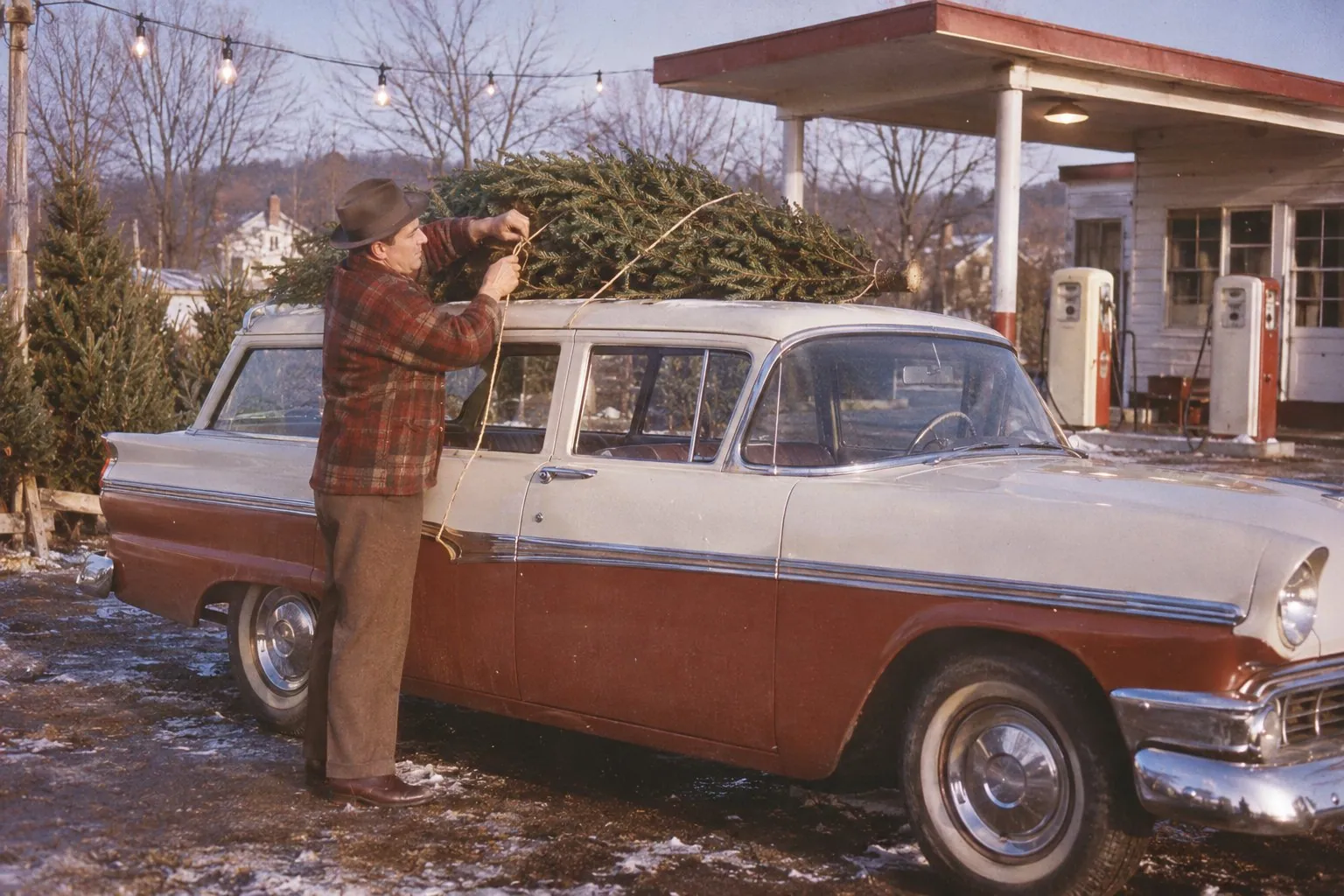
In most houses it was a real tree from a lot by the gas station or the church, tied to the roof of the car. It dropped needles into the carpet until Easter and made the whole house smell like pine. The lights were big screw-in bulbs that got hot to the touch.
Then came the shiny ones. The Aluminum Specialty Company of Manitowoc, Wisconsin, brought out its Evergleam trees at Christmas 1959, UpNorthNews reports. They sold for $4.95 to $29. At 1959 prices, that's about $53 to $313 today.
You couldn't put electric lights on a metal tree, so a lot of families aimed a rotating color wheel at it. The tree turned red, then blue, then green, then gold, all night long.
Joseph Kapler, a curator at the Wisconsin Historical Museum, told UpNorthNews the company didn't invent the metal tree. What it did was perfect it, making it easier to set up and store. In the same story, Manitowoc shop owner Cathy Karl called the Evergleam "the workingman's tree."
At its peak the company had about 750 people building Christmas trees, WUWM reported. It made more than 1 million of them, according to Antique Trader.
Today collectors pay real money for them. Antique Trader listed a 1960s six-foot, 94-branch Evergleam that sold for $500. WUWM said rare pink ones have brought as much as $1,800.
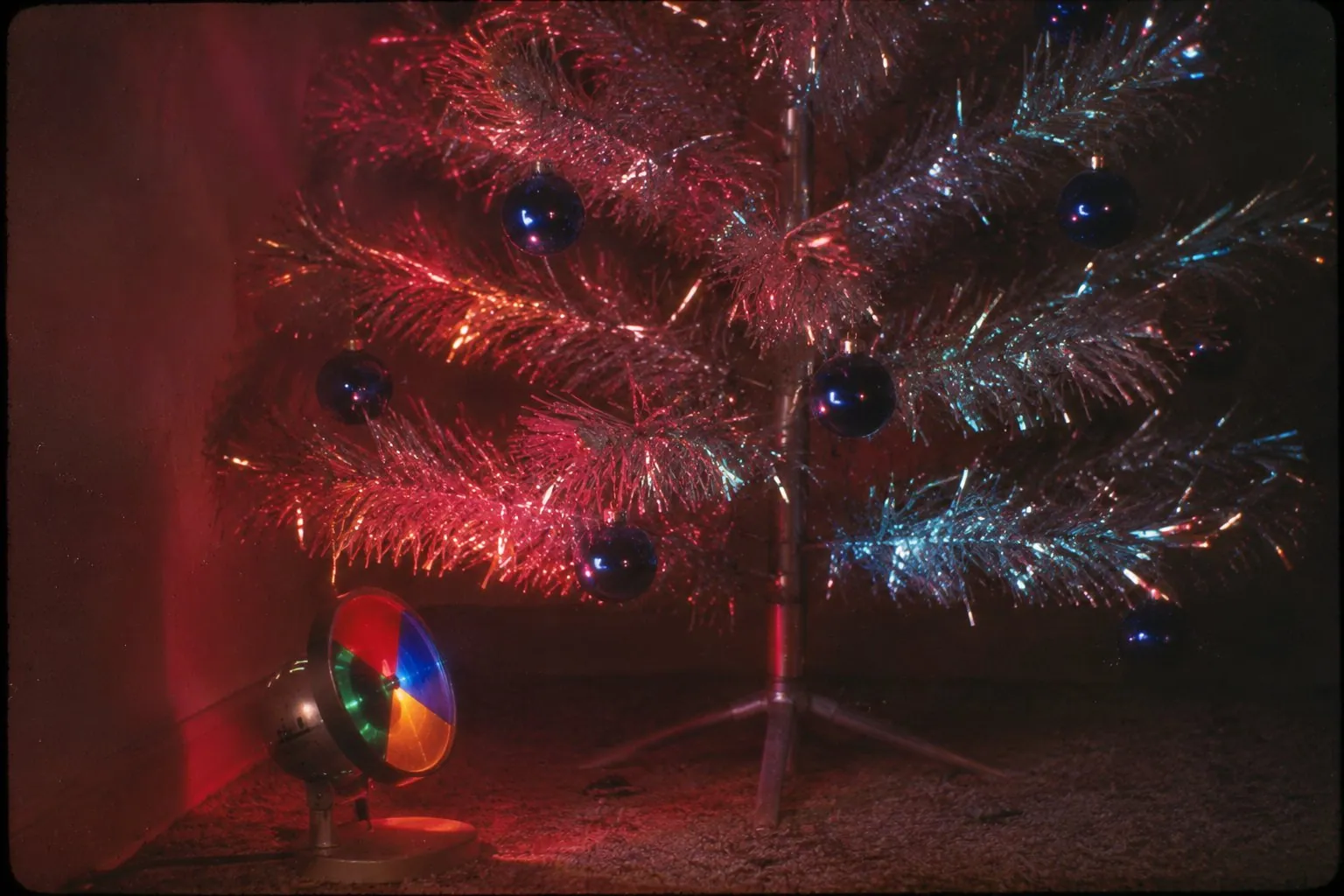
Read more: How the Old Color Wheel for a Christmas Tree Worked
The Wish Book on the kitchen table
For a lot of kids, the Sears Christmas catalog was the most important book in the house. Sears started it in 1933 with 87 pages, only 25 of them toys, the Harvey County Historical Society says. By 1968 it had grown to 605 pages, with 225 pages of toys.
You remember how it went. You circled things in pen, turned down page corners and left it open on the table where your mother would see it. Montgomery Ward and JCPenney put out Christmas books of their own, and plenty of families went through all three.
The toy pages tell the story of each decade. In the '50s it was electric trains, cap guns and cowboy outfits. By the '60s you saw G.I. Joe, slot cars and Easy-Bake Ovens. In the '70s it was Evel Knievel stunt cycles and Star Wars figures. Our toy pages go year by year.

Christmas on television
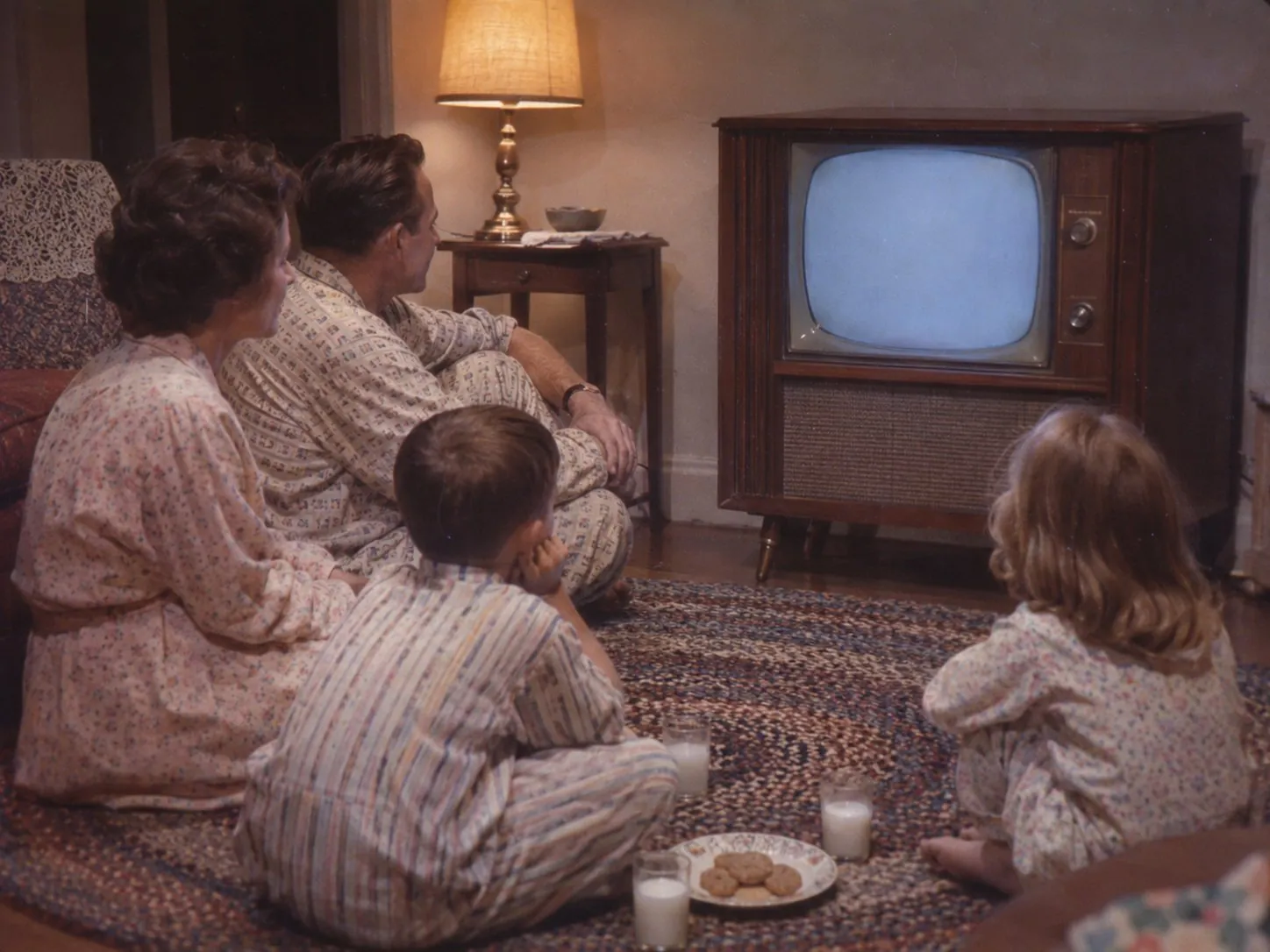
When a holiday special came on, the whole family sat down to watch together, because if you missed it you waited a year. Nobody had a tape recorder for the TV, and there was no rerun the next week.
Rudolph the Red-Nosed Reindeer first aired on NBC on Sunday, December 6, 1964, according to the Internet Archive record. The stop-motion special came from Videocraft, the studio later known as Rankin/Bass. General Electric sponsored it as part of The General Electric Fantasy Hour, and it moved to CBS in 1972, the same record says.
A Charlie Brown Christmas premiered on CBS on December 9, 1965, the Deseret News notes, and nobody expected much from it. It went on to become a December regular. It also poked fun at aluminum trees, and WUWM reports that the special is a big reason pink ones are so wanted today. How the Grinch Stole Christmas joined the lineup in 1966.
The records on the hi-fi
Christmas music in your house probably came off a stack of records on the console stereo. Bing Crosby's "White Christmas" was in a lot of those stacks. So was Gene Autry's "Rudolph, the Red-Nosed Reindeer," which he recorded in 1949.
Then the teenagers got their turn. Bobby Helms put out "Jingle Bell Rock" in 1957, and Brenda Lee recorded "Rockin' Around the Christmas Tree" in 1958. Lots of families also picked up a cheap holiday album at the tire store or gas station, with famous singers on the cover. Our music pages cover the songs and those store albums.
Halloween and Thanksgiving
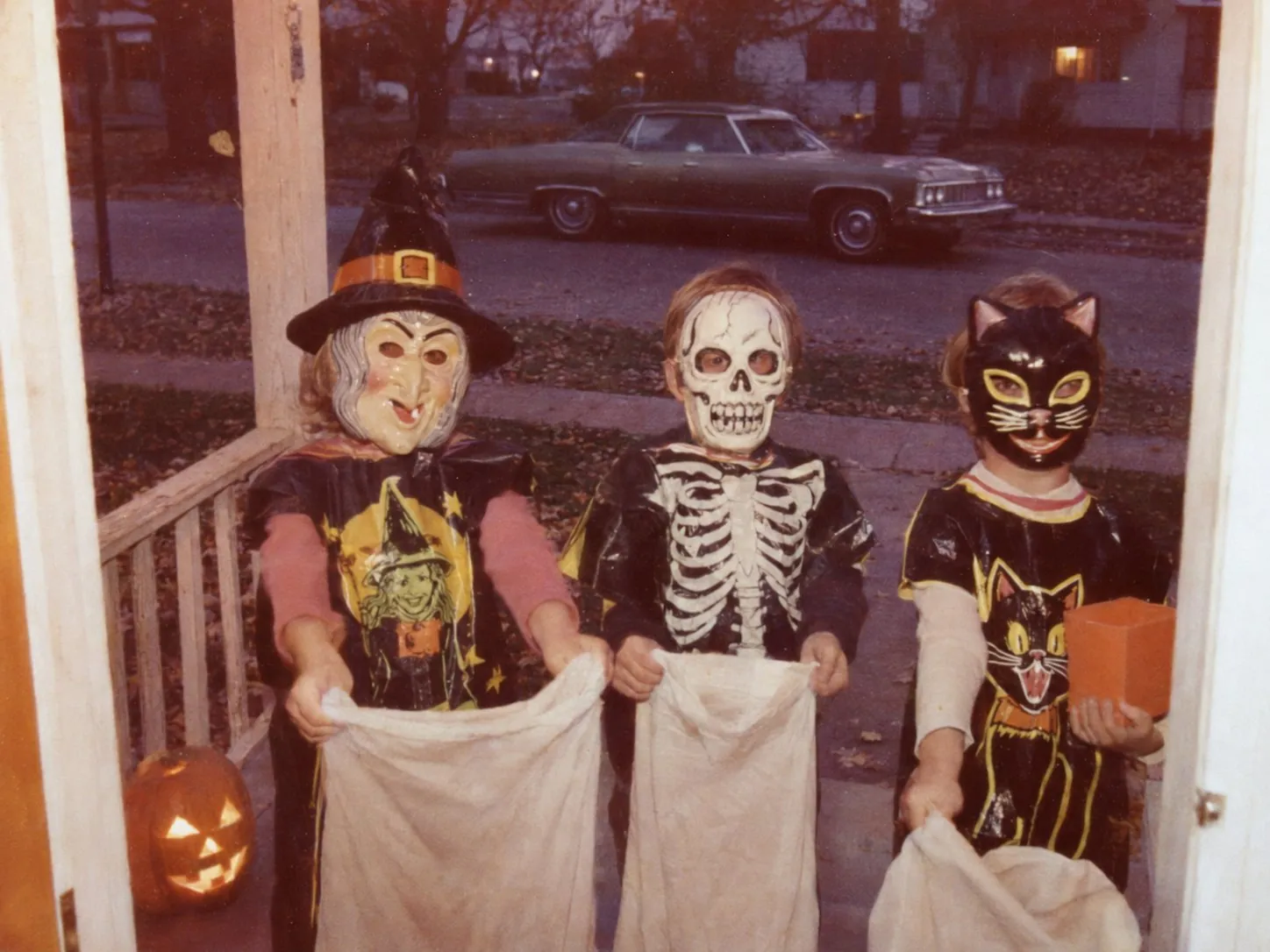
Fall had two big days of its own. For Halloween, a lot of kids wore dime-store costumes from companies like Ben Cooper and Collegeville: a plastic mask with a thin elastic band and a printed vinyl smock, all in one box. You could barely see out of the eyeholes, and your breath fogged up the inside.
You came home with a pillowcase full of Mary Janes, candy corn, popcorn balls and Tootsie Rolls. Plenty of kids also carried the little orange UNICEF box and collected pennies door to door.
Thanksgiving morning meant the Macy's parade on TV while the turkey roasted, with football after dinner. Our Thanksgiving pages cover the parade balloons, the menus and the Detroit and Dallas games.
Easter, the Fourth and the rest of the year
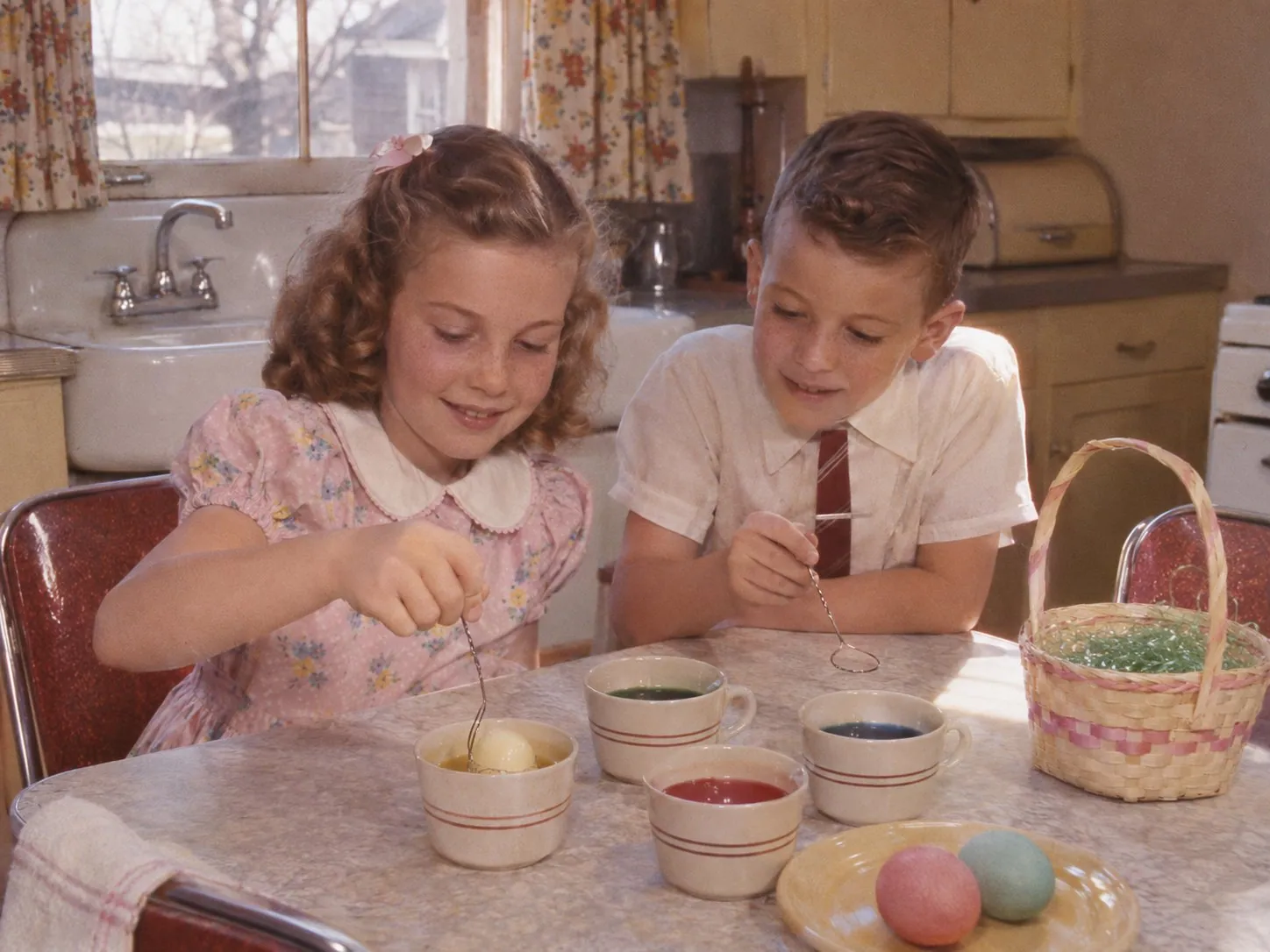
Easter meant new shoes that pinched, a clip-on tie and a basket with green plastic grass that kept turning up in the vacuum for weeks. You dyed eggs with the PAAS kit and the little wire dipper, and you probably bit the ears off a chocolate bunny first.
The Fourth of July was sparklers, a picnic and a fireworks show at the ballfield or the county fairgrounds. In states that allowed them, kids bought firecrackers at a roadside stand, and you could smell the punk and the powder all evening. Our pages on Easter, the Fourth, New Year's Eve and Valentine's Day pick up from there.
Frequently asked questions
When did aluminum Christmas trees first come out?
The Aluminum Specialty Company of Manitowoc, Wisconsin, brought out its Evergleam trees at Christmas 1959, UpNorthNews reports. Curator Joseph Kapler told the paper the company didn't invent the metal tree but made it easier to set up and store.
How much did an aluminum Christmas tree cost in the 1960s?
Evergleam trees sold for $4.95 to $29, according to UpNorthNews. At 1959 prices, that's about $53 to $313 today.
When did the first Sears Christmas catalog come out?
Sears put out its first Christmas catalog in 1933, with 87 pages, the Harvey County Historical Society says. By 1968 the Wish Book had reached 605 pages.
When did Rudolph first air on TV?
The stop-motion Rudolph special first aired on NBC on Sunday, December 6, 1964, according to the Internet Archive. It moved to CBS in 1972.
What year did A Charlie Brown Christmas first air?
It premiered on CBS on December 9, 1965, the Deseret News notes. Nobody expected much from it, but it became a December regular.
Sources
- Aluminum Christmas Trees? They're a 'Home-Grown' Wisconsin Invention, UpNorthNews, 2021
- Remember Aluminum Trees? Wisconsin-Made Evergleams Are Making A Comeback, WUWM Milwaukee Public Radio, 2013
- Rudolph The Red Nosed Reindeer (1964), Internet Archive, 2018
- Deseret News archives: 'Charlie Brown Christmas' debuted in 1965, Deseret News
- Every Toy a Kid Could Want: The Wish Book, Harvey County Historical Society
- Aluminum Christmas Trees Are Yuletide Cool, Antique Trader, 2020
Related Stories

Love a trip down memory lane?
Get a fun quiz every morning. Free · One email a day · Unsubscribe anytime