The Aluminum Christmas Tree and Color Wheel, 1959–1960s
How a Wisconsin pots-and-pans company made the silver tree that went red, blue, green and gold in a dark living room, and how Charlie Brown turned on it.
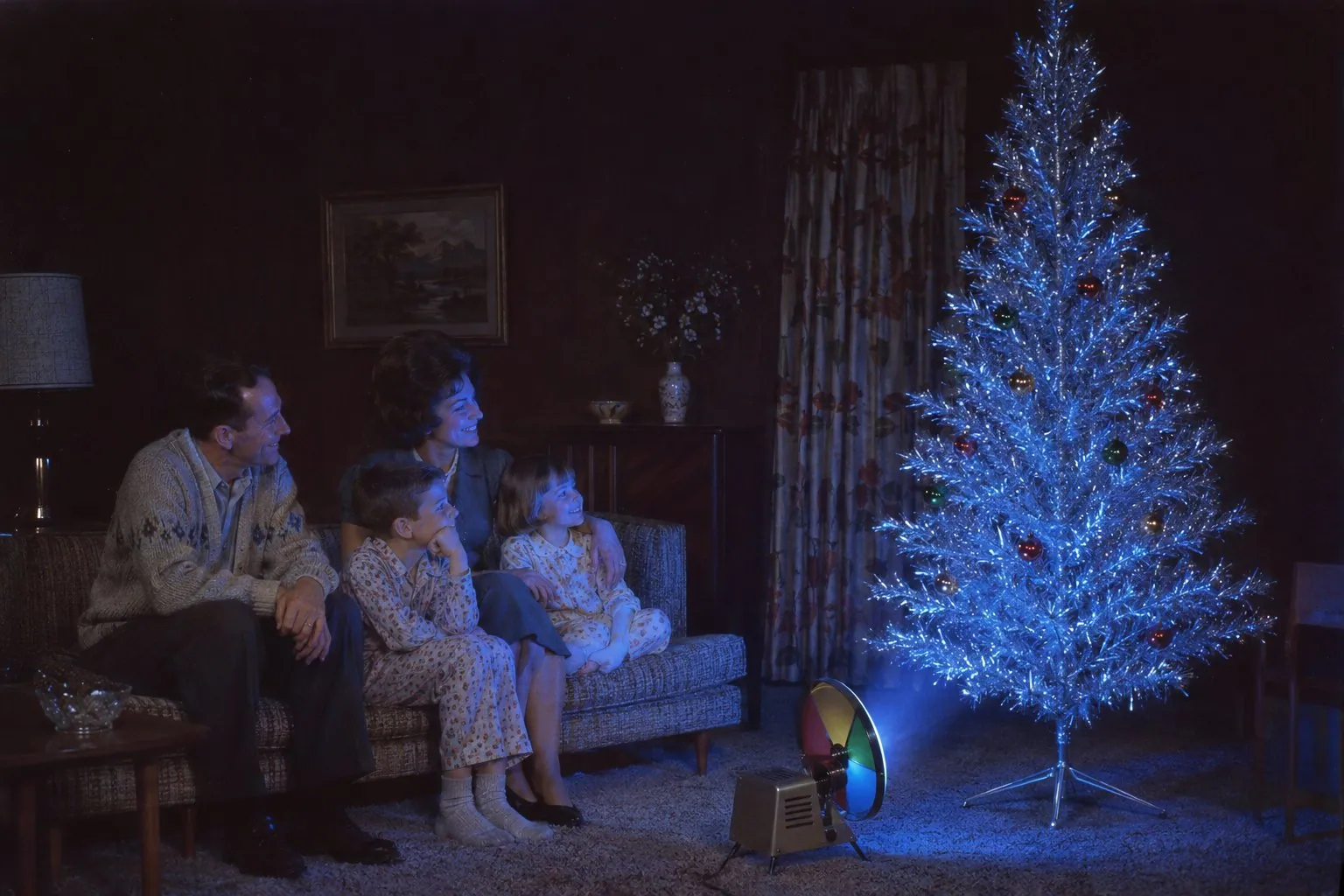
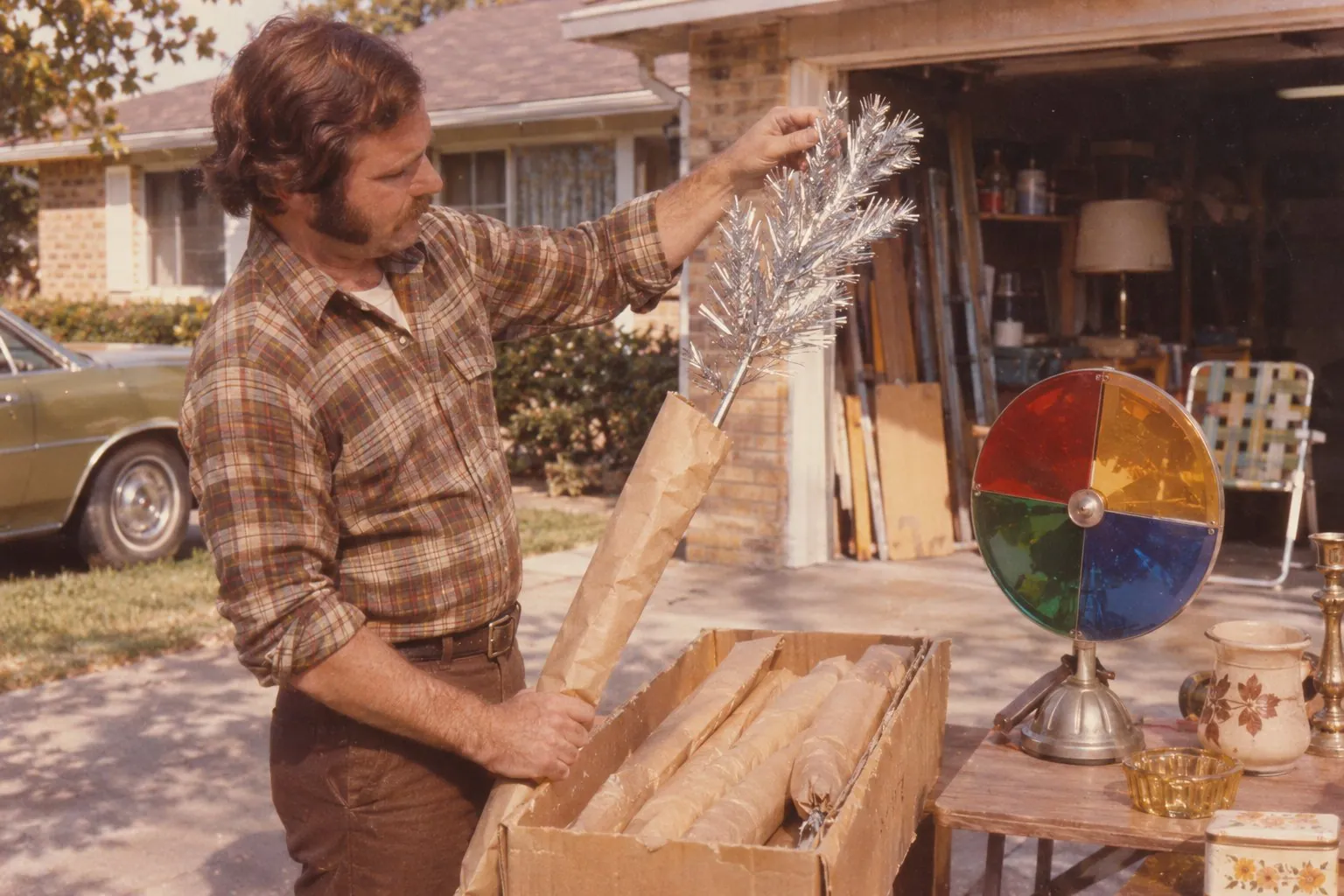
The aluminum Christmas tree and color wheel was a shiny metal tree, usually silver. Instead of strings of bulbs, it was lit by a lamp shining through a slowly turning disk of colored plastic. It caught on in the late 1950s and 1960s because it was cheap, never dropped a needle, packed away in a box and looked like the space age had landed in the living room.
You probably remember it best with the lamps off. The tree went red, then blue, then green, then gold, while the little motor in the wheel hummed on the carpet. There was no pine smell, no sap and no pan of water to fill, only a soft whir and colored light moving across the ceiling.
Most of those trees came from one town on Lake Michigan.
How a pots-and-pans company got into Christmas trees
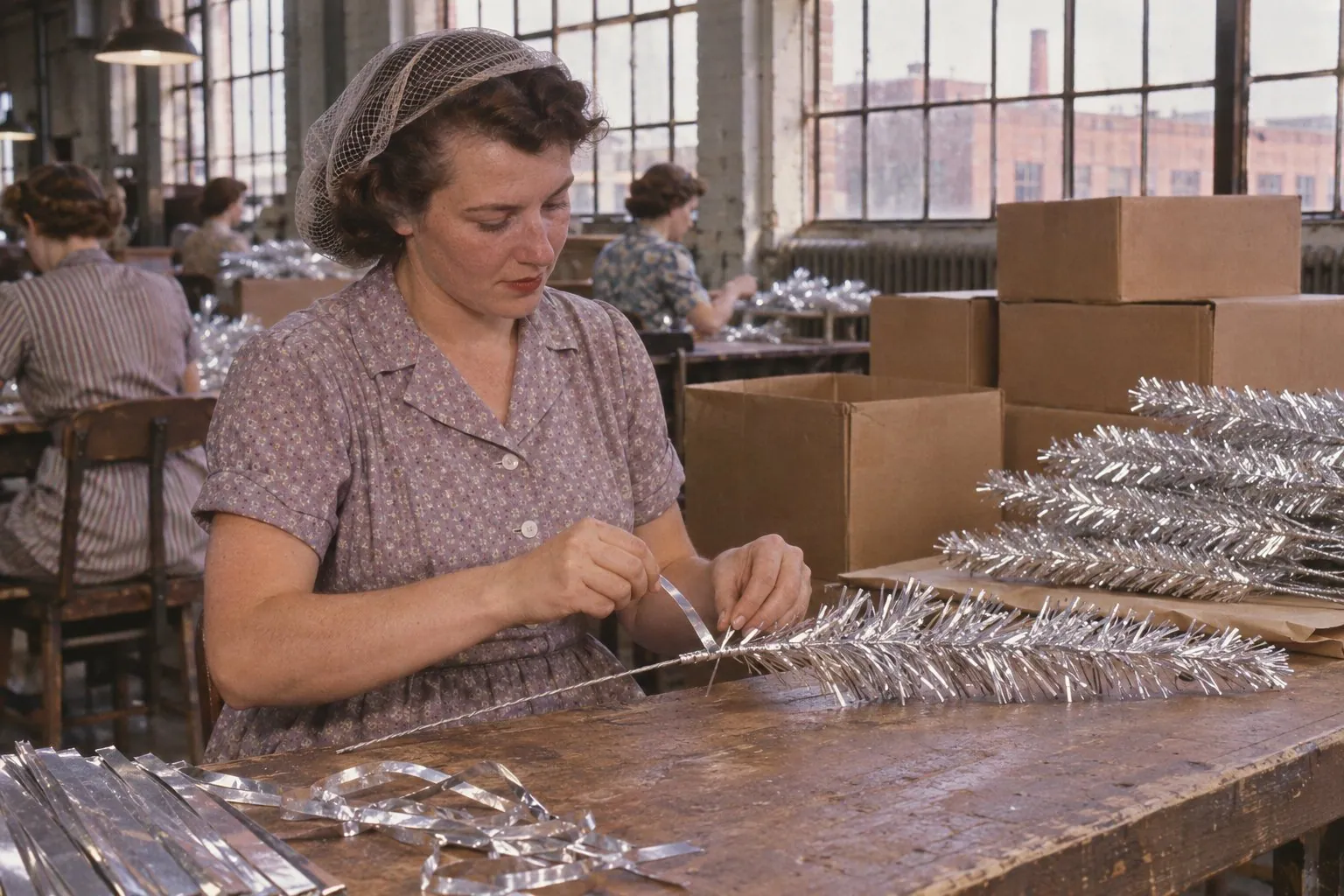
In 1958 a salesman went to a Christmas party for the Ben Franklin dime-store chain and was shown an aluminum tree made by a Chicago company, the Iron Mountain Daily News reported. That salesman was Tom Gannon of Aluminum Specialty Company in Manitowoc, which was best known for its pots and pans, according to Wisconsin Public Radio.
The company's engineers took apart the Chicago tree, which came from a firm called Modern Coatings, and redesigned it with foil "needles." Each tree cost less than $12 to make in 1959 (about $130 today), The Maui News reported. Wisconsin Public Radio says the new tree debuted at the American Toy Fair in March 1959.
The store price was about $25 in 1959 (about $270 today), according to The Maui News. By Christmas 1960 the tree had a name, the Evergleam, Up North News reported. Over the years Manitowoc turned out more than 1 million of them, according to NBC 26.
Joe Kapler, curator at the Wisconsin Historical Museum, told Wisconsin Public Radio that the trees were made cheaply from Scotch tape, aluminum foil and wooden dowels. That makes it a little funny that they now sell for hundreds of dollars.
What a silver tree cost back then
Prices are from The Maui News (1959) and a WorthPoint record of an original box with "1964" and the price written on it.
| Item | Price then | About today |
|---|---|---|
| Evergleam tree, 1959 | $25 | $270 |
| Cost to make one, 1959 | under $12 | under $130 |
| 4-foot Evergleam pom-pom, 1964 | $4.98 | $50 |
Color wheels were sold separately, and the price depended on the store and the model.
Read more: How the Old Color Wheel for a Christmas Tree Worked
Why the aluminum Christmas tree and color wheel went together
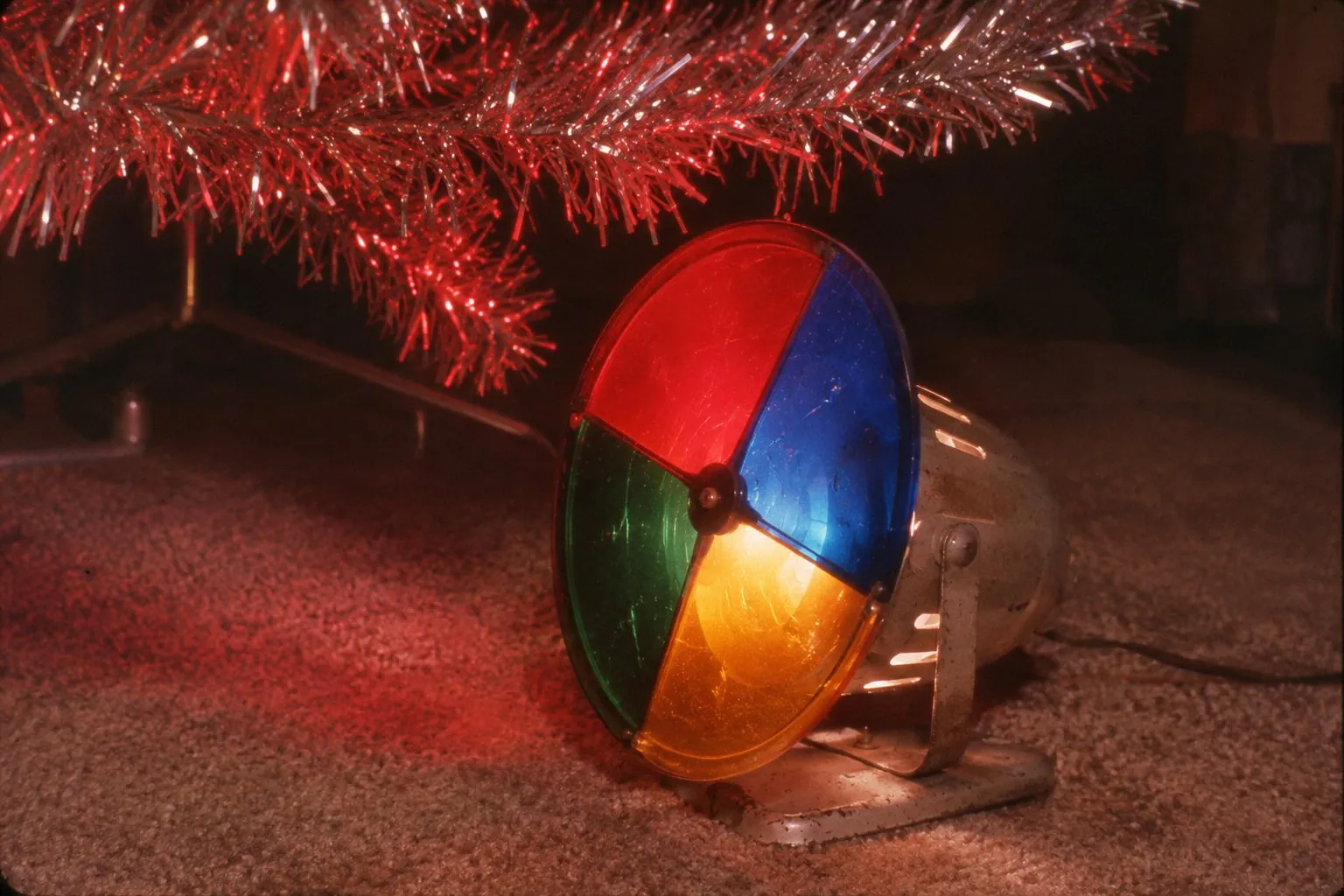
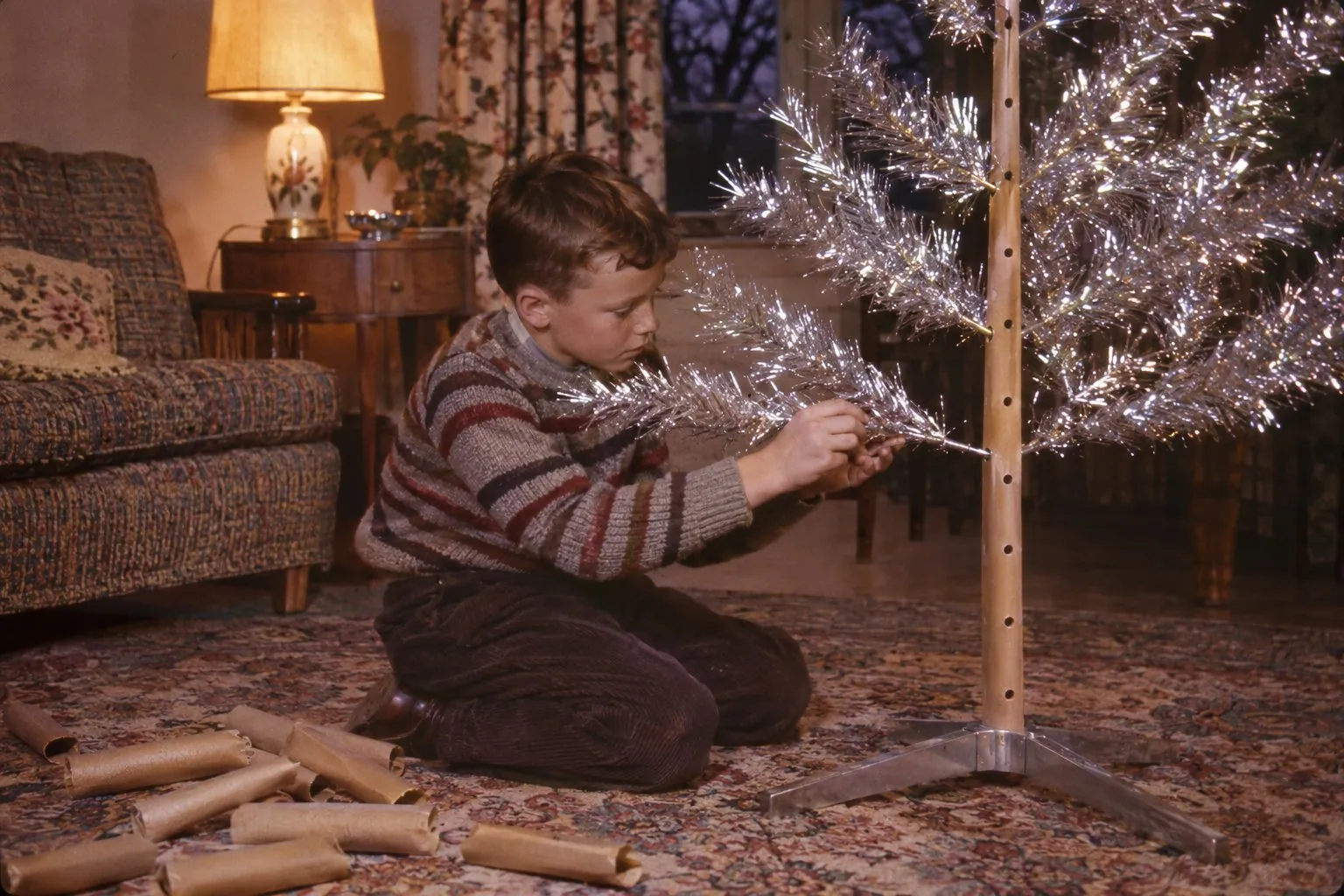
Electric lights didn't belong on metal branches. Wrapping a string of bulbs around aluminum risked a short or a shock, so a family needed another way to light the tree. The answer was a lamp on the floor pointed at the tree.
A color wheel was a small metal can with a bright bulb inside. In front of it, a round disk split into colored panels turned slowly on a little motor. Every few seconds a new color washed over the tree. Some families added a revolving stand so the tree turned too.
Ornaments stayed simple. Many households used solid glass balls in a single color, so the moving light did the work.

Pom-poms, pink trees and other styles
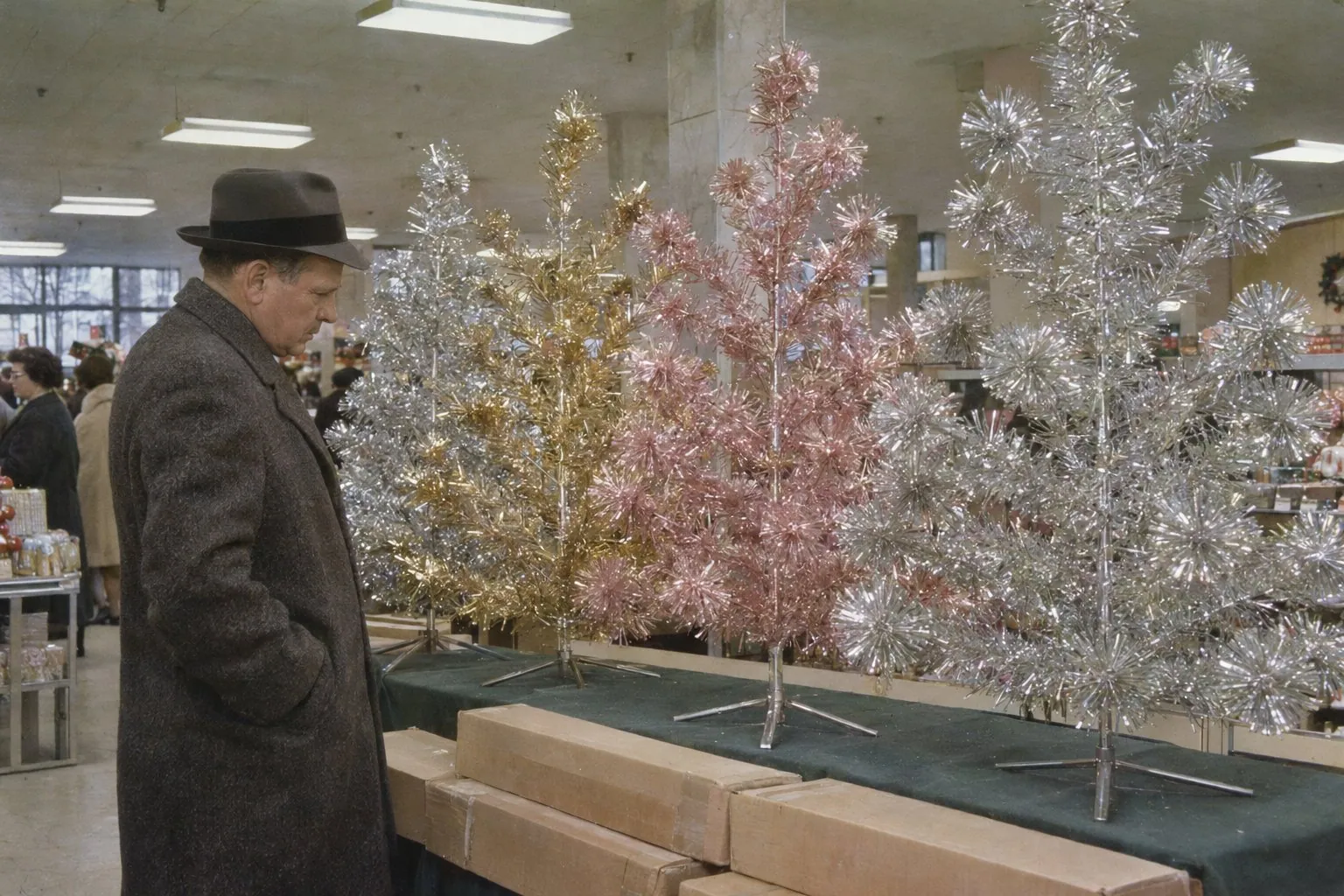
The first Evergleam branches had straight needles. Later, Aluminum Specialty added styles such as the pom-pom, according to the Wisconsin Historical Museum. The museum's collection includes the Fountain, the Frosty, the Tru-Taper and a six-foot Blue Frost. There are also gold, green and pink trees, plus four-foot tabletop sizes for apartments and offices.
Silver sold best. The museum also notes that other manufacturers started making aluminum trees during the 1960s, so not every silver tree in a picture from that decade is an Evergleam.
Charlie Brown and the backlash
In December 1965, CBS aired "A Charlie Brown Christmas." Lucy sends Charlie Brown off to "get the biggest aluminum tree you can find," and he comes back with a small, droopy real one. The aluminum tree came to stand for everything that had gone wrong with Christmas, Mental Floss wrote.
The special is often blamed for killing the trees, but the timing is more complicated. Kapler told Wisconsin Public Radio that sales peaked in 1964–65 and that he doesn't give the cartoon much credit for the decline, because sales stayed strong after it aired. According to Antique Trader, sales started falling in the late 1960s.
The 1970s aluminum Christmas tree
Production ended in the early 1970s. Antique Trader puts the last Evergleam in 1971, when the company went back to its toy cookware sets. The Maui News says 1970. Either way, by the mid-'70s most silver trees were sitting in attics in their cardboard boxes or showing up at garage sales.
In 1989, Manitowoc artists Julie Lindemann and John Shimon started collecting the trees from garage sales, estate sales and even dumpsters. That eventually led to their book "Season's Gleamings," the Iron Mountain Daily News reported. According to The Maui News, people who grew up with the trees started looking for them again in the late 1990s.
How to tell a real one
A genuine 1960s tree has some features that are easy to spot:
- A wooden center pole with angled holes. Each branch pushes into its own hole.
- Paper sleeves around the branches. Atomic Ranch says a tree should still have the sleeves that protected it in storage.
- The box. Evergleams say Aluminum Specialty Co., Manitowoc, Wisconsin. Other makers included Handy Things Manufacturing Company of Michigan.
- The right branch count. Antique Trader lists a six-foot Evergleam with 94 branches and a four-foot one with 58.
- A heavy wheel. An original color wheel has a metal housing and an old cord, so have an electrician check it before you plug it in.
What collectors pay now
Atomic Ranch says silver is usually the cheapest color and pink the most expensive. It also reported a rare pink tree that sold for more than $3,000. Antique Trader recorded eBay sales of $4,050 for a gold pom-pom tree, $2,025 for a gold Evergleam and $534 for a six-foot silver one.
At an Atlee Raber auction, a four-foot, 58-branch Evergleam sold for $279 and an eight-foot Handy Things pom-pom tree sold for $868, Antique Trader reported. Manitowoc shop owner Cathy Karl told Up North News she had heard secondhand that a rare blue-and-burgundy tree went for $10,000.
"Fifty, sixty years on, the Evergleam is now a warm, nostalgic memory, fondly recalled," Kapler told Mental Floss.
Where to see a whole forest of them
Every holiday season, Manitowoc puts on Evergleams on Eighth, with vintage trees in downtown store windows. WBAY reported hundreds of trees on display around town and at the Rahr-West Art Museum. The Wisconsin Historical Museum in Madison has also put on its own Evergleam exhibits.
If you stand among them with the lights low and a color wheel turning, you may hear that same hum from the carpet.
Frequently asked questions
What is an antique aluminum Christmas tree with color wheel worth?
It depends on color, size and condition. Antique Trader recorded silver Evergleams selling for about $279 to $534 and a gold pom-pom tree for $4,050. A working original color wheel adds to the value.
Can you put lights on an aluminum tree?
Not strings of electric lights. Bulbs wrapped around metal branches can cause a short or a shock, which is why people lit their trees with a color wheel on the floor.
Who made the first aluminum Christmas tree?
A Chicago company, Modern Coatings, was making metal trees by 1958, according to The Maui News. Aluminum Specialty of Manitowoc redesigned the idea and started selling it in 1959. Its tree became the best-known one, the Evergleam.
Did Charlie Brown really kill the aluminum tree?
It helped make the trees look tacky, but it wasn't the only reason. Kapler told Wisconsin Public Radio that sales stayed strong after the 1965 special, and production went on until the early 1970s.
Is an aluminium tree with a color wheel the same thing?
Yes. "Aluminium" is the British spelling. In America, people called them aluminum trees, silver trees or Evergleams, and almost all of them came with, or were sold beside, a rotating color wheel.
Sources
- Oh Aluminum Christmas Tree, Your Branches Are Ever Gleaming, Wisconsin Public Radio, 2022
- Ever Gleaming, Wisconsin Historical Society / Wisconsin History Center, 2023
- How Charlie Brown killed the aluminum Christmas tree, The Maui News, 2017
- Manitowoc celebrates aluminum Christmas trees, Iron Mountain Daily News, 2019
- Aluminum Trees Are Yuletide Cool, Antique Trader, 2020
- The Short Life—and Awesome Resurgence—of the Aluminum Christmas Tree, Mental Floss, 2014
Related Stories
Love a trip down memory lane?
Get a fun quiz every morning. Free · One email a day · Unsubscribe anytime