The 1970s Christmas Tree: Flocked, Fake and Full of Tinsel
Color-coded branches, spray-on snow and silver tinsel everywhere: here is how the 1970s Christmas tree went up in your living room.
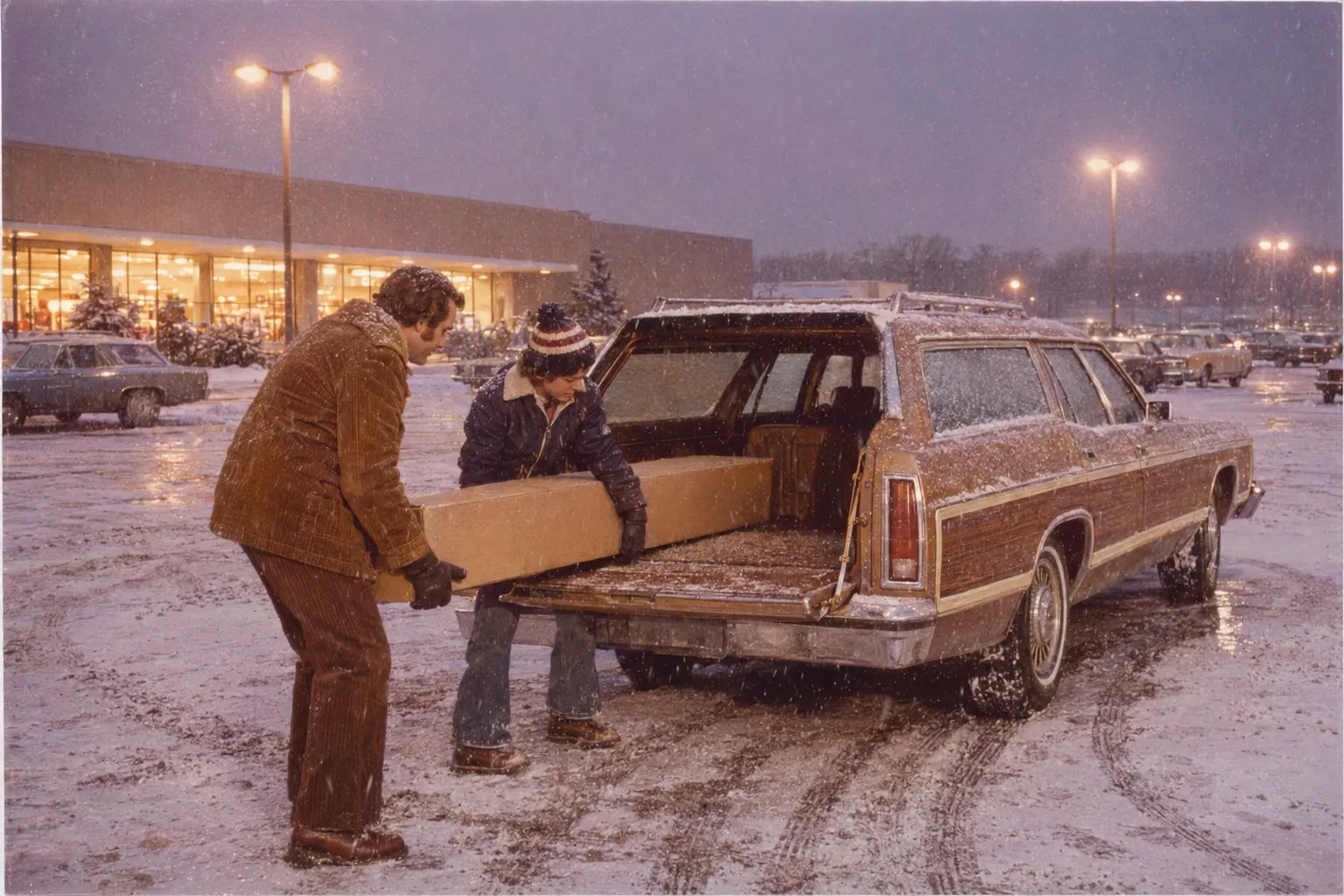
A typical 1970s Christmas tree was either a fresh-cut pine from a corner lot or, more and more often, an artificial tree that came out of a cardboard box. Either way, it usually wore big colored bulbs, glass and satin ornaments and a heavy coat of silver tinsel, and plenty of them were frosted white with flocking.
You probably remember the smell of that box coming down from the attic: dusty cardboard and a little bit of plastic. Then came the sorting of branches on the living room carpet while somebody hunted for the stand.
This is the story of how families moved from real trees to boxed ones, and how they trimmed them once they did.
From the corner lot to the attic box
Through the '50s and '60s, most families still bought a real tree. In a lot of towns that meant a lot at the gas station or the church parking lot, a string of bare bulbs overhead and a man in a plaid coat working the saw.
Fake trees weren't new. The Addis Brush Company had made trees in 1930 using the same machines it used for toilet brushes, just with green bristles, according to University of Illinois Extension. Aluminum trees followed, first made in Chicago in 1958, the Extension says.
Aluminum was the flashy choice. Then, in December 1965, CBS aired "A Charlie Brown Christmas." In it Charlie Brown passes up the shiny metal trees and goes home with a scrawny real one. After that, an aluminum tree started to look a bit silly.
The green plastic tree was the one that lasted. Si Spiegel, who ran Hudson Valley Tree Inc. in Newburgh, New York, told NPR that brush trees led the artificial market from 1960 to 1980. With PVC plastic branches, he said, the brush tree "became the Ford of the industry."
Read more: Ben Cooper Costumes: Who Dressed America's Trick-or-Treaters
How the 1970s Christmas tree went together
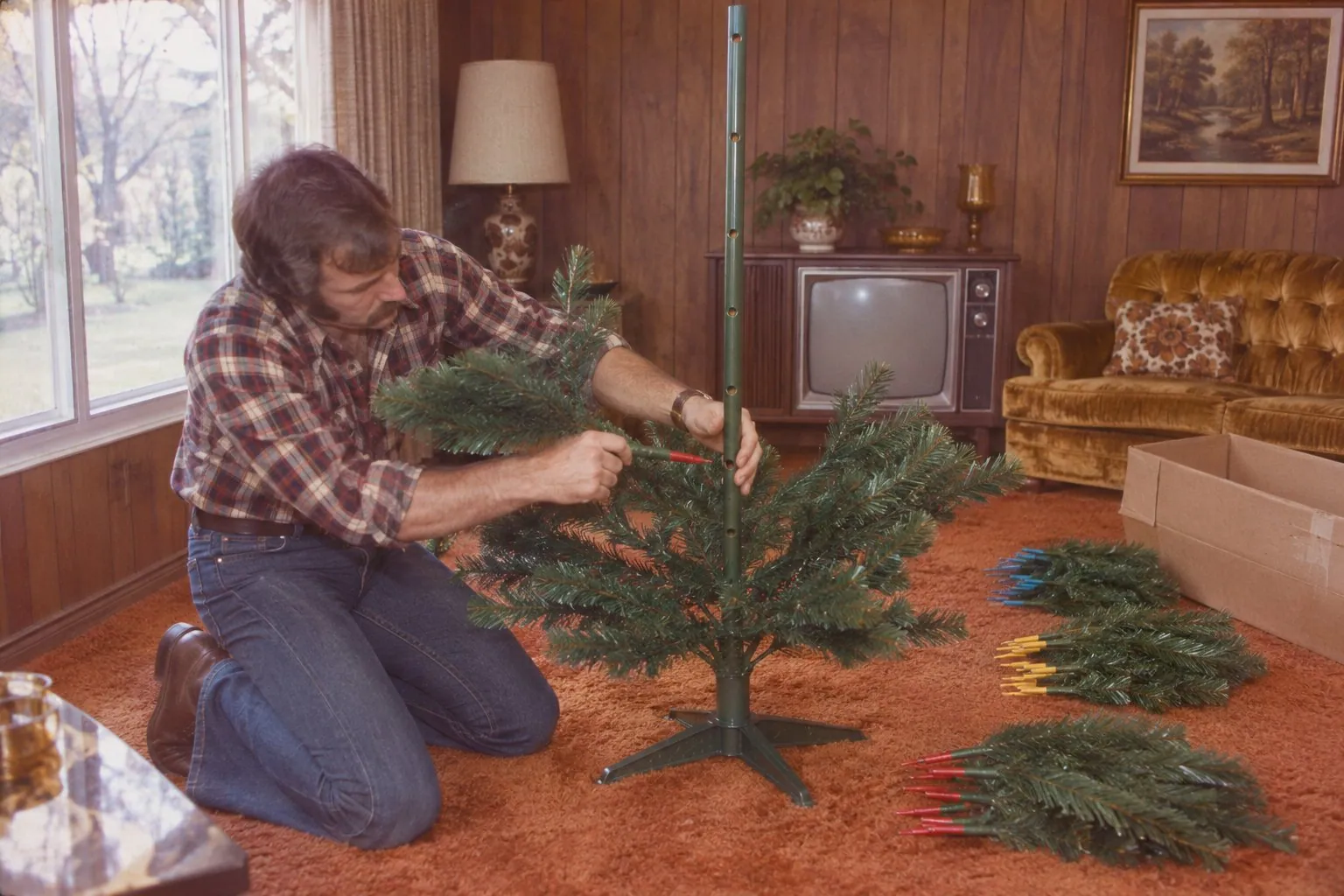
If your family had an artificial tree, you know the routine. There was a green wooden or metal pole with rows of angled holes, and a pile of wire branches wrapped in plastic needles.
On many trees the tip of each branch wire was painted a color, so all the reds went in one row and all the yellows in the next. Lose track and you ended up with long branches at the top and short ones at the bottom. Somebody always lost track.
Then came fluffing. Every branch came out of the box squashed flat, so somebody had to bend each little wire tip out by hand. Kids usually got that job. It took the better part of an hour, and your fingers were sore afterward.
Spiegel saw people change their minds about these trees. "When I first began manufacturing trees in the early 1960s, 95 percent of the people said they'd never have an artificial tree," he said, as quoted in Beth Collier's history of the business. He patented a hinged branch holder in 1972, and by the mid-1970s he was turning out 800,000 trees a year for American Tree and Wreath, Collier writes.
Branches got softer, too. In the 1970s, "soft needle" trees began taking over, NPR reported. They were less scratchy than the stiff brush kind and looked more like the real thing.
Flocking: snow that never melted
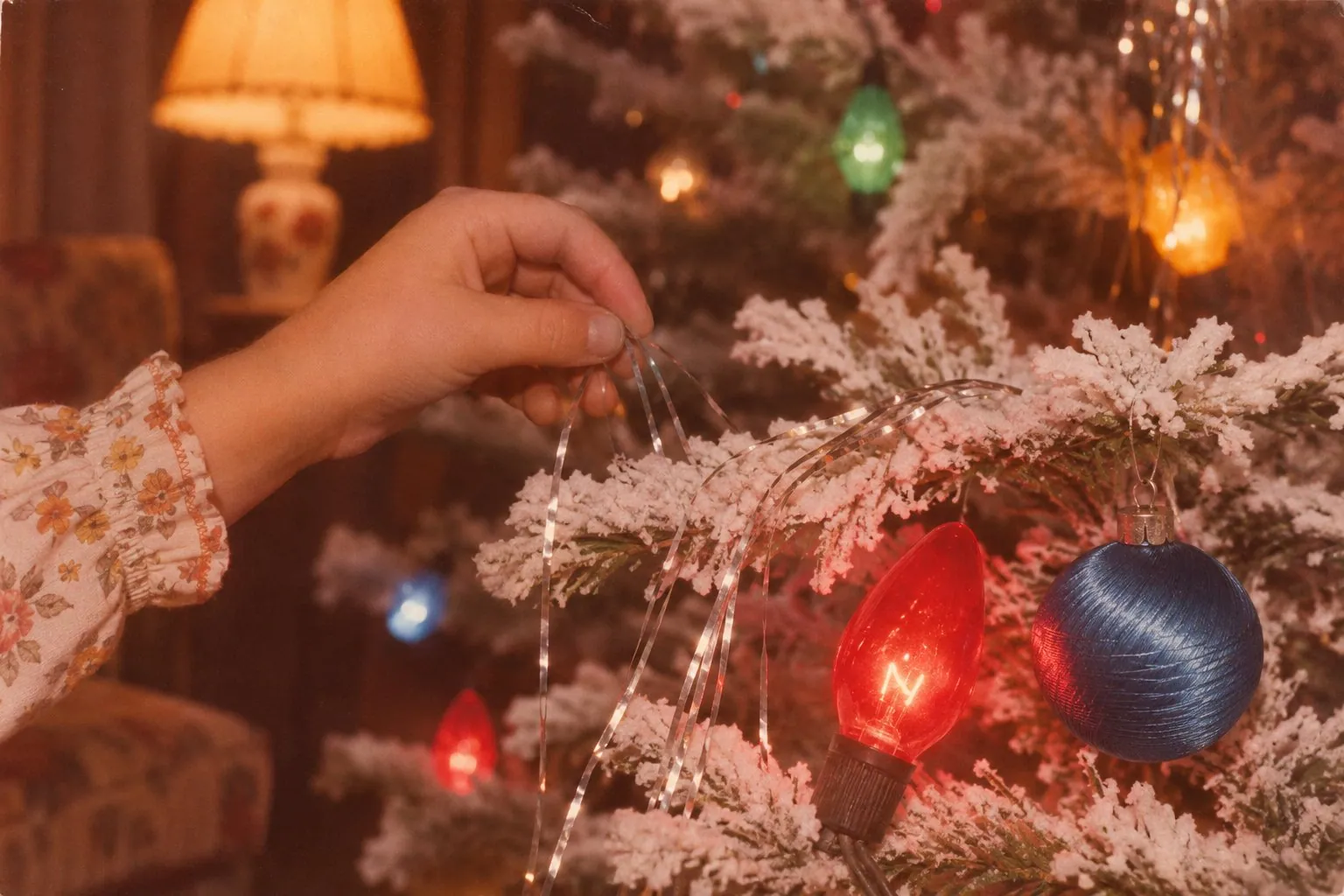
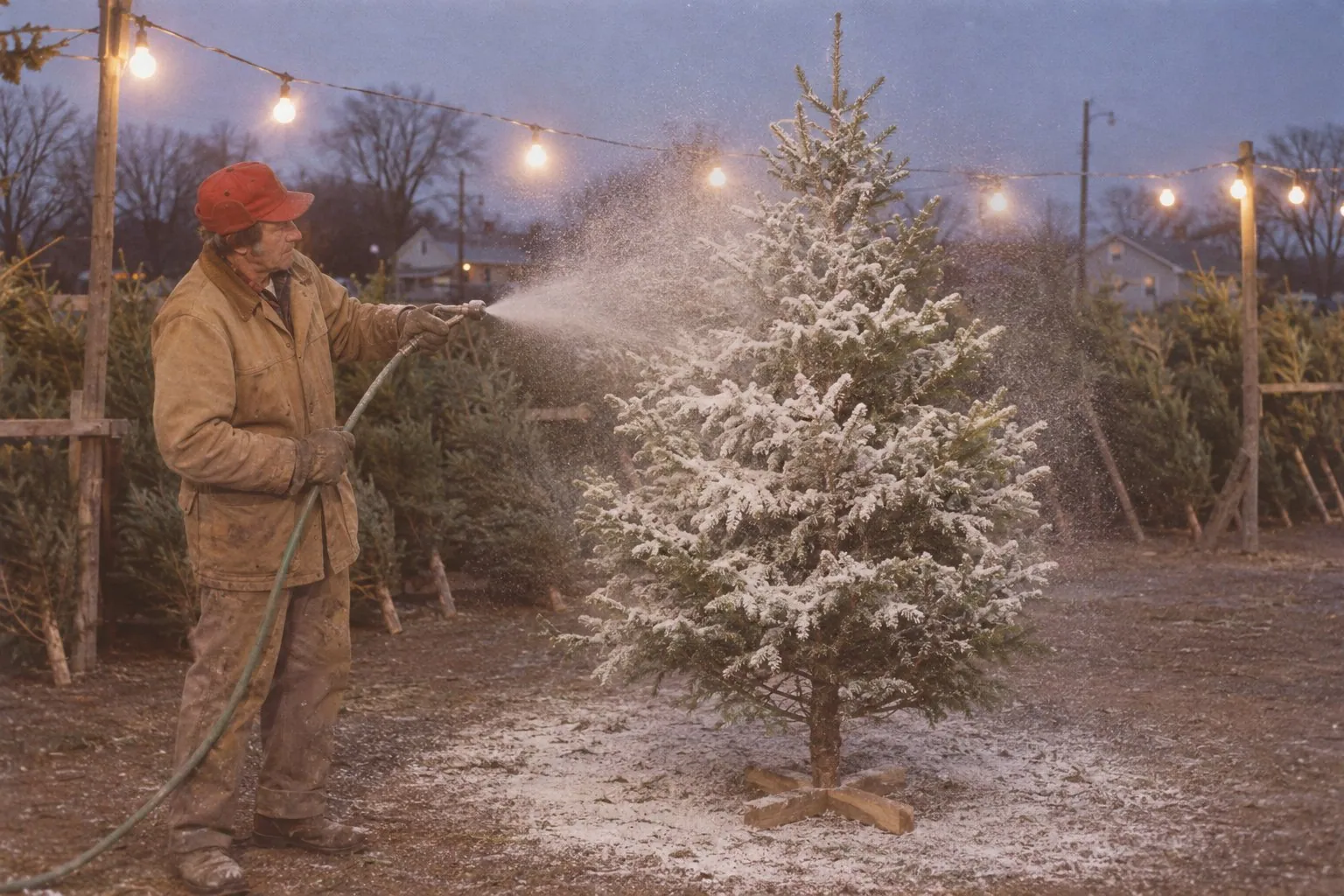
A flocked tree was a 1970s showpiece. The branches were sprayed with a sticky white fiber that dried into what looked like fresh snow, and the whole room seemed brighter.
There were a few ways to get one. Some tree lots would flock your real tree for an extra charge. You could buy an artificial tree that came already flocked, or do it yourself with spray cans of artificial snow. Some home kits even hooked up to the blowing end of a vacuum cleaner.
Flocking had a price you paid all season. It shed on the carpet, got on your sweater and turned up in the vacuum bag well into January. Most families also had a can of spray snow for the corners of the front windows, often sprayed through a cardboard stencil of a star or a bell.
Tinsel, and the fight over how to hang it
Tinsel might be the thing people remember best about a 1970s tree. It came in flat cardboard packs of thin silver strands, and nearly every house had an argument about how to hang it.
One side, often Dad, wanted it put on one strand at a time so it hung straight like icicles. The other side, often the kids, grabbed a handful and threw it. Both kinds of trees ended up in plenty of family photos.
The old tinsel had lead in it, which is why it hung so nicely and felt heavy in your hand. In 1971 the government decided lead tinsel was a health risk and talked manufacturers into stopping voluntarily, University of Illinois Extension notes. The plastic tinsel that replaced it was lighter. It clung to everything and drifted around whenever the furnace kicked on.
Some families didn't throw the old lead tinsel away. They pulled it off the tree in January, wound it back on its cardboard and used it again the next year.
Lights, ornaments and the angel on top
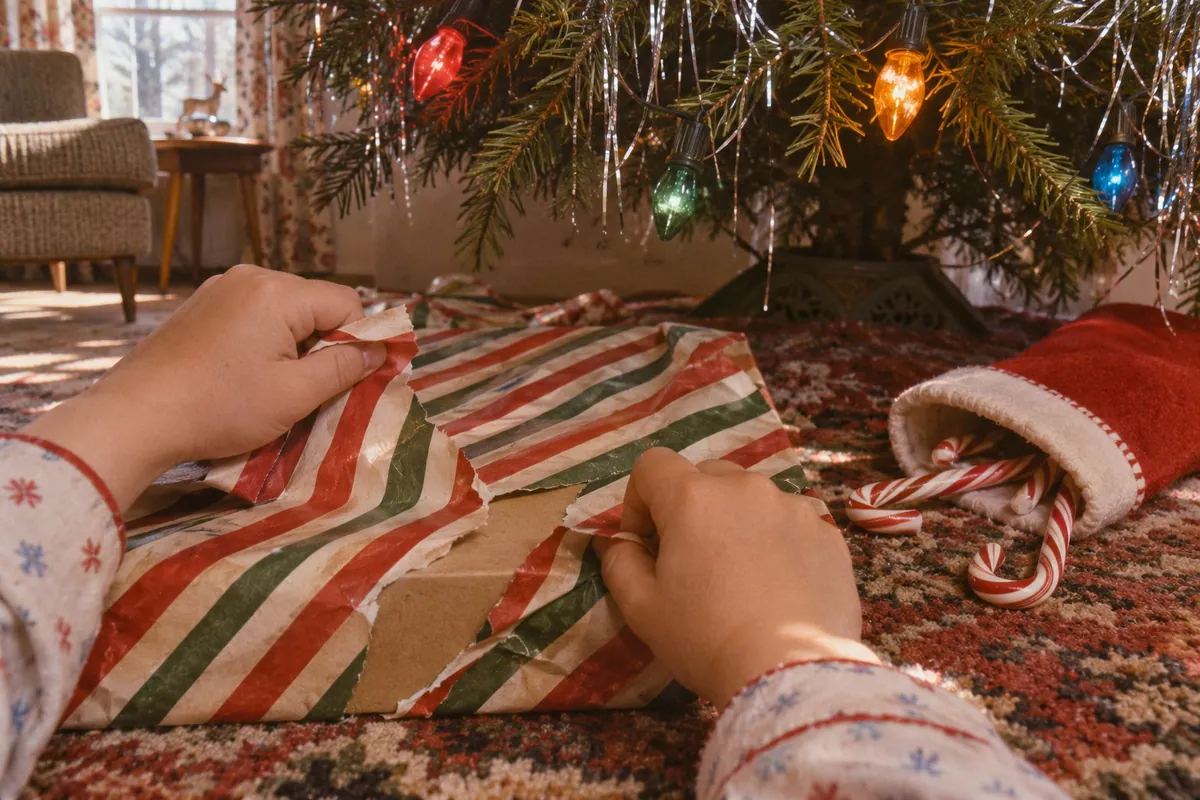
Lights went on first, and you probably remember the big bulbs: C7s inside and fatter C9s, in red, green, blue, orange and yellow. They got hot enough to warm your fingers. When one burned out, you tested bulbs until you found the bad one.
Over the decade the little "midget" or miniature lights became more common, and many trees had both kinds at once. The plug end usually ended up behind the couch in a tangle of extension cords.
Ornaments came out of old egg cartons and liquor-store boxes. Many families had a mix of glass balls left over from the '50s and '60s, shiny satin-thread balls, and things the kids made at school with pipe cleaners and construction paper. In 1973 Hallmark started selling its Keepsake ornaments, and buying a new one each year became a habit in a lot of homes.
The tree topper was the last thing on. It was usually a lighted star or an angel with a plastic face, and it always leaned a little.
Why the boxed tree won
The reasons were practical. You bought it once, it didn't drop needles, it didn't dry out by New Year's, and nobody had to tie anything to the roof of the station wagon.
The numbers show how far things had moved by the mid-'80s. In 1986, 35 percent of American homes had an artificial tree, 38 percent had a real one and 28 percent had none, according to National Christmas Tree Association figures cited by NPR.
A lot of you grew up with both kinds: a real tree as a kid and a boxed one by the time you had kids of your own. The color-coded branches, the flocking on the carpet and the tinsel arguments came with the boxed tree.
Frequently asked questions
What did 1970s artificial Christmas trees look like?
Most were green plastic trees with wire branches that fit into holes on a center pole. The branch tips were often color-coded to show which row they went in. Brush-style trees led the market from 1960 to 1980, Si Spiegel told NPR, and softer "soft needle" trees caught on during the 1970s.
Did Christmas trees from the 1970s have lead tinsel?
Early in the decade, many did. In 1971 the government called lead tinsel a health risk and manufacturers voluntarily stopped making it, according to University of Illinois Extension. Plastic tinsel took its place.
When did aluminum Christmas trees go out of style?
The first aluminum trees were made in Chicago in 1958, University of Illinois Extension says. They lost their appeal after "A Charlie Brown Christmas" poked fun at them on CBS in December 1965, and green plastic trees took over the artificial market.
How were Christmas trees flocked in the 1970s?
Some tree lots sprayed real trees for you, and some artificial trees came already flocked. At home, families used spray cans of artificial snow or flocking kits, some of which worked with a vacuum cleaner's blower.
Sources
- Christmas Tree Facts, University of Illinois Extension, undated
- Begun The Christmas Tree War Has, NPR, 2014
- Begun The Christmas Tree War Has, WGBH, 2014
- Where Did Artificial Christmas Trees Come From?, Beth Collier, 2022
Related Stories
Love a trip down memory lane?
Get a fun quiz every morning. Free · One email a day · Unsubscribe anytime