The 1970s Angel Tree Topper on Grandma's Tree
The plastic angel that glowed, the doll-faced cone angel, the tinsel star: find the exact topper from your family's tree.
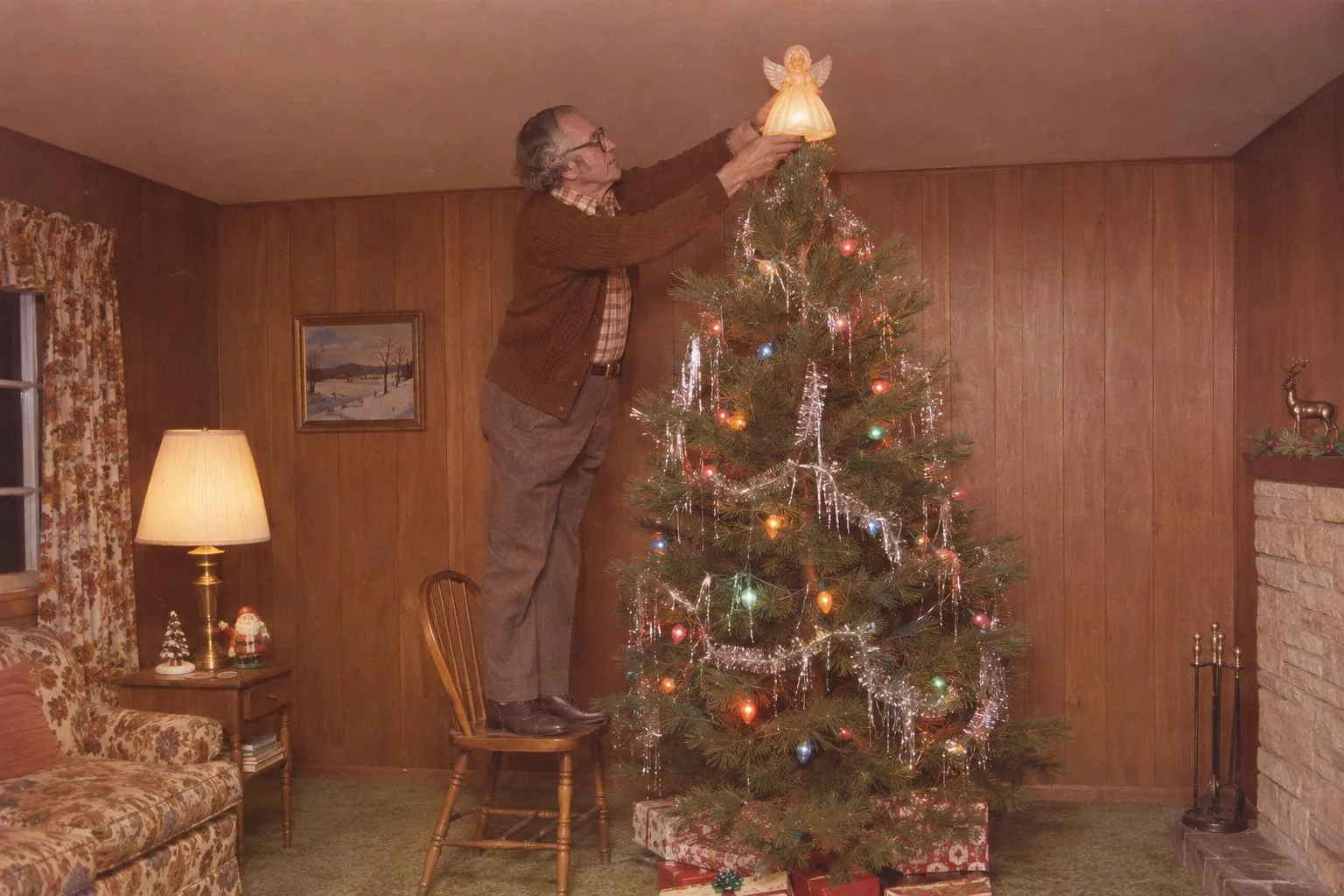
The 1970s angel tree topper you remember was most likely one of three kinds: a hard plastic angel that lit up from inside, a cardboard-cone angel with a doll face and a skirt of tinsel, felt or burlap, or a white angel wrapped in spun-glass "angel hair." Plenty of families skipped the angel altogether and used a lighted plastic star or a glass spire.
Your memory of it is probably tied to one moment. Somebody, usually Dad or Grandpa, climbed a kitchen chair while everyone else told him it was crooked.
This guide sorts the toppers by how they looked, so you can work out which one sat on Grandma's tree.
Which 1970s angel tree topper did your family have?
Angels came in more varieties than any other topper. The clues are what she was made of, her face, and whether she lit up.
The glowing plastic angel
This was the one that lit up. She was molded from thin, see-through plastic, often white, cream or pale pink, with a short cord out the back that plugged into a socket on the light string. Once the room lights went off, her whole body glowed.
If you can still picture a small round hole under her skirt, that's where the bulb sat. Those bulbs ran warm, and lots of these angels ended up with a scorched spot or a little sag where the plastic had softened over many Christmases. Look on the back or the base for a maker's name. Noma is one you'll often see on lighted plastic Christmas pieces from these years.
The cone angel with a doll face
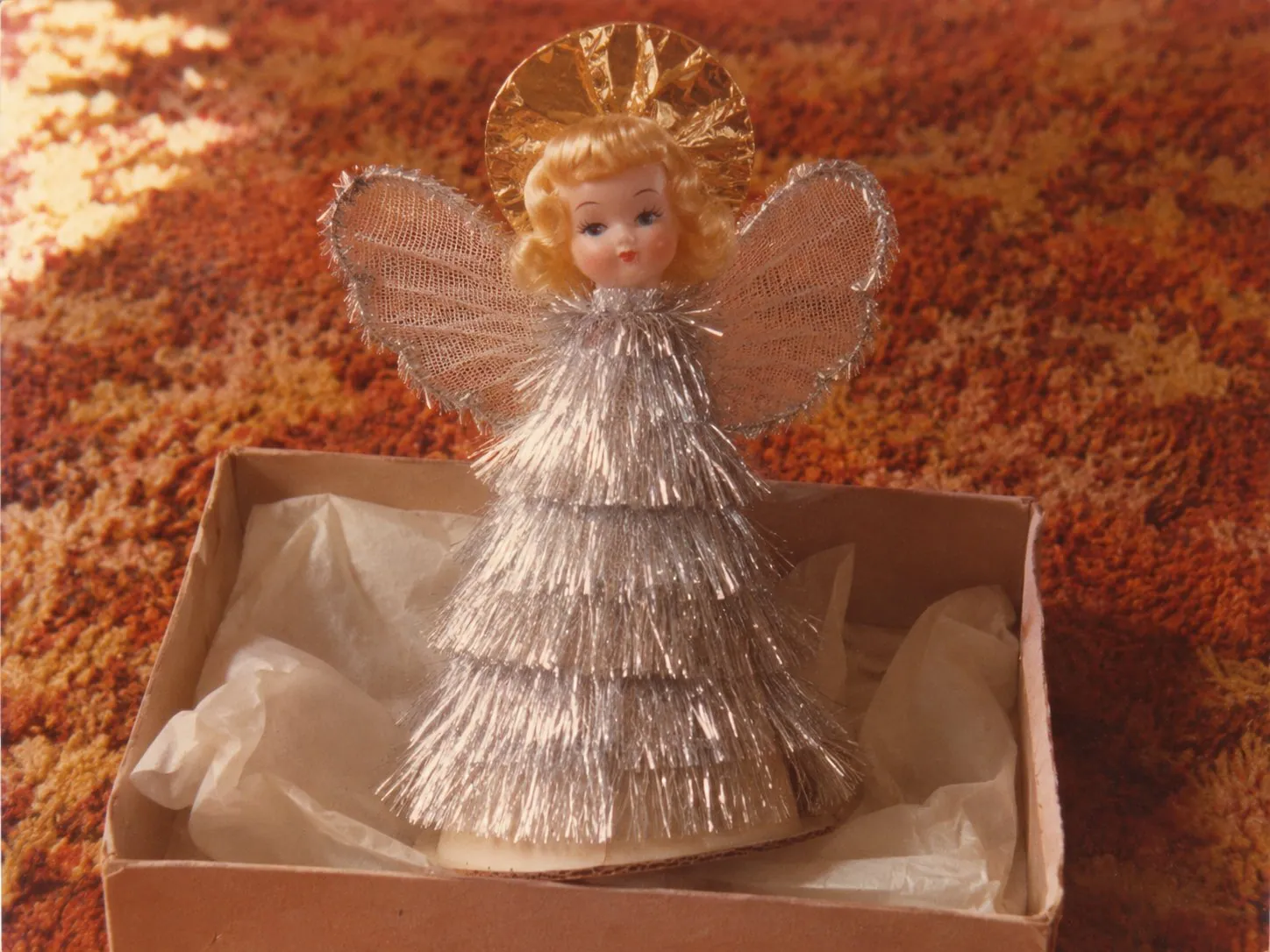
She sat on the tree with no wires at all. Her body was a cardboard or plastic cone that slipped over the top branch. On top went a small molded head with painted eyes and red lips, and sometimes a gold foil halo.
The skirt is how you tell one from another. Some had layers of silver or gold tinsel. Others had felt, satin or lace, and by the late '70s you saw homespun ones made of burlap and jute twine. Turn one over and you'll often find "Made in Japan," "Made in Hong Kong" or "Made in Taiwan" stamped inside the cone. Those three places made a huge share of the inexpensive Christmas decorations sold here in those years.
The angel hair angel
Some angels were wrapped in a white, cloud-like fluff called angel hair. That fluff was spun glass, the same stuff in the bags of angel hair people stretched over their trees.
If you remember your hands itching after touching her, that's the reason. Mothers made it a rule that kids looked but didn't handle her.
Read more: Ben Cooper Costumes: Who Dressed America's Trick-or-Treaters
The stars that lit up the living room
Plenty of families thought an angel was too much and went with a star. In those years, stars came in two main kinds.
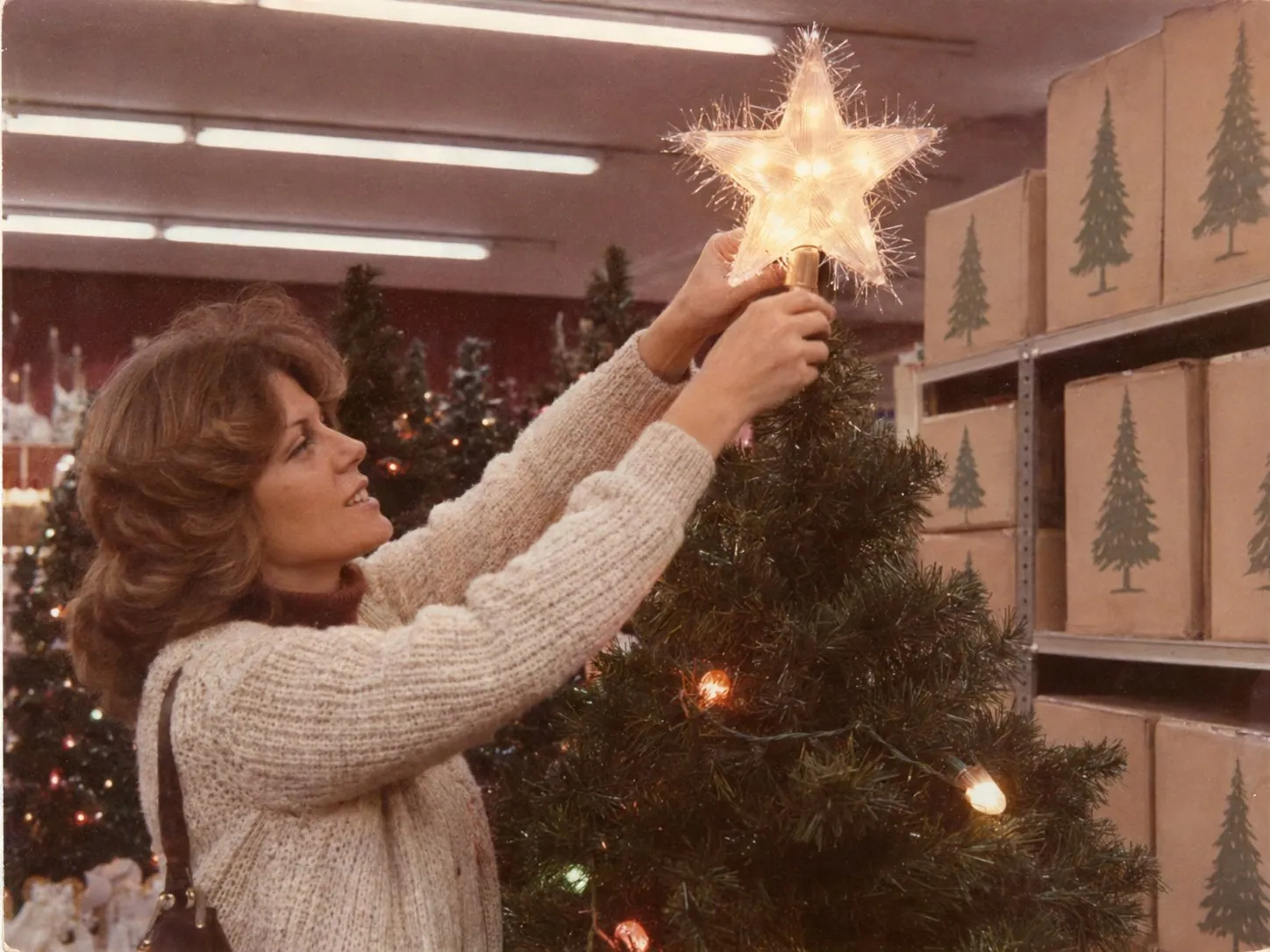
The lighted plastic star
This was the angel's cousin: one bulb in the middle and see-through plastic around it, usually five-pointed, sometimes with a long tail like the Star of Bethlehem. Many had a ring of tinsel or a sunburst of plastic rays around the edge.
Most clipped or wired onto the top branch and plugged in like the angels. Some newer ones had small twinkling bulbs fixed to the points. Miniature lights caught on in the '70s, so you started seeing toppers made for them too.
The tinsel and foil star
The unlit kind was cardboard or wire covered in shiny foil or tinsel garland. It caught the light from the bulbs below. If your tree had big C7 or C9 bulbs in red, green, blue and orange, a foil star picked up every color.
| Topper | What it was made of | Lit up? | How to spot it |
|---|---|---|---|
| Glowing angel | Thin molded plastic | Yes, one bulb | Cord out the back, hole for the bulb |
| Cone angel | Cardboard or plastic cone, doll head | No | Tinsel, felt or burlap skirt, maker's stamp inside |
| Angel hair angel | Spun glass over a form | Sometimes | White fluff, itchy to touch |
| Lighted star | Clear or colored plastic | Yes | Rays or tinsel around the edge |
| Glass spire | Blown, silvered glass | No | Tall point, often with an indent |
The glass spires from the '50s
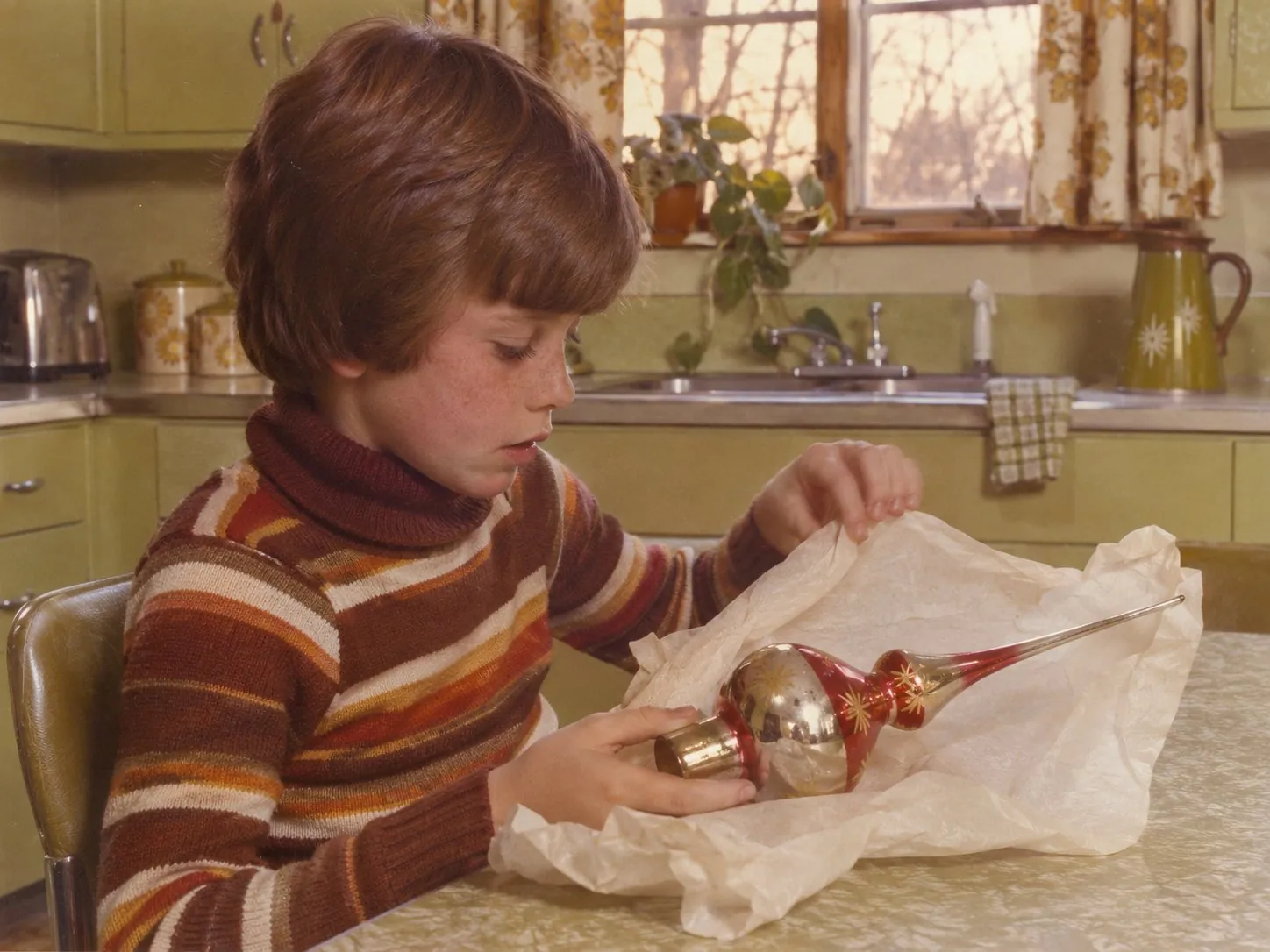
Some homes didn't have an angel or a star at all, just a tall, pointed glass spire with a round bulb at the bottom and a spike rising from it. These usually came down from the '40s and '50s, made of silvered glass painted in bright colors, sometimes with a frosted indent on the side.
Shiny Brite was the name on many of the glass ornament boxes from those years, and the matching spires had the same look. By the '70s, a family that still owned one tended to keep it in its own box, wrapped in tissue, and hang it last.
These were the fragile ones. If one ever broke on Christmas Eve, you may still remember the sound of glass hitting the floor and somebody running for the broom.
The trees under the toppers
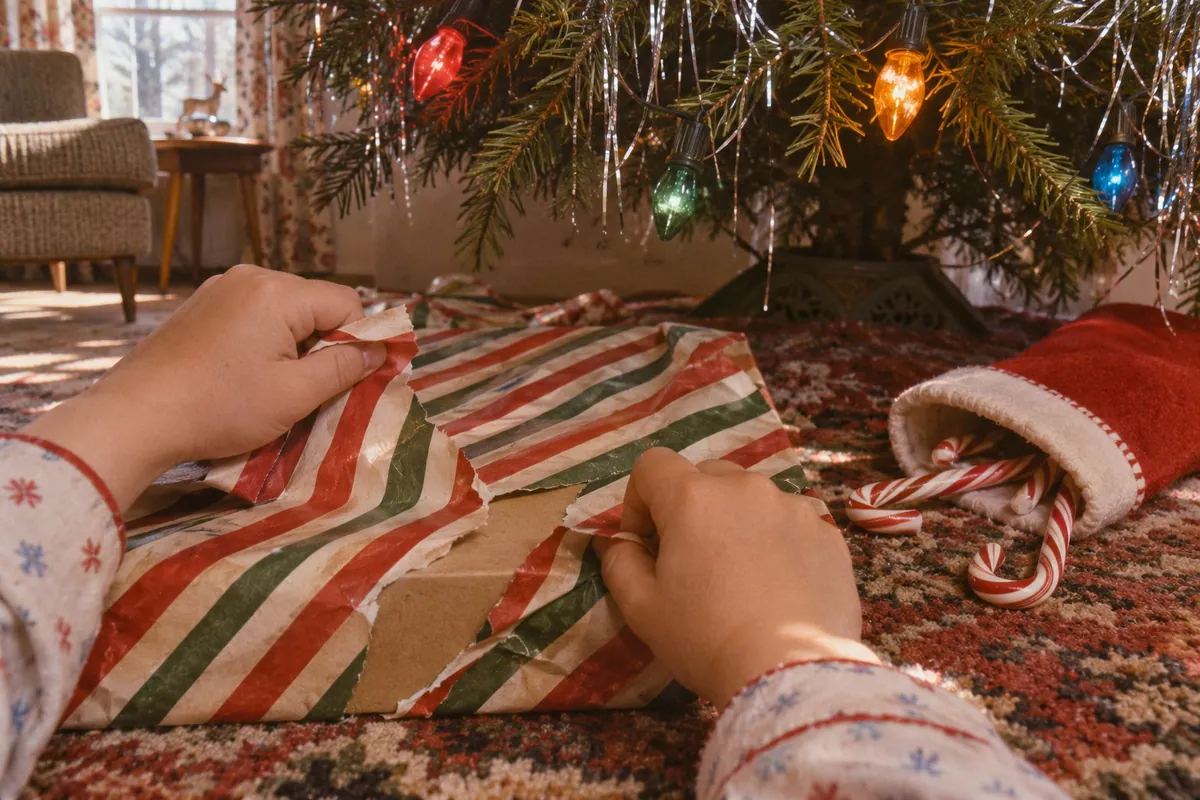
What your topper looked like depended on the tree under it. On a real Scotch pine or balsam fir from the lot at the gas station or the church, you got that sharp pine smell, and you'd find needles in the carpet until February.
Families with an aluminum tree usually used a lightweight topper, or none. Evergleam trees, made in Manitowoc, Wisconsin, starting in 1959, couldn't take electric lights safely, so people lit them with a rotating color wheel on the floor. Sales of those trees fell after "A Charlie Brown Christmas" poked fun at them when it first aired on CBS on December 9, 1965.
All through the '70s, more people switched to artificial green trees in boxes, with branches you hooked in by color-coded tips. A stiff plastic top branch held a cone angel or a clip-on star better than a floppy real one did.
Why that one topper stuck with you
The topper was the last thing to go on and the first thing you noticed. In many homes it was also the oldest decoration in the box, older than the kids who argued over who got to hand it up.
That's why so many still turn up today. People brought Grandma's angel home after the house was sold, and she still sits on top of their tree, a little scorched and faded.
Frequently asked questions
What did a 1970s tree topper usually look like?
Most were either a glowing plastic angel, a cardboard-cone angel with a doll face, or a lighted plastic star. Burlap and felt angels grew common late in the decade, and some families still used a glass spire from the '50s.
How can I tell if my angel tree topper is from the 1970s?
Look inside the cone or on the base for a stamp like "Made in Taiwan," "Republic of China" or "Made in Hong Kong." Burlap or jute skirts, molded doll faces and a cord for one bulb also point to those years.
Why did my grandmother's angel make my hands itch?
Many angels were trimmed with angel hair, which was spun glass. Tiny glass fibers can bother the skin, so it's best to handle these with gloves.
Is it safe to plug in a 1970s Christmas tree topper today?
Check the cord and socket first. Old wires get brittle, and the plastic around the bulb may already be heat-damaged, so many collectors swap in a cool LED bulb or simply leave the topper unlit.
Sources
- Editor's note: no expert quote, readers' memories or linked sources are included because our web search tool was unavailable while this was written. The article sticks to well-established history, and its dates and brand names should be checked against references like these before publishing.
- Sears, Roebuck and Co., Christmas Wishbook catalogs, 1970s editions
- Montgomery Ward, Christmas catalogs, 1970s editions
- Robert Brenner, Christmas Past, Schiffer Publishing, 1985
Related Stories
Love a trip down memory lane?
Get a fun quiz every morning. Free · One email a day · Unsubscribe anytime