Grandma's Vintage Christmas Tree With Bubble Lights
The little tabletop tree with glowing glass candles that bubbled: who made it, how it worked and where it sat every December.
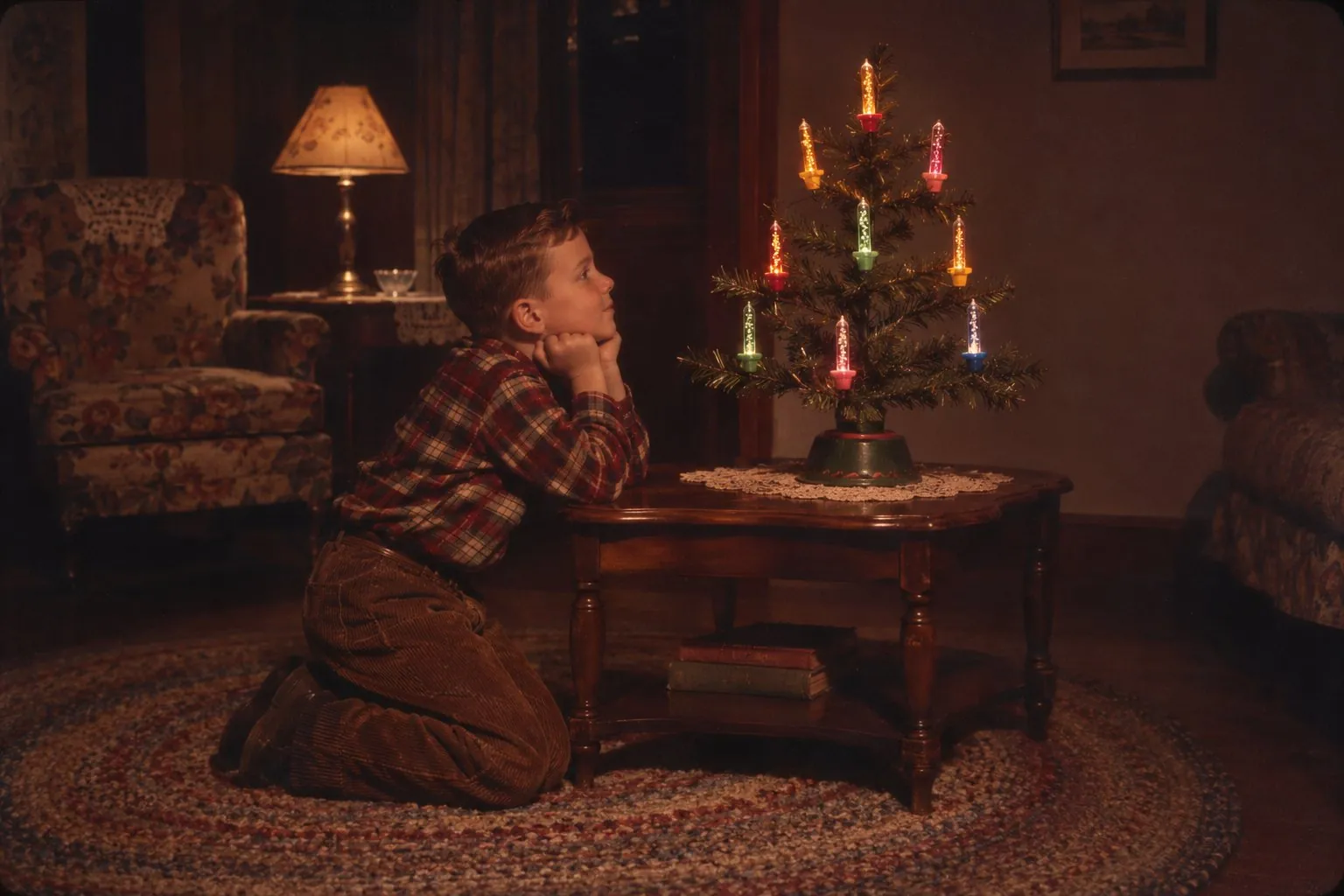
The vintage Christmas tree with bubble lights was a small artificial tabletop tree with glass tubes of colored liquid that bubbled once the bulbs warmed up. The classic ones came from NOMA, Paramount and Royal in the late 1940s and early 1950s. The Shiny Brite bubble trees you see in listings today were made much later by Christopher Radko.
You probably remember one plugged in on a side table, a windowsill or the top of the console set. Grown-ups liked it because it brightened a corner. Kids liked it because you could sit and wait to see which tube would start bubbling first.
It wasn't the big tree in the living room. It was the little one, and in a lot of houses it came out of the same box every year.
Where the bubble light came from
The idea came from Carl Otis, an accountant at Montgomery Ward who tinkered in his basement. A historian named Fay told The Washington Post in 1989 that Otis had been experimenting with methylene chloride, a liquid that boils at a low temperature. Otis first pictured his bubbling tube as an advertising display.
Christmas historian Thomas Carlisle has said Otis was inspired by glowing candles and offered the idea to several companies before NOMA said yes, House Digest reported. The collectors' club Golden Glow of Christmas Past says he also had the bubble tubes on a jukebox in mind, and that the lights came out in December 1946.
They sold fast. "NOMA sold 9.7 million of them in 1946, the first year of full production and sales," Fay told The Washington Post. Fay added that in 1947 Otis earned more than $63,000 in royalties (about $888,000 today) at 3 cents a light (about 42 cents today).
Read more: Ben Cooper Costumes: Who Dressed America's Trick-or-Treaters
Who made the little tabletop trees
Lighted tabletop trees came before the bubble lights did. Paramount, which also sold under the Raylite name, had been selling them since 1937, according to the collector site Old Christmas Tree Lights. When the company began making its own bubbling lights in 1947, bubble light trees soon followed.
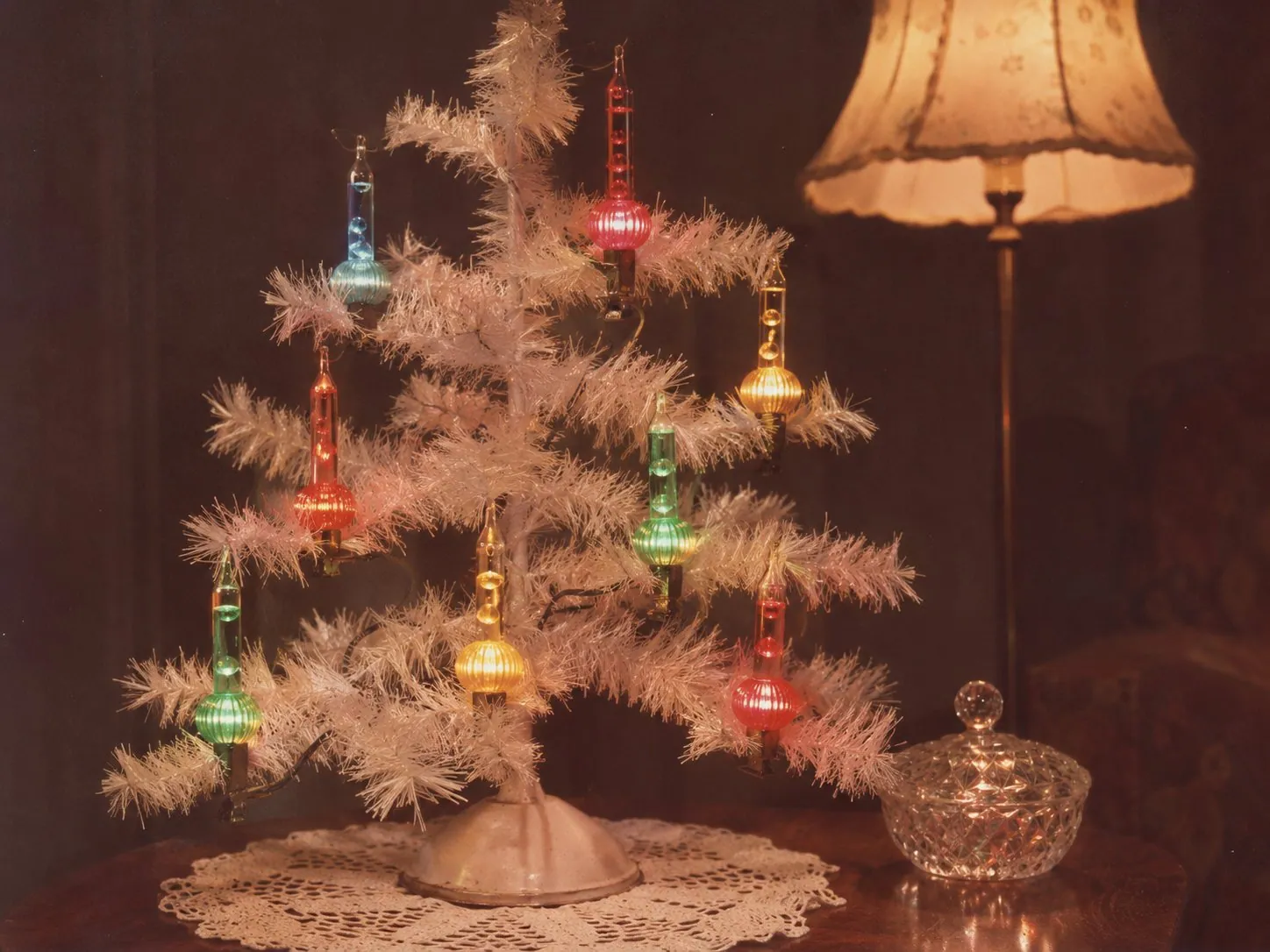
The same site shows NOMA bubble light trees from 1948 with nine of the new saucer-style bubbling lights. It also shows a Royal bubble light tree from about 1950 that belongs to collector Chris Cuff. Royal Electric of Pawtucket, Rhode Island, called its lights "Sparkling Royalites" to stay clear of NOMA's patents.
The tree that ran on one bulb
One Paramount tree didn't use separate lamps at all. A single 25-watt bulb lit and heated the whole thing, and the bubble tubes slid into slots in a metal cone at the base, Old Christmas Tree Lights explains. The site calls it very hard to find today.
What made a vintage Christmas tree with bubble lights bubble
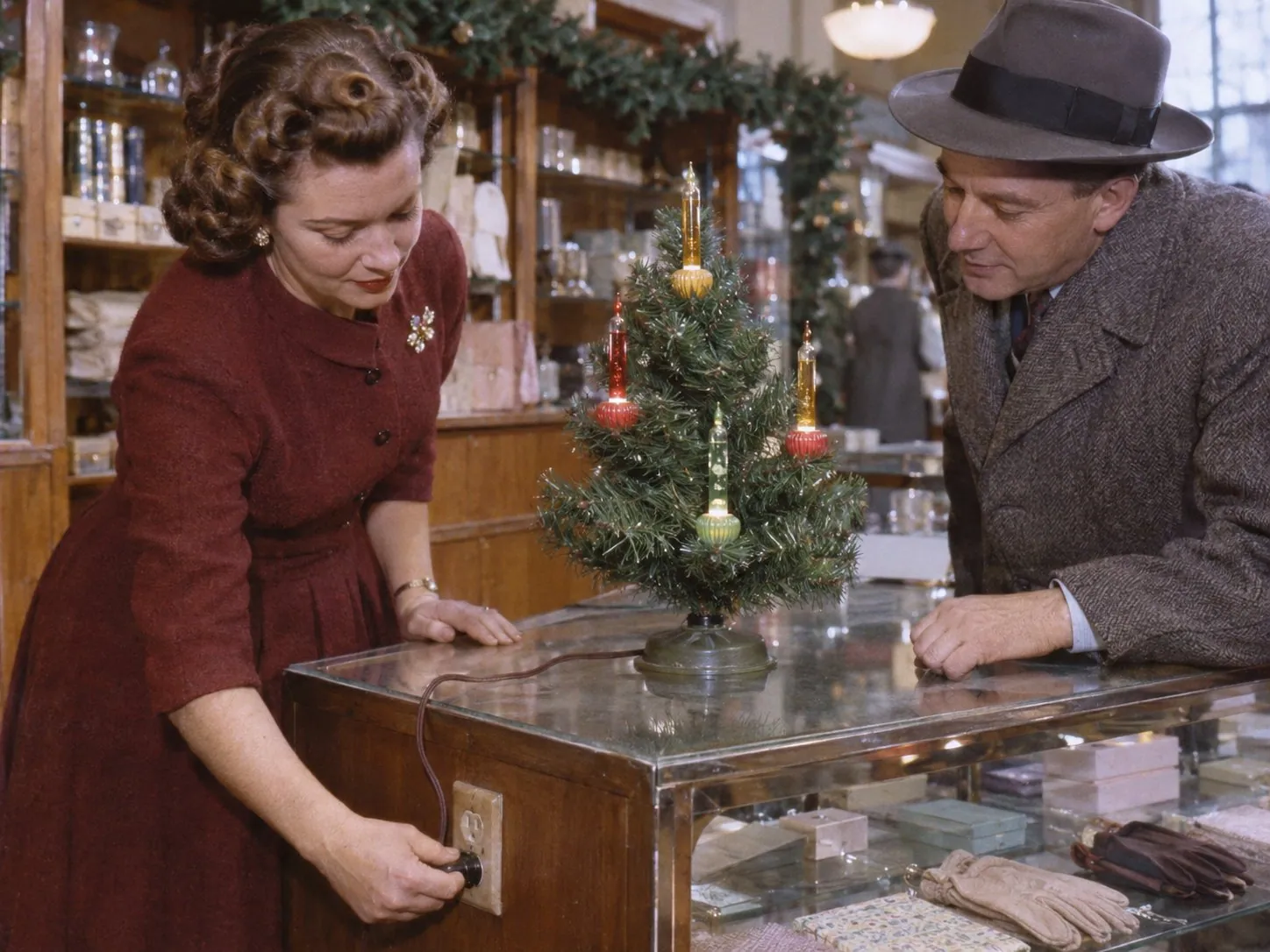
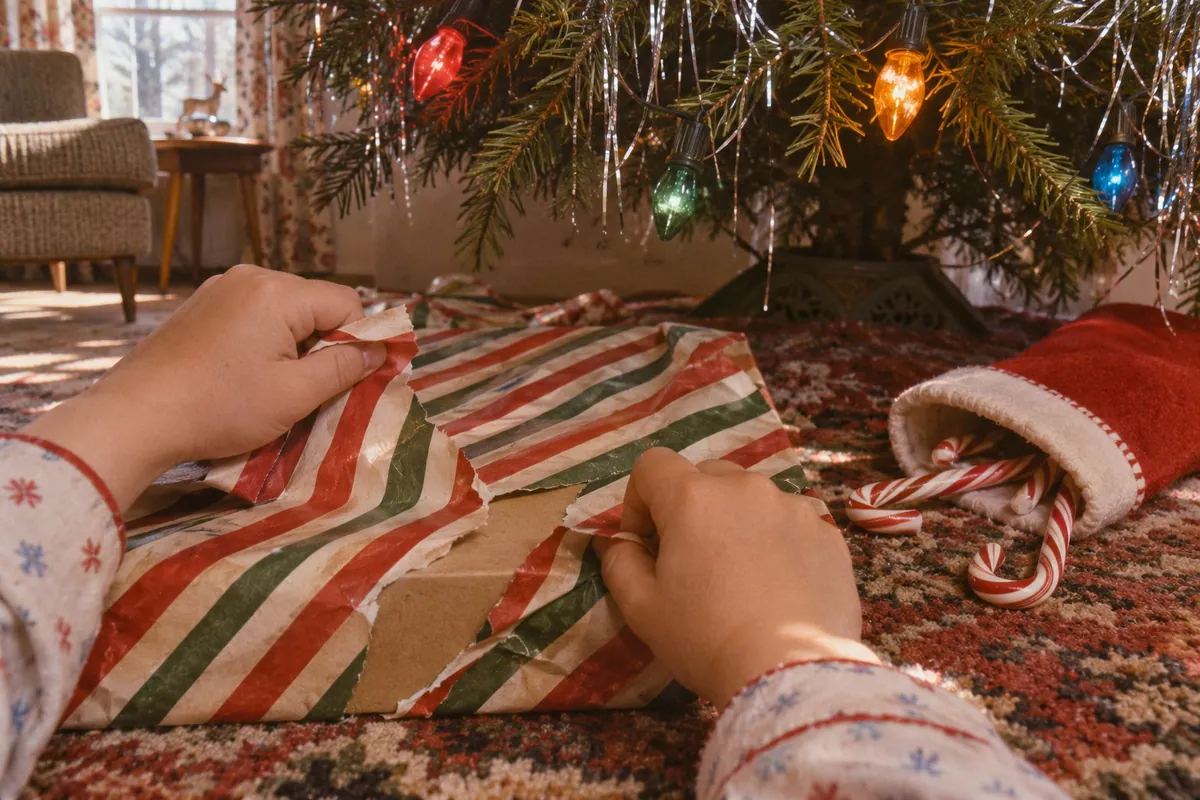
Each light was a small bulb in a plastic base with a sealed glass tube on top. Heat from the bulb brought the liquid to a boil, so the lights didn't start bubbling the moment you plugged them in. Sometimes one tube stayed still long after the others had started, and somebody would give it a gentle tap.
The earliest NOMA lights had small glass pieces inside the tubes to get the bubbles going and spread them out, Old Christmas Tree Lights notes. Without them, the bubbles came out bigger and less even.
The heat could cause trouble, too. In 1948 NOMA tried a flatter plastic base, but the lamps ran so hot that the bases melted and warped, and the style was soon dropped, Golden Glow reports.
The lights weren't cheap. Royal's first sets, sold in 1947, went for $2.69 (about $38 today), and they still cost a bit less than NOMA's, Old Christmas Tree Lights says.
Where the little tree sat every December
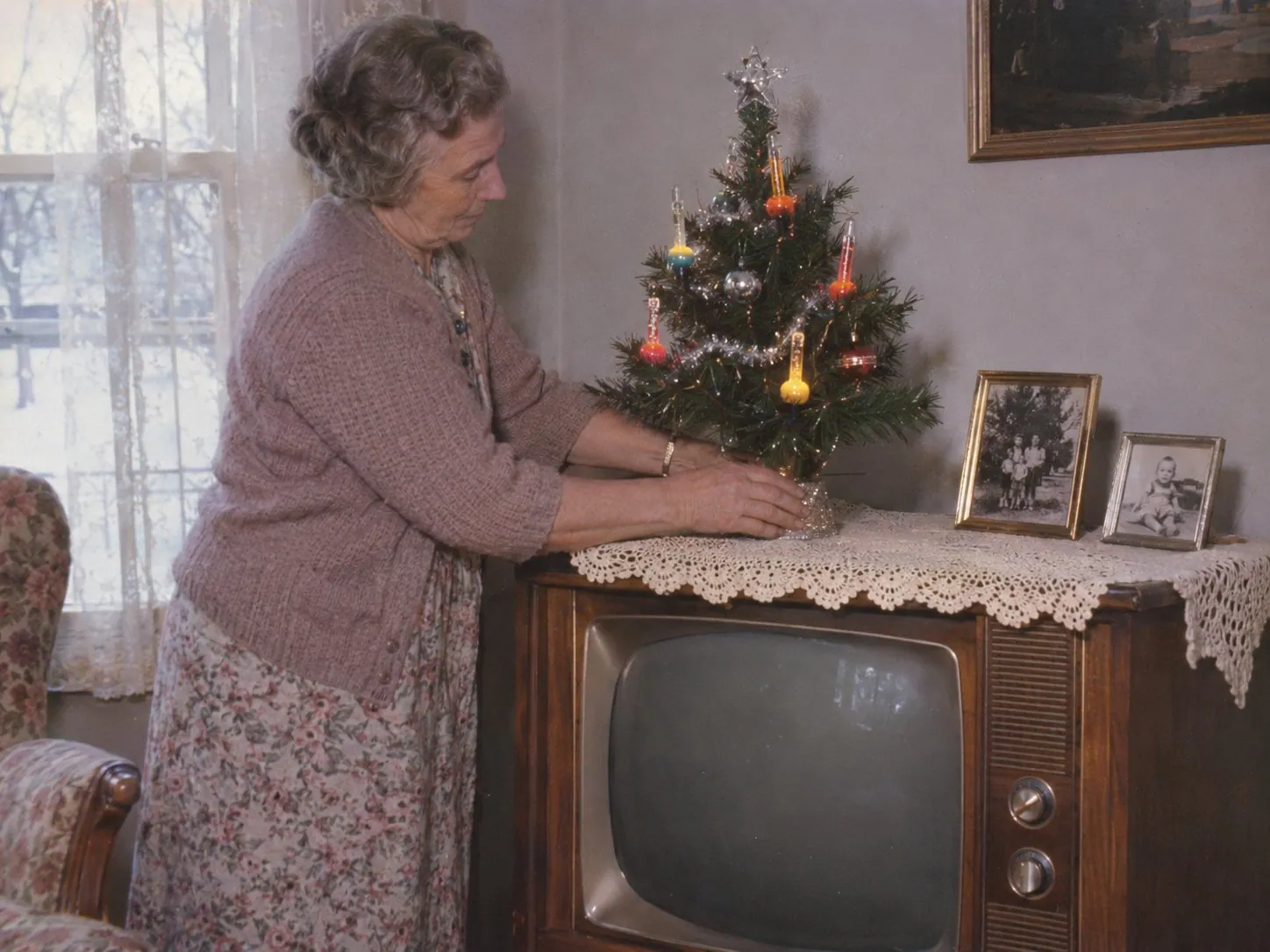
Ask around and you'll hear about the same few places. It sat on the end table next to Grandpa's chair, on a doily on top of the television cabinet, or in the front window where people walking by could see the colors. In some homes it stood on the piano, in others on a hall table by the door.
The big tree got the tinsel, the presents and the arguments about which side faced the room. The little bubble tree just sat there doing its job, and that may be why so many people remember it. If you were small enough, it was at eye level.
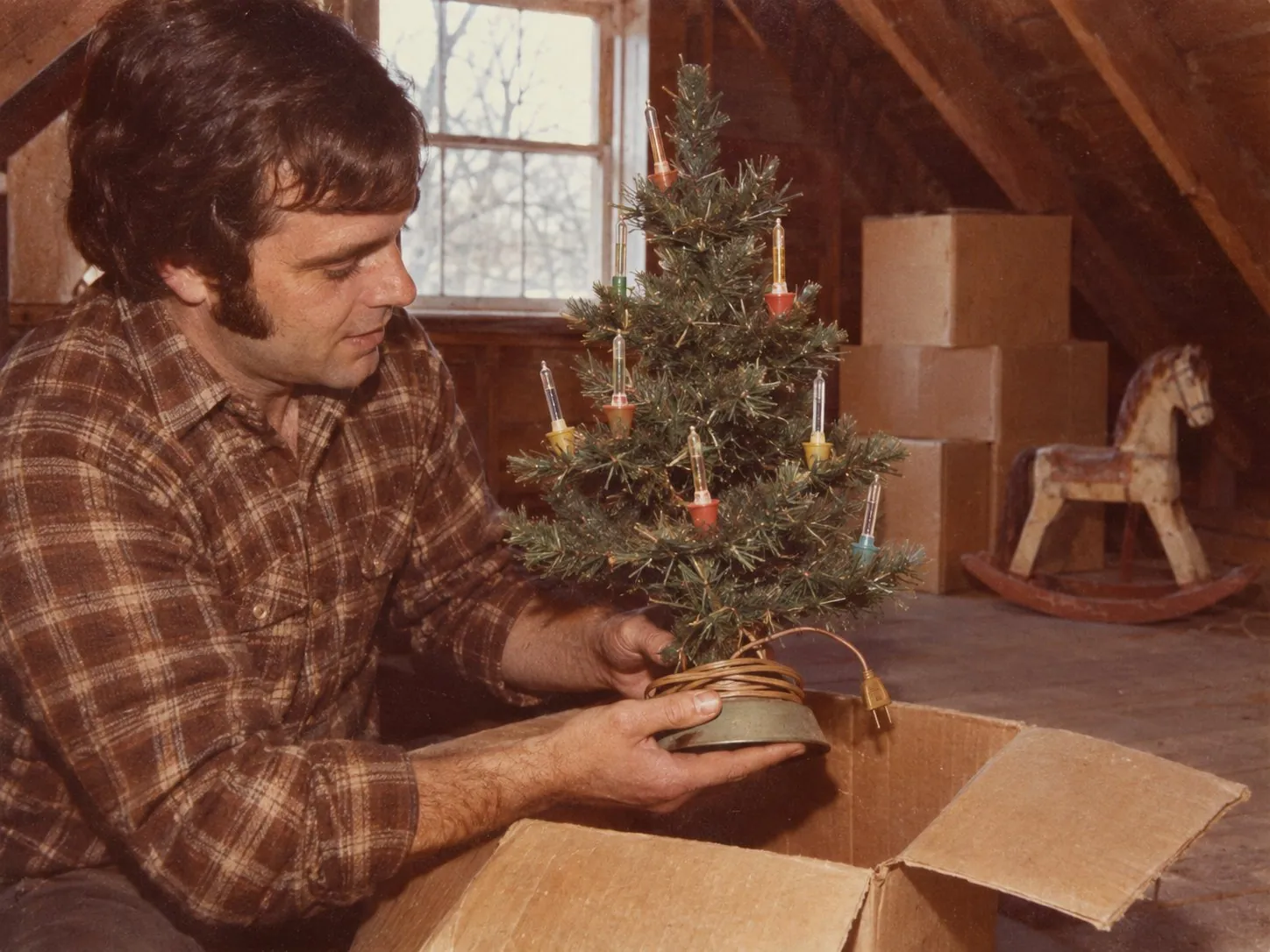
When the season ended, it went back into its cardboard box, cord wrapped around the base, and up to the attic or down to the basement until next year.
Why the bubble lights faded, then came back
Fay told The Washington Post that bubble lights eventually lost their sales for an odd reason: they were so popular that everyone already owned them, and the novelty wore off.
The companies changed too. After Royal's decoration factory burned in 1955, NOMA bought the molds and kept using Royal's Santa and snowman figures, sometimes giving them a little green tree to hold instead of a bubble light, according to Old Christmas Tree Lights.
Bubble lights are still being made, and that's why the old and new ones get mixed up at thrift stores, House Digest points out.
The Shiny Brite bubble tree came later
Shiny Brite was the glass ornament brand many of us grew up with, the colored balls in the cardboard box with the little cells. Most Shiny Brite bubble light trees and "Bubble Brite" trees sold today come from Christopher Radko's line, which brought back the old Shiny Brite name.
A Radko value guide lists a 2003 Radko bubble light tree, a 36-inch white tree with 20 lights and even a Halloween version. These are new-made trees with an old look. They're not the ones from the 1940s and '50s, even if they look a lot like them.
If you find one today
The early trees are worth checking closely. Many were covered in Visca, a shiny fiber, and Old Christmas Tree Lights notes that many of those trees have faded badly and are shedding now. A clean white NOMA from about 1949 is the kind of example that site singles out.
Look for the maker's name on the base, the plug or the box. And go easy with a 75-year-old cord. A lot of owners leave the original tree unplugged on a shelf and get their bubbles from a newer set.
Frequently asked questions
What is a vintage bubble tree?
It's a small lighted artificial tree, made to sit on a table, with bubble lights fitted into the branches or base. NOMA, Paramount and Royal made them in the late 1940s and early 1950s, soon after NOMA brought out bubble lights in 1946.
Who made the Shiny Brite bubble light tree?
The Shiny Brite bubble trees sold today come mostly from Christopher Radko's revival of the Shiny Brite name, not from the original 1950s ornament company. A Radko value guide lists a bubble light tree from 2003.
When were bubble lights invented?
Carl Otis, an accountant at Montgomery Ward, came up with them, and NOMA brought them out in 1946. A historian told The Washington Post that NOMA sold 9.7 million bubble lights that first year.
What liquid is inside a bubble light?
Otis worked with methylene chloride, a liquid that boils at a low temperature, so the warmth of a small bulb is enough to make it bubble. That's why the lights take a little while to start.
Is it safe to plug in an old bubble light tree?
Look over the cord, the plug and the sockets first. Brittle or cracked wiring is a fire risk. Many collectors keep the original tree just for display and use newer bubble lights for everyday use.
Sources
- Celebrations, The Washington Post, 1989
- Lighted Tabletop Trees, Old Christmas Tree Lights
- Lighting Outfits 1946–1950, Old Christmas Tree Lights
- Bubble Light Identification, Old Christmas Tree Lights
- Vintage Bubble Lights, Golden Glow of Christmas Past
- The Fun Vintage Christmas Lights To Keep Your Eyes Peeled For At The Thrift Store, House Digest
Related Stories
Love a trip down memory lane?
Get a fun quiz every morning. Free · One email a day · Unsubscribe anytime