Atlantic Mold 1974 Ceramic Christmas Tree: Who Made Yours?
That "Atlantic Mold 1974" stamp tells you whose mold your tree came from, not who poured it or when. Here's how to read it.
"Atlantic Mold 1974" on the bottom of a ceramic Christmas tree means the tree was cast in a mold sold by the Atlantic Mold company, and 1974 is the year that mold design was copyrighted, not the year your tree was made. Atlantic sold the molds; hobbyists and neighborhood ceramics shops poured, painted and fired the trees, using molds from Atlantic, Holland Mold, Nowell's, Arnel's and others.
So the real maker of your Atlantic Mold ceramic Christmas tree from 1974 is most likely a person. Maybe it was your mother, an aunt, or the woman who ran the ceramics shop out of her garage. Often her name or initials are scratched right next to the stamp.
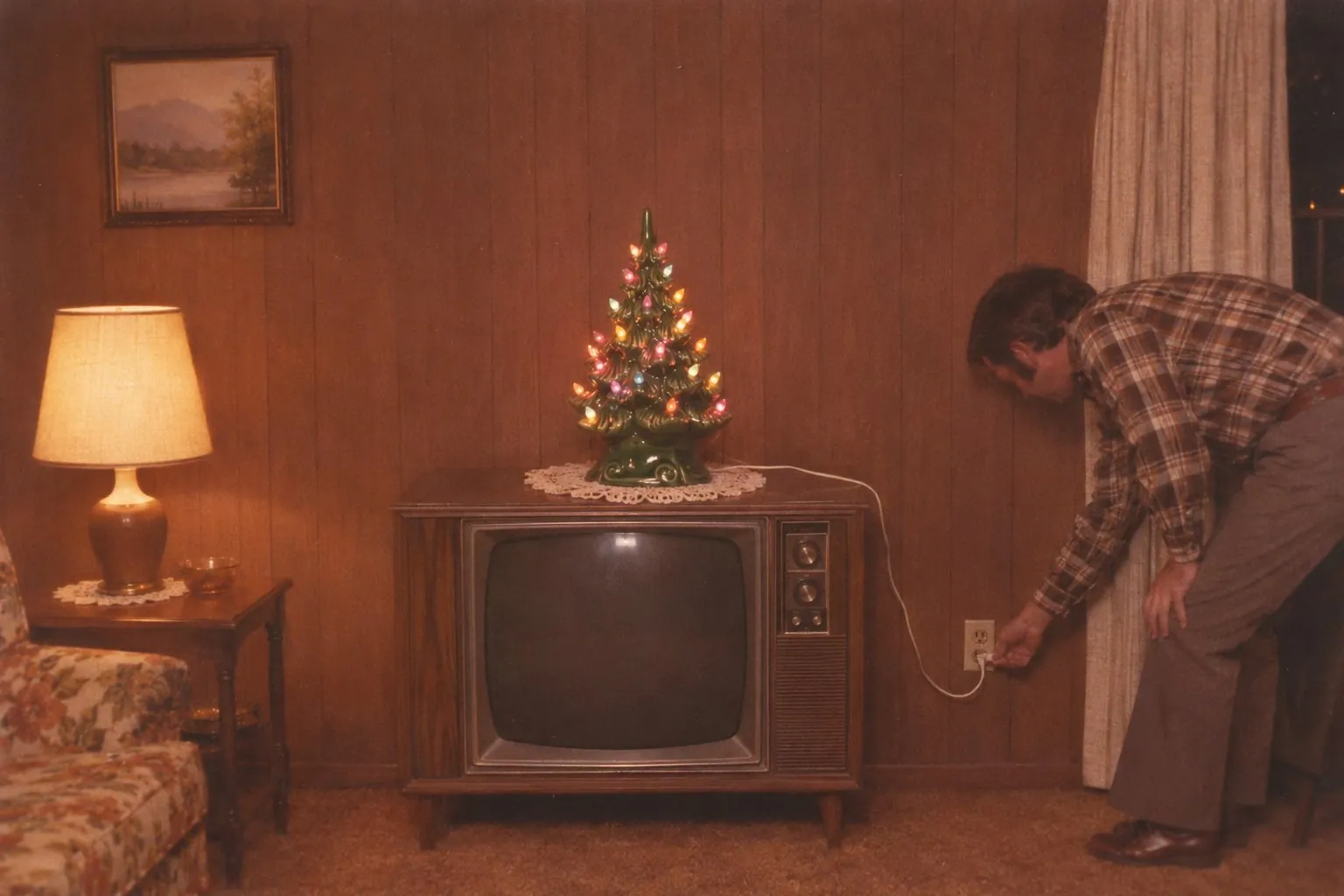
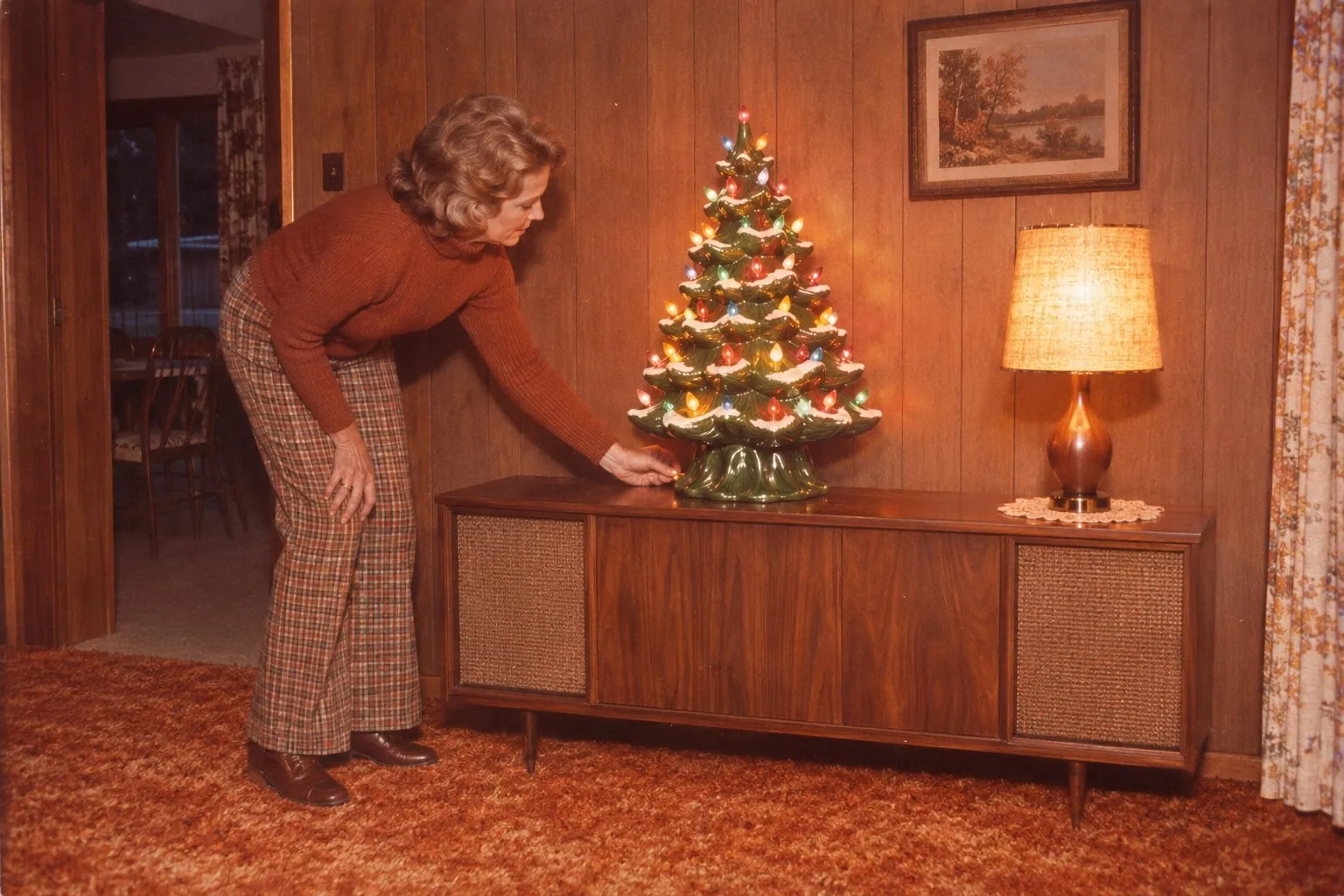
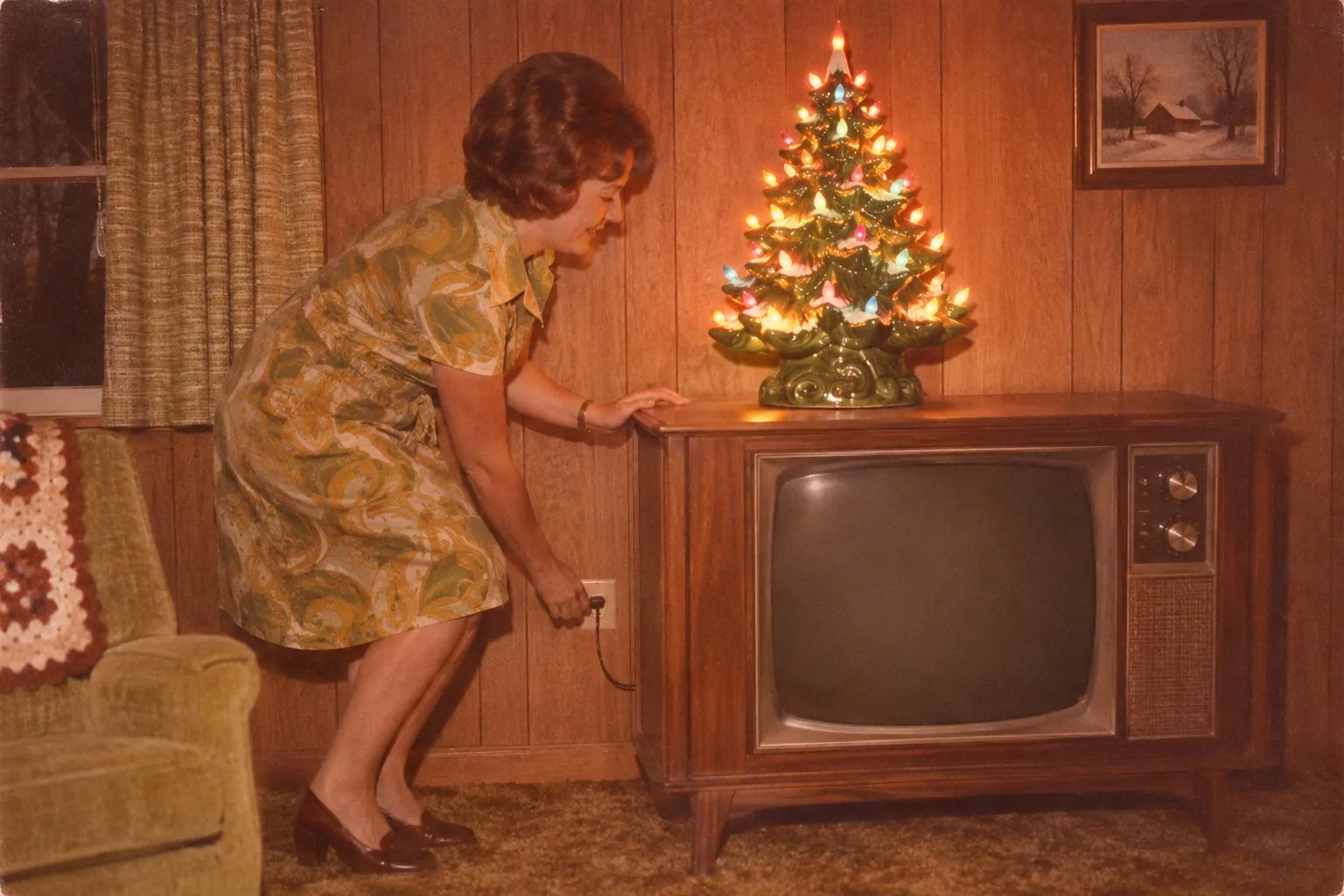
You probably remember the tree itself: glowing green on top of the console TV, little plastic bulbs in red, yellow and blue, and the warm smell of the bulb heating up the clay inside.
What "Atlantic Mold 1974" Means on a Ceramic Christmas Tree
The company's own explanation is the plainest. The date "typically indicates the copyright date of the original mold design rather than an actual manufacturing date," Atlantic said on its website, as quoted by the American Ceramic Society. The company sold thousands of its 1958 A-64 tree molds to studios around the country, and it added that a tree "could have been made in 1958 or just last week by your local studio."
Collectors say the same. Atlantic, Dogwood Ceramic Supply, Arnel's and Holland Mold all stamped the year the mold was made, Our State magazine noted. A collectors' column in The Weekly View gave an example: a tree marked 1972 may actually have been poured in 2005.
What else is scratched under there
Turn the tree over and you'll usually find three things:
- The mold maker's name, cast into the clay: Atlantic Mold, Holland Mold, Nowell's, Arnel's.
- A year, which is the mold's copyright date.
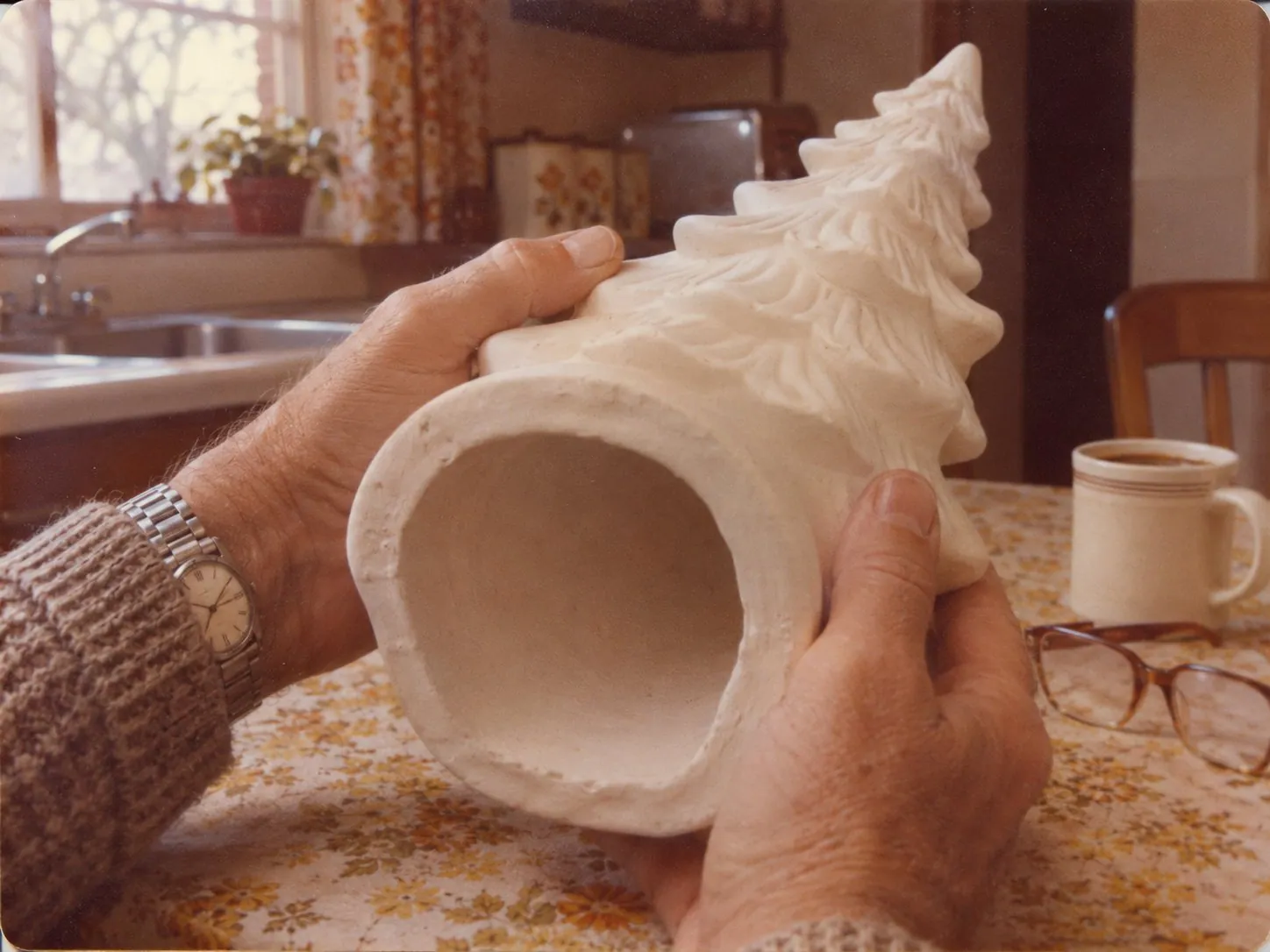
- A name or initials, sometimes with a year, scratched in by hand before firing. That's the person who actually made your tree, and it's your only clue to when.
Read more: The Aluminum Christmas Tree and Color Wheel, 1959–1960s
How the Tree Got Made at the Ceramics Shop
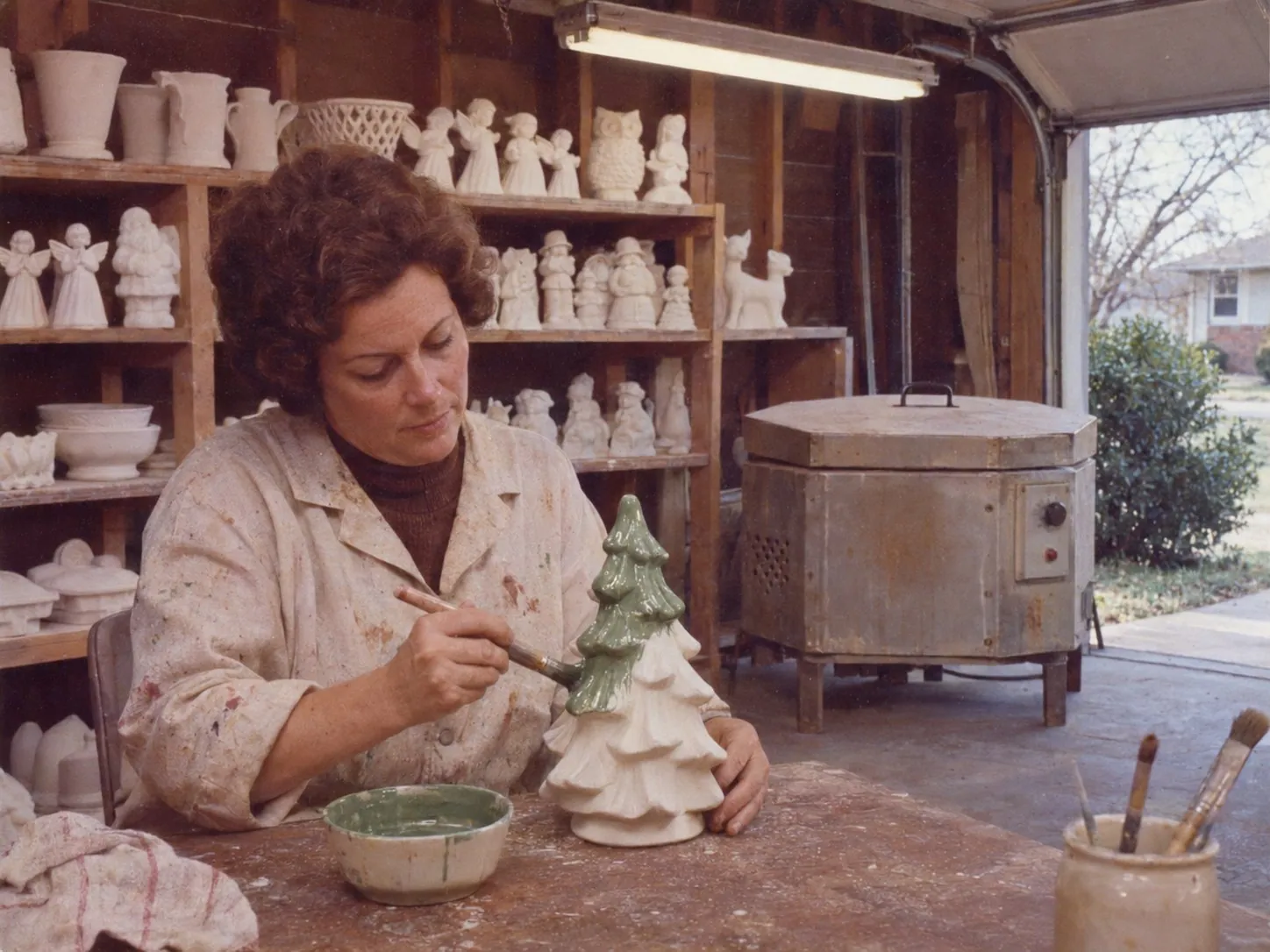
The Weekly View column said thousands of ceramics shops opened across the country in the second half of the 1960s. Many were run out of a basement or garage, with a kiln in the corner and shelves of chalky white greenware waiting to be claimed.
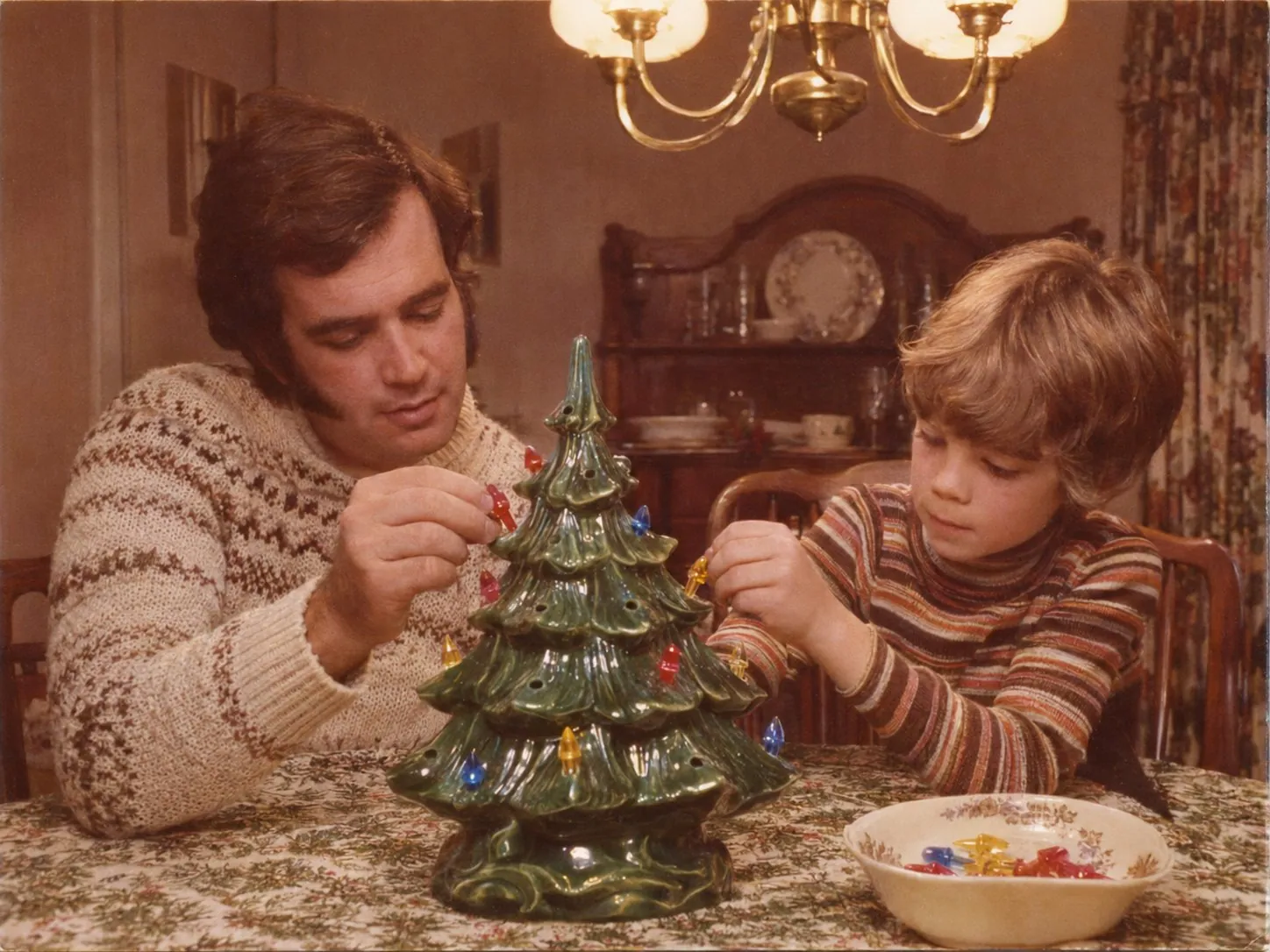
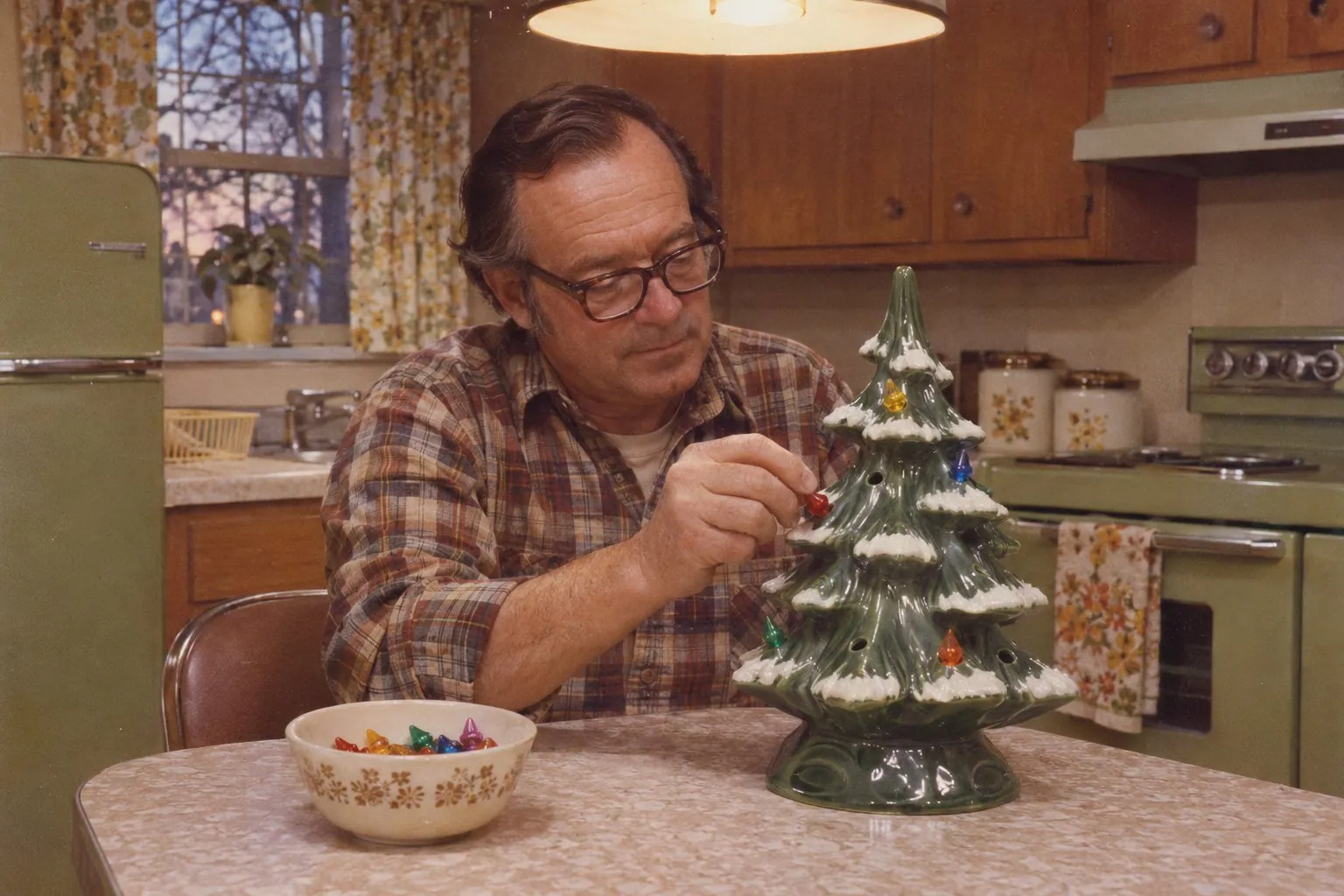
If you went along, you remember the routine. You cleaned the seam lines off the soft cast tree with a little knife and a damp sponge, and the dust got everywhere. Then came the glaze, a firing in the kiln, and the fiddly part: pushing dozens of plastic bulbs into the holes, one at a time.
WorthPoint wrote in 2021 that the shops gave women across the country a place to make and paint ceramics, and the Christmas tree became the most popular holiday piece.
What did one cost new? It varied by shop and by size. We couldn't find a price list from the time, so we won't guess at a number.

Atlantic, Holland, Nowell's and Arnel's: Telling the Molds Apart
The surest way to tell them apart is the stamp. Every company sold several tree sizes and shapes, and every painter finished hers differently, so two trees from the same mold can look like strangers. The table below lists the companies in no particular order, with what we could confirm about each.
| Mold company | What we know | Source |
|---|---|---|
| Atlantic Mold | Copyrighted the A-64 tree mold in 1958; stopped operating in July 2001 | American Ceramic Society; My Tiki Life |
| Holland Mold | Founded in Trenton, N.J., in 1946; sold molds only, never finished pieces | WorthPoint |
| Nowell's Mold | Named by WorthPoint among the 1950s mold makers behind the tree boom | WorthPoint |
| Arnel's | Started in Beaverton, Ore., in 1953; made molds and unpainted pieces for hobbyists | Vintage Unscripted |
Holland Mold Christmas trees
Holland Mold was the work of Frank Hollendonner, an Austrian immigrant, who started the company with his brother Rudy, according to WorthPoint's company guide. The same guide lists Holland's light-up Christmas tree among the firm's most collected pieces, along with its cabbage dinnerware.
The light inside
The light inside is a clue, too. By the later 1970s, the usual setup was a single bulb inside the tree that lit up small plastic "bulbs" in bright colors, according to The Weekly View. Its collectors' note added that most vintage trees you'll find were made between the late 1960s and the late 1970s.
Avon Trees and Other Store-Bought Ones
Not every ceramic tree came from a shop kiln. Avon's name turns up on some small lighted trees, and as the hobby faded, ready-made trees from overseas factories filled the stores. WorthPoint wrote that ready-made ceramics from Japan and China became the usual way to buy holiday decorations.
A store-bought tree tends to give itself away. A tree that feels light, came pre-painted or is made of colored clay is mass-produced and probably from the 1980s or later, says a guide from vintage dealer Industrial Artifacts. No painter's name underneath is another hint.
The Stories Behind the Trees
The trees matter because of who made them. A CBC Edmonton reporter wrote that the family tree, nearly 50 centimeters tall, was made by the reporter's grandmother in Montreal in 1979, and unwrapping it every December was a special treat, CBC News reported.
In Greensboro, North Carolina, Stacy Smith got her first tree from her husband's late grandmother's things and built a collection of 15, Our State reported. She told the magazine she enjoys "the thrill of the hunt."
Some of the old molds are still in use. Glenn Schreider, co-owner of Dark Horse Arts and Gifts in Arizona, told CBC News he and his wife make trees year-round from vintage molds dated 1977, 1978 and 1981. Do you remember which mold your shop used, and whose name went on the bottom? We'd like to hear.
What a Vintage Atlantic Mold Christmas Tree Is Worth Now
Prices swing a lot with size, condition and color. Most vintage ceramic trees sell for about $40 to $150, and Atlantic- or Holland-marked trees 16 inches or taller bring about $90 to $200, according to a value guide from The Pocket Price. Special ones go higher: the 1974 Atlantic Mold tree with a music box base sold for $650 in 2021, WorthPoint reported.
The molds themselves sell too. Original tree molds go for more than $200 online, CBC News reported. That's one reason new trees keep coming out of old molds, with old dates on the bottom.
Frequently asked questions
Is my Atlantic Mold 1974 ceramic tree really from 1974?
Not necessarily. The 1974 is the year the mold design was copyrighted, and a tree could have been poured any time after that, even decades later. A painter's name or a year scratched in by hand is your best clue to the real date.
What is a vintage Atlantic Mold ceramic Christmas tree worth?
Most sell for about $40 to $150, and Atlantic- or Holland-marked trees 16 inches or taller bring about $90 to $200, according to The Pocket Price. A 1974 Atlantic Mold tree with a music box base sold for $650 in 2021, WorthPoint reported.
Who made Holland Mold Christmas trees?
Holland Mold, founded in Trenton, New Jersey, in 1946, made only the molds, WorthPoint says. The trees themselves were poured and painted by hobbyists and local ceramics shops.
Did Avon sell ceramic Christmas trees?
Avon's name does appear on some small lighted ceramic trees. We couldn't find Avon catalog records giving years or prices, though, so we can't date them for you. Avon sold finished goods, so its trees didn't come from a hobby shop's kiln.
Sources
- Video: History of vintage ceramic Christmas trees, The American Ceramic Society, 2020
- A Christmas Comeback, Our State, 2022
- Ceramic Christmas Trees: A Trend That's Brighter than Ever, WorthPoint, 2021
- Vintage Ceramic Christmas Trees, The Weekly View, 2017
Related Stories
Love a trip down memory lane?
Get a fun quiz every morning. Free · One email a day · Unsubscribe anytime