70s Christmas Decorations: What Our Homes Really Looked Like
Tinsel in the shag carpet, paper bells overhead and a glowing Santa on the lawn. Here is how the 1970s house dressed up for Christmas, room by room.
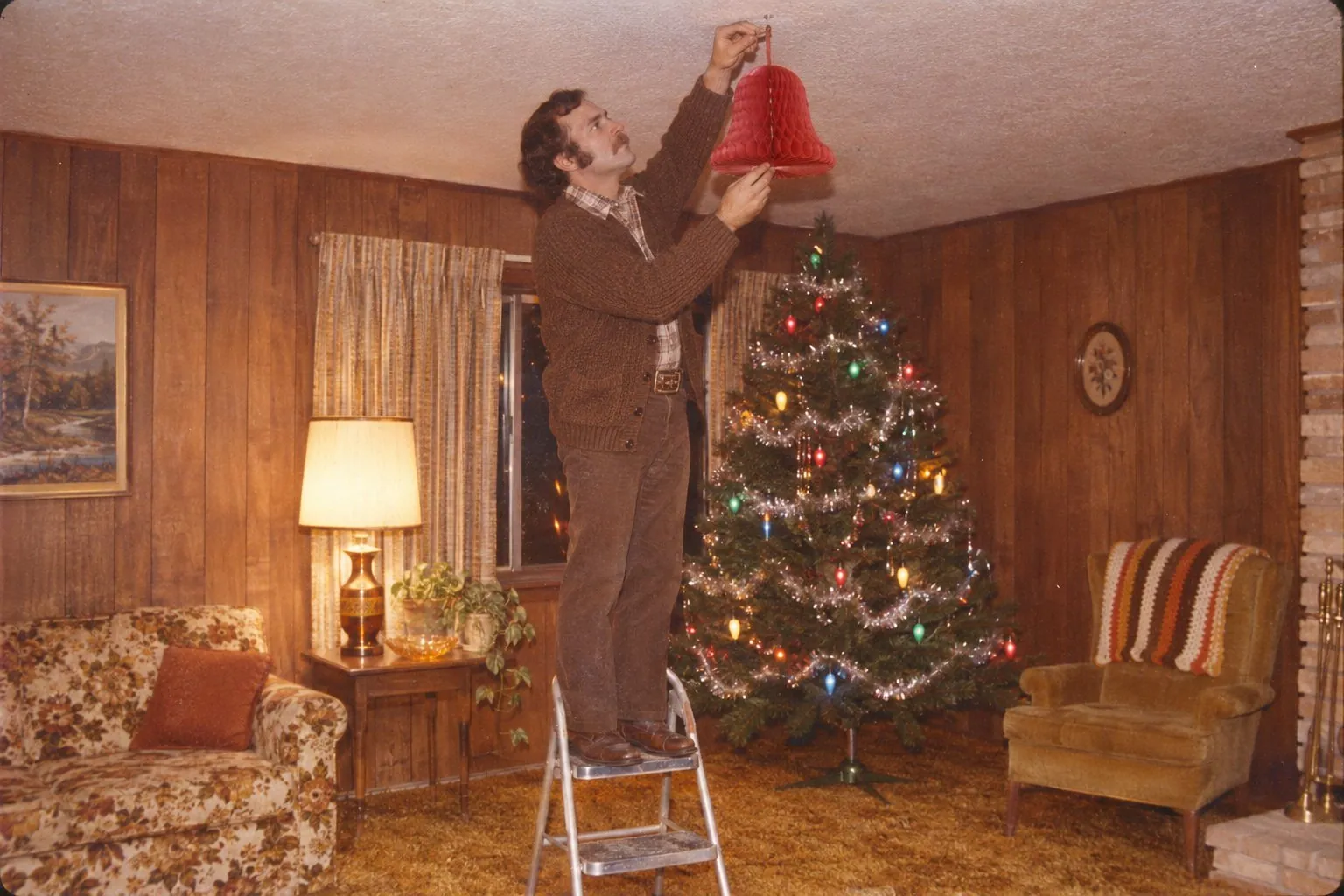
What Christmas decorations did people use in the 1970s? Most families had an artificial or fresh-cut tree with big colored bulbs, glass and plastic ornaments, and lots of tinsel. They added paper honeycomb bells hung from the ceiling, plastic blow-mold figures in the yard and a pile of homemade crafts. That mix is what 70s Christmas decorations really were: a little store-bought, a little made at the kitchen table, and no two houses quite alike.
You probably remember the green-and-gold colors, the felt stockings with your name in glitter glue, and the smell of hot bulbs warming dust on the branches. This isn't a shopping list. It's a walk through the house the way it looked back then, with notes on how to spot a real piece today.
Why 70s Christmas decorations looked the way they did
The '60s ended with a turn away from the space-age look. The aluminum tree with its rotating color wheel was still around, but "A Charlie Brown Christmas" made fun of it in 1965. By the early '70s, most living rooms had gone back to green trees.
Plastic was everywhere. It was cheap, it didn't break when the cat knocked the tree over, and it came in the same harvest gold, avocado and burnt orange as the kitchen. Glass ornaments didn't disappear, but boxes of shatterproof plastic balls sat right beside them at the dime store.
Then there was the tinsel. In 1972, according to Mental Floss, the FDA reached an agreement with manufacturers to stop making lead tinsel. Lead had been used because it hung straight and kept its shine.
The 70s style Christmas tree
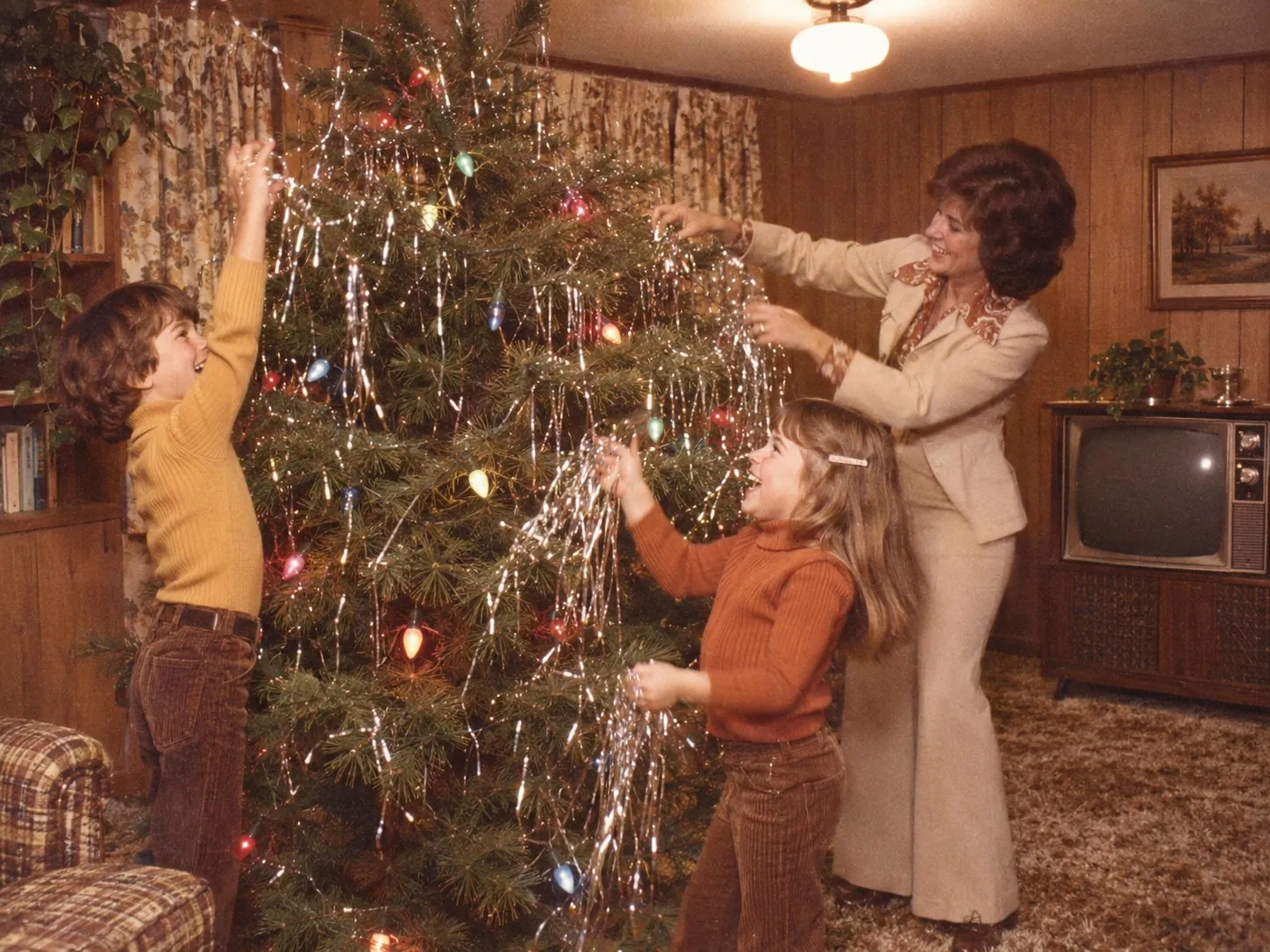
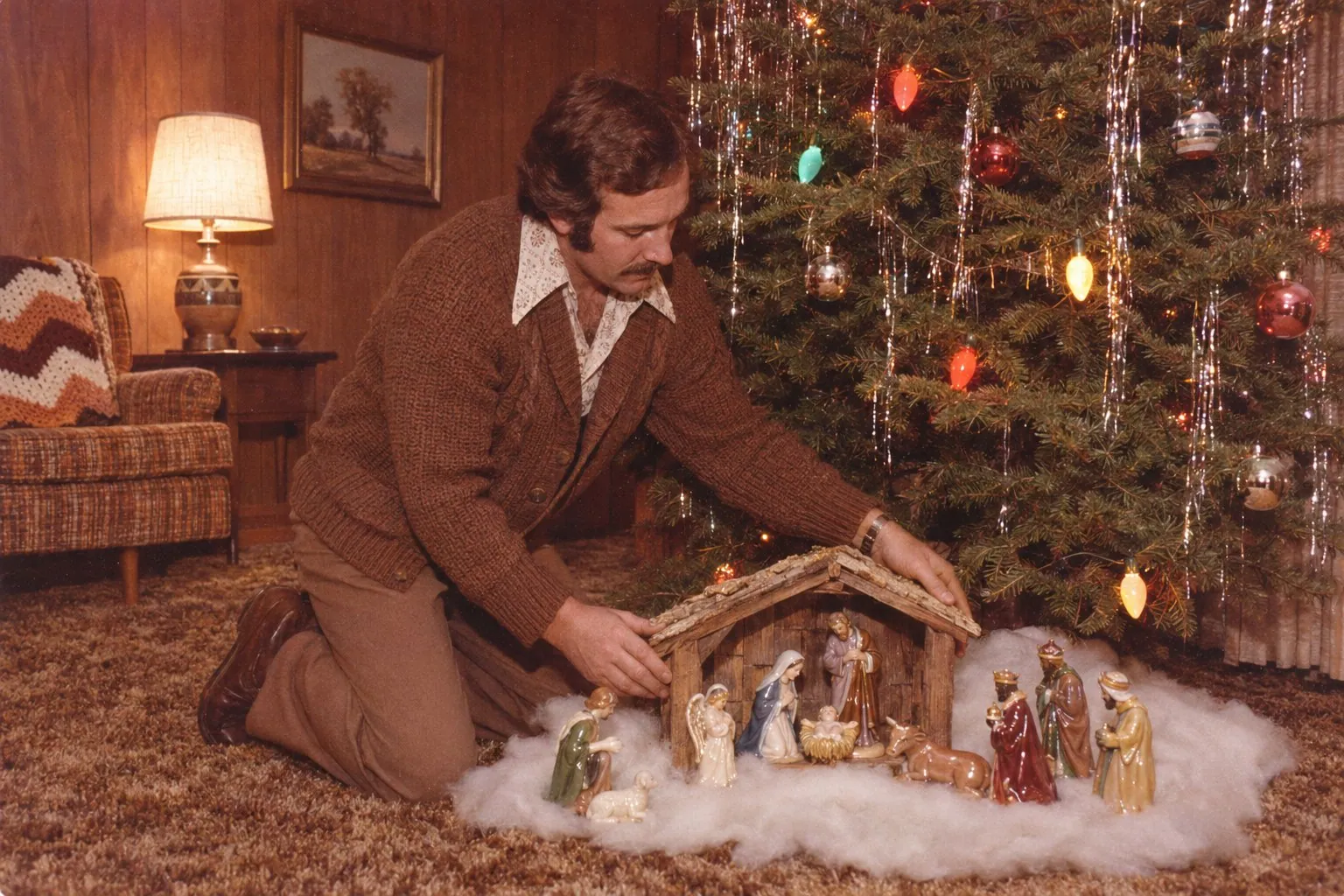
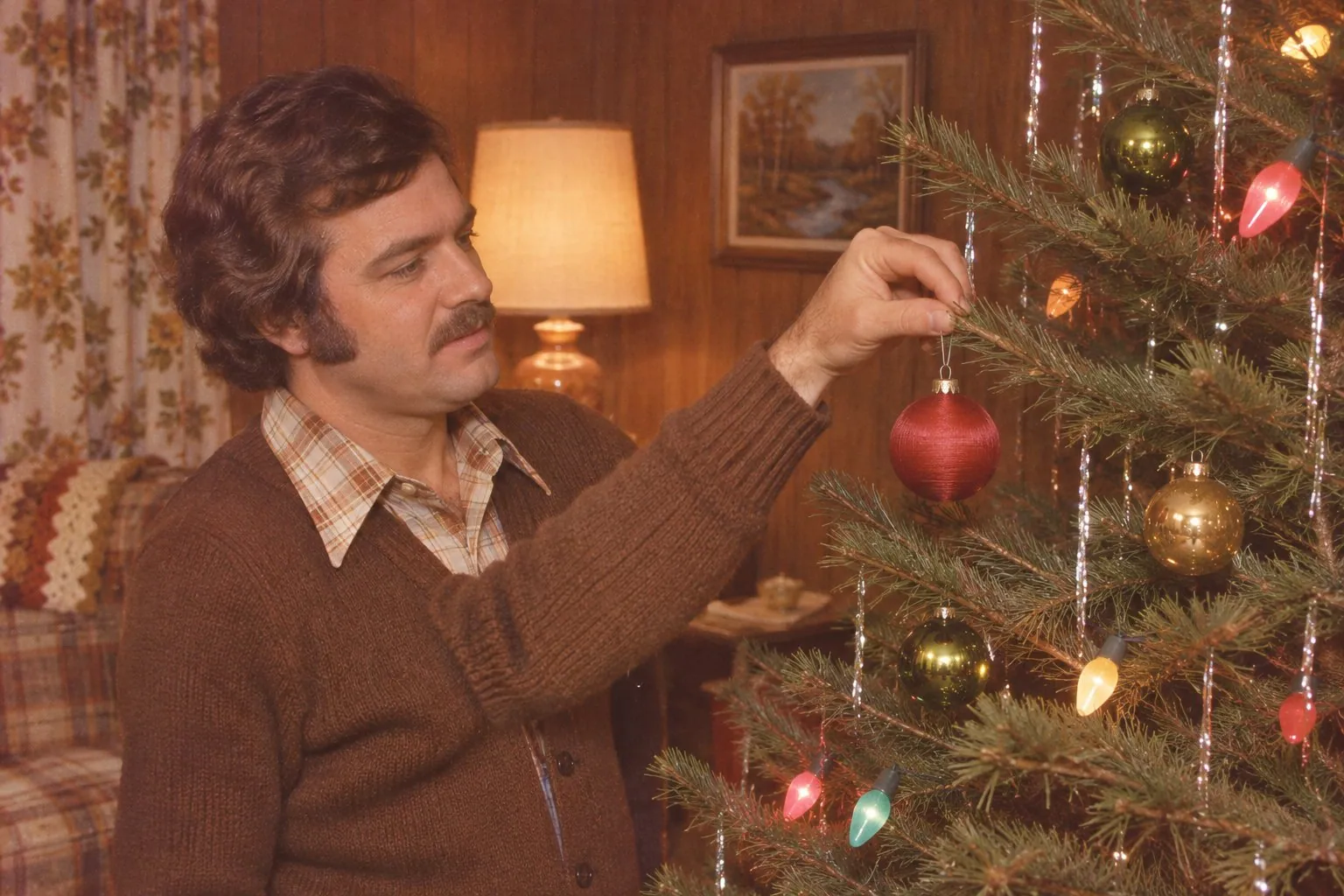
A 70s style Christmas tree was usually full and bushy. Some families had a fresh Scotch pine from a lot by the gas station. Others had an artificial tree whose branch tips were color-coded and pushed into holes in a wooden or metal pole. Some trees were flocked white, as if snow had blown in through the window.
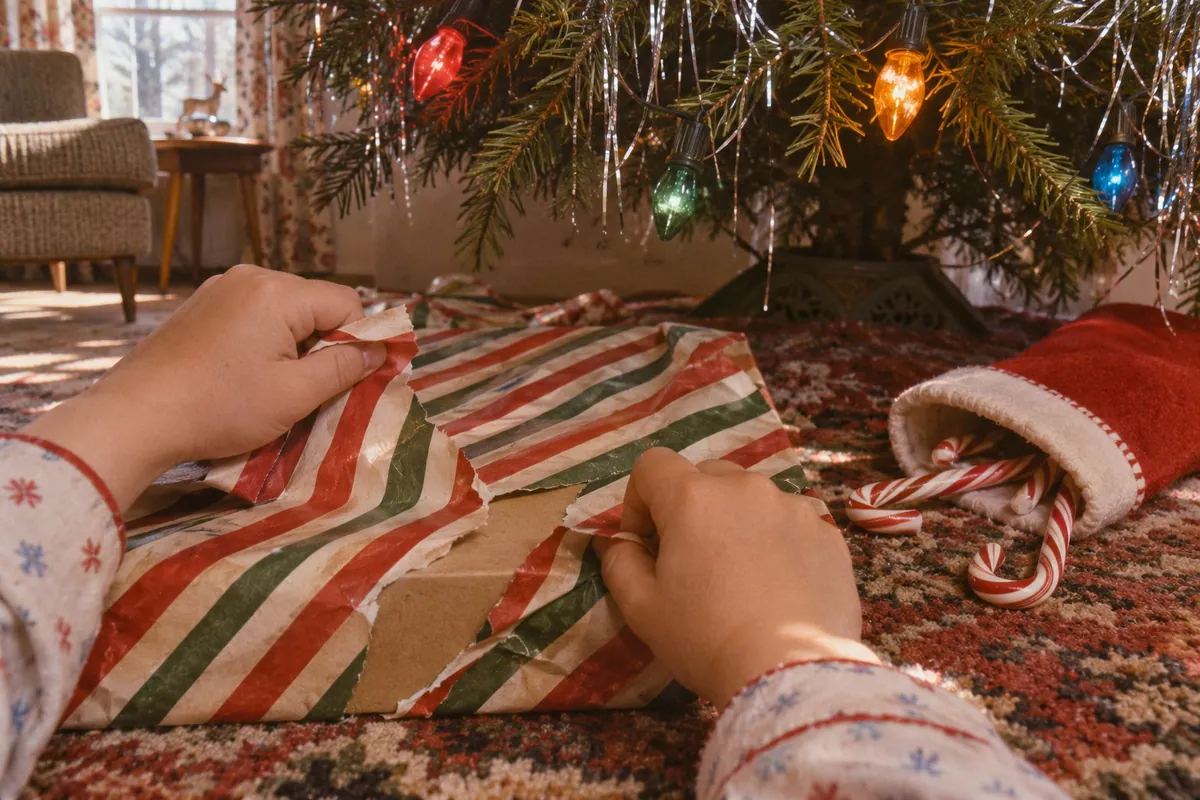
On it went big C7 or C9 bulbs in red, green, blue, orange and yellow, and later the tiny "Italian" mini lights. Below that came glass balls, plastic balls, a few handmade pieces and a topper, usually a star or a light-up angel. The last thing on was tinsel, strand by strand if Mom was watching and in clumps if the kids were.
Read more: Ben Cooper Costumes: Who Dressed America's Trick-or-Treaters
The living room: tinsel, garland and lights
You probably bought your tinsel at Woolworth's, and some of it stayed in the shag carpet until Easter. The heavy lead kind hung straight down like icicles. The plastic tinsel that replaced it floated and clung to everything.
The change happened quietly. Production of lead tinsel was expected to stop starting January 1, 1972, Medical Daily reported. Malcolm "Mac" Jensen of the FDA's Bureau of Product Safety told the Associated Press in November 1972, "There was never any effort to hide it." Even so, an official worried that people who liked the lead kind "would stockpile it," Newser reported, citing Popular Science.
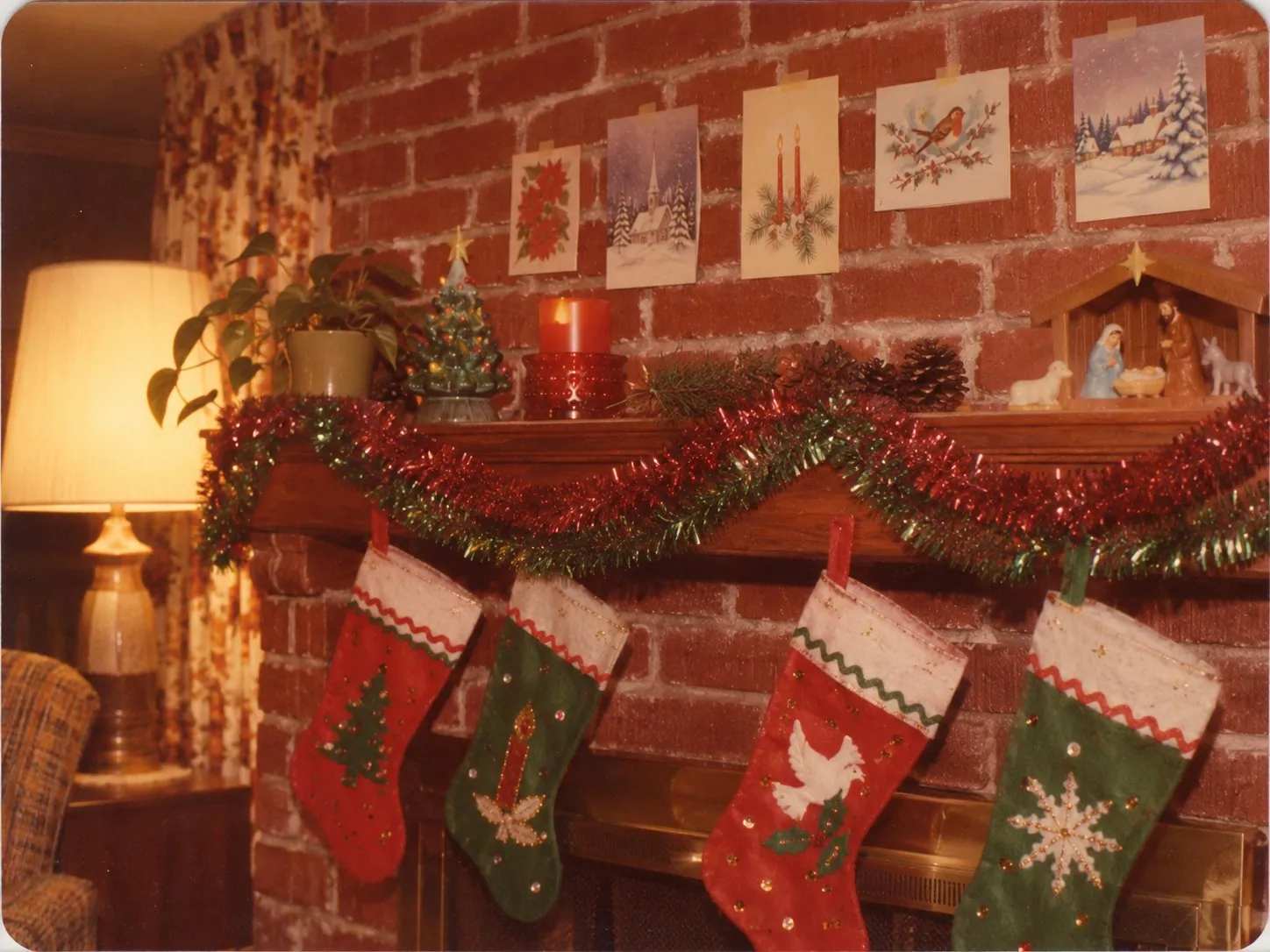
The rest of the room joined in. Thick tinsel garland was twisted around the tree and draped over the curtain rods. Christmas cards were taped around the doorframe. A plastic nativity or a candle ring sat on top of the console TV. Felt stockings with sequins and rickrack hung from the mantel or, in many ranch houses, from a nail on the paneling.
Hanging from the ceiling: paper bells and honeycomb
Look up in a 1970 Christmas living room and you might see a red tissue-paper bell. It folded flat like a fan and opened into a honeycomb shape. The Beistle Company of Shippensburg, Pennsylvania, was one of the best-known American makers of these honeycomb paper decorations. Many were also imported.
Most 1970s paper Christmas decorations hung on a thumbtack and a piece of thread. You'd find them over the dining table, in a doorway or in the corner of a classroom. Foil garlands did the same job. These accordion-pleated or twisted streamers in red, green and silver were strung corner to corner across the ceiling and caught the light every time the furnace kicked on.
Schools and stores used the same things on a bigger scale. If your church basement hall had a Christmas supper, there was probably a row of honeycomb bells overhead.
The kitchen table: crafts that hung on every tree
A lot of the 1970s ornaments people treasure now were never sold in a store. They were made at the kitchen table, at Scouts or in a church craft class.
Melted plastic popcorn ornaments
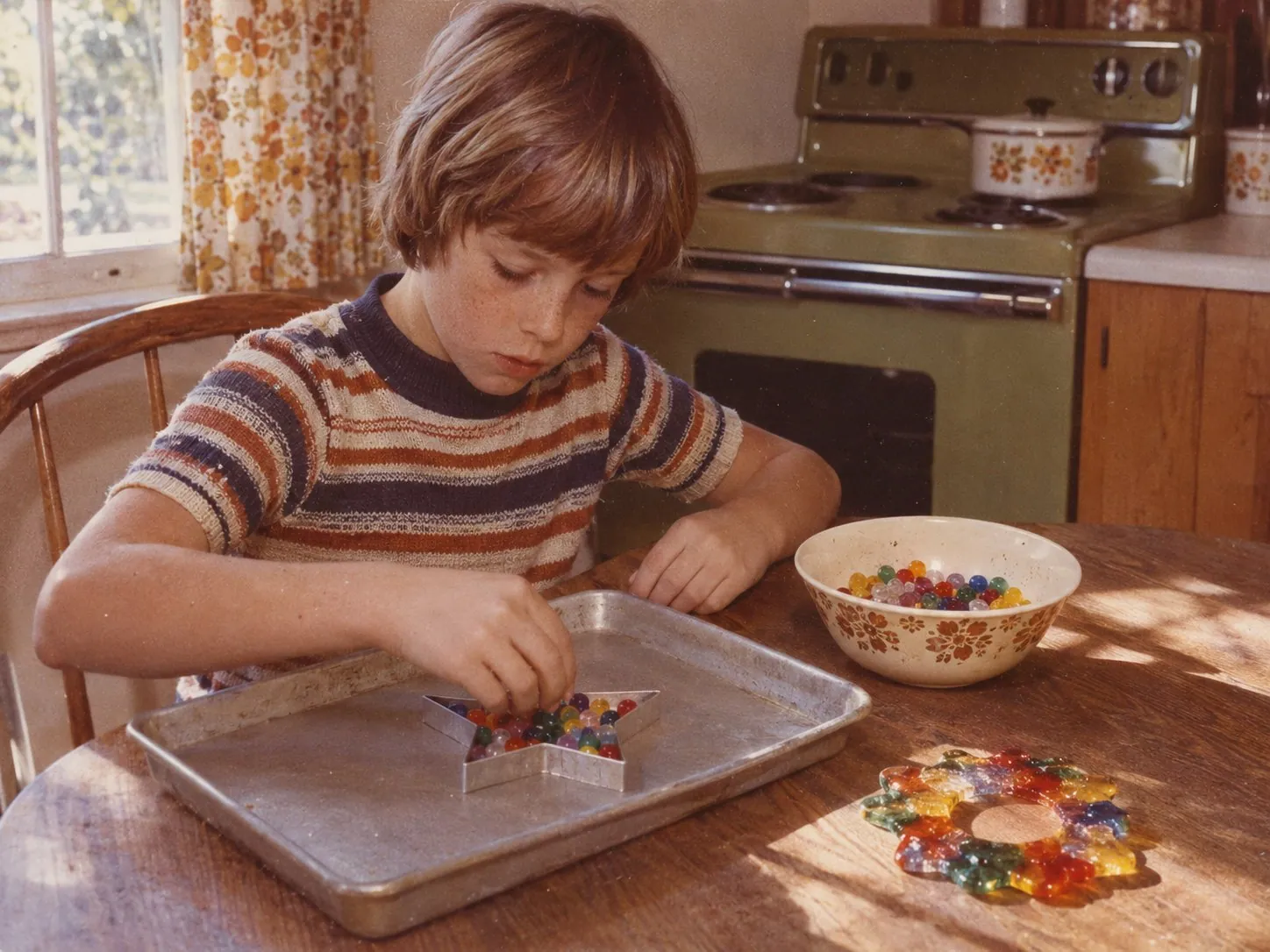
These are the 1970s melted plastic Christmas decorations people search for most. Kids filled a metal cookie-cutter-style form with colored plastic beads, the kind shaped like little kernels. The form went into the oven until the beads softened and fused together. Out came a stained-glass-looking star, wreath, bell or candy cane.
They are easy to recognize. The surface is lumpy where each bead melted into its neighbor, the colors are bright and see-through, and there's usually a hole near the top for a hook or a loop of yarn. Many families still have one or two that someone's grandmother made.
The ceramic tree from Mom's class
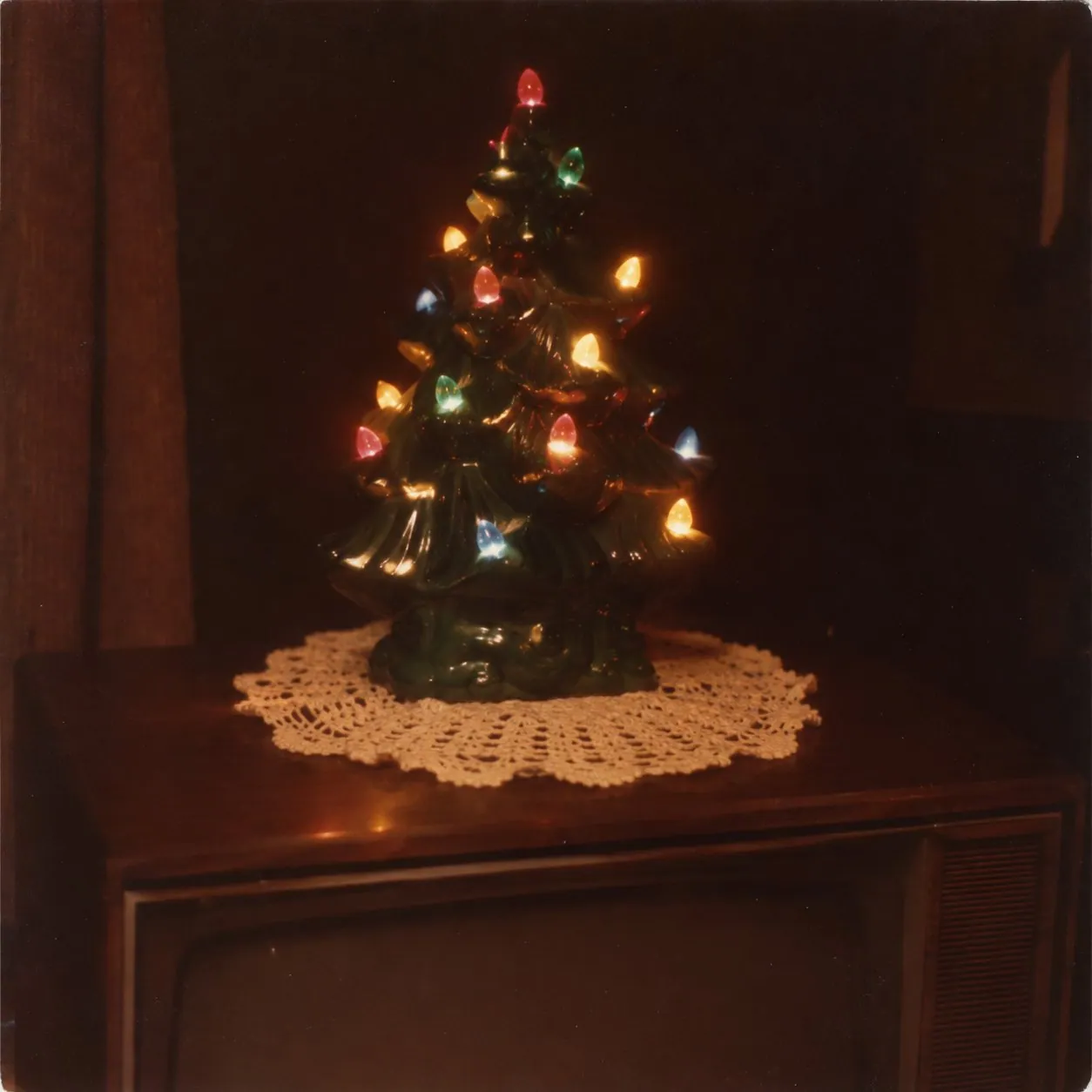
Ceramic shops sold time in their kilns and classes in painting molded "greenware." Women came home with a glazed green tree that had little holes for colored plastic pegs. A bulb in the base lit the pegs up. It sat on the end table or the TV every December, and many families still put theirs out today.
Other crafts were made at home too: yarn God's-eyes, felt ornaments, Styrofoam balls covered in sequins and pins, and strings of popcorn and cranberries. The yarn idea even went commercial. Hallmark's first Keepsake ornaments in 1973 included yarn figures alongside decorated glass balls.
Out in the front yard: blow-mold Santas and snowmen
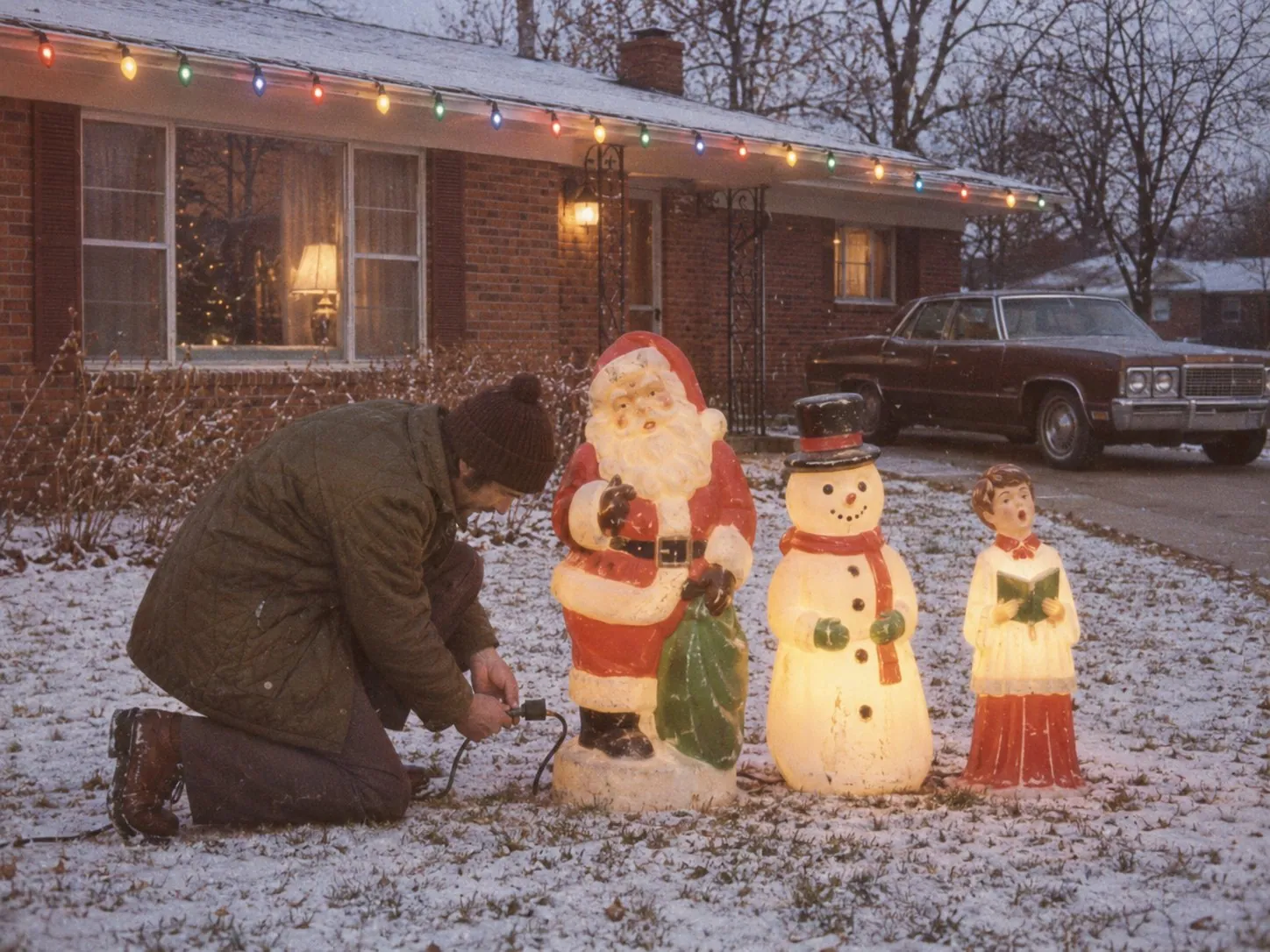
Blow molds were hollow plastic figures with a light bulb inside: Santa, a snowman, a choir boy, candles, a nativity set. These are the 1970s plastic Christmas decorations people picture first. They glowed on lawns and porches across the country, and the cord ran back through a cracked front window.
Most came from a handful of American companies. Empire of Carolina was in Tarboro, North Carolina. Union Products was in Leominster, Massachusetts, the same company that sold the pink plastic flamingo. General Foam Plastics was in Norfolk, Virginia. Their figures were sold at hardware stores, discount chains and catalog counters.
Rooflines got C9 bulbs and the neighbors kept score. On some streets one house went all out with a full nativity and a lighted Santa on the chimney. Other families settled for a single wreath on the door.
How to tell a real one, and what it's worth now
Genuine 1970s vintage Christmas decorations usually leave clues:
- Blow molds: look for the maker's name and city molded into the plastic, often near the base, sometimes with a year. Faded paint on the raised details is normal for an old one.
- Honeycomb paper: the paper is soft and slightly faded, and the cardboard ends often carry a maker's name or "Made in U.S.A."
- Melted bead ornaments: uneven bead shapes, bubbles in the plastic and a hand-tied hanger.
- Ceramic trees: the bottom is often marked with the mold maker and a date, plus the painter's initials scratched in by hand.
- Hallmark Keepsakes: a dated box or a date printed on the ornament.
Values swing widely, and there is no single price guide for everyday decorations. Many collectors check sold listings rather than asking prices. Common plastic ornaments and paper bells usually sell cheaply. Full blow-mold nativity sets, lighted ceramic trees and early dated Hallmark pieces in their boxes tend to bring more. Condition, original packaging and local demand decide most prices.
Frequently asked questions
What Christmas decorations were popular in the 1970s?
Colored bulb lights, tinsel, glass and plastic ornaments, paper honeycomb bells, blow-mold yard figures and ceramic trees were all common. Homemade crafts like melted-bead ornaments and felt stockings were big too.
Was 1970s tinsel made of lead?
Some of it was, early in the decade. In 1972, manufacturers agreed with the FDA to stop making lead tinsel, Mental Floss reported. The plastic kind that replaced it is lighter and doesn't hang as straight.
What were the melted plastic ornaments from the '70s?
These were homemade ornaments made by baking colored plastic beads in a metal form until they fused. They look like stained glass and have a lumpy surface.
How can I tell if a blow mold is from the 1970s?
Check the base for the maker's name, city and sometimes a year molded into the plastic. Makers included Empire of Carolina, Union Products and General Foam Plastics.
Sources
- The Tumultuous History of Tinsel, Mental Floss, 2019
- Tinsel, Christmas Tree Decoration, Once Caused Lead Poisoning In Small Children, Medical Daily, 2014
- Tinsel Was Once Dangerous to Kids, Newser, 2014
- Tinsel - Toxic Glow Of Christmas Past, Envisioning the American Dream, 2023
Related Stories
Love a trip down memory lane?
Get a fun quiz every morning. Free · One email a day · Unsubscribe anytime