The 1950 Studebaker Bullet Nose: Coming or Going?
Remember the Studebaker that looked like a plane and the coupe nobody could tell front from back? Here's the story, one year at a time, from 1947 to 1952.
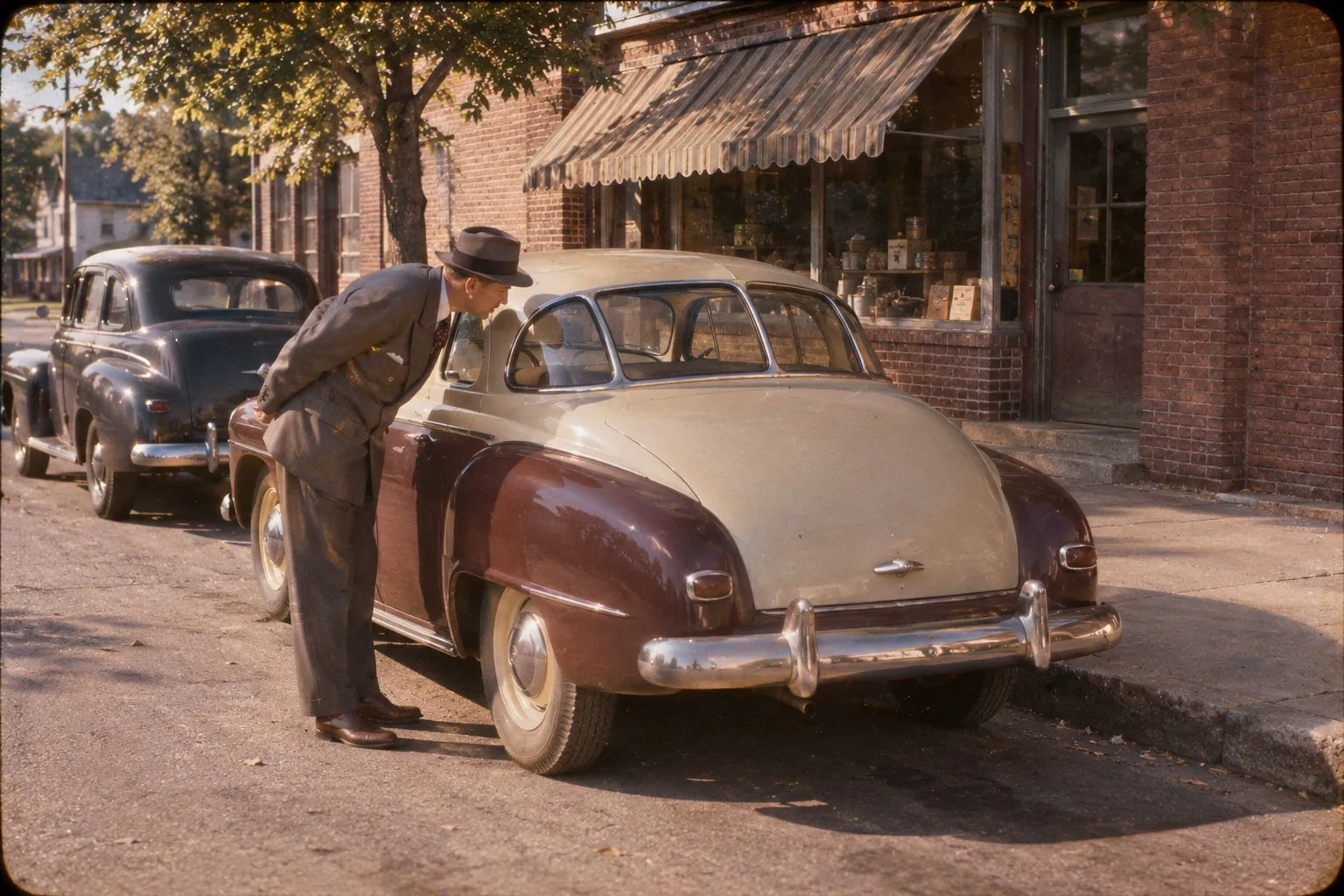
The 1947–1952 Studebakers looked different because they were brand-new postwar designs while most other makers were still selling warmed-over prewar cars, and they were styled to look like airplanes: long flat decks, low hoods and, on the Starlight coupe, a rear window that wrapped all the way around. Then the 1950 Studebaker added a chrome "bullet nose" that looked like a propeller hub, so nobody could mistake one for a Ford or a Chevy.
You probably remember the jokes before you remember the cars. Somebody's uncle would point at a Studebaker parked on Main Street and ask which way it was headed. Kids argued about it in the back seat.
Most of these cars came out of one factory town, South Bend, Indiana. For a few years right after the war, it was building cars that looked like the future.
Why everybody asked if it was coming or going
The joke started with the five-passenger coupe that came to be called the Starlight. According to Hagerty's model history, its big four-part rear window looked so much like a windshield that comedians wondered out loud whether the car was coming or going.
Radio comedian Fred Allen got off the best line. The ClassicCars.com Journal says he reportedly cracked that next year's Studebaker would leave you unable to tell whether it was going sideways.
The 1947 Studebaker
Hagerty says the styling was done mainly at Raymond Loewy's studios, with Virgil Exner doing much of the actual work. Exner later became Chrysler's chief designer. The 1947 Champion came as a four-door sedan with rear-hinged back doors, a two-door sedan, three- and five-passenger coupes and a convertible.
These were small, light cars. Writer J P Cavanaugh notes on Curbside Classic that the 1947–49 Champion rode on a 112-inch wheelbase and weighed only about 2,700 pounds.
The 1948 Studebaker and 1949 Studebaker
The 1948 and 1949 models kept the 1947 shape. That was fine, because buyers were still lining up for anything new. The same Curbside Classic piece says the design was still drawing "coming or going" wisecracks years after it first appeared.
Read more: 1960 Chevy Impalas: Six Taillights, Low Fins and the Price
The 1950 Studebaker gets its bullet nose
For 1950, Studebaker restyled the front of the 1947 body. The middle of the front end got a big chrome cone with a ring around it, and on each side sat a long, low air opening. Parked next to a Plymouth, it looked like a fighter plane.
A Yahoo Autos design story points out that the chrome cone looked more like aircraft hardware than a car grille. The same story says people still argue about the look today. People either loved it or called it the ugliest thing in town, and hardly anyone shrugged.
Lots of families took the gamble. Conceptcarz puts Studebaker's 1950 output at 320,884 cars, enough for ninth place in the industry, and says more than eighty percent of them were the lower-priced line.
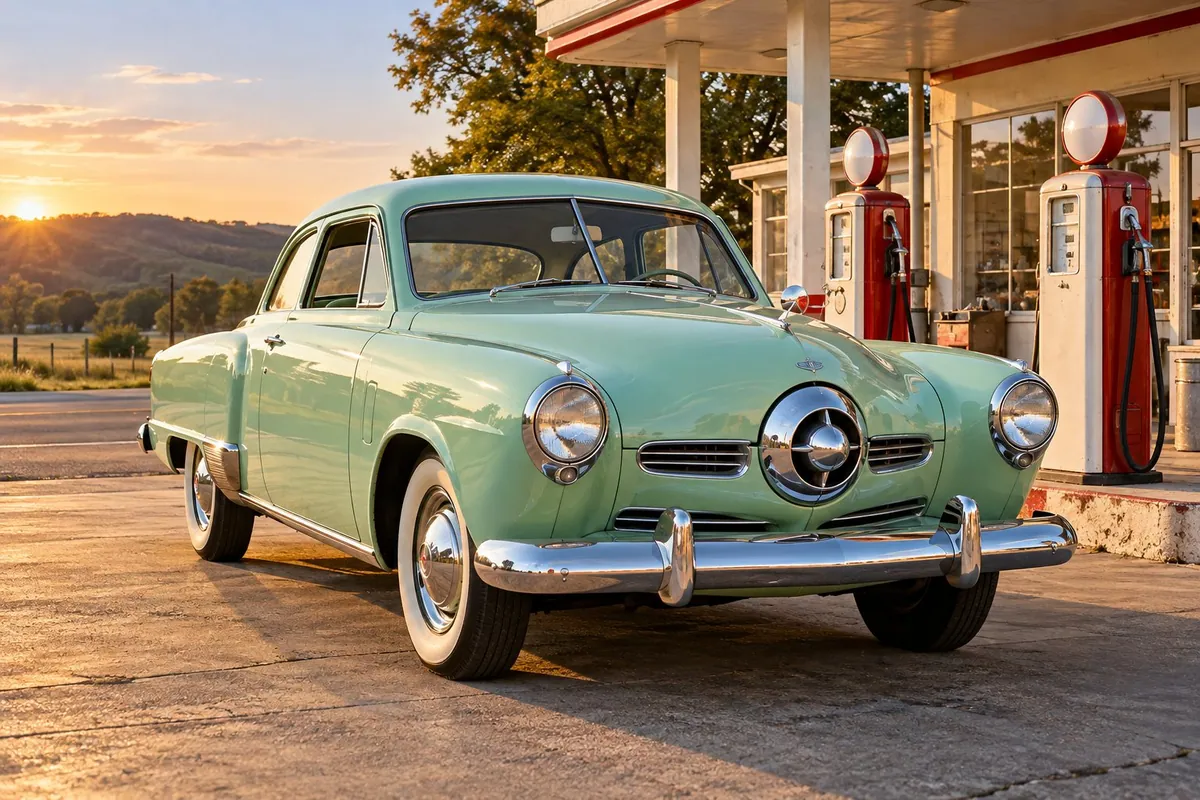
Its "bullet nose" made it look like an airplane. Which 1950 car is this?
What a 1950 Studebaker cost
Conceptcarz lists 1950 Champion prices from about $1,420 (about $18,460 today) to $1,980 (about $25,740 today), depending on body and trim. The bigger, pricier Commander used a larger six-cylinder engine that year. The Champion used a 169.6-cubic-inch flathead six rated at 85 horsepower, according to Barn Finds.
The '51 Studebaker and its new V8
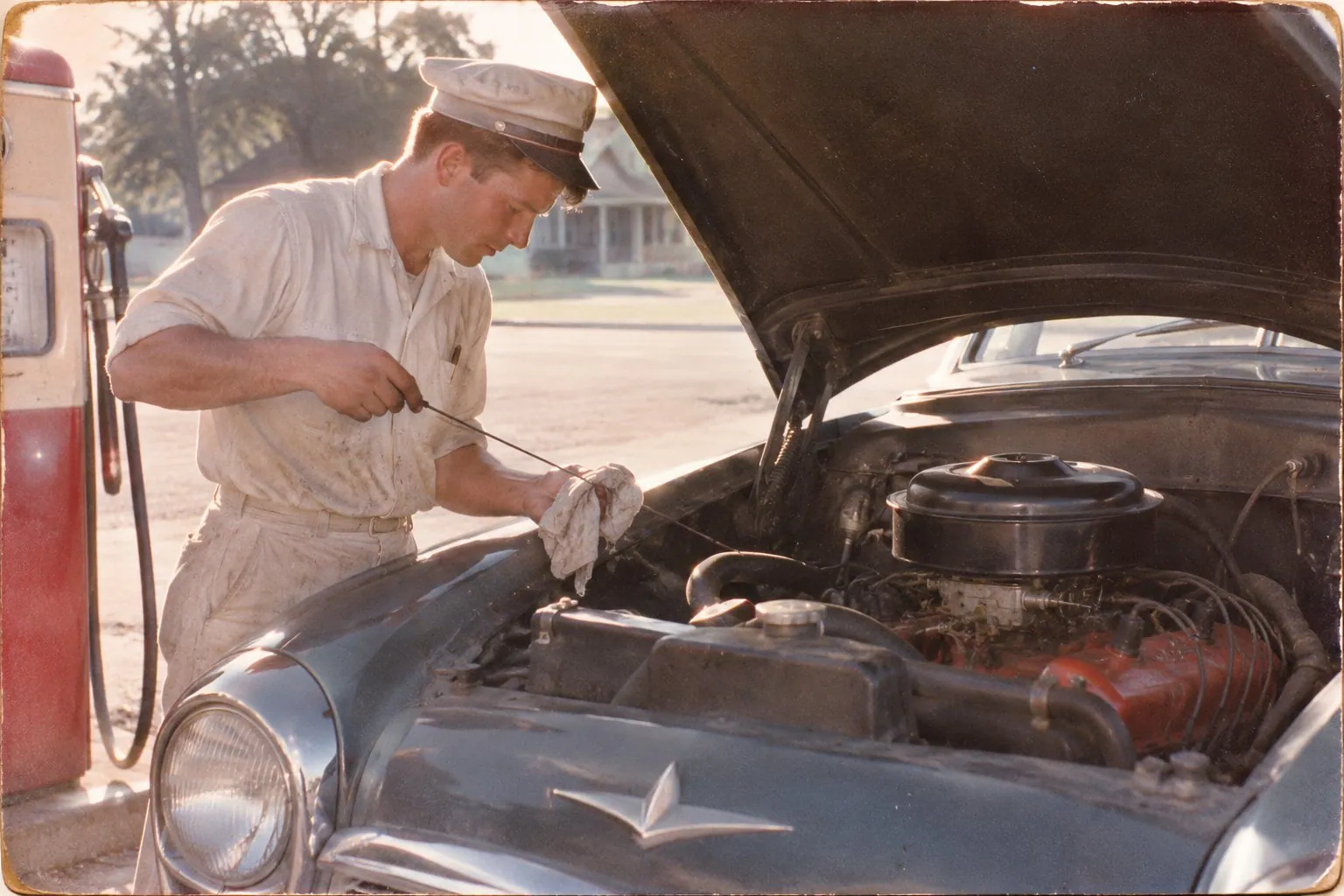
The 1951 Studebaker kept the bullet nose for one more year, which made it the last of them. The real news was under the hood of the 1951 Studebaker Commander.
Conceptcarz's 1951 Commander profile says it got an all-new overhead-valve V8 of 232.6 cubic inches, rated at 120 horsepower. Conceptcarz notes that Chevrolet and Plymouth didn't offer V8s until 1955. That gave a Studebaker owner something to brag about at the filling station.
The options were priced to tempt you. Conceptcarz says overdrive added $92 to a 1951 Champion (about $1,113 today) and $98 to a Commander (about $1,186 today). Automatic Drive cost $201 (about $2,432 today). The same source lists 1951 Commander prices from about $1,800 (about $21,780 today) to $2,245 (about $27,165 today).
Studebaker built 246,195 cars in 1951, according to Conceptcarz's 1951 Commander specifications. Of those, 124,329 were Commanders.
The 1952 Studebaker: the nose comes off
For 1952, the bullet was gone. Conceptcarz says it was replaced by a wide new grille some called the "clam digger." That year also brought the Starliner, Studebaker's first pillarless hardtop. It was the last year for the rear-hinged back doors on the four-door sedans.
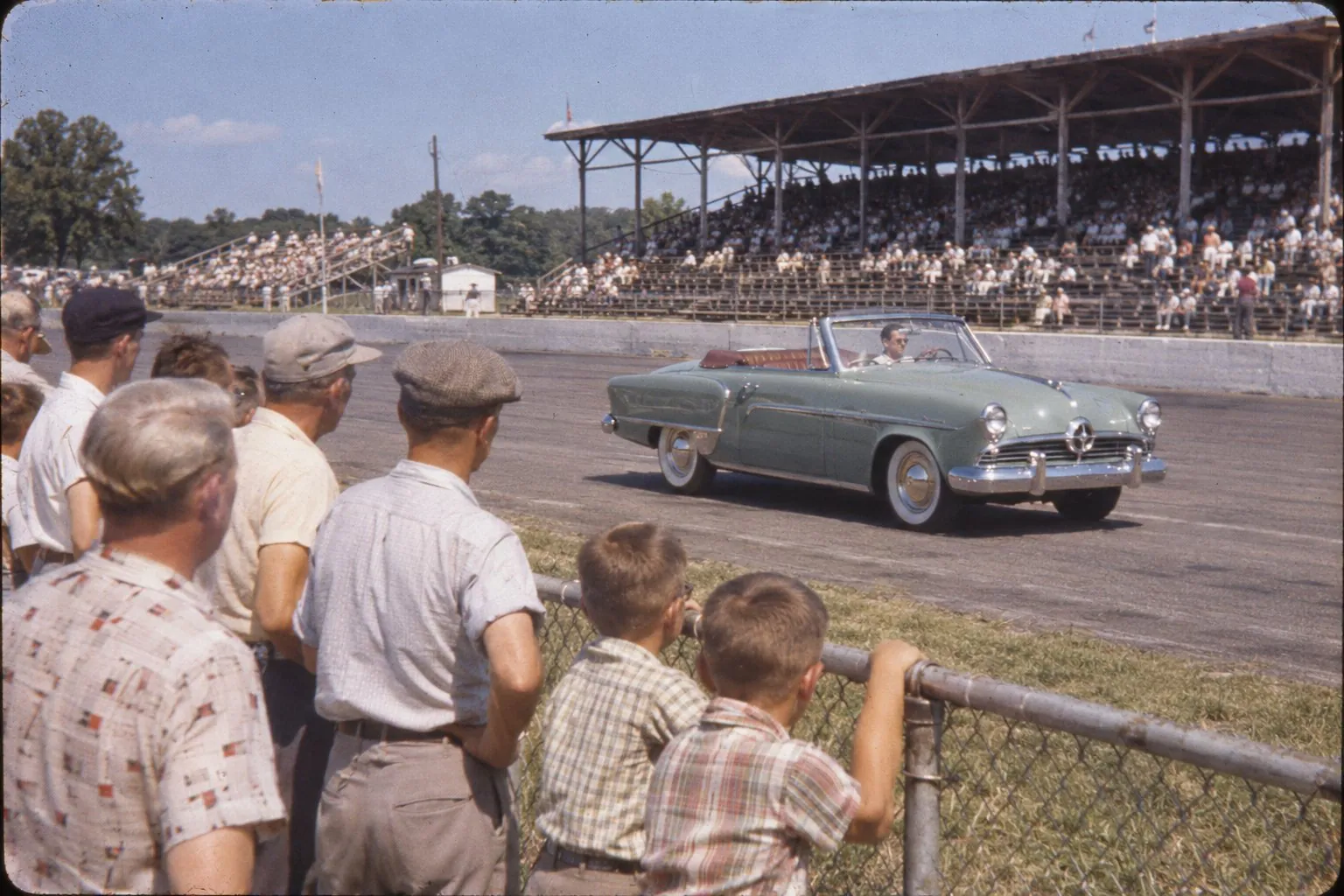
It was a birthday year too. Conceptcarz notes Studebaker turned 100 on February 16, 1952, counting from its start building farm wagons in 1852. The Studebaker National Museum says the company supplied two identical Commander State convertibles to pace the 1952 Indianapolis 500.
The Starlight coupe with the wraparound window stayed on sale through 1952. In 1953, a completely new Studebaker replaced it.
Year by year at a glance
This table lists each model year from 1947 to 1952, using the sources linked above.
| Year | Front end | What was new |
|---|---|---|
| 1947 | Low, plain front | All-new postwar body; wraparound-window coupe |
| 1948 | Same as 1947 | Carryover |
| 1949 | Same as 1947 | Carryover |
| 1950 | Bullet nose | Restyled front end; 320,884 cars built |
| 1951 | Bullet nose | New 120-hp V8 in the Commander |
| 1952 | "Clam digger" grille | Starliner hardtop; 100th birthday; Indy pace car |
The first new car after the war
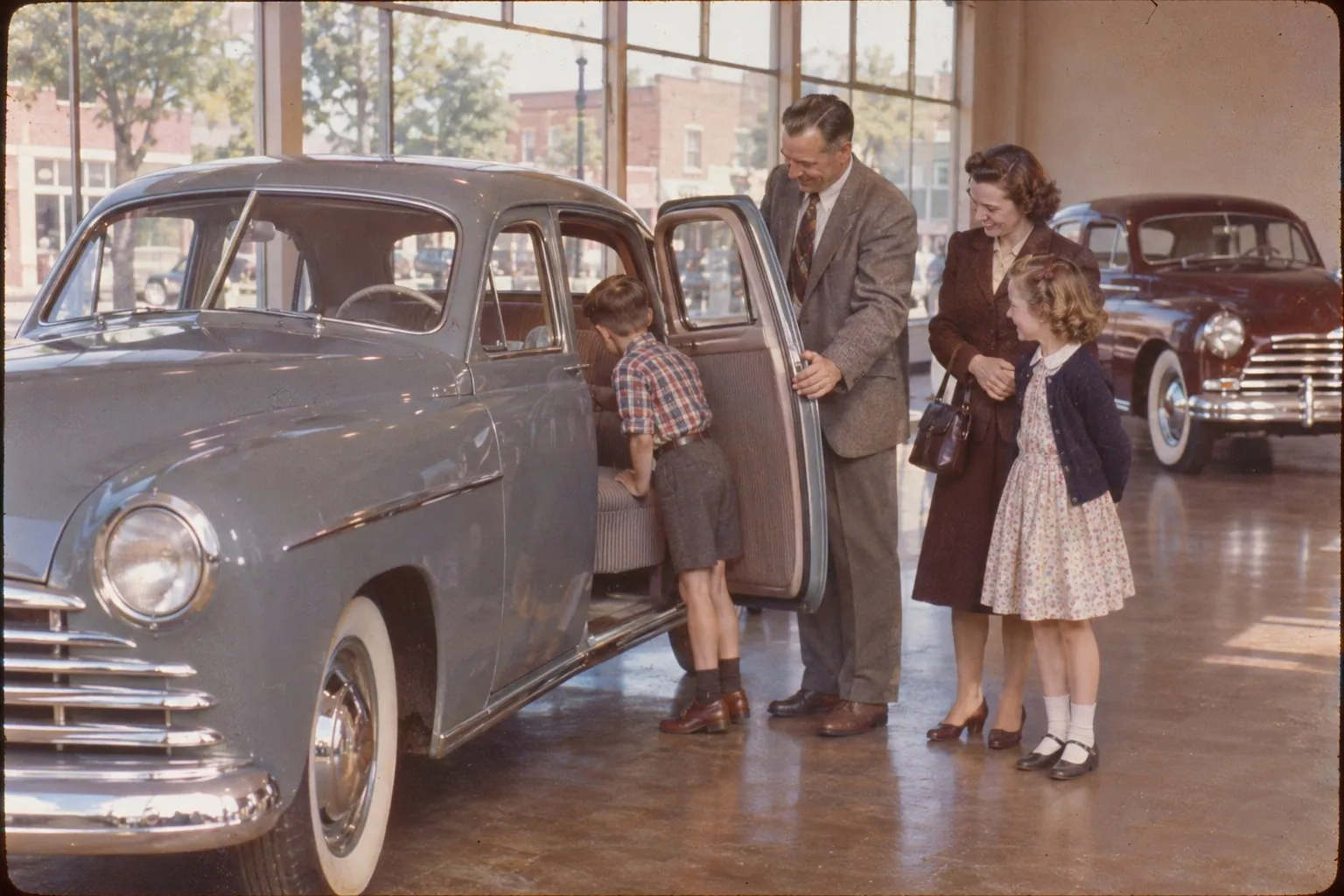
For a lot of families, a Studebaker was the first new car after years of patching up a prewar sedan. Gas had been rationed, tires were hard to find, and new cars hadn't been built since early 1942. When the dealer finally called, it meant something.
You may remember the smell of the new upholstery, or riding home with the window cranked down. Maybe your father kept the owner's manual in the glove box for years. Maybe the neighbors walked over to see which end was the front.
The cars still have fans. Curbside Classic editor Paul Niedermeyer wrote in that site's comments that he "used to really want a bullet-nose Starlight coupe." If your family had one, you know why.
Frequently asked questions
What made the 1947–1952 Studebakers look so different?
They were all-new postwar designs from Raymond Loewy's studio, with much of the work done by Virgil Exner. They had long, low, airplane-like lines. The Starlight coupe's wraparound rear window and the 1950–51 bullet nose made them stand out even more.
Did the 1951 Studebaker have a bullet nose?
Yes. The 1951 was the second and last bullet-nose year. Studebaker dropped it for 1952.
How much did a 1950 Studebaker cost new?
Conceptcarz lists 1950 Champion prices from about $1,420 (about $18,460 today) to $1,980 (about $25,740 today). The Commander cost more.
What engine did the 1951 Studebaker Commander have?
It had Studebaker's new overhead-valve V8 of 232.6 cubic inches, rated at 120 horsepower, according to Conceptcarz. The Champion kept its 85-horsepower six.
What was the 1950 Studebaker Commander?
It was the larger, more expensive line above the Champion. It used a bigger six-cylinder engine and wore the same bullet nose. The V8 didn't come along until 1951.
Sources
- 1952 Indy 500 Pace Car, Studebaker National Museum via Google Arts & Culture, 1952
- 1947 Studebaker Champion Deluxe, Hagerty
- 1950 Studebaker Champion, Conceptcarz
- 1951 Studebaker Commander, Conceptcarz
- 1949 Studebaker Champion Starlight Coupe, Curbside Classic, 2026
- Pick of the Day: 1949 Studebaker Starlight, ClassicCars.com Journal, 2017
Related Stories
Love a trip down memory lane?
Get a fun quiz every morning. Free · One email a day · Unsubscribe anytime