Model T Year Guide: What Changed From 1909 to 1927
Brass radiator, black paint or wire wheels? Here's how to tell which Model T year is in Grandpa's old photo, and why there was never a 1935 Model T.
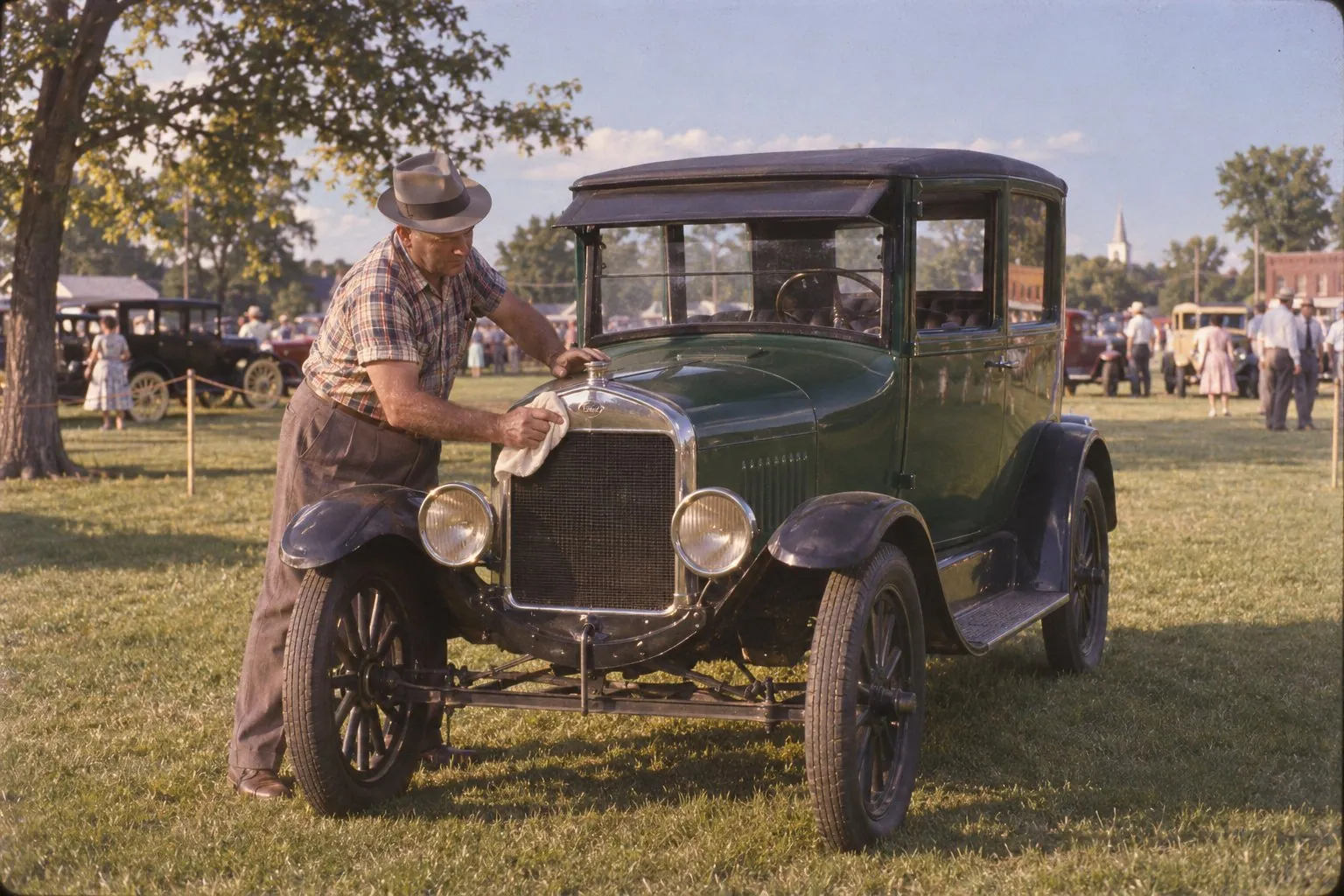
The Ford Model T was sold as the 1909 through 1927 models. The first one was built in Detroit in the fall of 1908 and the last in May 1927. It changed slowly from year to year, but it changed in a few big steps: brass radiators until 1916, black paint only from about 1914 to 1925, an electric starter in 1919, a new look for 1923, and a lower, more colorful car for 1926 and 1927. Once you know those steps, you can usually narrow down the Model T year in an old family snapshot to within two or three years.
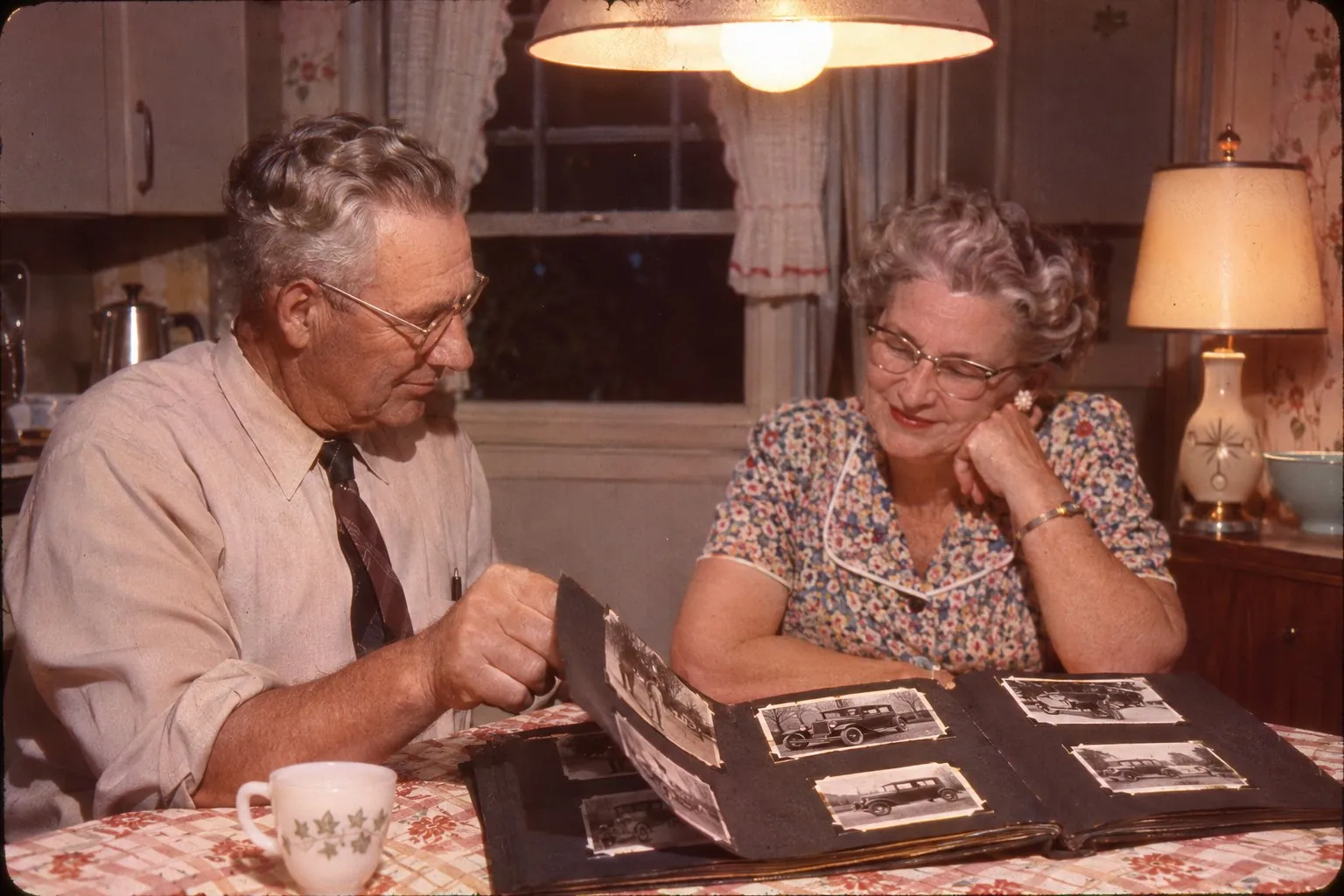
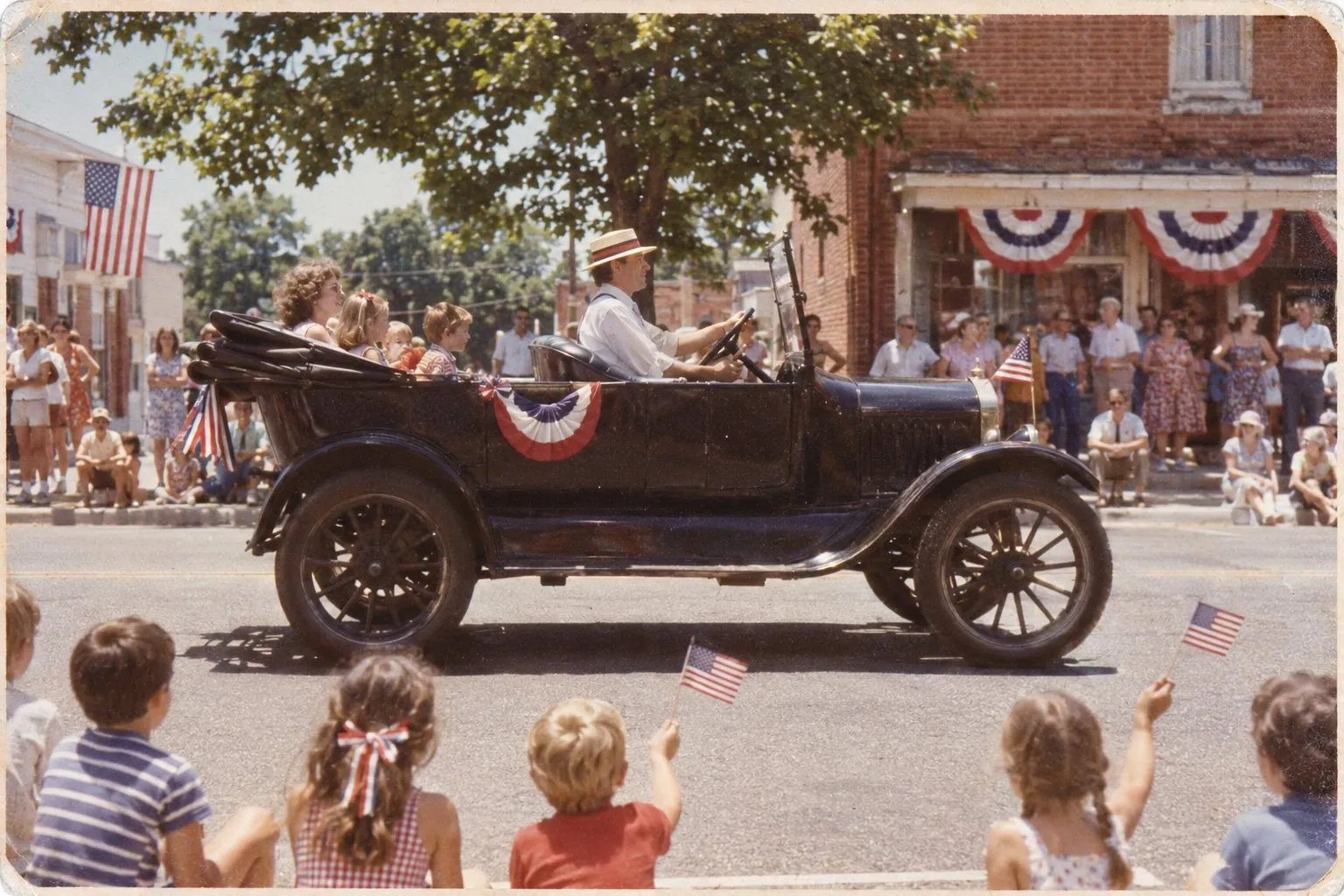
You probably remember Model Ts as old cars even when you were young. By the 1950s they showed up in Fourth of July parades, on farms behind the barn, and in the background of your parents' wedding pictures. Lots of people from the 1950s and '60s grew up hearing someone call any boxy old Ford "a Model T," whether it was one or not.
This guide goes through the changes in plain terms, mostly following Model T Ford: The Car That Changed the World by Bruce McCalley (Krause Publications, 1994). It's the year-by-year reference Model T clubs still use.
The early cars, 1909 to 1916
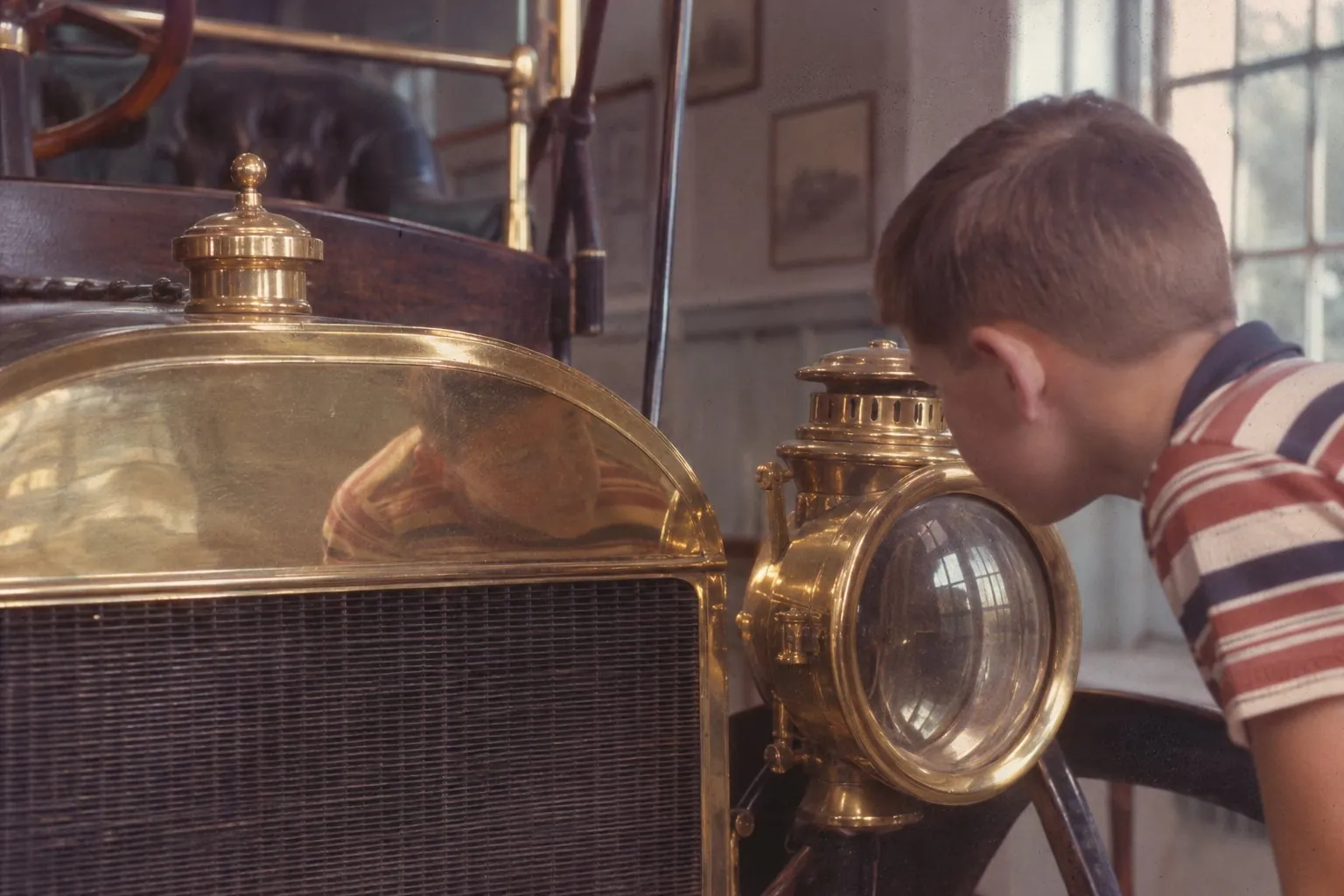
The first Model Ts are easy to spot because of all the brass. Collectors call these the "brass era" cars. The radiator, the headlights and the side lamps were all shiny brass, and the fenders were flat and plain. The very first cars burned gas or kerosene in their headlamps. Electric headlights, powered by the car's magneto, came with the 1915 models.
The cars weren't all black at first. McCalley's guide lists gray, red and a dark blue on the early cars. Then Ford's moving assembly line at Highland Park, Michigan, got going in late 1913, and black became the only color for more than a decade. Henry Ford put it bluntly in his 1922 book My Life and Work: "Any customer can have a car painted any colour that he wants so long as it is black."
Most early Model Ts were open touring cars, with a folding top and side curtains for rain. If you look closely at the driver's side of one in an old photo, something about the front seat seems a little off.
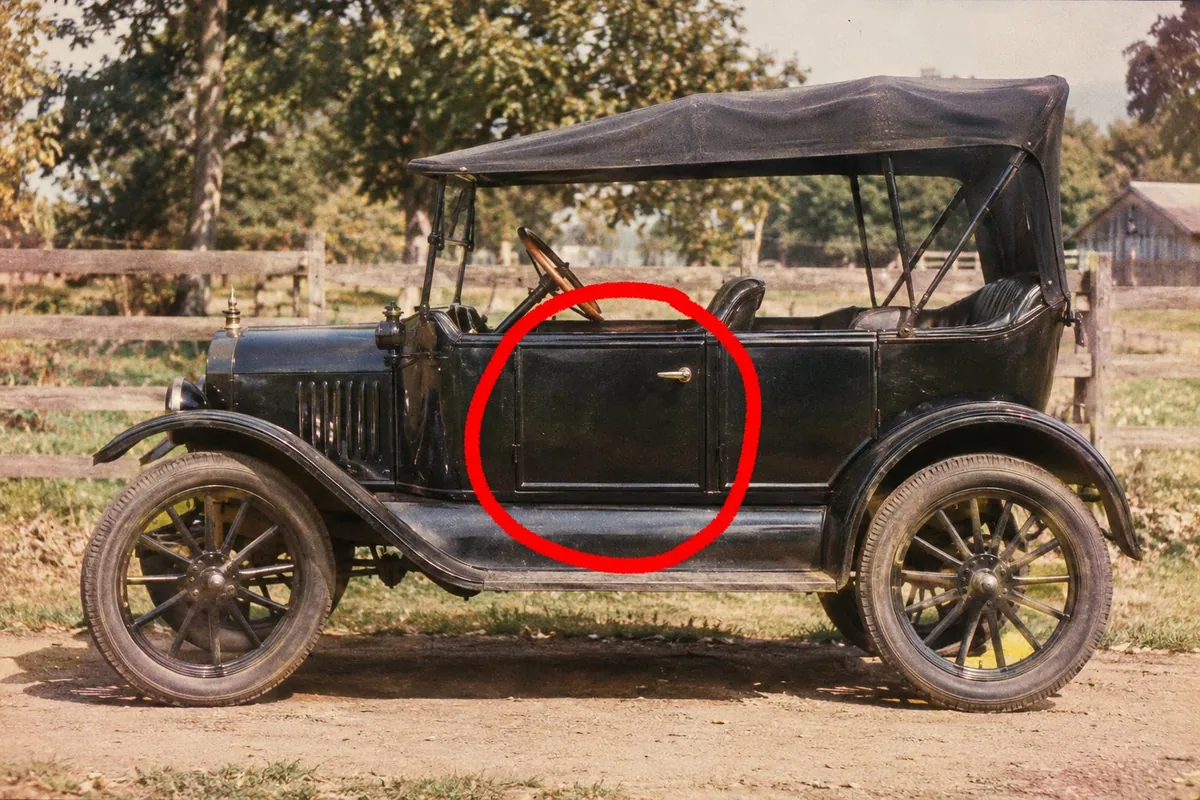
On many Model Ts, why couldn't the driver get in through THIS door?
Read more: The 1950 Studebaker Bullet Nose: Coming or Going?
The black years, 1917 to 1922
For 1917, Ford dropped the brass. A Model T from these years has a black steel shell around the radiator, a taller hood that slopes to meet it, and curved, crowned fenders in place of the flat ones. In a photo, that rounded front end and the lack of any shine up front tell you it's a 1917 or later car.
The other big change came with the 1919 models: an electric starter. It was standard on closed cars, the coupe and the center-door sedan, and an extra-cost option on open cars. Demountable rims came along at the same time, which made fixing a flat tire on the road a lot easier.
Driving one hadn't changed, though. There was no gearshift like the one on your dad's 1950s Chevy. A Model T had three pedals on the floor and two levers under the steering wheel, and none of them worked the way a modern driver would guess.
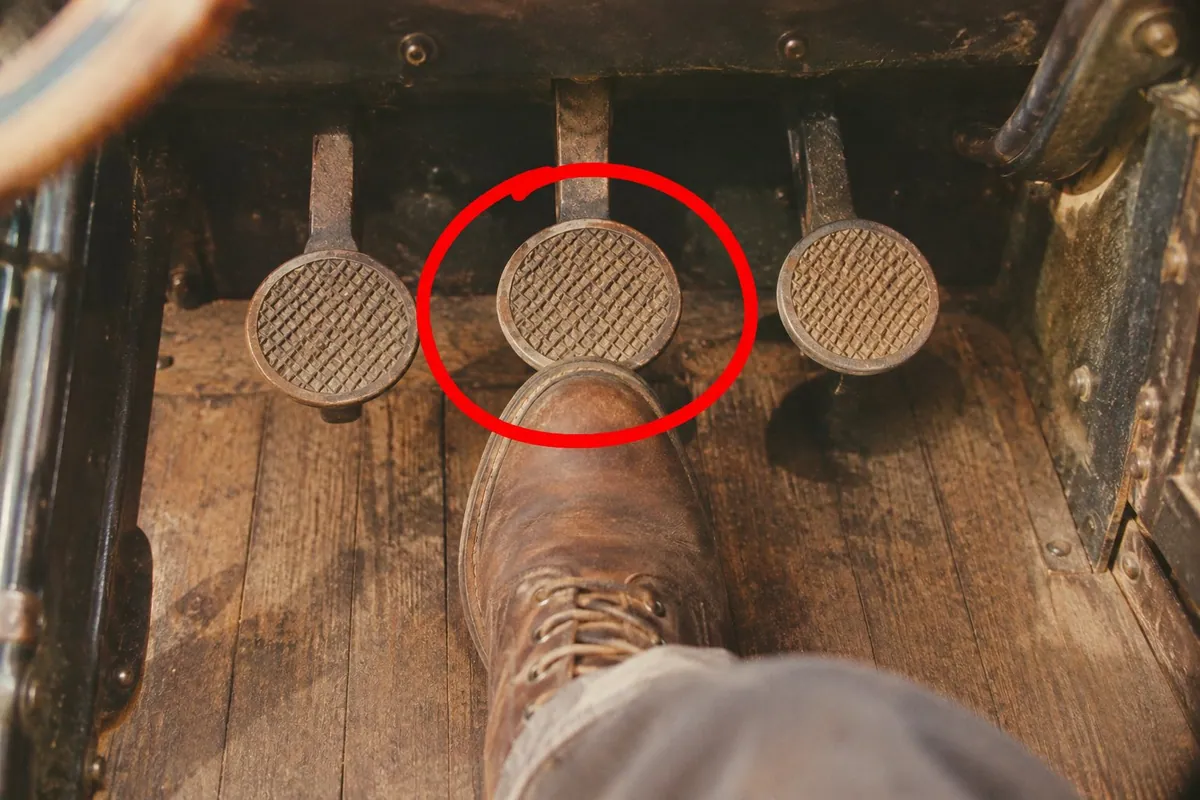
On a Ford Model T, what did the middle pedal do?
The 1923 Ford Model T
Ford started selling the 1923 cars in the fall of 1922, and you can see the difference. Open cars got a windshield that slanted back and a "one-man top" that one person could put up alone. The radiator and hood were taller, and a sheet-metal apron filled in the space under the radiator.
It was also the T's biggest year. McCalley's guide puts Ford's 1923 output at about 2 million Model Ts, the most of any year. In a lot of towns, the car parked in front of the feed store or the doctor's office was very likely a 1923 to 1925 Model T.
The 1923 coupe and roadster
The 1923 Ford Model T coupe was a closed two-seater with a steel roof, roll-up glass windows and a small rear deck for storage. Traveling salesmen and country doctors liked it. The 1923 Model T roadster, which Ford called the Runabout, was the open two-seat version, with a folding top and side curtains in place of glass.
The other news for 1923 was the four-door Fordor sedan. Soon after came a new two-door Tudor sedan, which replaced the old center-door model. So if Grandma is standing beside a black four-door sedan with a slanted windshield on the touring car next to it, you're looking at 1923 or later.
The 1926 Ford Model T, the "Improved Ford"
By the mid-1920s, Chevrolet and others had more style and more colors. Ford answered with the "Improved Ford," which went on sale in late 1925 as the 1926 model. It's the easiest Model T to date in a picture. The body sits noticeably lower, the hood and cowl run in one smoother line, and closed cars have a nickel-plated radiator shell.
The color came back, too. Closed cars were offered in shades such as green and maroon, according to McCalley's guide, and the open cars soon followed. Late in the run, wire wheels were offered in place of the old wooden spokes. If the car in your photo has wire wheels and sits low, it's almost surely a 1926 or 1927.
The 1926 coupe and roadster
The 1926 Ford Model T coupe kept its closed two-seat layout in the new, lower body, with bigger doors and the shiny radiator. The 1926 Model T roadster was the open two-seater. Ford also sold it with a small pickup box in back. People kept those working on farms long after the T was gone.
Why there's no 1935 Model T
The last Model T came off the line in May 1927. Ford then shut its plants for months to retool. The car that replaced it, the Model A, was shown to the public in December 1927 and built through the 1931 model year.
After that came the 1932 Ford V8, then the 1933 and 1934 Fords, and the 1935 Ford, which was also a V8. None of these were Model Ts. The confusion probably comes from the black paint, the tall upright look, and the family habit of calling every old Ford "the Model T." If the car in a 1930s or 1940s photo has a rounded grille, a gearshift lever on the floor, or headlights mounted between the fenders and the grille, it's not a T.
Telling the Model T year from a family photo
Here's a quick checklist. Use it from the top down and stop at the first line that fits. These are general rules, since dealers and owners often swapped parts.
| What you see | Likely years |
|---|---|
| Wire wheels, low body, shiny nickel radiator | 1926–1927 |
| Slanted windshield on an open car | 1923–1925 |
| Black radiator shell, rounded fenders | 1917–1922 |
| Brass radiator and brass lamps | 1909–1916 |
License plates can help as well. Many states put the year right on the plate, and that tells you the earliest the picture could have been taken.
Frequently asked questions
What years was the Ford Model T made?
The Model T was sold as the 1909 through 1927 models. Production began in the fall of 1908 and ended in May 1927, and Ford built about 15 million of them.
What's the difference between a 1923 and a 1926 Ford Model T?
A 1923 T has the taller radiator and, on open cars, a slanted windshield, and nearly all of them were black. A 1926 T sits lower, has a smoother hood line, and was offered in colors again, with a nickel radiator shell on closed cars.
Is a 1923 Ford T coupe the same as a roadster?
No. The coupe was closed, with a steel roof and roll-up glass windows. The roadster was open, with a folding top and side curtains.
Was there a 1935 Model T?
No. The Model T ended in 1927. The Model A followed for 1928 to 1931, and the 1935 Ford was a V8 car.
What is a 1926 Ford T roadster pickup?
It was the open two-seat roadster with a small cargo box in place of the rear deck. Farmers and tradesmen used them for years after Ford stopped making the T.
Sources
- Henry Ford, My Life and Work, Doubleday, Page & Company, 1922
- Bruce W. McCalley, Model T Ford: The Car That Changed the World, Krause Publications, 1994
- Ford Model T collection records, The Henry Ford museum, Dearborn, Michigan
- Ford Motor Company, company history of the Model T and Model A
Related Stories
Love a trip down memory lane?
Get a fun quiz every morning. Free · One email a day · Unsubscribe anytime