1960s Cars: Chevys, Fords, Cadillacs and Compacts
From the last tall tail fins to the first muscle cars, here's what sat in the driveway, what it cost then, and what that comes to now.
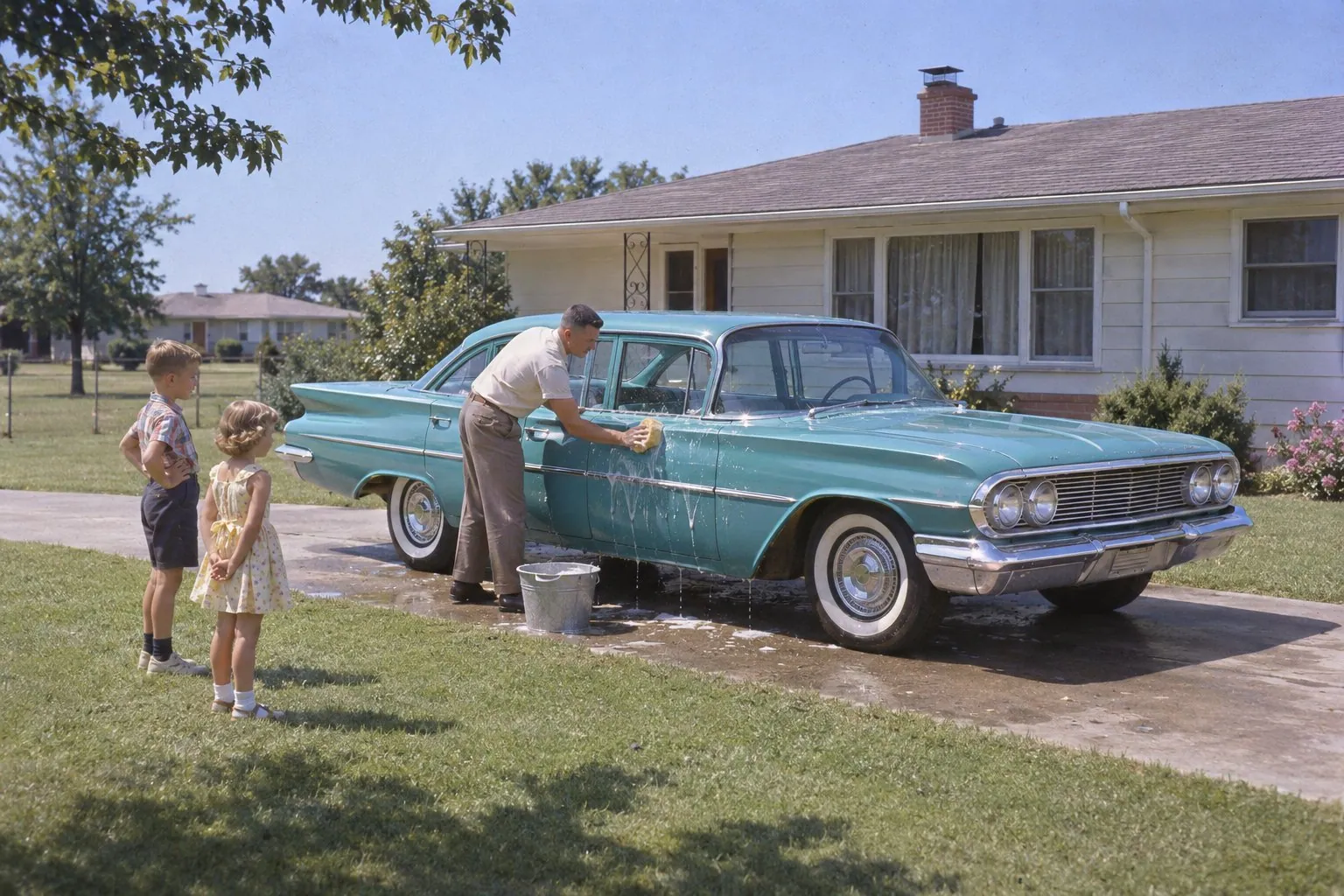
The 1960s cars that filled American driveways were full-size Chevrolets, Fords and Plymouths, roomy station wagons, Cadillacs and Lincolns for the well-off, and a new crop of small compacts like the Falcon and Corvair. Early in the decade they still wore tail fins and lots of chrome. By the end they were long, low and plain-sided, with big V8s under the hood.
You probably remember the family car better than some of the houses you lived in. Maybe it was a Bel Air with vinyl seats that burned the backs of your legs in July. Maybe it was a wagon with a rear-facing seat where the kids rode backward and made faces at the driver behind. Gas cost around 30 cents a gallon in many towns in 1960, roughly $3.20 in today's money.
Here's a tour of the decade, year by year and car by car.
Early 1960s cars still had their fins
When the decade opened, Detroit was coming off the high point of the fin era. The 1959 Cadillac is widely remembered as having the tallest fins of all, with twin bullet taillights set into each one. For 1960, Cadillac brought them down a bit. Within a couple of years most makers had trimmed them back or dropped them altogether.
The last of the tail fins
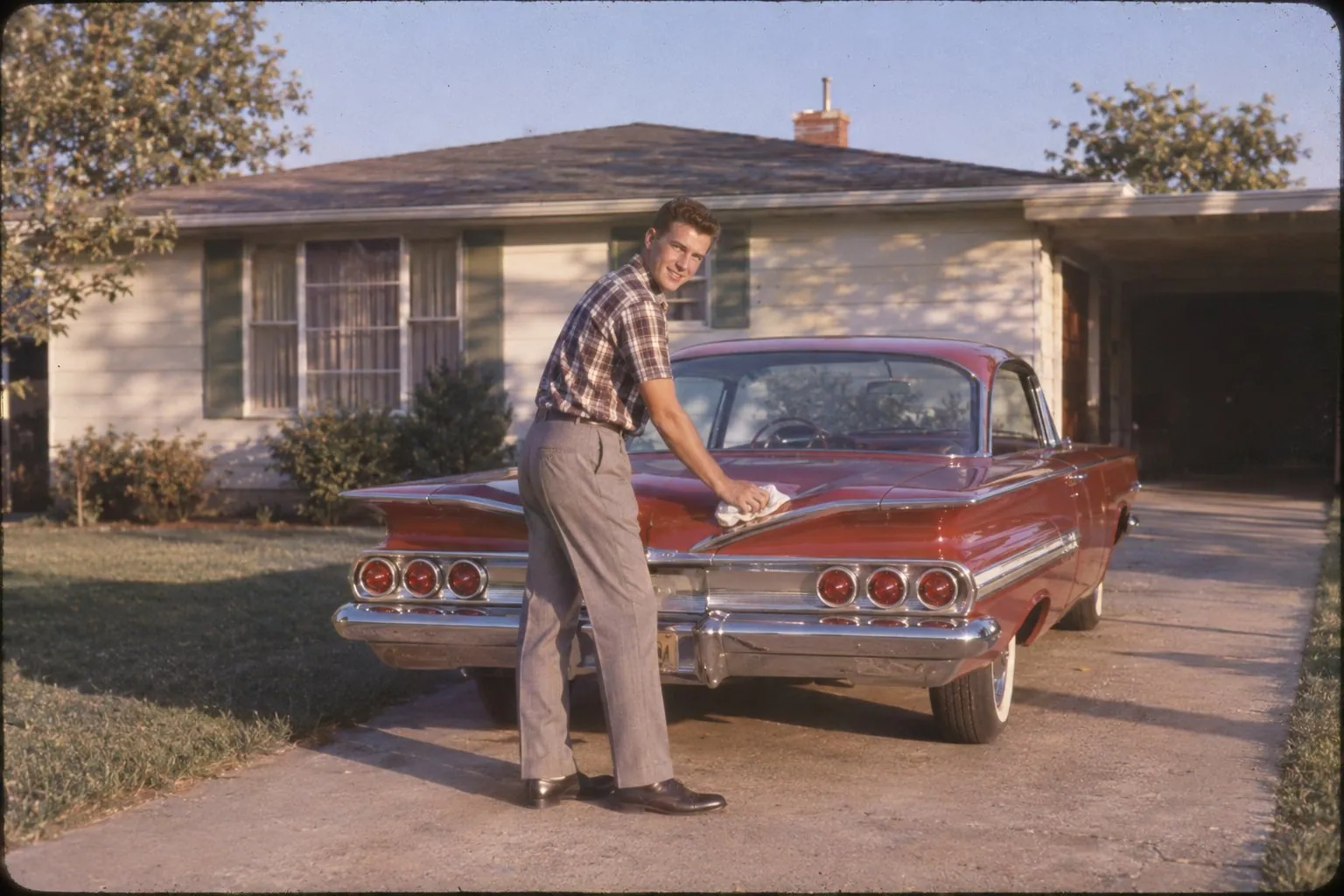
On a 1960 Plymouth or Chrysler, the fins still swept up over the rear fenders like a shark's. Chevrolet had laid its 1959 fins out flat like gull wings, then calmed them down for 1960. Those flat fins got Chevy through the turn of the decade, and by the early '60s the look had turned crisp and squared-off.
Chrome was everywhere on these cars, and the rear bumpers were especially fancy. On the biggest Cadillacs, the back end was practically a piece of jewelry, with slots and openings worked right into the bumper.
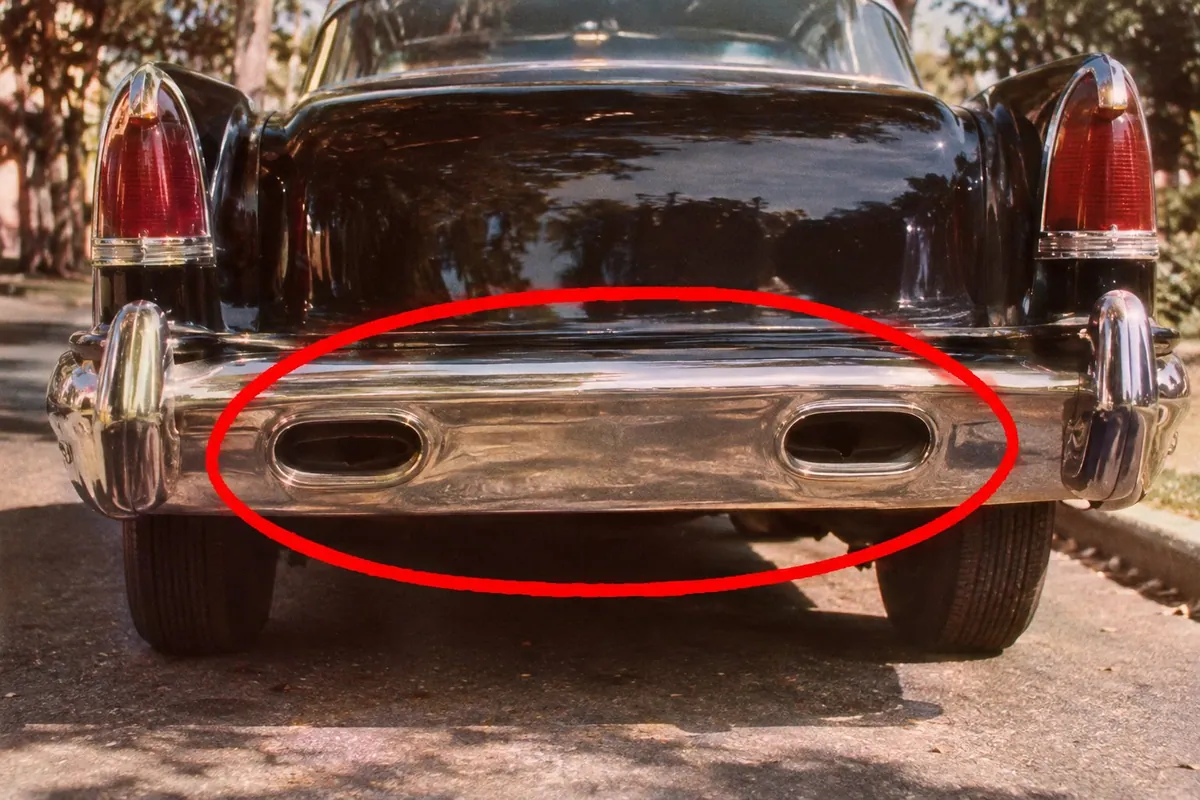
What came out of THESE two openings in the back bumper of a 1950s Cadillac?
Cadillac, Lincoln and Imperial at the top
For people with money, the choice was between Cadillac, Lincoln and Chrysler's Imperial. A 1960 Cadillac Series 62 cost about $5,000, roughly $53,000 today. Owning one meant you'd made it, whether you were a doctor, a car dealer or the man who ran the local lumberyard.
The 1961 Lincoln Continental changed what luxury looked like. It was slab-sided and nearly plain, and its rear doors opened from the center. A sedan cost about $6,000, roughly $63,000 today. A 1964 Continental is the car seen in the Dallas motorcade film.
Read more: The 1950 Studebaker Bullet Nose: Coming or Going?
The compacts move into the driveway
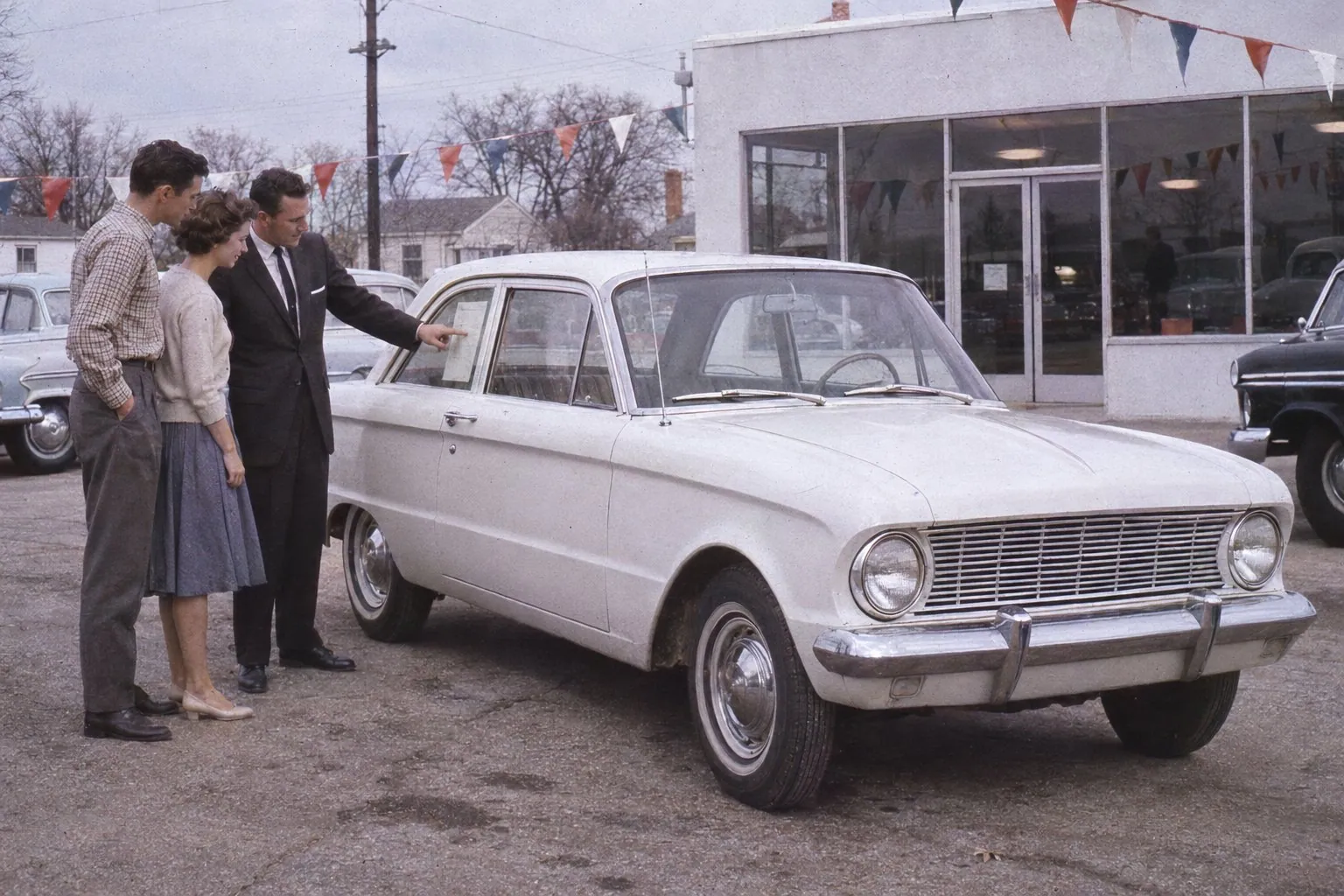
By 1959, imports like the Volkswagen Beetle were selling well. For 1960 the Big Three answered with small cars of their own: the Ford Falcon, the Chevrolet Corvair and the Valiant from Chrysler. Rambler was already selling its little American.
Falcon, Corvair, Valiant and the little Rambler
The Falcon was simple and cheap. The two-door listed at $1,912 and the four-door at $1,974, Auto123 reported. That's about $20,300 and $20,900 today. In its review, Auto123 said, "It was hard to find a better deal." Ford sold 435,676 Falcons in 1960 and 474,191 in 1961, the same review says.
The Corvair cost about $2,000, roughly $21,200 today. It had an air-cooled six in the back, so it sounded more like a VW than a Chevy. Ralph Nader's 1965 book Unsafe at Any Speed opened with a chapter on the Corvair, and that book followed the car for the rest of its life.
The Beetle itself sold for about $1,600 in the mid-'60s, around $16,000 today. Plenty of families bought one as a second car.
Chevy and Ford in the family driveway
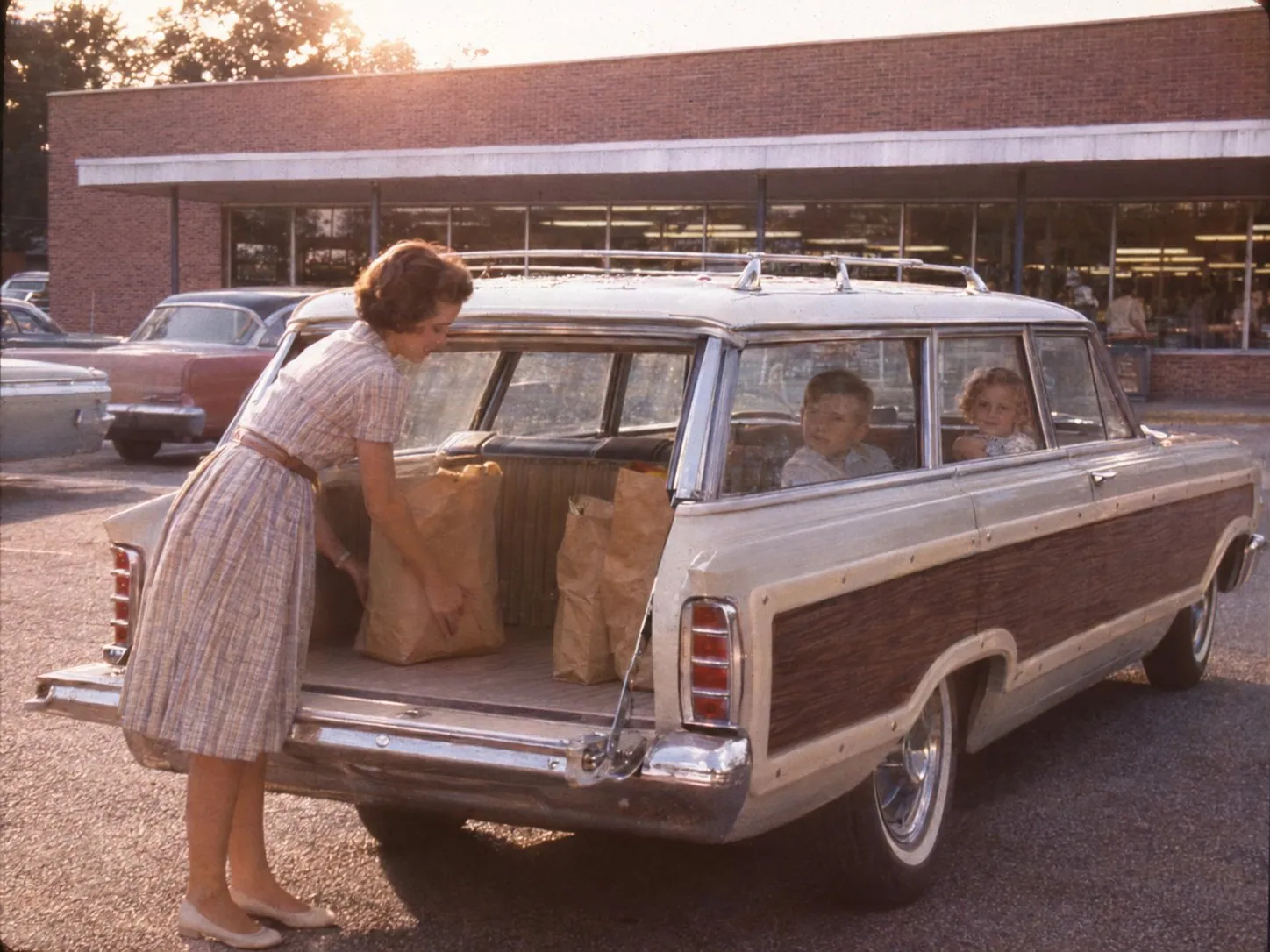
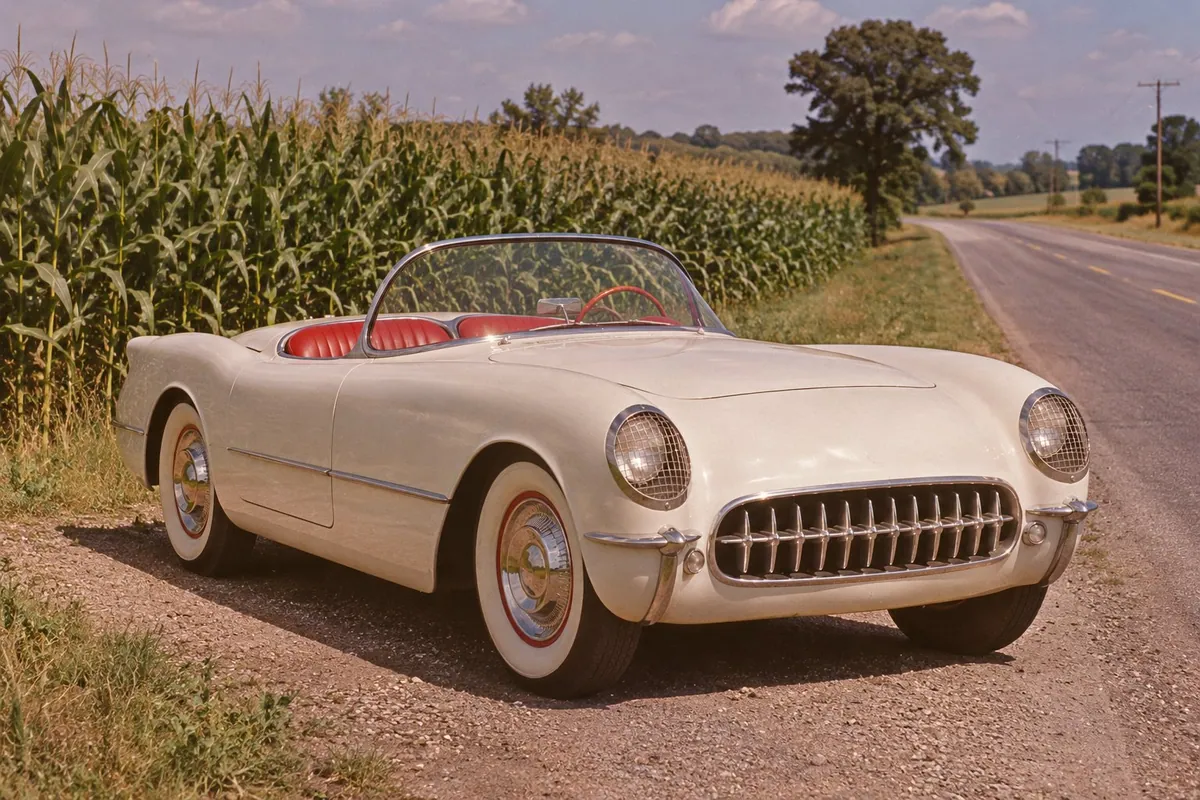
Most families still drove a full-size car. Chevrolet had the Biscayne, Bel Air and Impala, and Ford had the Fairlane and Galaxie. Plymouth's big car was the Fury. In 1965, Chevrolet sold more than a million Impalas in a single model year, a mark few nameplates have ever hit.
Station wagons carried the baby boom to church, to the lake and across the country on vacation. The Ford Country Squire had fake wood paneling down its sides. A Chevy wagon could hold a Cub Scout den, and some summers it held a camping trip's worth of gear on the roof rack.
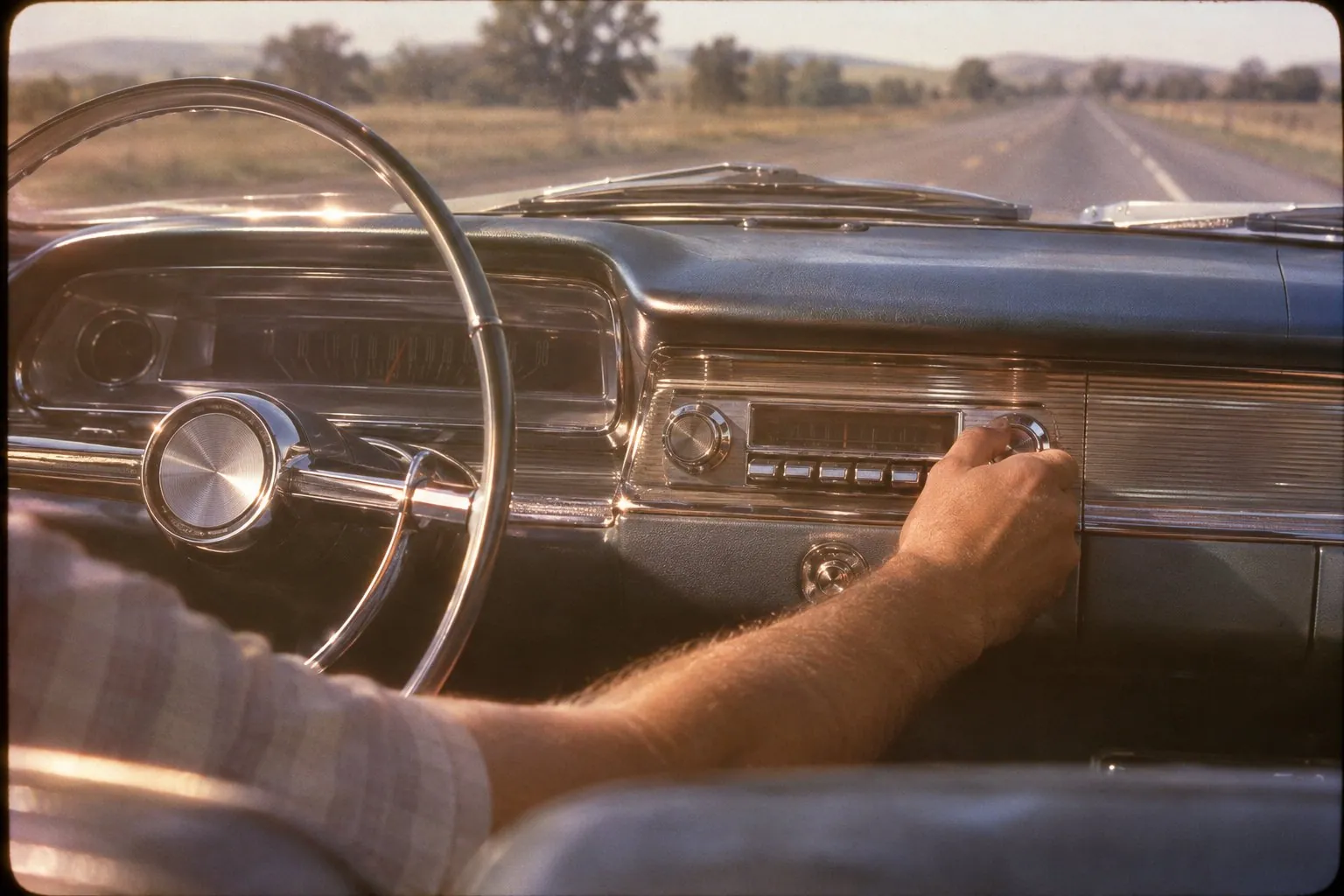
Remember the little things too: the AM radio with five push buttons, the cigarette lighter that popped out glowing orange, and the smell of a new car's vinyl. Seat belts were only starting to show up, and a lot of families never buckled them.
Dream cars at the auto show
Detroit loved showing off cars nobody could buy. You saw them at auto shows, in Life magazine and at the 1964–65 New York World's Fair, where GM's Futurama ride and Ford's Magic Skyway both featured cars of tomorrow.
Concept cars of the '60s
Ford's Mustang I concept was a tiny two-seat roadster with its engine behind the driver, shown at Watkins Glen in 1962. The Mustang that went on sale looked nothing like it, but it kept the name.
The boldest experiment was Chrysler's Turbine Car. Instead of a piston engine it ran on a jet-style turbine that whooshed like an airliner. It would burn kerosene, diesel and even tequila. From 1963 to 1966, Chrysler lent 50 of the bronze coupes to 203 ordinary drivers for three months each. Afterward, most of the cars were destroyed.
Patrol cars in New York City
NYPD police cars in the '60s
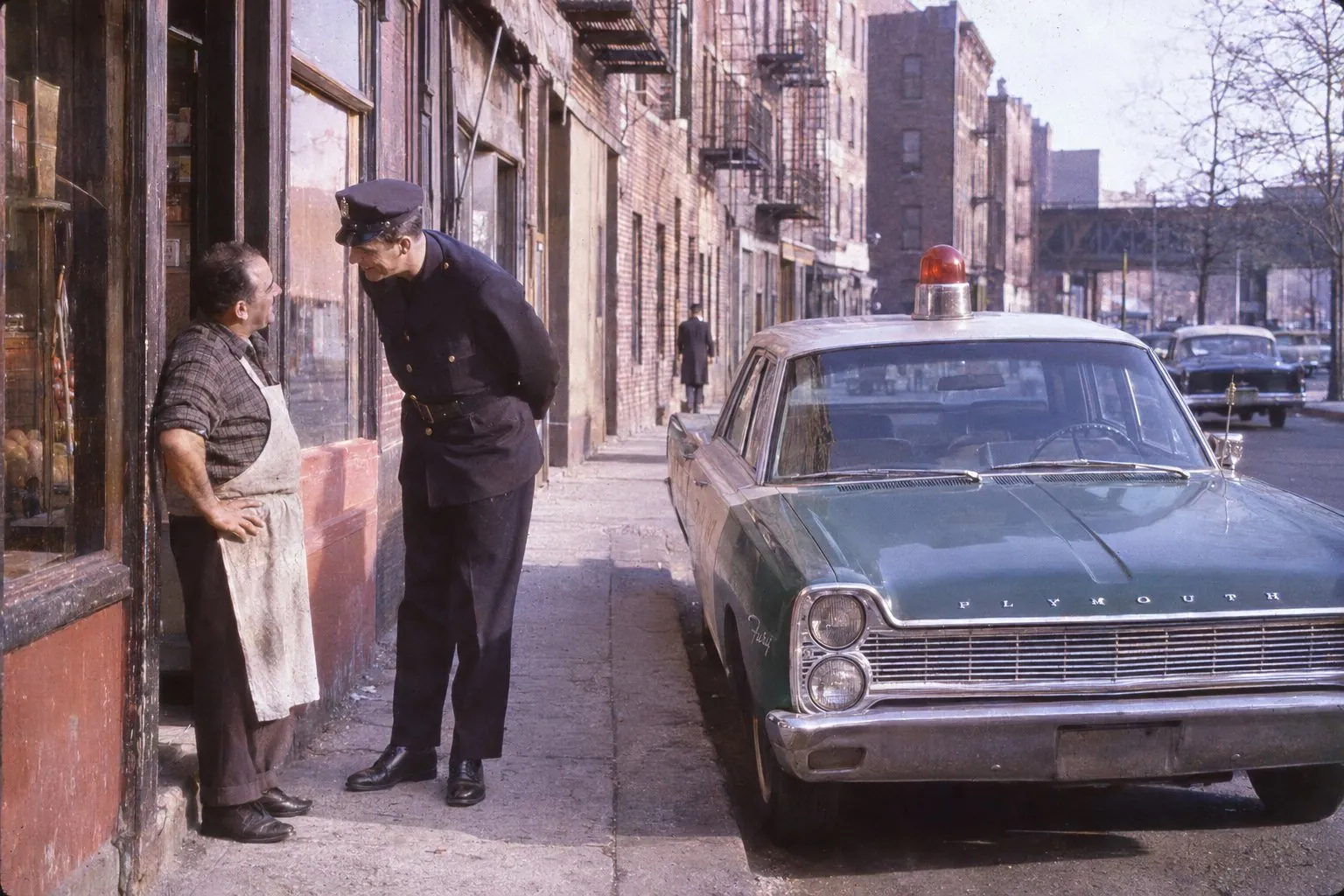
If you grew up in New York or visited there, you remember the green-and-white radio cars with a single red "gumball" light on the roof. The department mostly bought plain full-size Plymouths, Fords and Chevrolets. Blue and white didn't arrive until the 1970s.
TV made those cars famous well beyond the five boroughs. Car 54, Where Are You?, which aired on NBC from 1961 to 1963, followed two Bronx patrolmen and their Plymouth.
Mustangs, GTOs and the muscle years
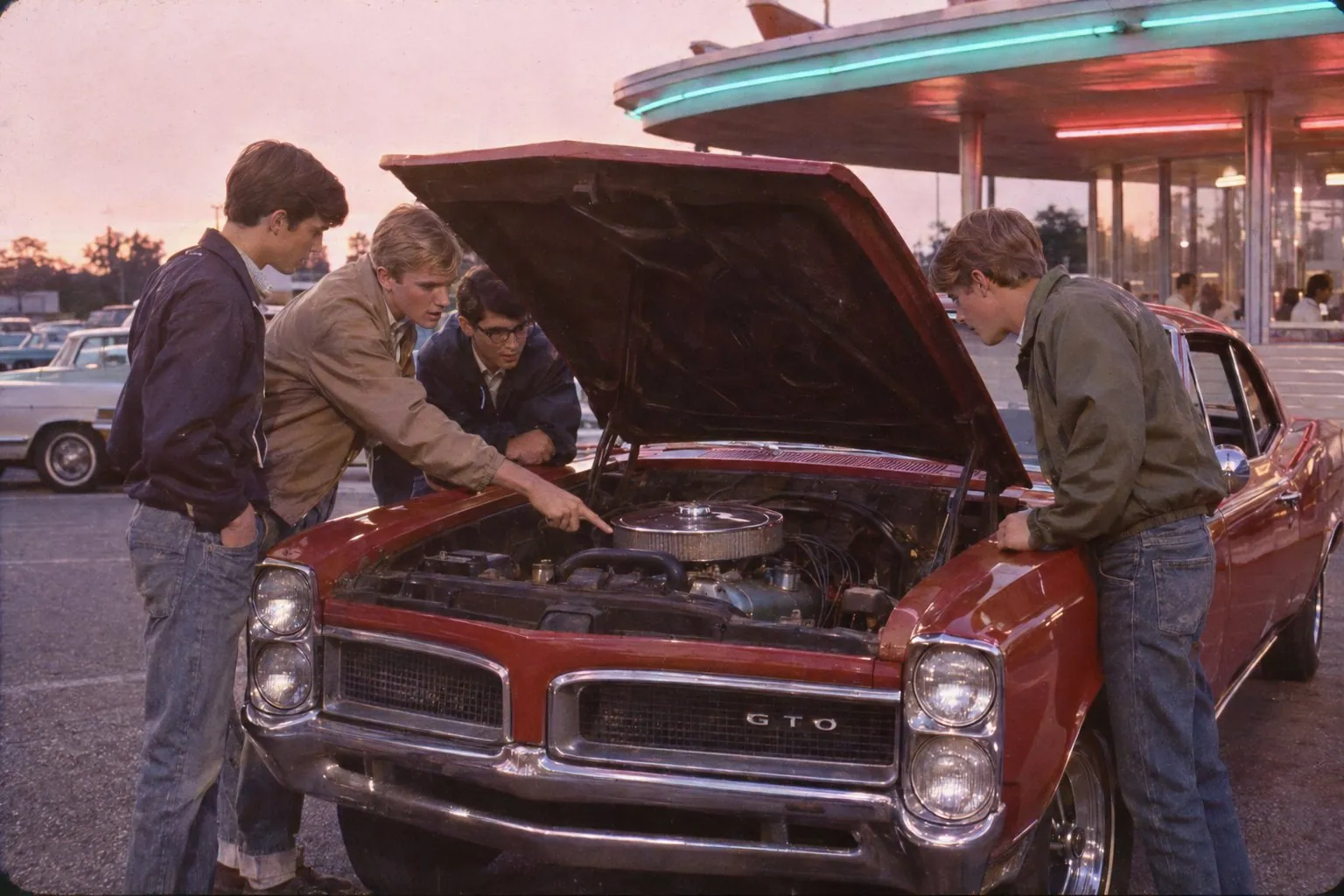
The Mustang was introduced April 17, 1964, at a base price of $2,368, about $23,900 today. It sold more than 400,000 in its first year. Young buyers, secretaries and retirees all lined up for one, because you could order it cheap or loaded.
That same year, Pontiac offered the GTO package on its Tempest for about $300 extra, roughly $3,000 today. It came with a big 389 V8. Before long there were Chevelle SS models, Road Runners, Chargers and Camaros, and Saturday nights on Main Street sounded different.
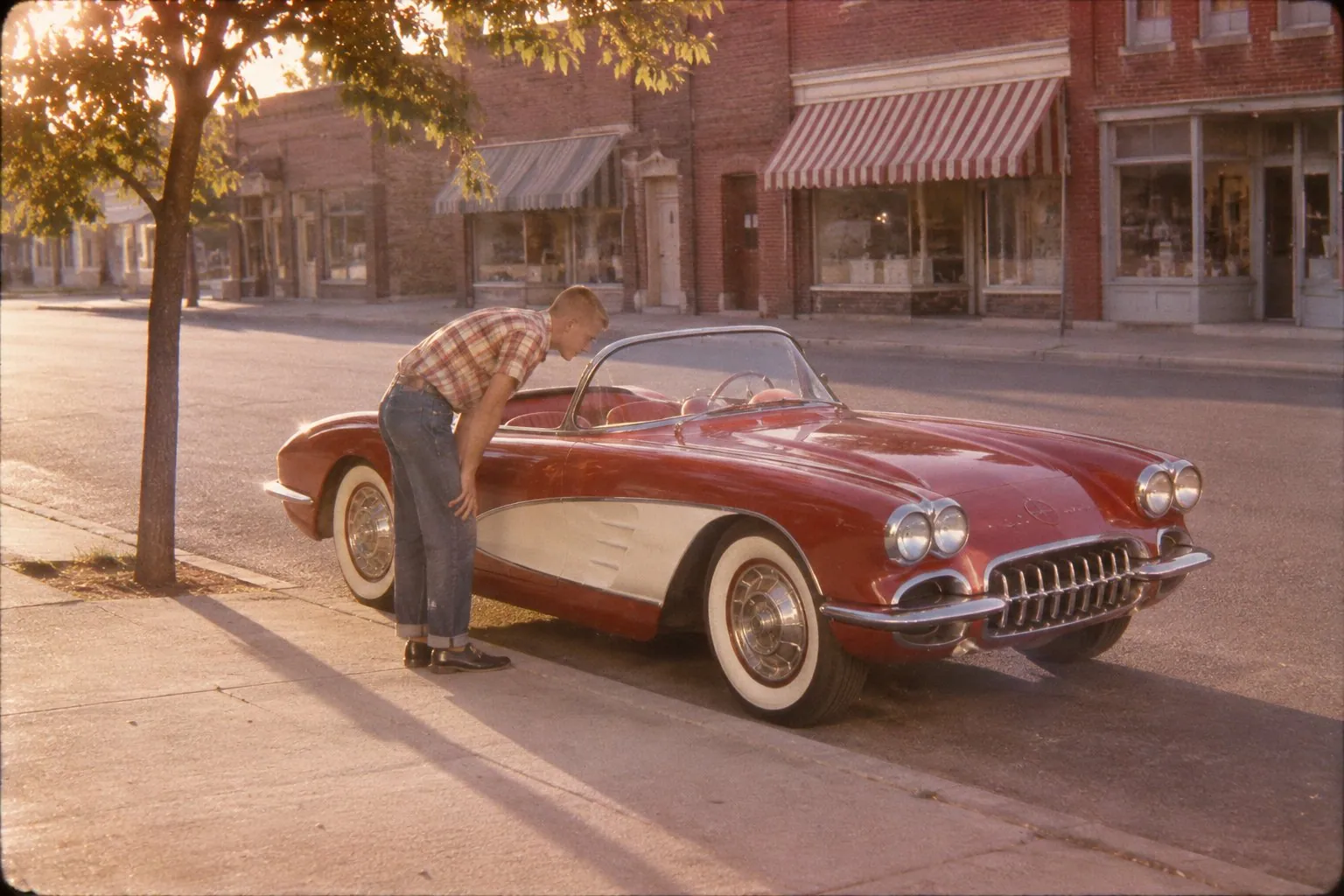
Chevrolet's sports car got a new look as well. The 1963 Corvette Sting Ray had a split rear window that lasted just one year. Car buffs still argue over which American two-seater claimed the territory first.
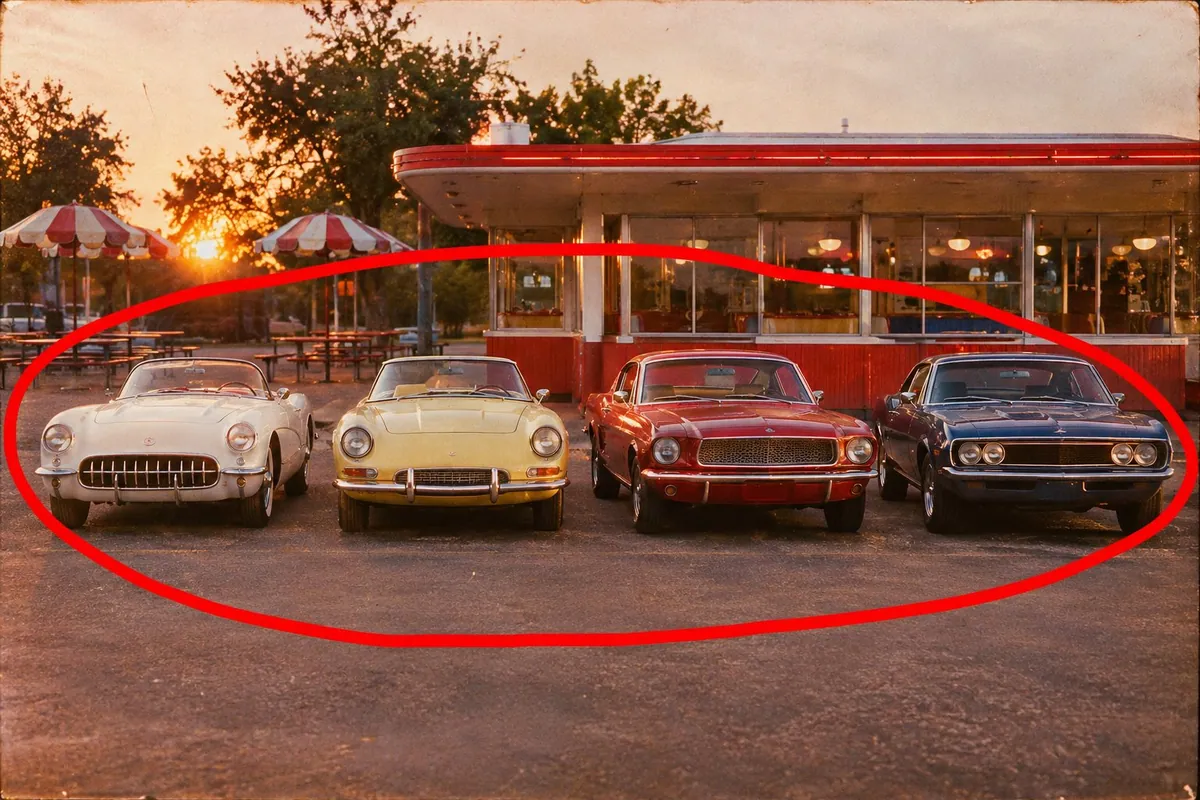
Car guys still argue about this one. Which of these came FIRST?
What 1960s cars cost, then and now
These are list prices for one model of each car, arranged by year rather than ranked. The Falcon price comes from Auto123. The others are rounded. Today's dollars use the U.S. Bureau of Labor Statistics CPI.
| Car | Price then | About today |
|---|---|---|
| 1960 Ford Falcon two-door | $1,912 | $20,300 |
| 1960 Chevrolet Corvair | about $2,000 | $21,200 |
| 1960 Cadillac Series 62 | about $5,000 | $53,000 |
| 1961 Lincoln Continental sedan | about $6,000 | $63,000 |
| 1964 Ford Mustang | $2,368 | $23,900 |
| 1965 Volkswagen Beetle | about $1,600 | $16,000 |
Frequently asked questions
What did cars from the sixties look like?
Early 1960s cars still had tail fins, wraparound windshields and heavy chrome. By the mid-'60s they had flat sides, stacked or quad headlights and long hoods. The late-decade muscle cars added hood scoops and racing stripes.
What were the most common 1960 American cars?
Full-size Chevrolets, Fords and Plymouths led sales, along with station wagons. The new compacts, the Falcon, Corvair and Valiant, came on fast. Ford alone sold 435,676 Falcons in 1960, according to Auto123.
How much did a new car cost in 1960?
A 1960 Ford Falcon two-door listed at $1,912, about $20,300 today, Auto123 reports. A Cadillac Series 62 cost about $5,000, roughly $53,000 today.
Which cars from 1960 to 1970 changed the most?
The Mustang came in 1964 and created the "pony car." The GTO set off the muscle-car race the same year. Over the decade, cars went from finned and chrome-heavy to lean and powerful.
Sources
- 1960 Ford Falcon Review: We Drive the Ancestor of the Mustang, Auto123
- Consumer Price Index, All Urban Consumers, U.S. Bureau of Labor Statistics, 2024
- Standard Catalog of American Cars 1946–1975, Krause Publications
Related Stories
Love a trip down memory lane?
Get a fun quiz every morning. Free · One email a day · Unsubscribe anytime