1960 Chevy Impalas: Six Taillights, Low Fins and the Price
The 1960 Chevy Impala calmed the wild '59 fins, brought back six round taillights and sold for under $3,000. Here's what made it the car everybody wanted.
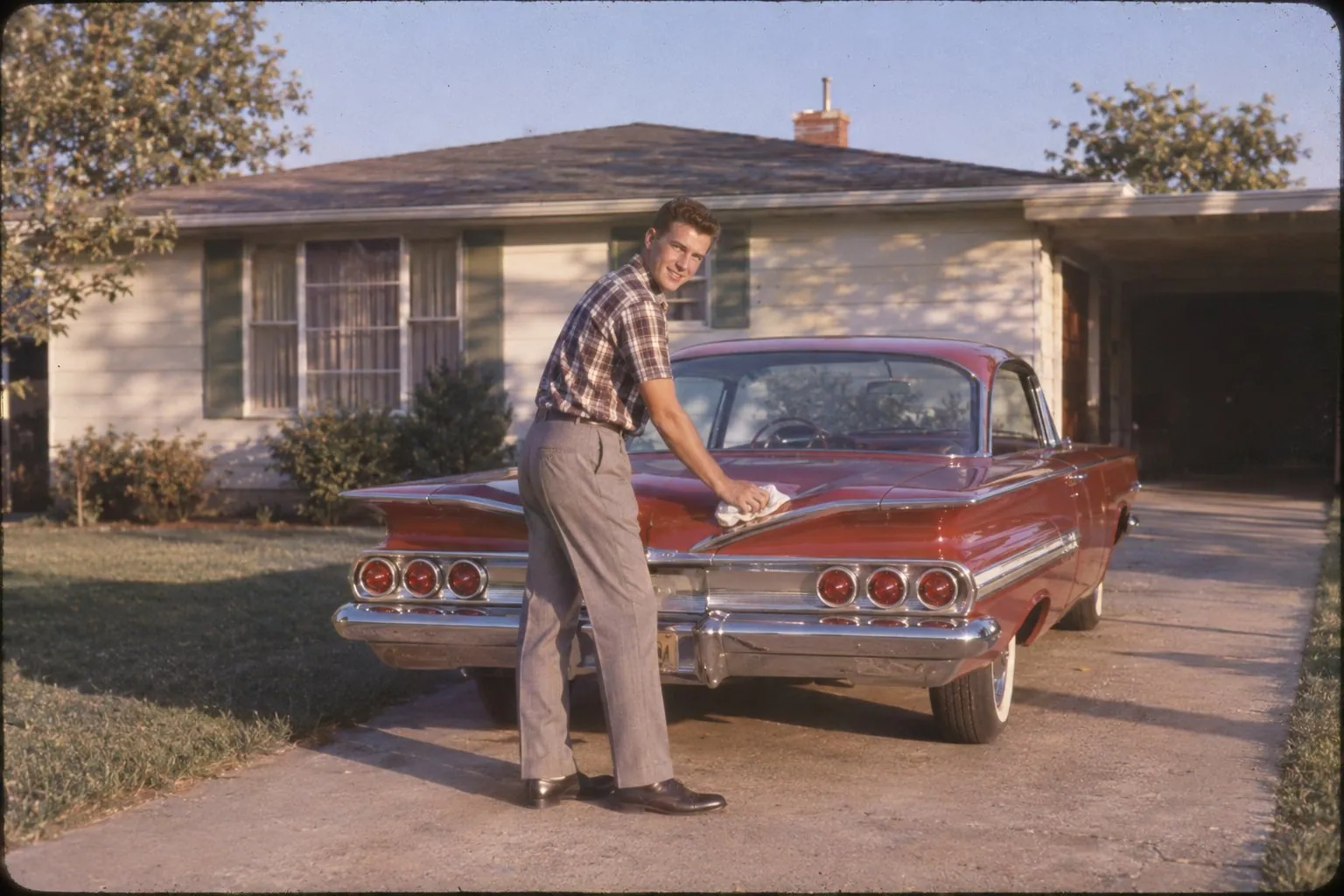
The 1960 Chevy Impalas were big, low, chrome-trimmed family cars with flatter fins than the '59 and three round taillights on each side. A V8 Sport Coupe cost about $2,700 new in 1960 (about $28,600 in today's money) and a V8 convertible about $2,950 (about $31,300 today), according to the factory prices listed in the Standard Catalog of American Cars 1946–1975.
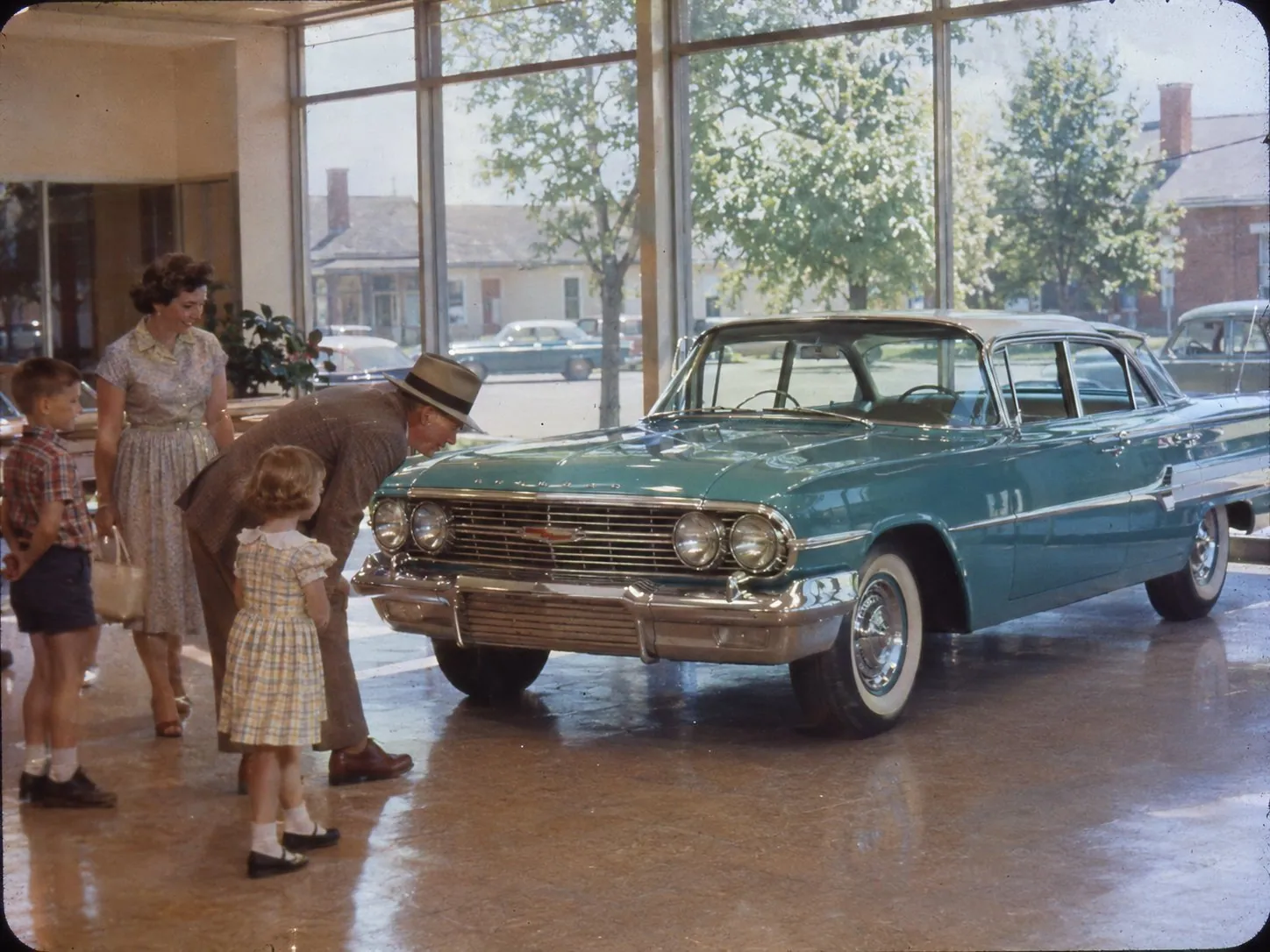
You probably remember one sitting in a neighbor's driveway, or going by on Saturday night with the windows down and the dual exhaust burbling. It was Chevrolet's top-of-the-line car. It still looked like the jet age, but the '59's wild styling had been toned down enough that your dad could picture one parked at church.
This article covers the history, every body style and engine, how to tell a real one, and the long-running mix-up about a 1960 Impala SS.
Where the Impala name came from
The Impala first showed up in 1958 as the top Bel Air, the Bel Air Impala, sold as a sport coupe and a convertible. For 1959 Chevrolet made it a series of its own, sitting above the Biscayne and the Bel Air. That same year brought the famous "batwing" fins and teardrop "cat's-eye" taillights.
The '59 turned heads, but plenty of buyers thought it went too far. For 1960 Chevrolet kept the same 119-inch wheelbase and basic body but flattened the fins into a lower wing and squared up the front end. It also brought back the round taillights that Chevy fans had loved on the 1958.
Read more: The 1950 Studebaker Bullet Nose: Coming or Going?
The jingle "See the USA in your..." advertised which car brand?
How to spot a 1960 Impala car
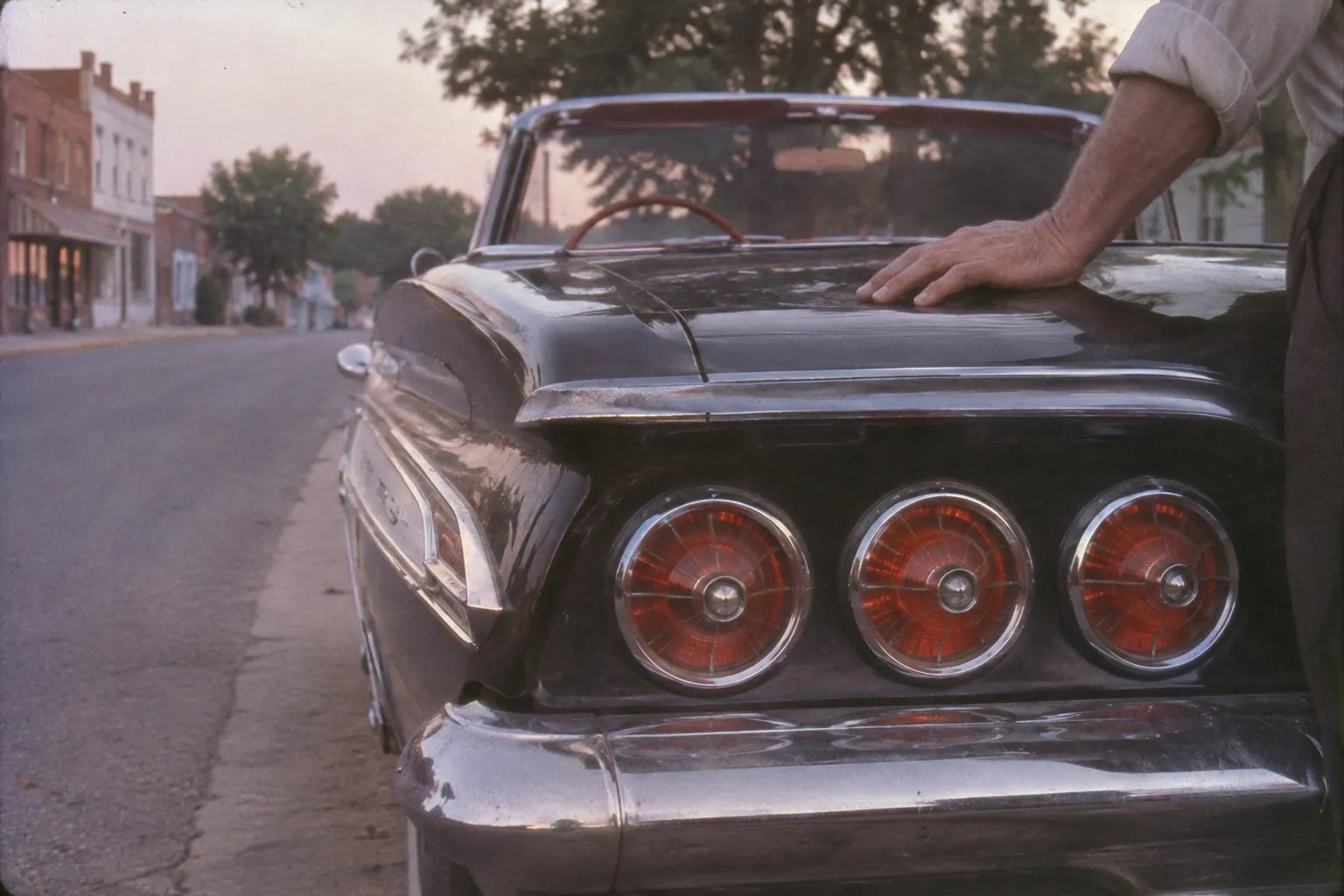
The quickest tell is at the back. The 1960 Impala has six round taillights, three on each side. The cheaper 1960 Biscayne and Bel Air got four, two on each side. If you count six round lights under a low, flat fin, you're almost certainly looking at a 1960 Impala.
A few more things to check:
- Not a 1959: the '59 has big batwing fins and teardrop lights lying on their sides.
- Not a 1958: the '58 also had six round taillights, but it has a rounder body, scalloped rear fenders and no wing-style fin.
- Not a 1961: the '61 got a new body with a much plainer, squared-off rear end and no real fins at all.
- Impala badging: look for Impala script and the crossed-flags emblems Chevy used on its top cars.
Collectors also check the serial number and the body tag on the firewall. The codes there should match an Impala series and body style. Restoration guides spell out what each code means. Because so many Bel Airs have been dressed up with Impala trim over the years, those numbers matter more than the chrome does.
Every 1960 Impala body style
Chevrolet offered the 1960 Impala in four body styles, according to the company's 1960 sales literature:
- Sport Coupe: the two-door hardtop with no center post. With the windows down, the whole side opened up. This was the one most teenagers dreamed about.
- Sport Sedan: a four-door hardtop with a wide, flat roof that seemed to float over the car.
- Four-door sedan: the 1960 4 door Impala with posts between the windows. It was the sensible family pick, with Impala trim and a lower price than the hardtop.
- Convertible: the 1960 convertible Impala, with a power top on the option list. The Standard Catalog of American Cars puts production at just under 80,000 for the year.
If you wanted a wagon with Impala-level trim, you had to order a different model. In 1960 that was the Nomad, which Chevrolet sold as its own model name.
What was under the hood
You could buy a 1960 Impala Chevrolet with almost any engine Chevy made, from a gas-sipper to a street brawler. The Standard Catalog of American Cars lists these:
| Engine | Size | Horsepower (1960 ratings) |
|---|---|---|
| Blue Flame six | 235 cu. in. | 135 hp |
| Turbo-Fire V8, two-barrel | 283 cu. in. | 170 hp |
| Turbo-Fire V8, four-barrel | 283 cu. in. | 230 hp |
| Turbo-Thrust V8, several versions | 348 cu. in. | 250 to 335 hp |
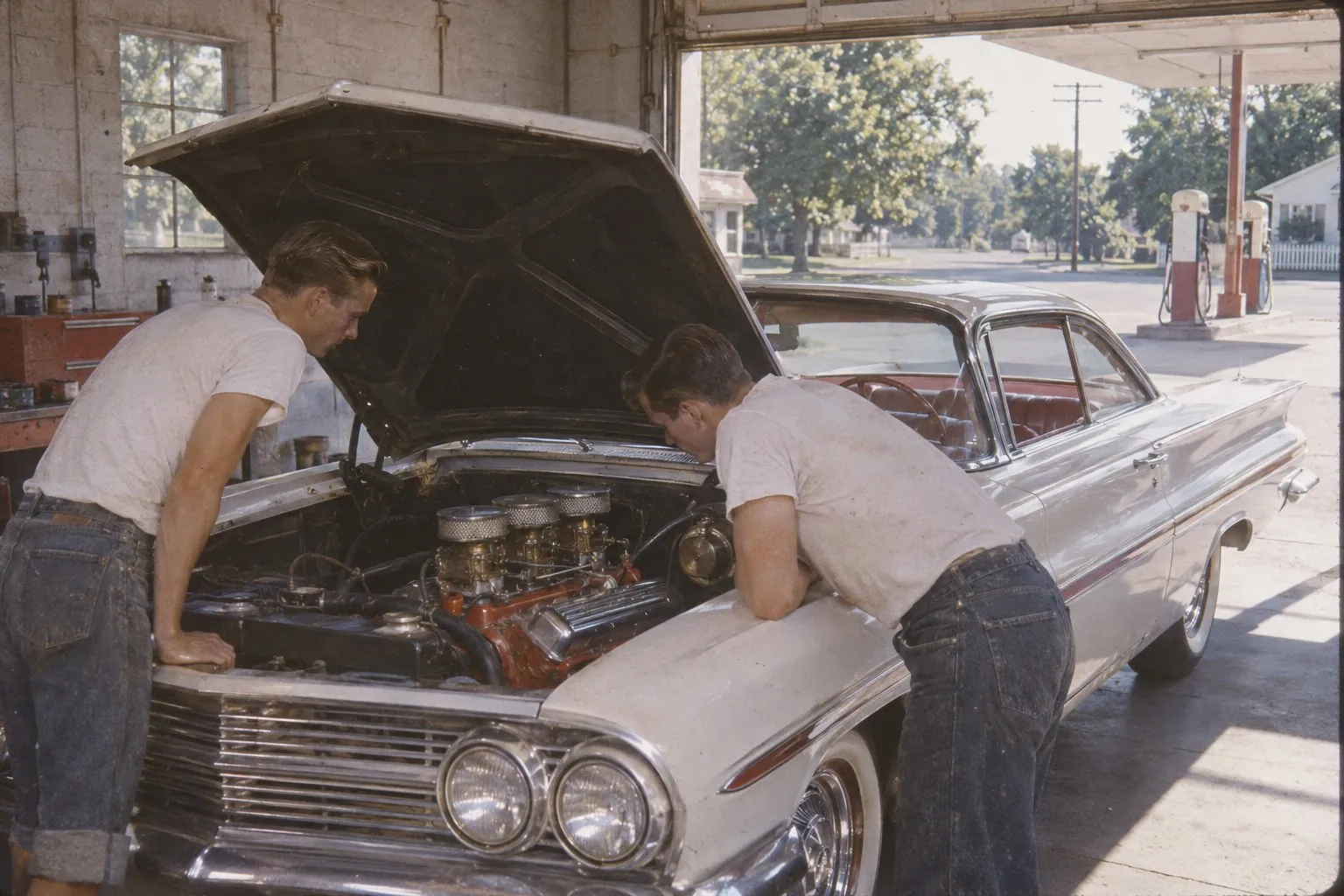
The hottest 348s used three two-barrel carburetors and were mostly meant for drag strips and highway patrol buyers. Most Impalas that rolled off dealer lots had the 283 V8. Most were paired with the two-speed Powerglide automatic, though a three-speed column shift was standard. A four-speed floor shift was offered with the bigger engines.
The 1960 Impala SS that never was
You'll find plenty of ads and car-show cards calling something a "1960 Impala SS." There's no such thing. Chevrolet introduced the Impala Super Sport package partway through the 1961 model year, as the Standard Catalog of American Cars records.
The first Chevrolet Impala SS (1961, not 1960) came with special trim, heavy-duty suspension and brakes, a padded dash and a tachometer on the steering column. It could be ordered with the 348 or the brand-new 409 V8, rated at 360 hp. Only a few hundred were built that first year, which is why a genuine '61 SS is worth so much today.
So if someone shows you a 1960 Impala Super Sport, it's a 1960 car with SS badges added later. Plenty of owners have done that because they like the look. It just isn't factory.
What it cost new, then and now
These are approximate 1960 factory list prices for V8 models before options, from the Standard Catalog of American Cars 1946–1975. Today's figures use the U.S. Bureau of Labor Statistics CPI (×10.6 for 1960):
| 1960 Impala (V8) | Price in 1960 | About in today's dollars |
|---|---|---|
| Sport Coupe | about $2,700 | about $28,600 |
| Convertible | about $2,950 | about $31,300 |
| Six-cylinder version | about $100 less | about $1,060 less |
That was the base sticker. Powerglide, a radio, whitewalls, power steering and a two-tone paint job could push the bill well past $3,000 in 1960 (well past $31,800 today). That was a lot of money in a year when many families were still paying off the house.
What collectors pay today
Prices on the collector market vary a lot from car to car. A tired four-door sedan with a six-cylinder engine usually sells for a fraction of what a restored Sport Coupe or convertible brings. Those two body styles are what most buyers chase.
The biggest money goes to cars with original 348 engines, factory four-speeds and paperwork that proves it. Price guides such as Hagerty's track recent sales by body style and condition. They're the place to check current figures, because the numbers move from year to year.
Frequently asked questions
Was there a 1960 Impala SS?
No. Chevrolet introduced the Impala Super Sport package partway through the 1961 model year, according to the Standard Catalog of American Cars. Any 1960 Impala with SS badges had them added later.
How much did a 1960 Impala cost new?
A V8 Sport Coupe listed for about $2,700 in 1960 (about $28,600 today), and a V8 convertible for about $2,950 (about $31,300 today). Options could add several hundred dollars more.
How can I tell a 1960 Impala from a Bel Air?
Count the taillights. The 1960 Impala has six round lights, three per side, while the 1960 Bel Air and Biscayne have four. The serial number and body tag codes confirm the series.
What was the biggest engine in a 1960 Impala?
The 348-cubic-inch Turbo-Thrust V8, offered in several versions up to 335 hp with three two-barrel carburetors. The 409 didn't arrive until 1961.
Did the 1960 Impala come as a station wagon?
Not under the Impala name. Chevrolet's top wagon in 1960 was the Nomad, which was trimmed to Impala level but sold as its own model.
Sources
- Chevrolet 1960 passenger car sales catalog, Chevrolet Motor Division, General Motors, 1959
- Standard Catalog of American Cars 1946–1975, Krause Publications
- Consumer Price Index, U.S. Bureau of Labor Statistics, 2024
Related Stories
Love a trip down memory lane?
Get a fun quiz every morning. Free · One email a day · Unsubscribe anytime