Studebaker Gran Turismo Hawk: The 1962–64 Quick Makeover
Studebaker was short on money and its coupe was old. Brooks Stevens gave it a Thunderbird-style roof and a new name in a matter of months.
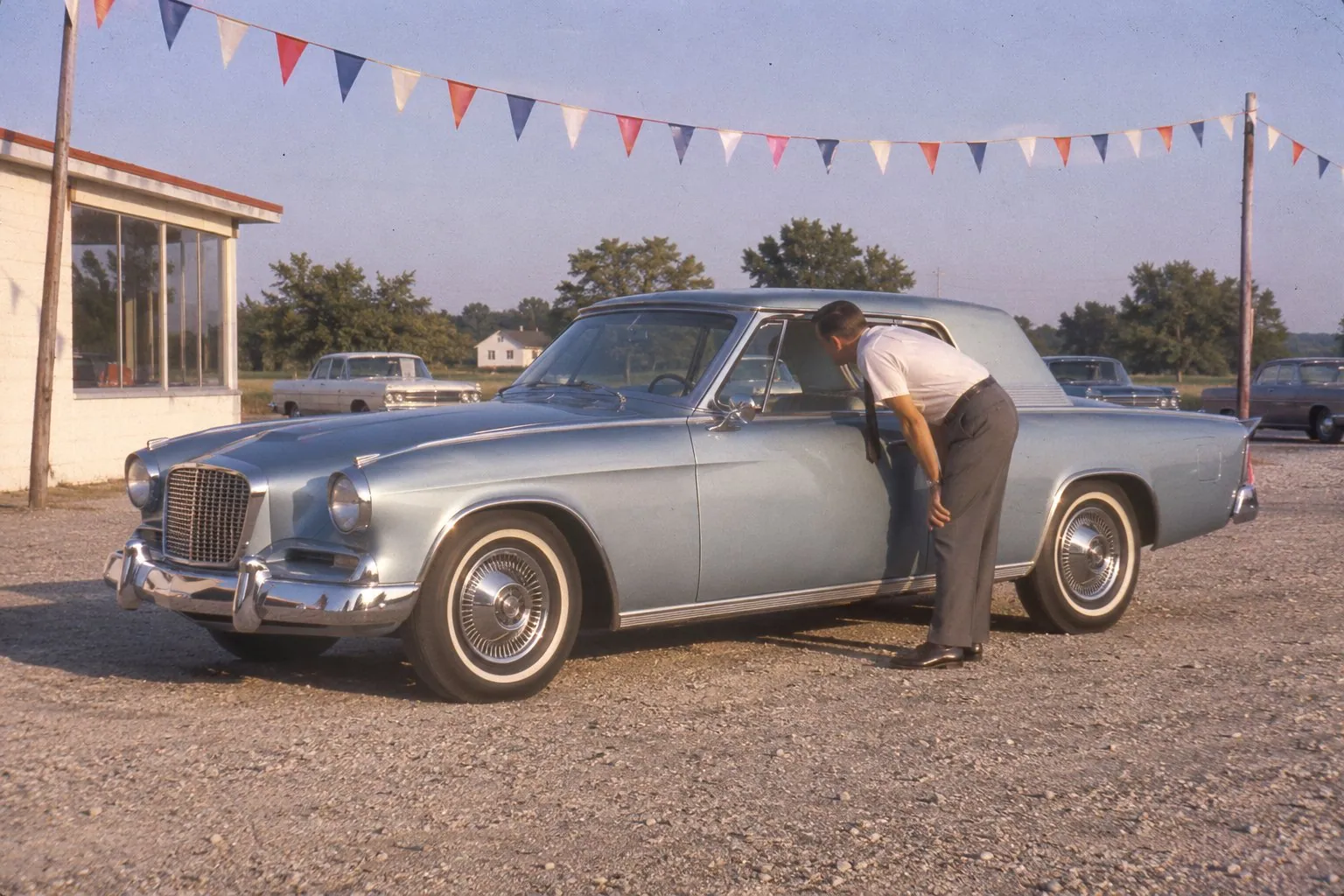
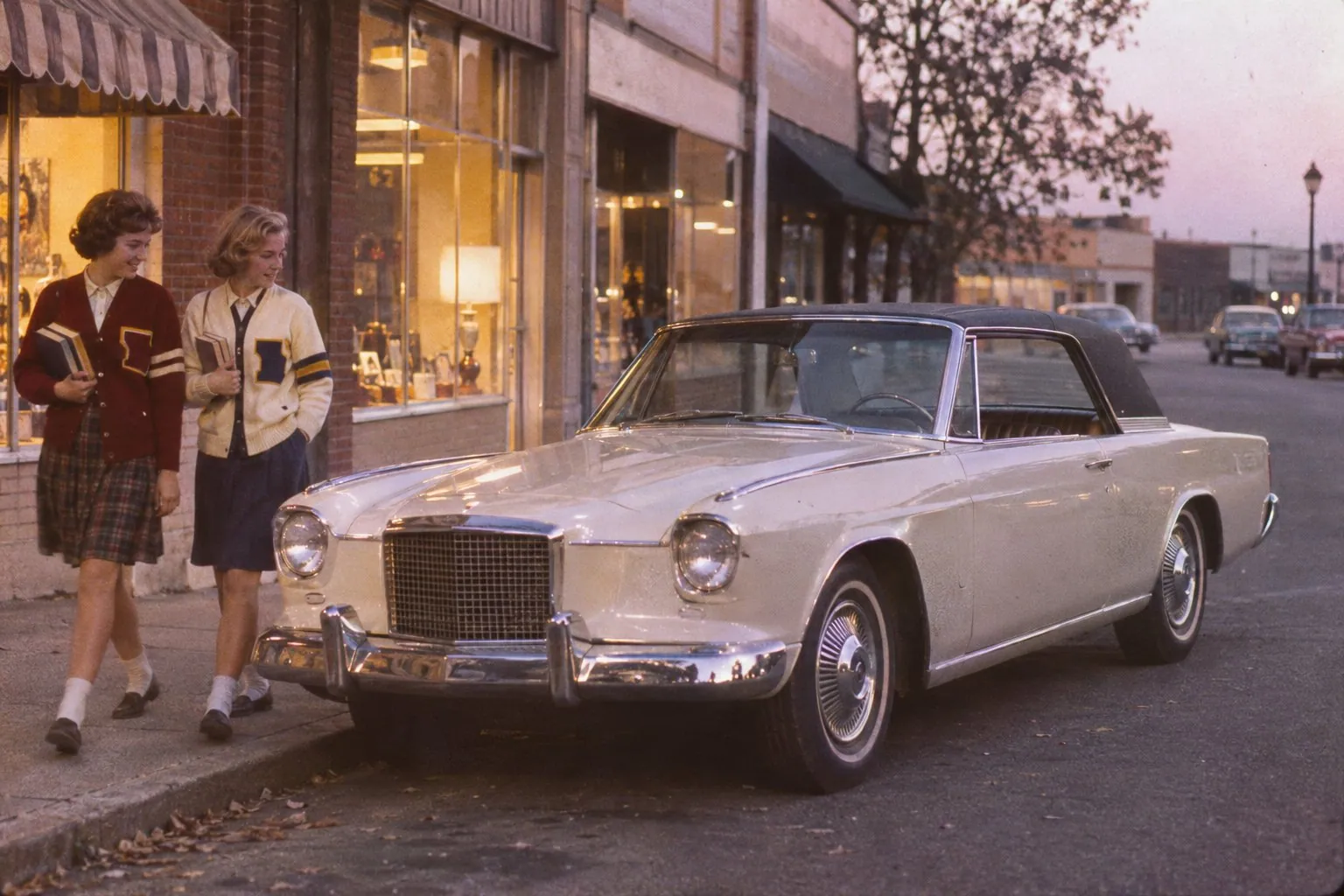
The Studebaker Gran Turismo Hawk was the 1962 to 1964 version of Studebaker's Hawk hardtop. For 1962, designer Brooks Stevens removed the tailfins and gave it a squared-off Thunderbird-style roof and a new interior. For 1963 it got round parking lights, more woodgrain on the dash and the Avanti's high-performance engines as options. For 1964 it got a smooth trunk lid, a Hawk emblem in the grille and an optional vinyl roof, and then the South Bend plant closed in December 1963.
You may remember Studebakers parked at the curb in the early '60s, usually Larks, with a Hawk here and there. The GT Hawk was the one that made people take a second look. It was long and low, it had no fins, and from some angles it looked like something a Ford dealer would sell.
The car was a careful makeover of a body that was already about ten years old. Stevens did it fast and spent very little.
Studebaker almost dropped the Hawk
By 1961, the Hawk was in trouble. The Studebaker National Museum says that after Hawk sales fell in the late '50s and early '60s, the company thought about dropping the car once the 1961 model year was over.
Sherwood Egbert, Studebaker's new president, wanted to keep it. He hired Brooks Stevens, a Milwaukee industrial designer, to update it for 1962. Stevens was already freshening the 1962 Lark at the same time.
According to Hagerty, Stevens got the job in the winter of 1961. He had a "shoestring budget," and the car had to be ready that fall. He had months to do it, not the years a new car usually took.
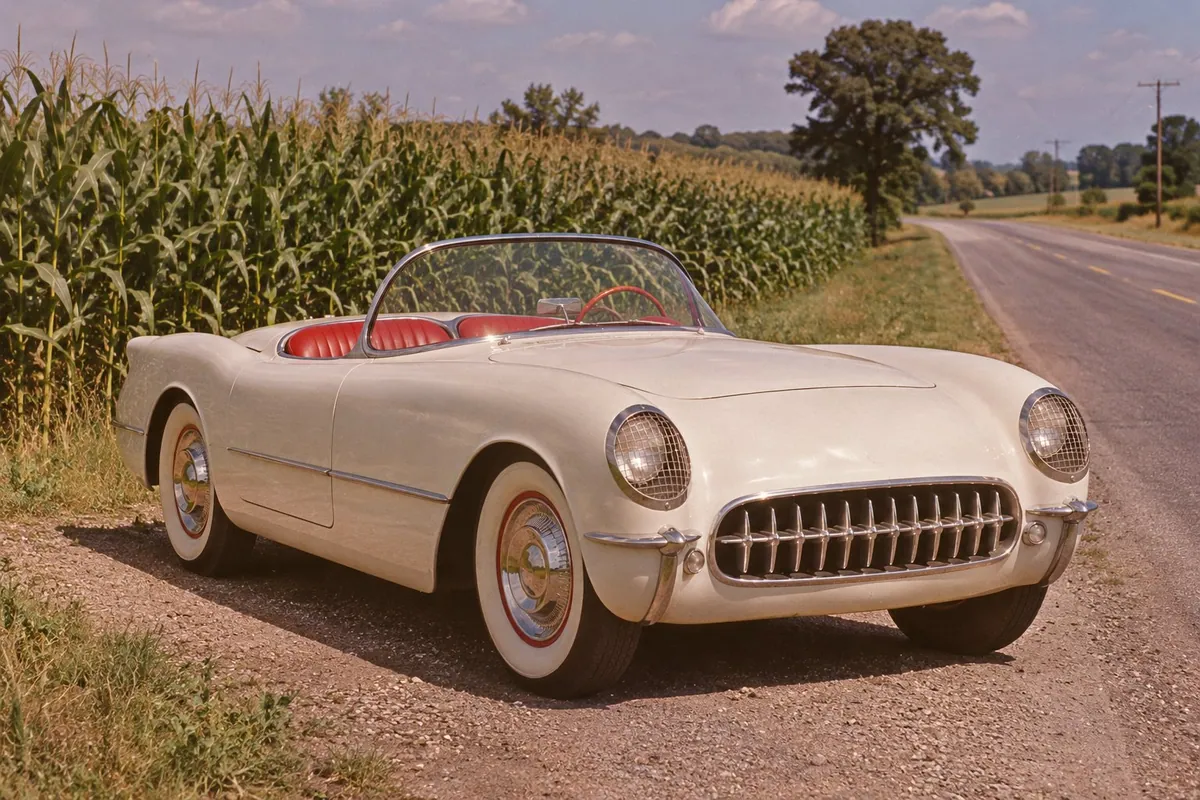
Read more: The 1950 Studebaker Bullet Nose: Coming or Going?
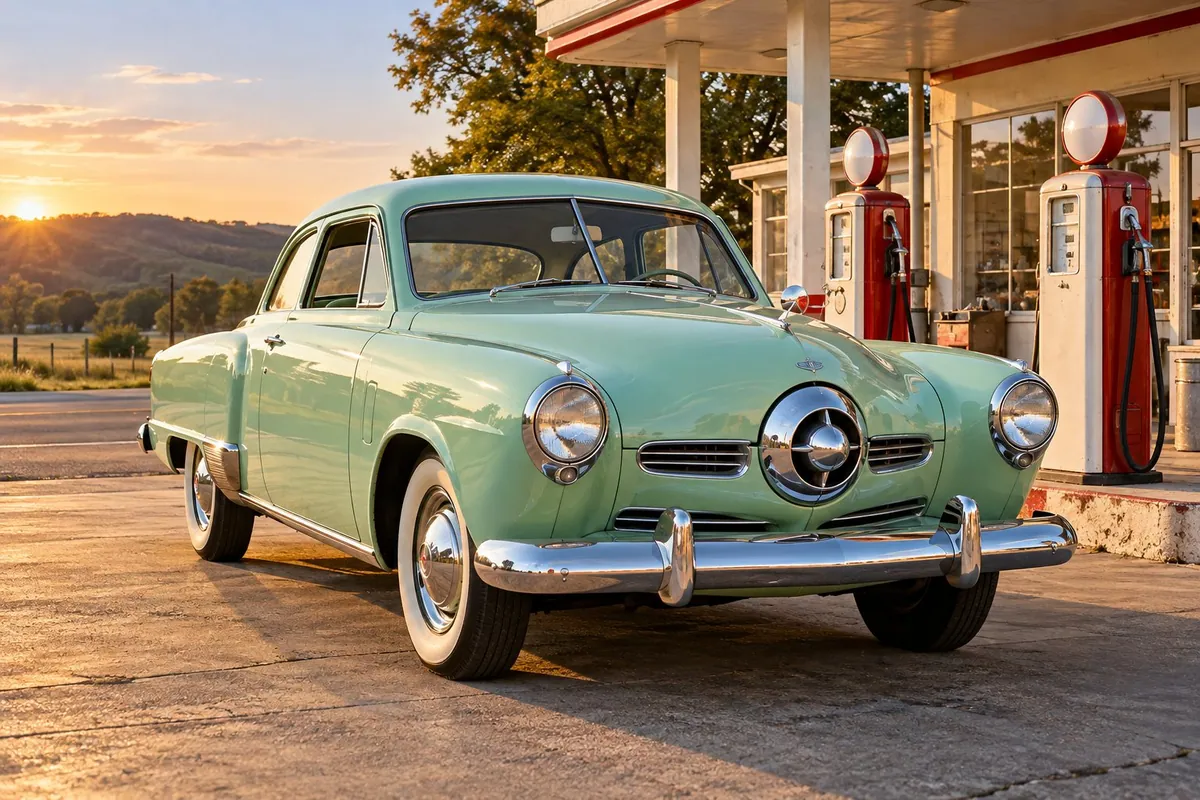
Its "bullet nose" made it look like an airplane. Which 1950 car is this?
How Stevens did it on a shoestring
Stevens couldn't afford a new body, so he worked with the one he had. The doors, cowl and windshield stayed as they were. Most of the changes were to the roof, the rear end and the trim.
What he changed for 1962
- The fins came off. The rear fenders got a rounded, rectangular shape in place of the old tacked-on fins.
- A new roof. A formal, squared-off roofline was patterned on the Ford Thunderbird. Hagerty says it was made of fiberglass to save on tooling.
- A calmer rear end. Hagerty compares the slab sides and rear to the plain, dignified Lincoln Continental of those years.
- A European look up front. Stevens' prototype had the code name "Hawk Monaco." Conceptcarz says the grille and radiator shell took their cue from Mercedes-Benz.
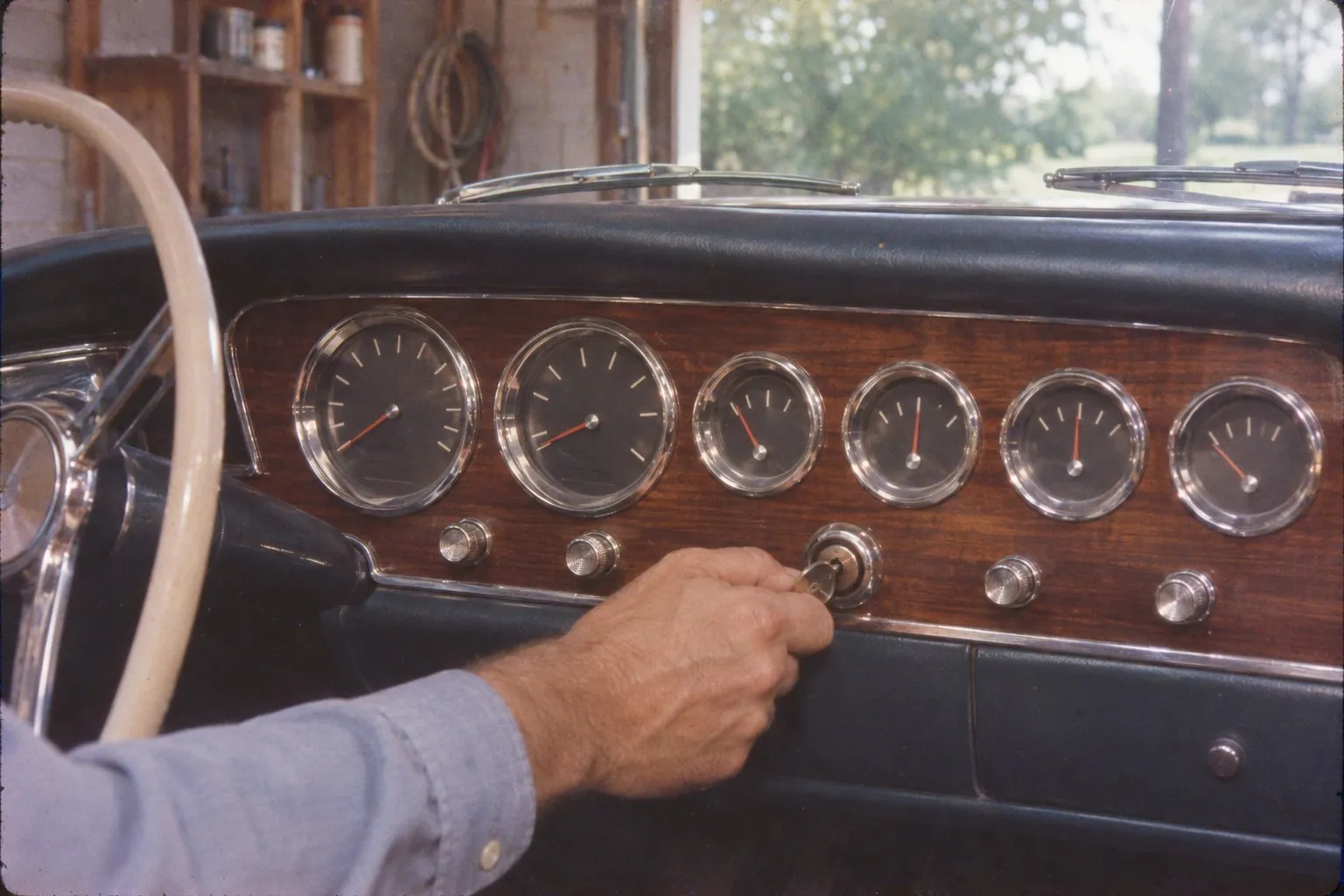
- A new interior. The Studebaker National Museum's 1962 Hawk page says the interior was "completely redesigned."
The museum says the redesign worked. The price went up $400 over 1961 (about $4,200 today), and Hawk sales still more than doubled.
What a GT Hawk cost back then
These are the base prices for a V8 hardtop, as listed by the Studebaker National Museum. Today's dollars are figured with the U.S. Bureau of Labor Statistics CPI table (2024 dollars) and rounded.
| Model year | Base price then | About today | Built |
|---|---|---|---|
| 1962 | $3,095 | $32,200 | 9,335 |
| 1963 | $3,095 | $31,900 | 4,634 |
| 1964 | $2,958 | $29,900 | 1,767 |
In 1962 that base price included a 289-cubic-inch V8 rated at 210 horsepower, according to the museum. A four-barrel carburetor and dual exhausts added 15 horsepower. Export cars could get a smaller 259 V8 or a six.
The production totals include cars built for export. Old Cars Weekly gives U.S. figures of 8,388 for 1962, 4,009 for 1963 and 1,484 for 1964.
How the Gran Turismo Hawk changed each year
Over three model years the car changed only a little, and you have to know where to look to tell one year from another.
1962: the new look
This was the year the fins came off and the roof was squared up. It was also the best year by far, with 9,335 built, according to the Studebaker National Museum.
1963: small changes, bigger engines
Old Cars Weekly says the 1963 models got only "a few subtle changes." Conceptcarz notes that the rectangular parking lights were replaced with round ones. The right side of the dash also got woodgrain to match the area around the gauges.
Under the hood was where the news was. The museum's 1963 Gran Turismo Hawk page says buyers could now order the Avanti's high-performance engines and disc brakes. Old Cars Weekly lists the R1 version of the 289 at 240 horsepower. The supercharged R2 was rated at 290.
1964: the last of the line
The Studebaker National Museum's 1964 Hawk page names a redesigned deck lid and an optional vinyl roof as the biggest changes. Conceptcarz adds a Hawk emblem in the center of the grille, a "Studebaker Hawk" nameplate on the trunk and, for the first time, an optional AM/FM radio.
Stevens had wanted a half-vinyl roof on the car from the beginning, and 1964 was the first year he got it. The museum says Hawk production ended on December 20, 1963, when Studebaker closed its South Bend plant. That means every 1964 GT Hawk was built in the fall of 1963.
The Super Hawk and the run at Bonneville
Early in 1963, Studebaker put together a performance package for the Hawk and the Lark. Cars with it were called the "Super Hawk" and the "Super Lark," the Studebaker National Museum says. It also says only 44 supercharged Super Hawks were built. One of them, painted Super Red, is in its collection.
Studebaker also took the Hawk to the salt. Hagerty reports that a four-speed R2 Hawk reached 140 mph at the Bonneville Salt Flats, but it adds that the run came too late to save the car.
What testers and owners said
Car magazines of the day noticed the new roof. In its 1962 road test, reprinted by Curbside Classic, Car Life said the roof "looks pure Thunderbird to us." The testers also said the restyle "drew compliments."
The makeover couldn't hide everything. Curbside Classic points out that the long, narrow 1953 body and the old cowl and windshield still gave away the car's age. Look inside and the door panels date from the Eisenhower years.
Owners have their own stories. Old Cars Weekly profiled a Wisconsin collector named Kobernik who owns a 1964 R2 car. It reports that his biggest headache has been the fussy plumbing and wiring that came with the supercharger.
Where you can see one today
Stevens bought one for himself. The Studebaker National Museum in South Bend now has his 1964 GT Hawk, a gift to its permanent collection. The car has the black vinyl "sport roof," the supercharged R2, disc brakes and a Powershift automatic.
You can still buy one without spending a fortune. Hagerty calls the GT Hawk a Certified Milestone Car and one of the least expensive cars with that title. Its profile lists values from $8,000 to $17,000, though prices vary with condition and options.
Frequently asked questions
What is a Studebaker GT Hawk?
"GT Hawk" is the short name for the Studebaker Gran Turismo Hawk, a two-door hardtop sold as a 1962, 1963 and 1964 model. Brooks Stevens restyled it from the older Hawk, and it was the last version of the Hawk line, which began with the 1956 Golden Hawk.
How much did a 1963 Studebaker Gran Turismo Hawk cost?
The Studebaker National Museum lists the 1963 base price at $3,095, or about $31,900 in today's money. The Avanti engines, disc brakes and the Super Hawk package cost extra.
How can you tell a 1963 Studebaker GT Hawk from a 1962?
Look at the parking lights. Conceptcarz notes that they changed from rectangular in 1962 to round in 1963, and the right side of the 1963 dash got woodgrain trim.
How many Gran Turismo Hawks were built?
The Studebaker National Museum gives 9,335 for 1962, 4,634 for 1963 and 1,767 for 1964. That comes to 15,736 cars over three model years, counting export cars.
Why did Studebaker stop making the GT Hawk?
The Hawk ended when Studebaker closed its South Bend, Indiana, plant on December 20, 1963. After that, the company built a smaller lineup in Hamilton, Ontario, and the Hawk wasn't part of it.
Sources
- 1962 Studebaker Hawks, The Studebaker National Museum
- 1964 Studebaker Hawks, The Studebaker National Museum
- Studebaker National Museum Receives 1964 Studebaker Gran Turismo Hawk, The Studebaker National Museum
- Car of the Week: 1964 Studebaker GT Hawk, Old Cars Weekly
- Collectible Classic: 1962-64 Studebaker Gran Turismo Hawk, Hagerty Media
- Consumer Price Index, U.S. Bureau of Labor Statistics, 2024
Related Stories
Love a trip down memory lane?
Get a fun quiz every morning. Free · One email a day · Unsubscribe anytime