Studebaker Avanti: Loewy's Last-Ditch 1963 Sports Car
The 1963 Studebaker Avanti had no grille, a fiberglass body and an optional supercharger. Here's the story, what it cost, and what it's worth now.
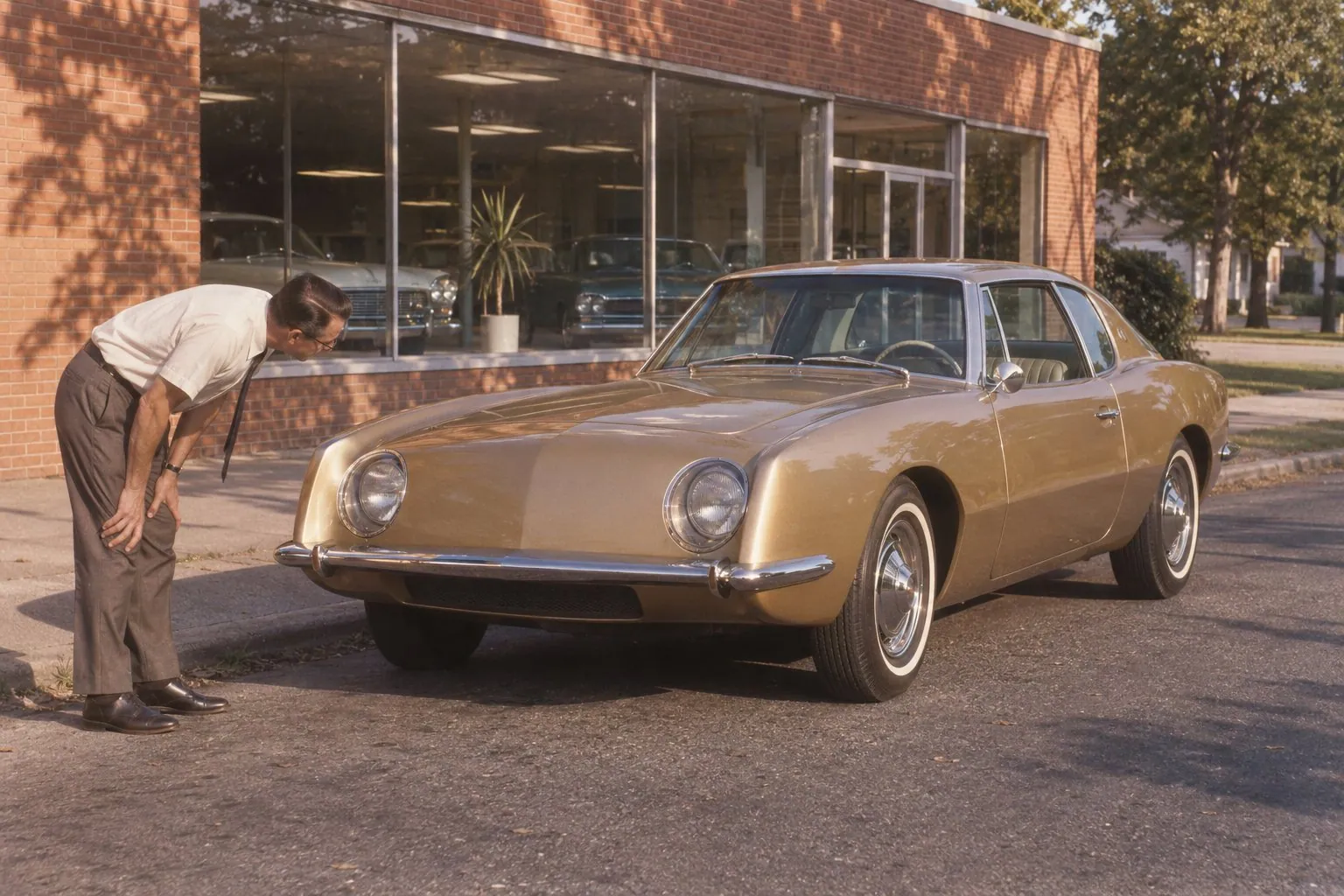
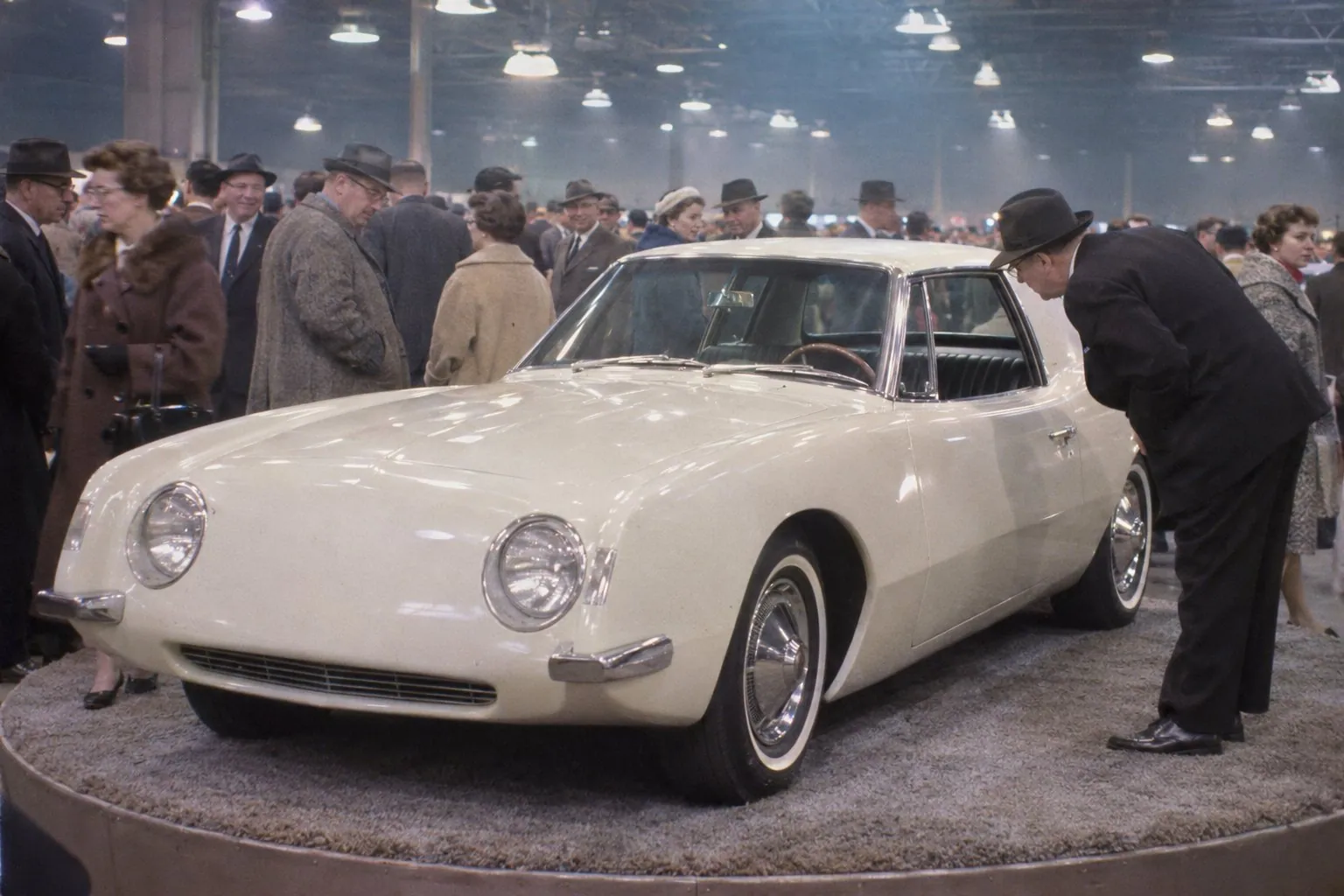
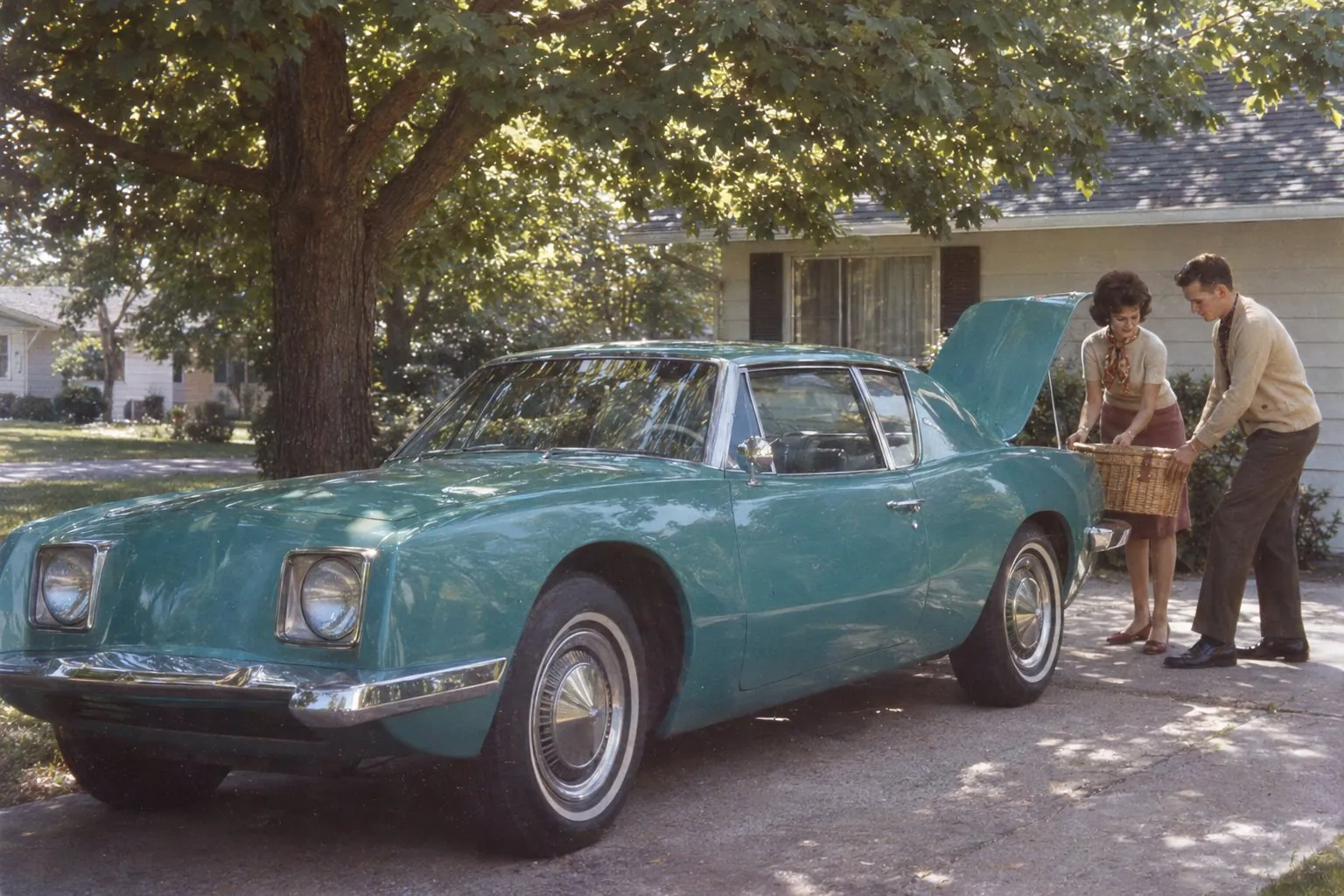
The Studebaker Avanti was a four-seat sports coupe with a fiberglass body. Raymond Loewy's design team drew it, and the old Studebaker company of South Bend, Indiana, built it as a 1963 model. What made it different was the look: no grille, a narrow "Coke bottle" waist and a raked-back nose. It also had front disc brakes and an optional supercharger in years when most American cars still stopped with drums.
You probably remember the first time you saw one. It sat low and looked like it had driven in from 1975. Nothing else on the lot looked like it, and a Studebaker was the last car anyone expected to look that way.
That was the whole idea. Studebaker was losing money, and its new president, Sherwood Egbert, wanted one bold car to get people back into the showrooms.
Loewy and Studebaker go way back
Raymond Loewy was the French-born designer who also styled Lucky Strike packs and Greyhound buses. His studio had worked for Studebaker since the 1930s. Right after the war, his team gave the company the 1947 Starlight coupe, the one with the wraparound back window that made people joke they couldn't tell which way it was going.
In 1953 came the long, low Starliner coupe, still counted among the best-looking American cars of the decade. And at the start of the '50s, the Loewy studio gave Studebaker a front end that people at the gas station still talk about.
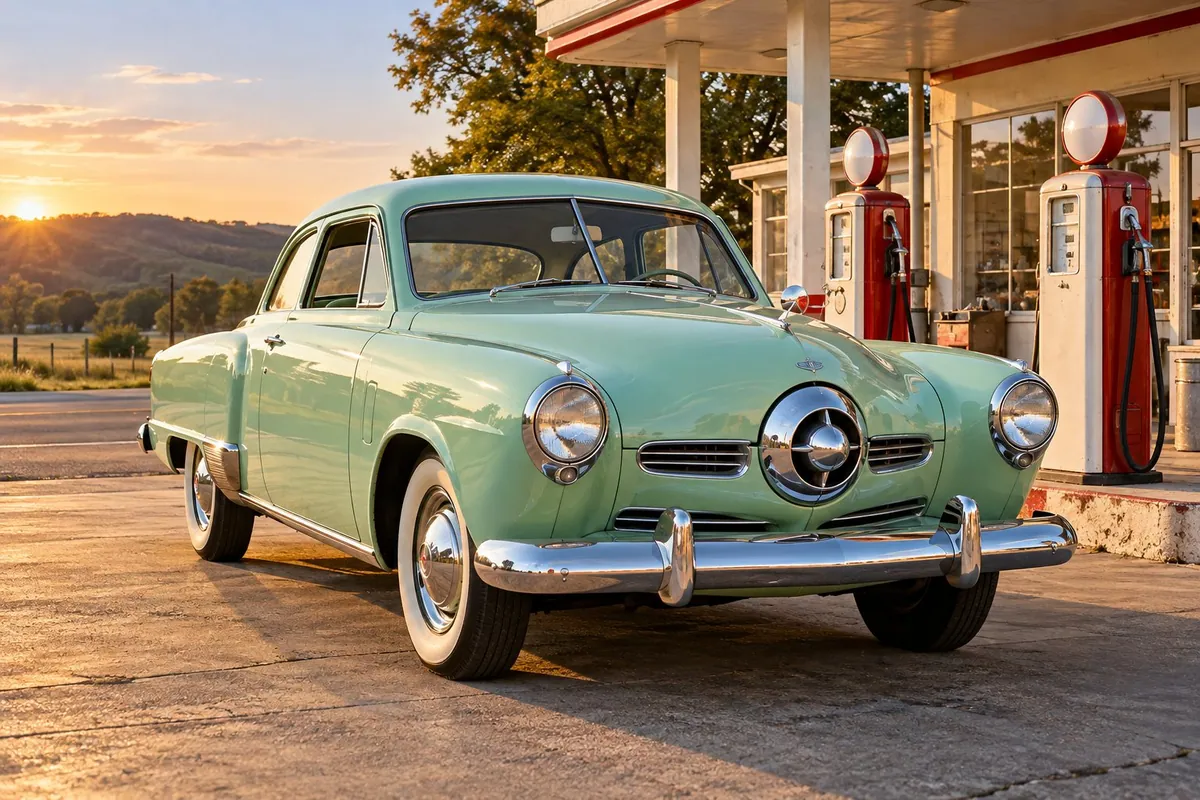
Its "bullet nose" made it look like an airplane. Which 1950 car is this?
By 1961 the company needed that kind of magic again. The Lark compact had sold well for a couple of years, but sales were sliding. Studebaker had been building wagons and cars in South Bend since the 1850s, and it was running out of time.
Read more: The 1950 Studebaker Bullet Nose: Coming or Going?
How the Studebaker Avanti came together
Egbert brought Loewy back. Loewy gathered a small team that included Tom Kellogg, John Ebstein and Bob Andrews at a rented house in Palm Springs, California, in the spring of 1961. They had the full-size design finished in about 40 days.
To save money, the body sat on a shortened Lark convertible frame with Studebaker's own V8. The body was fiberglass, made at first by an outside firm in Ashtabula, Ohio, that had also built early Corvette bodies, Hagerty notes. The name is Italian for "forward." Hagerty's writer judged that for 1962 the car truly lived up to it "as far as the body design and shape."
The public got its first look at the New York auto show in April 1962, and orders came in fast. Then the bodies didn't. The Ohio supplier couldn't keep up, the panels often needed hand work, and buyers waited for months. Hagerty says the supplier "let Studebaker down." Studebaker ended up making bodies itself, but many buyers had already given up and gone to Chevrolet for a Corvette.
Inside, the Avanti had touches you didn't find on a Ford or Plymouth. There was a built-in roll bar over the front seats and gauges up on the ceiling console like an airplane cockpit. Under the hood sat a different engine depending on which letter you ordered.
R1, R2 and R3 in plain words
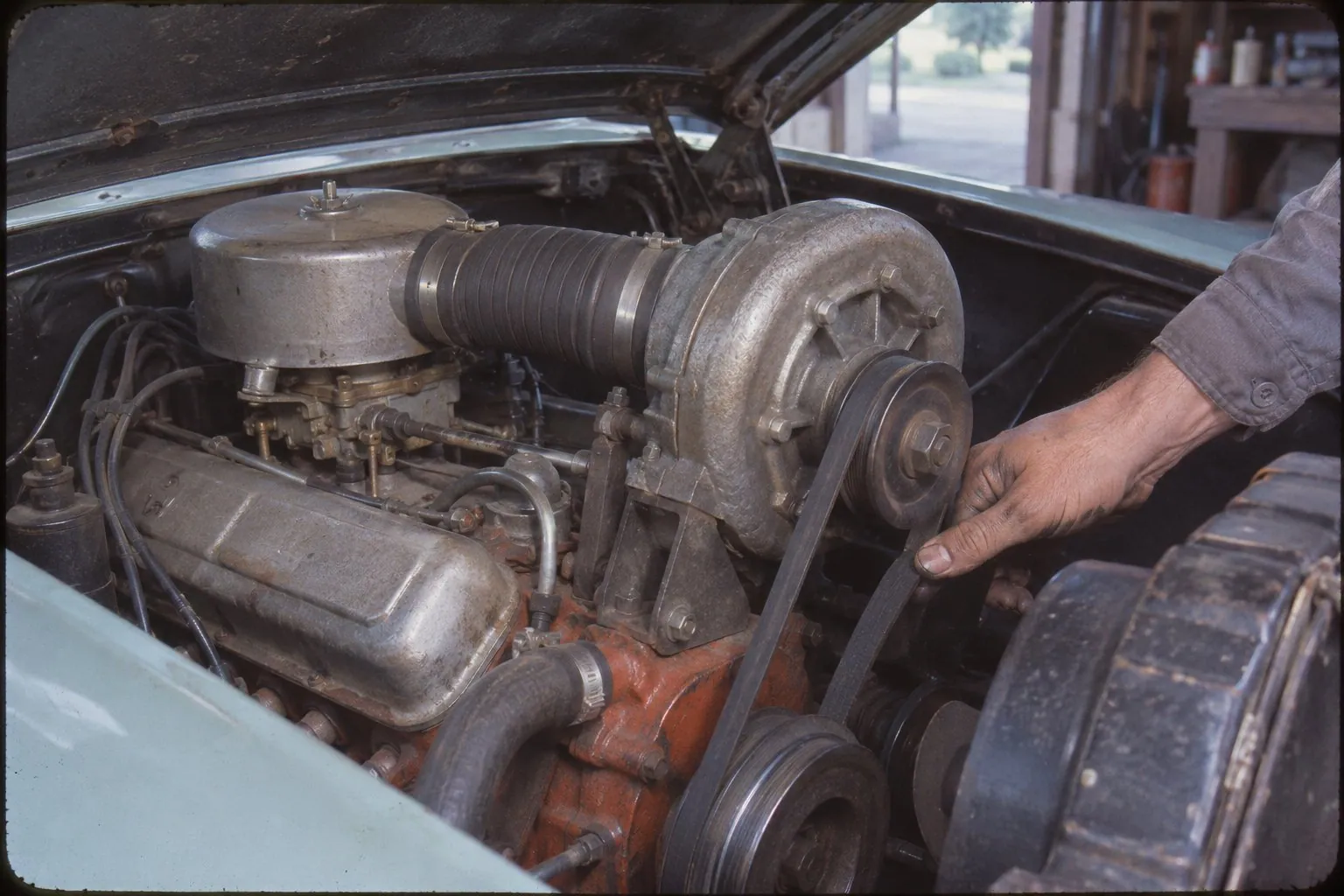
Studebaker named its engines like codes, but they're easy to explain. All three were versions of the company's 289-cubic-inch V8, the same basic engine found in a Hawk or a Lark.
- R1: the standard engine. It had a four-barrel carburetor, a hotter camshaft and dual exhausts, and was rated at 240 horsepower, according to HowStuffWorks' history of the 1963–64 Avanti. Most Avantis had this one.
- R2: the R1 plus a Paxton belt-driven supercharger, a fan-like pump that forces extra air into the engine. HowStuffWorks lists it at 289 horsepower, one horsepower per cubic inch, a figure the ads loved. You could hear the supercharger whine when you stepped on it.
- R3: a hand-built racing version, bored out to about 304 cubic inches, supercharged and good for roughly 335 horsepower. Only nine Avantis got one, says The Avanti R3 registry site.
The supercharger link came from Andy Granatelli, who later became famous for STP and the Indy 500. His family ran Paxton, which Studebaker had bought. In 1962 and 1963 he took Avantis to the Bonneville Salt Flats in Utah and set a string of speed records, as Hagerty's story on Granatelli at Bonneville recounts. Granatelli had a motive beyond Studebaker's: every record was an ad for his superchargers.
What it cost then and what it brings now
The 1963 Avanti had a base sticker of $4,445, HowStuffWorks reports. That's about $45,800 in today's money, using the U.S. Bureau of Labor Statistics price index. It was a lot for a Studebaker. Add the R2 engine, power steering, a radio and air conditioning, and the price went up from there.
| Price | In today's dollars | |
|---|---|---|
| 1963 Avanti, base sticker (HowStuffWorks) | $4,445 in 1963 | about $45,800 |
| 1963–64 Avanti as a collector car, 2017 (MyCarQuest) | under $50,000 | n/a |
Because so few were made, the Avanti never fell to junk-car prices. In 2017, MyCarQuest listed the 1963–64 Avanti among interesting collector cars for less than $50,000. That's about what the car cost new once you adjust for inflation. For today's numbers by condition and engine, Hagerty's valuation tool for the 1963 Avanti tracks current values, and R2 cars generally bring more than R1s.
The 1964 cars and the end in South Bend
You can tell a 1964 Avanti from a 1963 at a glance. The round headlight surrounds became square ones. There were small changes inside too, but the shape stayed the same.
There just weren't many of them. Studebaker built about 4,600 Avantis in all, nearly 3,800 of them 1963 models, according to HowStuffWorks. In December 1963 the company stopped building cars in South Bend and moved what was left of car production to Hamilton, Ontario. The Avanti didn't go along, and Hagerty dates the end of Avanti production to that same December 1963.
The design outlived the company. Two South Bend Studebaker dealers, Nate Altman and Leo Newman, bought the tooling and began building the Avanti II in 1965 with Chevrolet engines. Various owners kept versions of the car going for decades after that. Loewy's crew had spent about 40 days on the design, and other people kept building it for more than 40 years.
Frequently asked questions
How much did a 1963 Avanti cost new?
The base price was $4,445 in 1963, HowStuffWorks reports. That's about $45,800 in today's dollars. Options like the supercharged R2 engine and air conditioning added more.
Was there a 1962 Studebaker Avanti?
Not as a model year. The Avanti was shown in April 1962 and production started in June 1962, but those cars were sold as 1963 models. That's why you'll see people say "1962 Avanti" for the same car.
What's the difference between a 1963 and 1964 Avanti?
The easiest clue is the headlights. 1963 cars have round headlight surrounds and 1964 cars have square ones. The 1964s are also far rarer, because production ended in December 1963.
What do R1, R2 and R3 mean on a Studebaker sports car?
They're engine codes. R1 was the standard 289 V8 at 240 horsepower. R2 added a Paxton supercharger for 289 horsepower, and R3 was a bigger, hand-built racing engine fitted to only nine Avantis.
Who built Avantis after Studebaker?
South Bend dealers Nate Altman and Leo Newman started building the Avanti II in 1965 using Chevrolet engines. Other owners kept the car in small-scale production for decades afterward.
Sources
- Collector Classics: Remembering the Studebaker Avanti, Hagerty Media, 2014
- 1963-1964 Studebaker Avanti, HowStuffWorks
- Before He Finally Conquered Indy, Andy Granatelli Took on Bonneville, Hagerty Media
- Studebaker Avanti R3 Engine, TheAvanti.com
- 1963 Studebaker Avanti Base Value, Hagerty
- Consumer Price Index, U.S. Bureau of Labor Statistics, 2024
Related Stories
Love a trip down memory lane?
Get a fun quiz every morning. Free · One email a day · Unsubscribe anytime