Old People Candy: What Was in Grandma's Candy Dish
Butterscotch, striped mints, ribbon candy and caramel cubes: here's what sat in Grandma's dish and her purse, and why she always had some on hand.
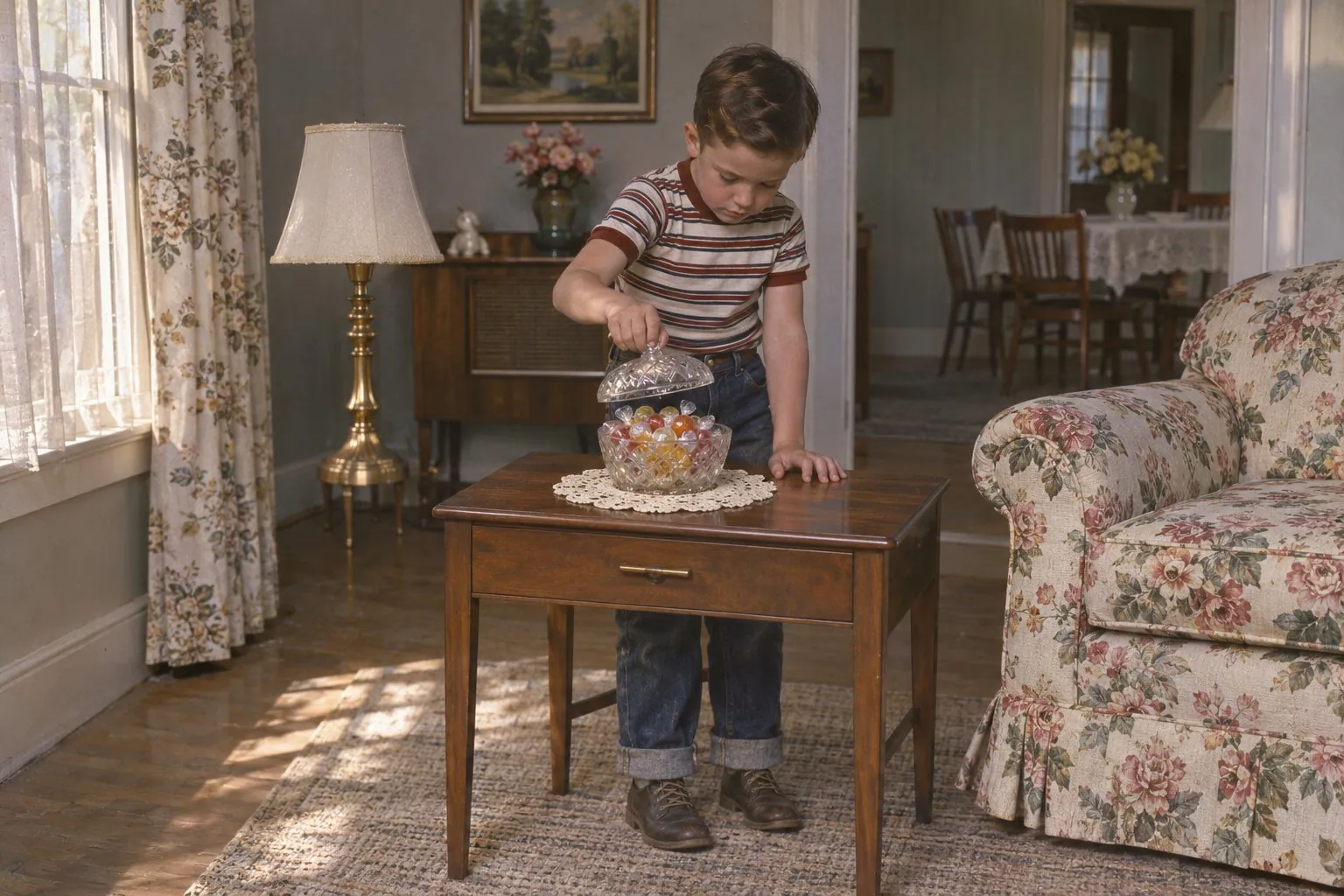
"Old people candy" means the wrapped hard candies and chewy caramels Grandma kept out: butterscotch discs, red-and-white peppermints, strawberry bonbons, ribbon candy, Mary Janes and Kraft caramels. She kept them because they were cheap by the bagful, they didn't melt or go stale in a dish, and they gave her something to hand any kid who walked in the door.
You probably remember the dish itself before the candy. It was pressed glass or cut glass with a lid that clinked when you lifted it, and it sat on the end table or the piano. Sometimes it was a tin that had held Christmas cookies years before.
The candies below are ones that still exist and have a history we could check. They're grouped by where you found them, and the order doesn't mean one was more popular than another.
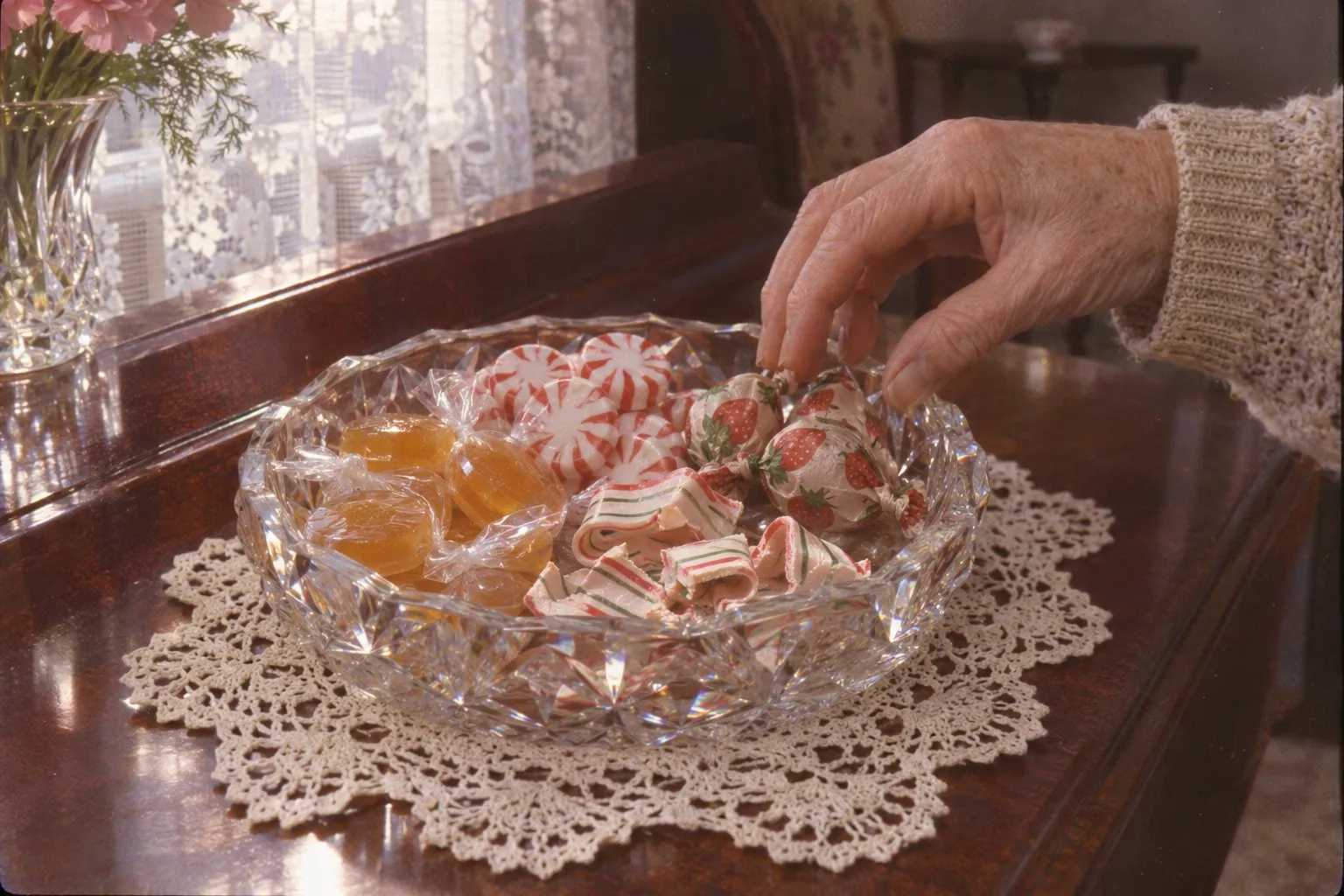
What filled the dish
Most of the dish was hard candy wrapped in cellophane and twisted at both ends. If you were a kid, the crinkle of that wrapper could carry across a quiet living room. Often it carried right to your mother, who would tell you "just one."
Butterscotch discs
These were round, gold and see-through, in clear wrappers. A lot of families bought them in bulk bags from Brach's of Chicago. When you sucked one long enough, it went thin as glass and cut the roof of your mouth.
Starlight mints
These were the red-and-white pinwheel peppermints. Even candy hobbyists can't say who made the first one, because people have been boiling sugar with peppermint oil for a very long time. Brach's still sells them as Star Brites.
Strawberry bonbons
They were red, wrapped to look like a strawberry, with a green top printed on the wrapper. The outside was hard and the inside was a sticky, jam-like center. On a warm day the wrapper stuck to the candy and you ate a little cellophane.
Ribbon candy
This one usually came out at Christmas. It was thin, folded ribbons of candy in loud stripes, and it broke if you looked at it wrong. By New Year's, most dishes held a pile of pieces.
The rest of the mix
Root beer barrels, lemon drops, cinnamon discs and horehound drops filled in the gaps. Horehound has a bitter, herbal taste, and plenty of kids took one once and never again.
Read more: 1950 Style Pants: Capris, Pedal Pushers and Slacks
The caramels and chews
Not everything in the dish was hard. Grandma usually kept something chewy for anyone with dentures or patience.
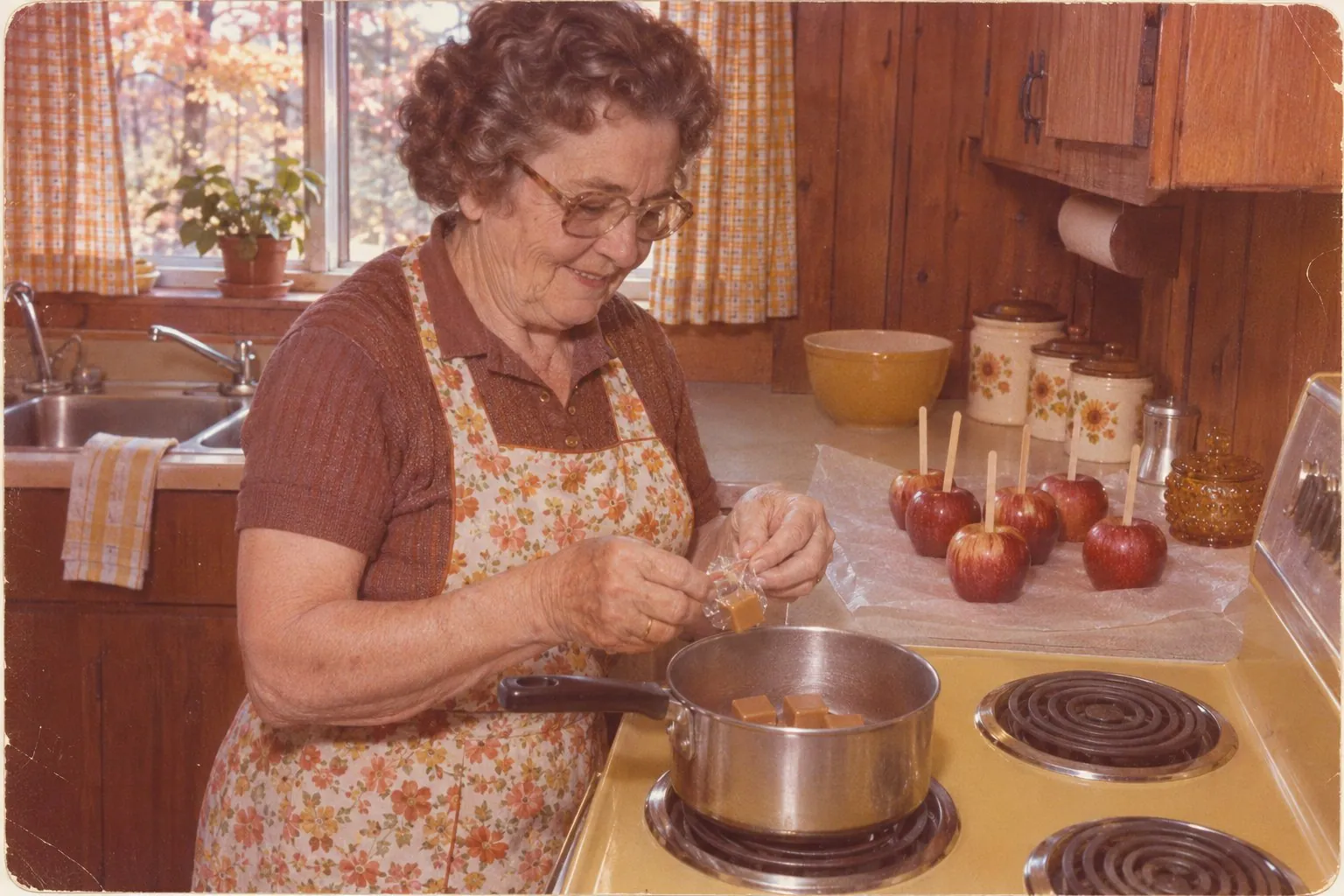
Kraft Caramels were introduced in 1933, The Spokesman-Review reported when Kraft sold the business in 1995. The paper noted that the bag traditionally came with wooden sticks and a recipe for caramel apples. That's why the same bag of tan cubes showed up in the dish in November and on apples in October.
Candy writer Cybele May of Candy Blog called Kraft Caramels "one of those products that transcends the definition of candy," since so many people bought them to cook with. Grandma did both. She unwrapped a dozen for her caramel corn and left the rest out for company.
Mary Janes came from the Charles N. Miller Co. of Boston in 1914, food historian Sarah Wassberg Johnson writes on The Food Historian. The candy is molasses taffy with peanut butter folded in. History Oasis describes the old wrapper as yellow wax paper with a red stripe, which is how you knew one from across the room.
Johnson calls Mary Janes "a staple old-time candy that still finds its way into candy jars." The company changed hands in 1989 and again in 1990, she notes, but the candy kept going.
What was in her purse
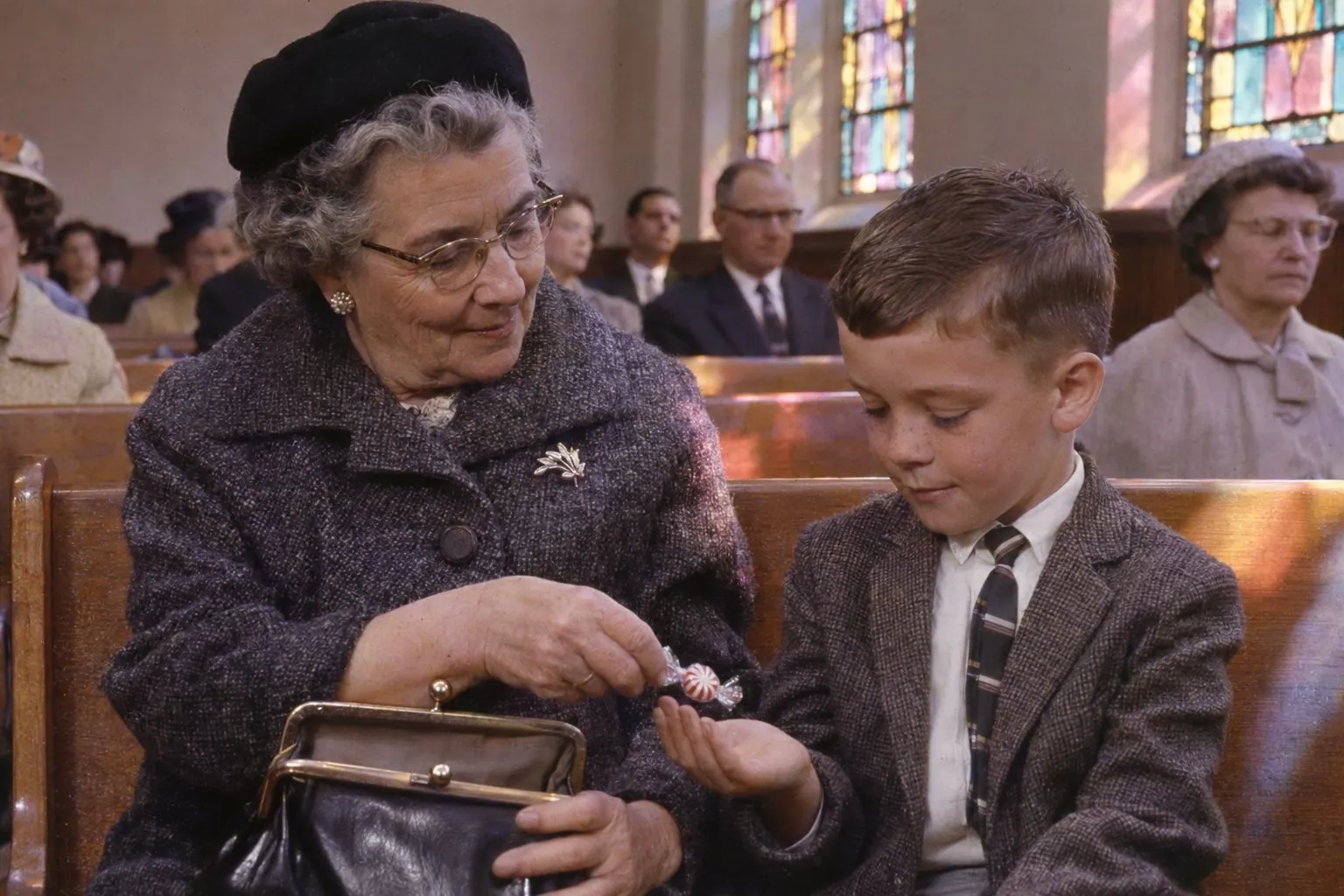
Grandma's purse was a candy dish that went to church. You probably remember sitting in a pew during a long sermon when the clasp clicked open. A hand came over with one wrapped mint, and you were expected to eat it without a sound.
That's where people get "old lady purse candy." It was anything wrapped tight enough to ride around for weeks loose among tissues, a compact and a coin purse. Usually that meant peppermints, butterscotch, or a roll of Life Savers with the end torn open and folded over.
Wrapped hard candy was a smart purse candy. Chocolate melted in a hot car, and a loose caramel picked up lint. A hard candy in cellophane could sit at the bottom of a handbag for a season and come out fine, maybe a little sticky.
Some purses also carried breath mints. If Grandpa smoked a pipe or drank coffee all day, there might be a small tin of something strong in his coat pocket too.
Why it got called old people candy
Nobody set out to make candy for grandparents. Most of these candies were just ordinary candy when they were new. Mary Janes, for example, were sold as cheap penny candy to kids, and History Oasis reports that one old slogan told buyers to "use your change for Mary Janes."
What changed was everything around them. In the '60s and '70s, kids' money went to new chocolate bars, sour candy and anything advertised on Saturday morning TV. Grandma kept buying what she had always bought, and the candy aged right along with her.
The candies also suited the way grandparents' homes worked. A dish got refilled maybe once a month, so the candy had to keep. Grandma wanted something she could offer the mailman, the minister or a visiting grandson without a trip to the store.
Where Werther's fits in
These days, when someone says "old people candy," the first brand most people name is Werther's Original. Its story starts later than many think.
The candy came from August Storck KG in Werther, Germany. The company relaunched its butter caramel in 1969 as "Werther's Echte," meaning "genuine," according to the company history at Funding Universe. That same history says Storck set up a U.S. sales subsidiary in 1977 and renamed the candy Werther's Original in 1998.
The candy's advertising, the history notes, featured a grandfather and his grandson. That ad campaign did as much as anything to make Werther's "grandpa candy." But if you grew up in the '50s or '60s, the gold candy in your grandmother's dish was most likely American butterscotch. Werther's came over when many of you were raising kids of your own.
Frequently asked questions
What is considered old lady candy?
It usually means wrapped hard candies and soft caramels: butterscotch discs, Starlight peppermints, strawberry bonbons, ribbon candy, root beer barrels, Mary Janes and Kraft Caramels. They're the candies that sat in a covered glass dish in a grandparent's living room.
What candy did grandmas keep in their purse?
Mostly wrapped peppermints, butterscotch and rolls of Life Savers. They held up for weeks in a handbag without melting, and they were quiet enough to unwrap during church.
Is Werther's Original old people candy?
It has that reputation, mostly because of ads showing a grandfather sharing it with his grandson. Its maker didn't set up U.S. sales until 1977, and the name "Werther's Original" dates to 1998, Funding Universe reports.
What are old people hard candies called?
Most have plain names: butterscotch discs, Starlight mints, strawberry bonbons, ribbon candy, horehound drops and root beer barrels. Many were sold in mixed bags by makers like Brach's.
Are these old folks candies still made?
Yes. Kraft Caramels, Mary Janes, Starlight-style peppermints and butterscotch discs are all still sold. Some brands changed owners along the way, and Mary Janes went through two owners in 1989 and 1990, according to The Food Historian.
Sources
- They Kept The Cheese And Sold The Caramels, The Spokesman-Review, 1995
- History of August Storck KG, Funding Universe (International Directory of Company Histories)
- The Real Story Behind the "Gross" Black and Orange Halloween Taffy, The Food Historian, 2020
- Kraft & Ferrara Pan Caramels, Candy Blog, 2010
- A Visual History of Mary Jane: The Candy that Refused to Die, History Oasis, 2025
Related Stories
Love a trip down memory lane?
Get a fun quiz every morning. Free · One email a day · Unsubscribe anytime