Model T Truck: The TT, the Pickup and the Fire Engines
From the one-ton TT to the little 1927 pickup and the red fire engine in your town's parade, here's how Ford's Model T trucks did the work.
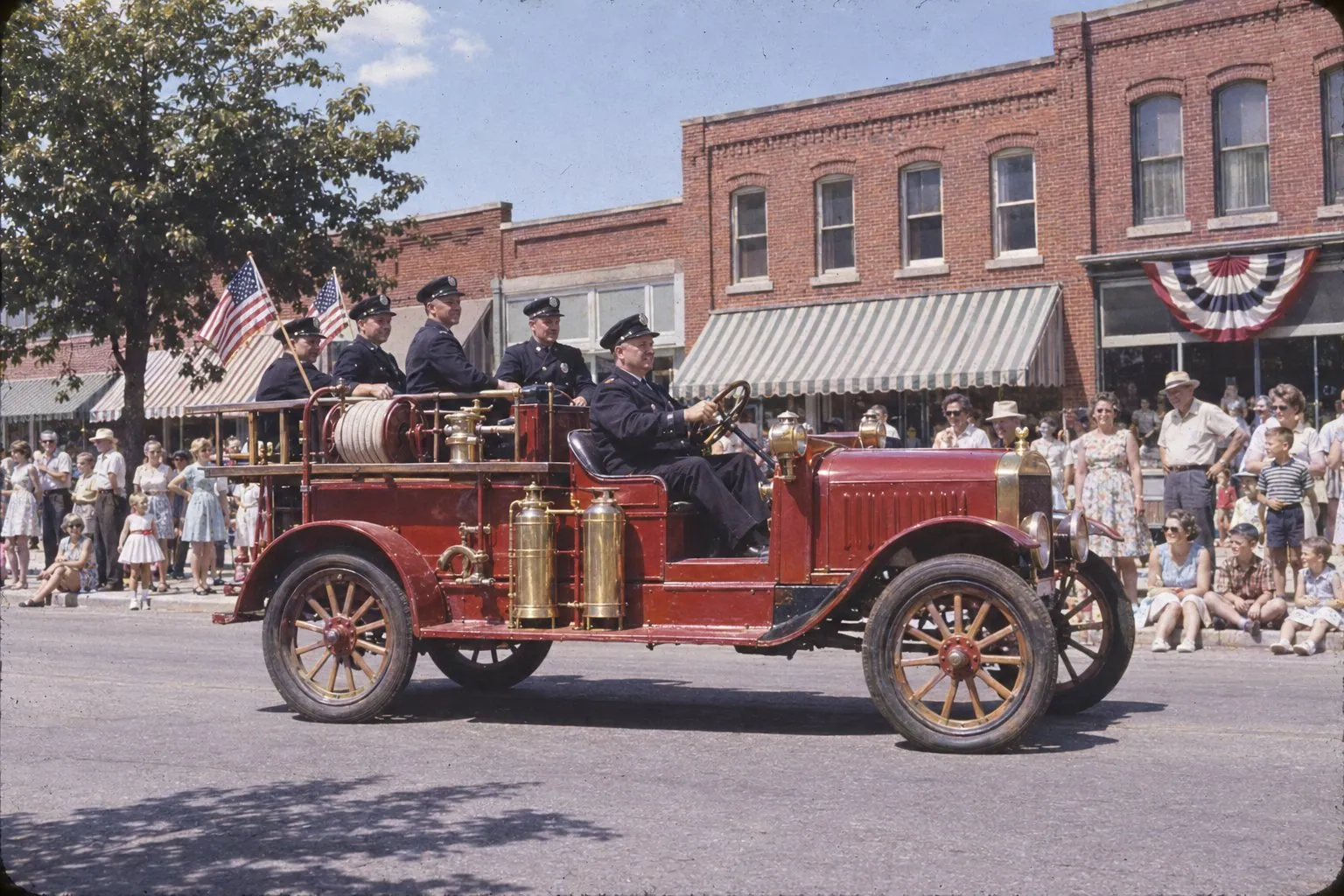
Ford built three kinds of Model T truck: the heavy one-ton Model TT chassis, a light Runabout with a factory pickup bed, and plain chassis that other companies turned into delivery vans, depot hacks and fire engines. The TT used the regular Model T engine and two-speed transmission. It put them on a stronger frame with a heavier rear axle and a worm-gear drive, so it gave up speed to gain pulling power.
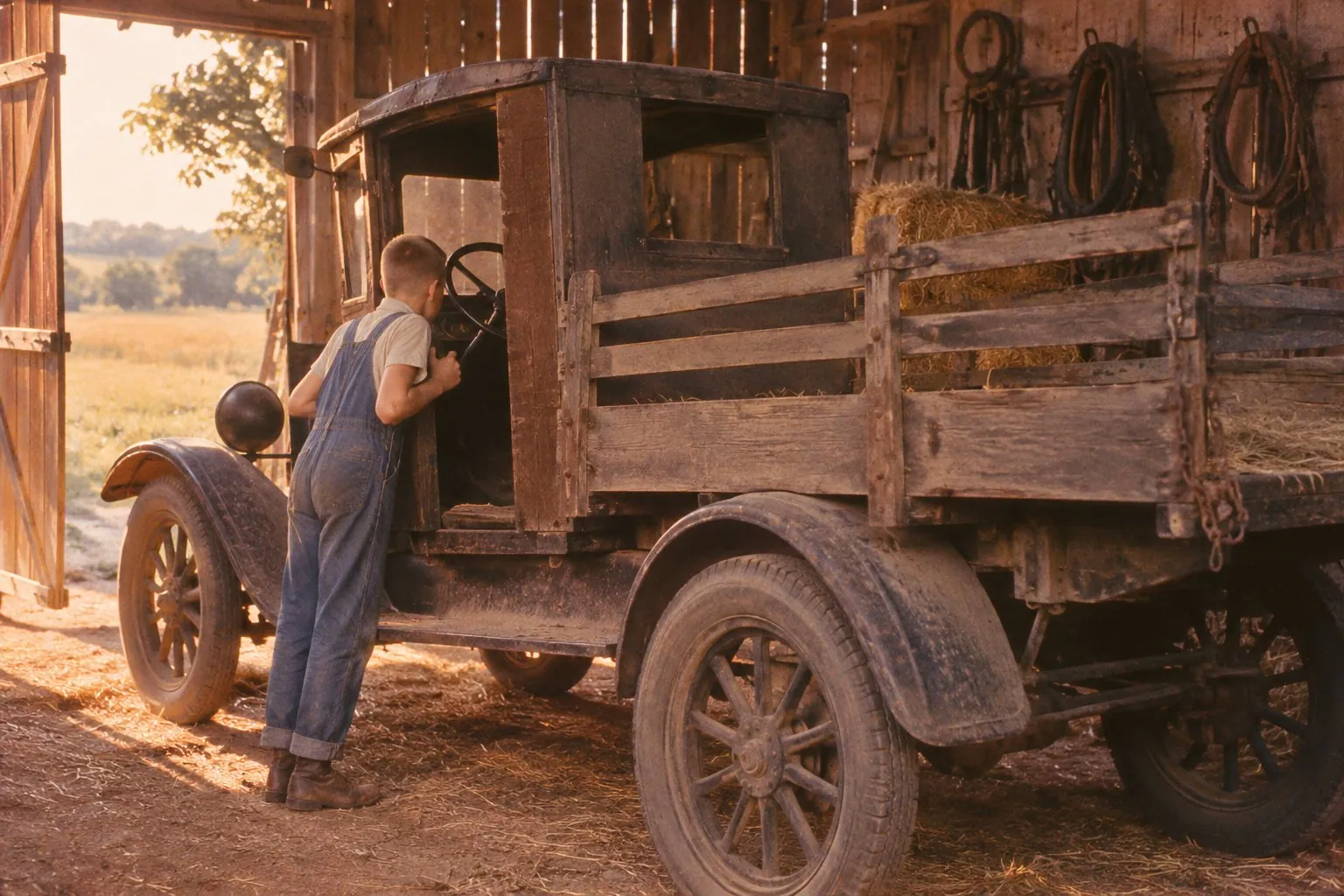
By the time you were a kid in the '50s or '60s, most of these trucks had long since retired. You still saw them, though. One might be rusting behind a barn, or getting polished for the Fourth of July parade, or sitting in a corner of the firehouse with brass that someone shined every Saturday.
They were the trucks your grandfather and his neighbors bought to haul milk cans, coal, lumber and mail. They're a big part of why Main Street switched from horses to gasoline.
How the Ford TT truck worked
The regular Model T came out in 1908, and people were loading it down with cargo almost right away. It wasn't really built for heavy loads, though. In 1917 Ford brought out a true truck version, sold as the Model T One-Ton Truck, as Mac's Motor City Garage explains. Nearly everyone just called it the TT.
The first TTs came with a reinforced chassis, worm-gear drive, two separate brake systems and solid rubber tires, according to The Henry Ford. The National Museum of Transportation adds that the TT had a stronger frame, a heavier rear axle and two extra rear springs.
Under the hood it was still the familiar Model T: a four-cylinder engine of about 22 horsepower and a two-speed planetary transmission, Mac's Motor City Garage notes. The worm gear made it pull hard and drive slow. That's why accessory catalogs sold extra gearing to Ford owners who wanted more from the truck.
Driving a TT meant learning the same odd controls as the car. There were three pedals on the floor and a pair of levers under the steering wheel. Anybody who learned on a three-on-the-tree Chevrolet in the '50s had to start from scratch.
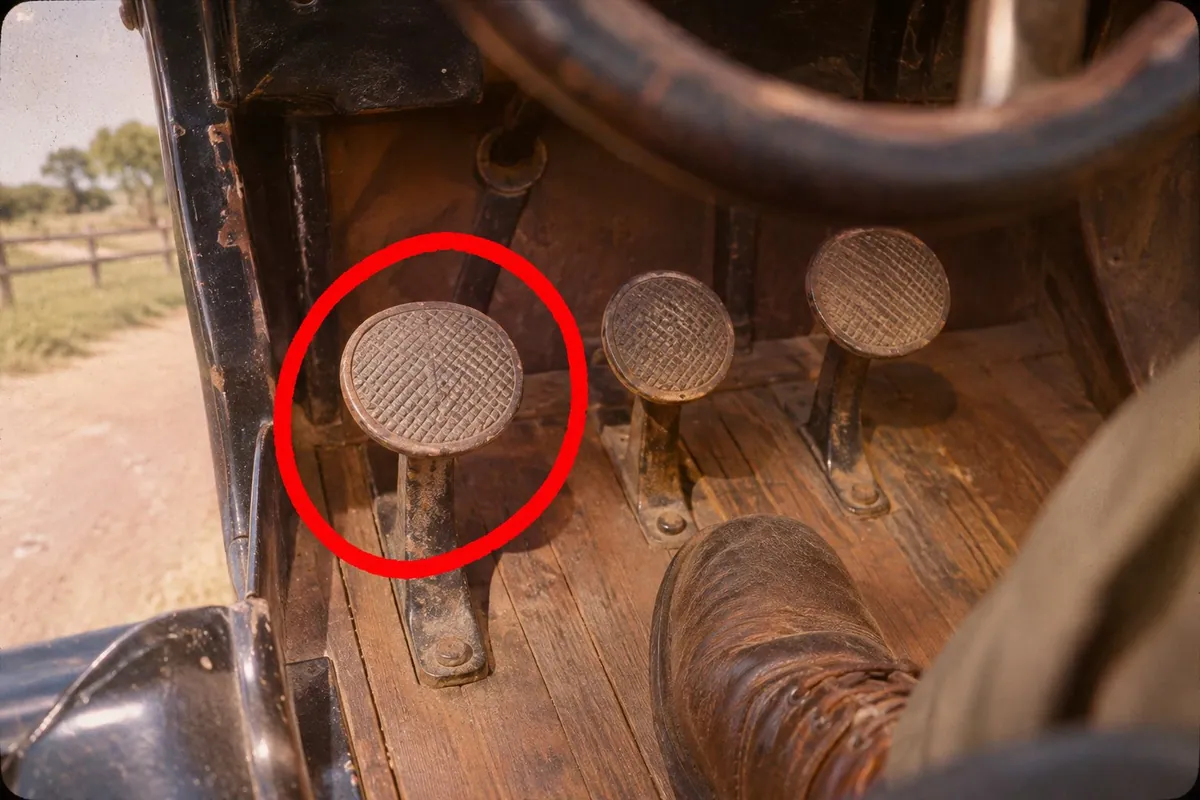
On a Ford Model T, what did the LEFT pedal do?
Read more: 1960 Cadillac Coupe DeVille: The Car That Said You'd Made It
What a Model T truck cost, then and now
At first Ford sold only the engine and chassis. The buyer had to find a cab and a body somewhere else, the National Museum of Transportation says. That's why old photos show so many different TTs. You'll see stake beds, dump boxes, milk-route bodies and homemade cabs knocked together from barn boards.
Prices kept falling as Ford's assembly lines sped up. This table uses Ford's factory prices from the Model T Ford Club of America's 1926 encyclopedia page and the 1917 price from the National Museum of Transportation. We worked out today's figures with the U.S. Bureau of Labor Statistics consumer price index, rounded, in 2024 dollars.
| Model and year | Price then | About today |
|---|---|---|
| TT chassis, 1917 | $600 | $14,700 |
| TT chassis, early 1926 | $365 | $6,500 |
| TT chassis, later 1926 | $325 | $5,800 |
| TT chassis with electric starter, later 1926 | $375 | $6,600 |
| Model T Runabout, 1926 | $290 | $5,100 |
In 1926, a starter added $50 to the TT's price, as both the club's listing and Mac's Motor City Garage show. Mac's adds that Ford offered several factory bodies by then, including a closed cab in 1925.
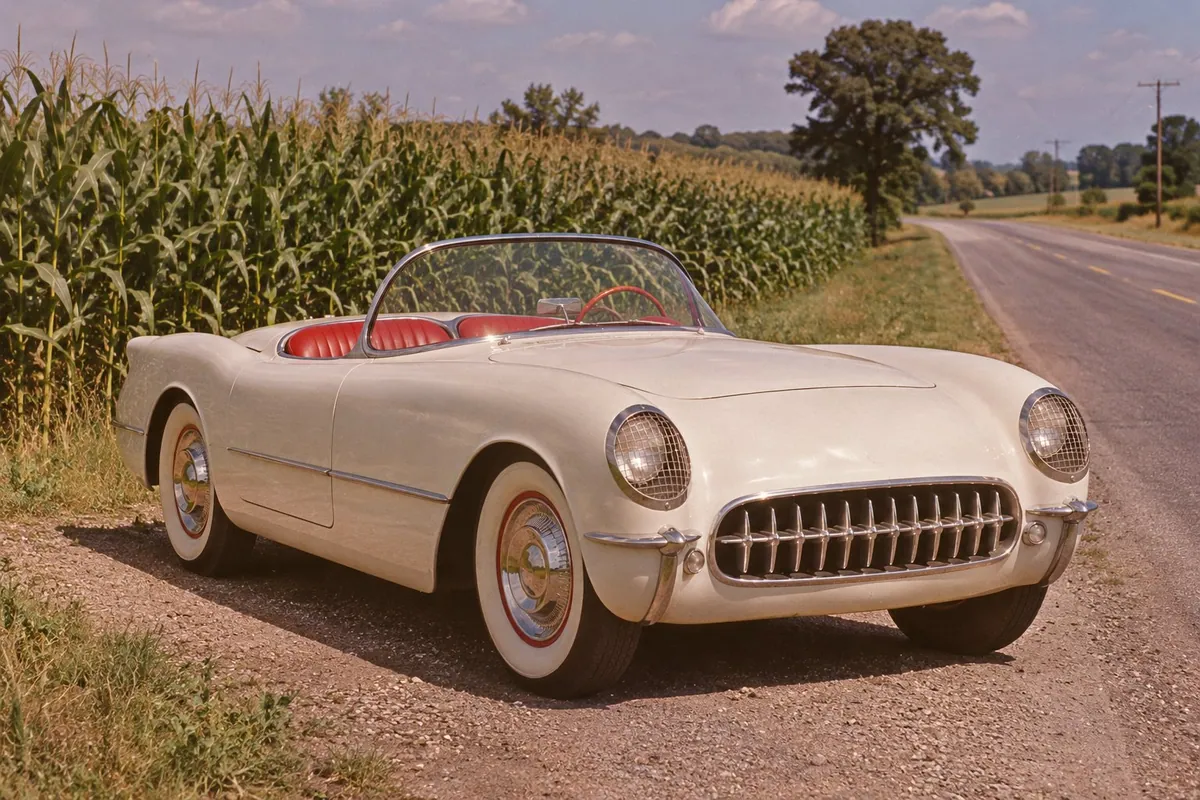
The Model T pick up arrives
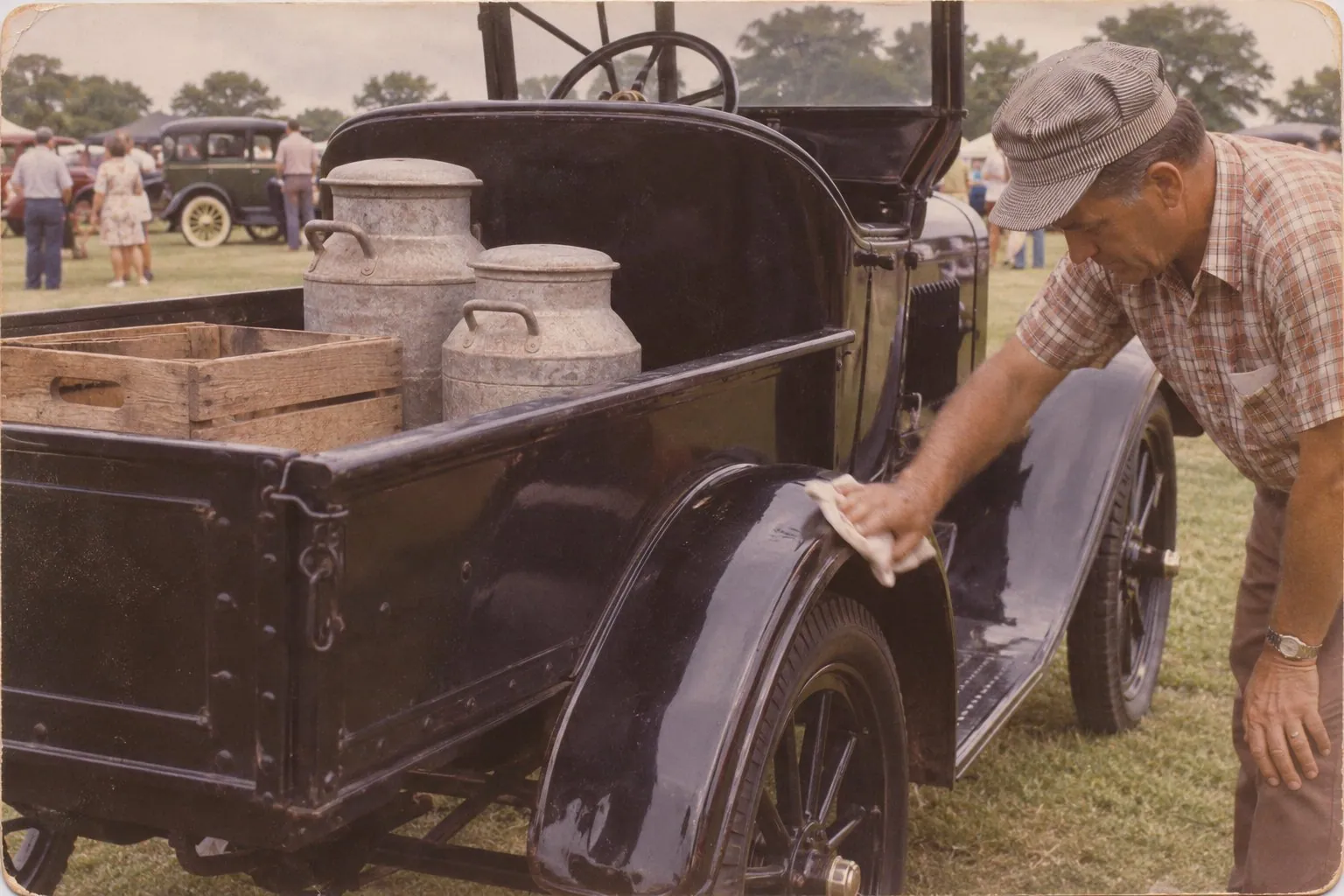
For years, farmers bolted homemade boxes onto the back of their Model T roadsters. Ford finally offered a factory version in 1925, the Model T Runabout with a pickup body. Ford's own history page calls it the company's first factory-produced pickup. Yahoo Autos reports that it came out in April 1925.
It was basically a two-seat roadster with a small steel bed in place of the rear deck. It was light, cheap and perfect for a farm family hauling cream cans to town or a feed sack home from the co-op.
The 1926 and 1927 Fords got new bodies and fenders, the Model T Ford Club of America notes. That's why a 1927 Ford Model T pickup looks lower and more modern than a 1915 car. The 1927 model is also the last one, since Ford ended Model T production that year.
A grandson who climbed into one of those pickups in the 1950s found the same strange floor that had puzzled his father. The pedals weren't laid out anything like the family Plymouth's.
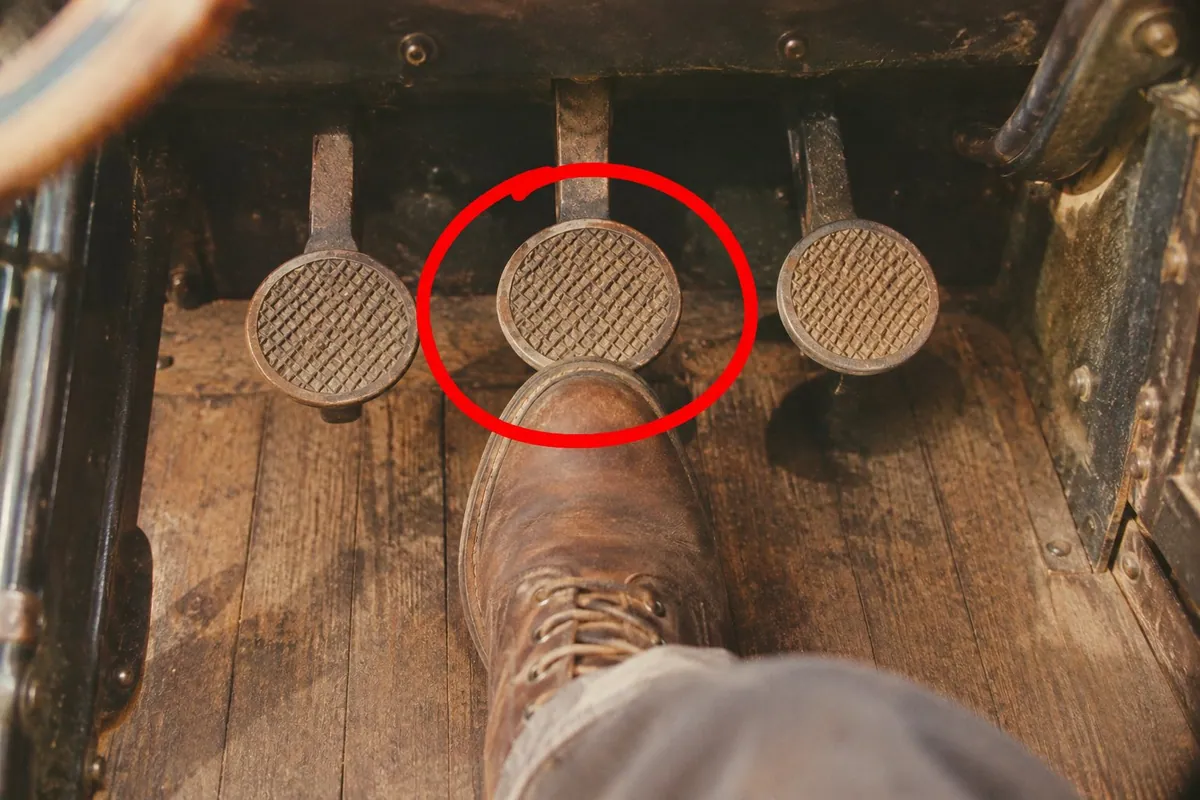
On a Ford Model T, what did the middle pedal do?
C-cabs, depot hacks and the mail
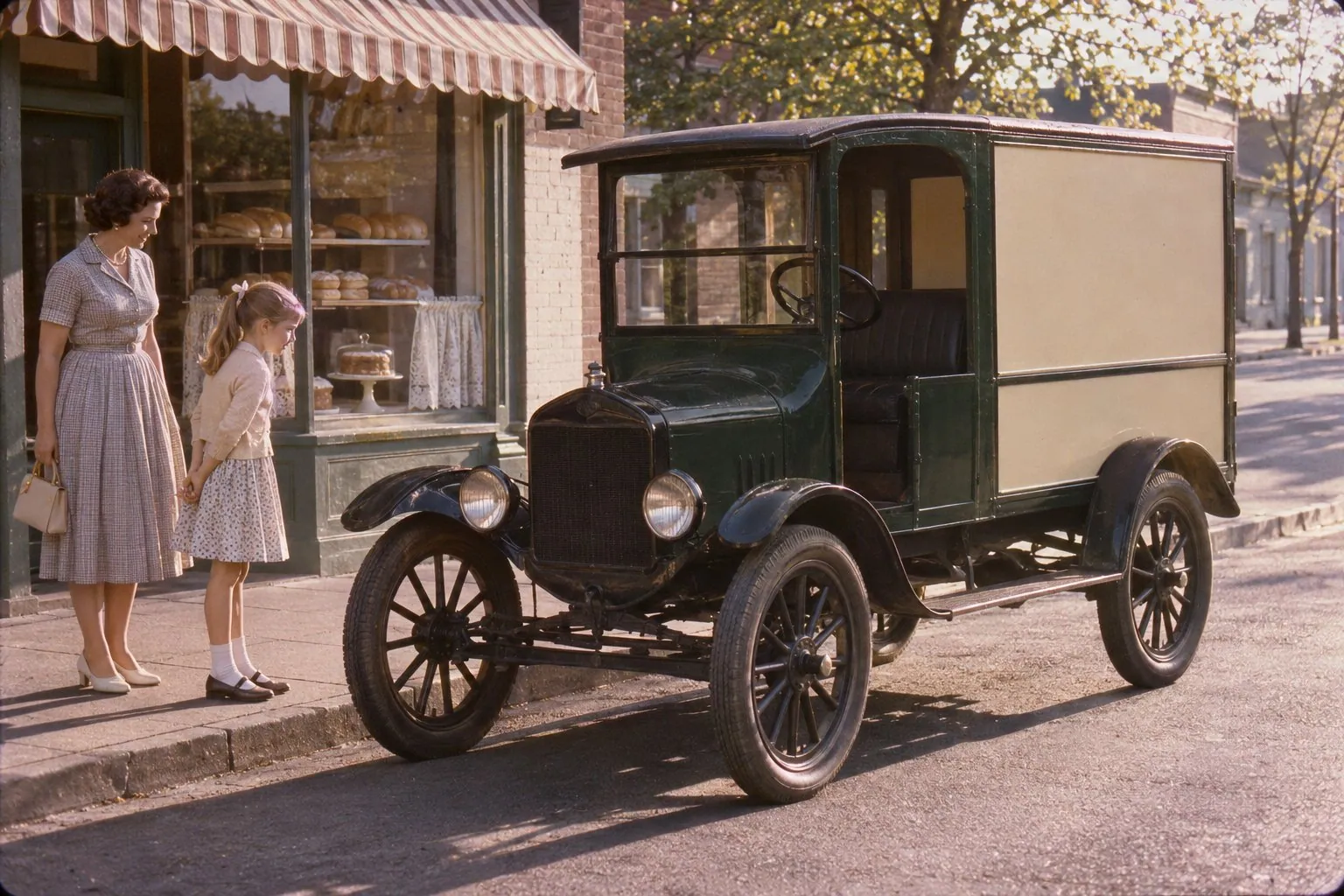
The C-cab is the one you probably picture first. It was named for the C-shaped cutout on each side of the cab, and the shape shows up on old bakery, dairy and hardware delivery trucks. Bakers, florists and dry-goods stores often had their names painted in gold leaf on the panel sides.
Coachbuilders also put wooden "depot hack" bodies on Model T chassis. These carried passengers and their bags between the railroad station and the hotel. Decades later they came back as the station wagon your family loaded up for vacation.
Mail went by Model T as well, especially on rural routes, where carriers often had to supply their own vehicles. For a mailman, a cheap Ford that could get through mud beat feeding a horse.
The town fire engine
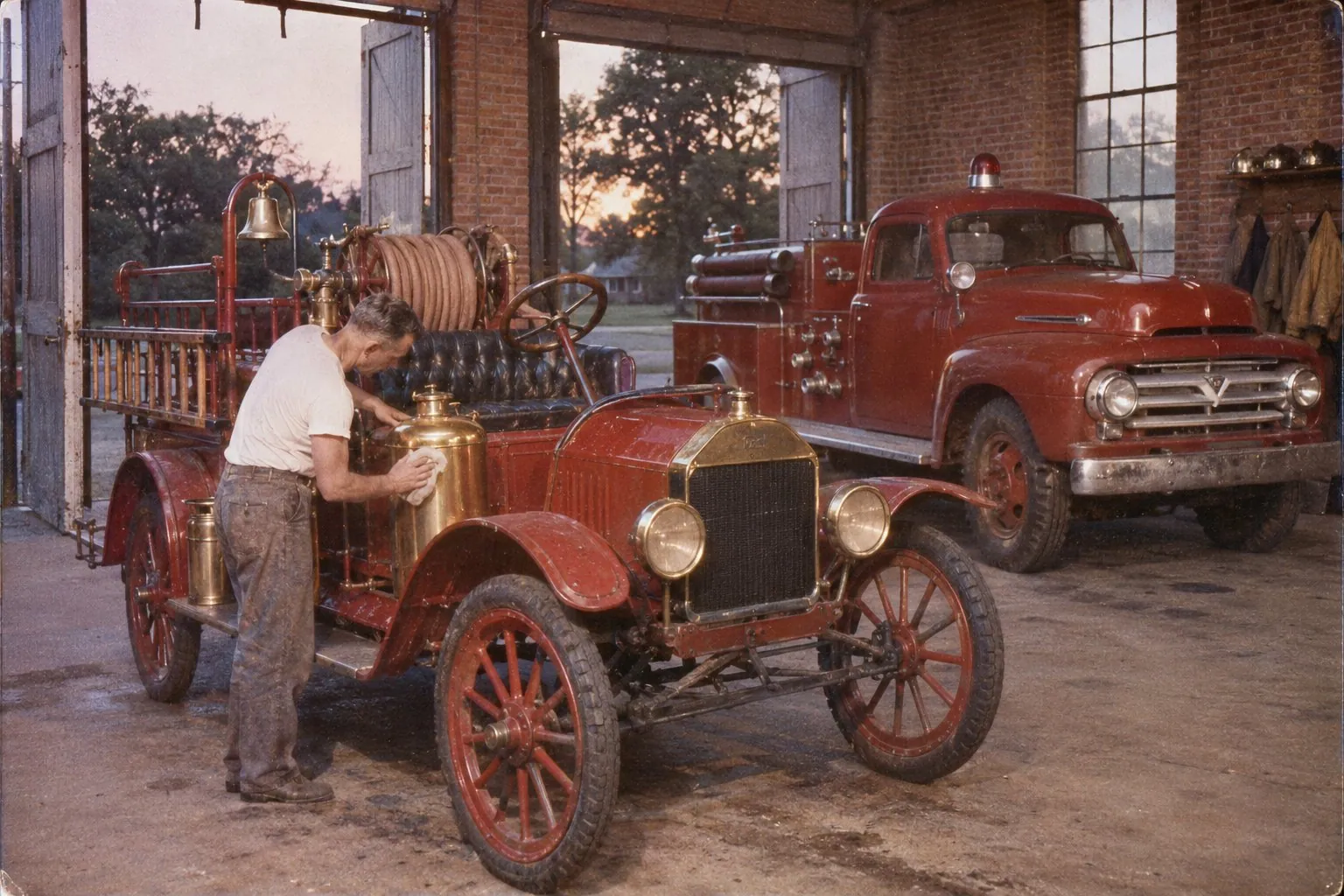
For a small town, the Model T was often the first motorized fire apparatus it ever owned. That's the word from a Google Arts & Culture exhibit on an American LaFrance Model T chemical truck. American LaFrance was one of the big fire-engine builders, and it converted Model Ts because they were cheap and reliable.
Most of these were "chemical engines." They carried tanks that used a soda-and-acid reaction to push water through a hose. It was just enough to knock down a barn or kitchen fire before the bucket line showed up.
The most famous one may be the 1926 Ford Model T fire truck at The Henry Ford. American LaFrance outfitted it, and it served Milan, Michigan, for 12 years. Henry Ford spotted it there and asked for it for his museum. He gave the town a new 1938 truck in trade, the museum says, which shows how much he valued these working Fords.
If you grew up in a small town, there's a good chance an old engine like this led the Memorial Day parade. The volunteers riding on the back would be waving to the crowd. A few of those trucks still roll today, with the long metal handle sticking out under the radiator.
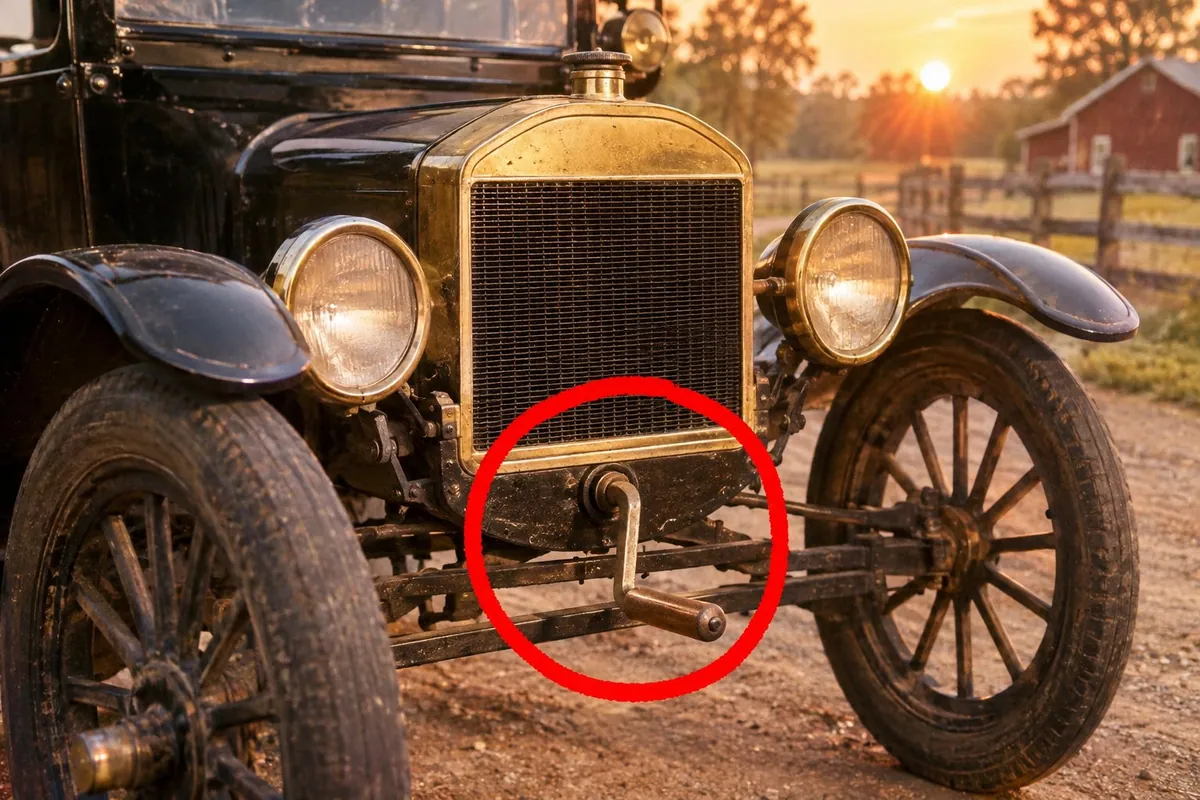
What was the metal handle sticking out of the front of a Ford Model T for?
Frequently asked questions
What was the Ford Model T truck called?
The one-ton version was sold as the Model T One-Ton Truck, and most people called it the Model TT. Ford built the first ones in July 1917, according to The Henry Ford.
How much did a Ford TT truck cost?
A bare TT chassis cost $600 in 1917 (about $14,700 today), the National Museum of Transportation says. By 1926 the price had dropped to $325, or about $5,800 today, according to the Model T Ford Club of America.
When did Ford sell its first Model T pickup?
Ford's first factory pickup was the Model T Runabout with a pickup body, which came out in 1925. Before then, owners bolted their own boxes onto roadsters.
Is a 1927 Ford Model T pickup different from earlier ones?
Yes. The 1926 and 1927 models got new bodies and fenders that sit lower than the earlier style. The 1927 was the last year of the Model T.
Were Model T fire trucks common?
Yes, especially in small towns. Companies like American LaFrance turned Model Ts into chemical engines, and in many places that was the town's first motorized fire truck.
Sources
- "Ford Model T One Ton Truck," 1918, The Henry Ford, museum collection record
- 1926 Ford Model T Fire Truck, The Henry Ford, museum collection record
- Ford Model TT Truck, National Museum of Transportation
- 1926 Model T Encyclopedia, Model T Ford Club of America
- The Model T: Born in Secrecy, Built for the World, Ford Motor Company, 2025
- Consumer Price Index for All Urban Consumers, U.S. Bureau of Labor Statistics, 2024
Related Stories
Love a trip down memory lane?
Get a fun quiz every morning. Free · One email a day · Unsubscribe anytime