Ford T Coupe, Roadster and Tudor: Every Model T Body
From the $260 runabout to the Fordor sedan, here's how to tell every Model T body apart and what each one cost in today's money.
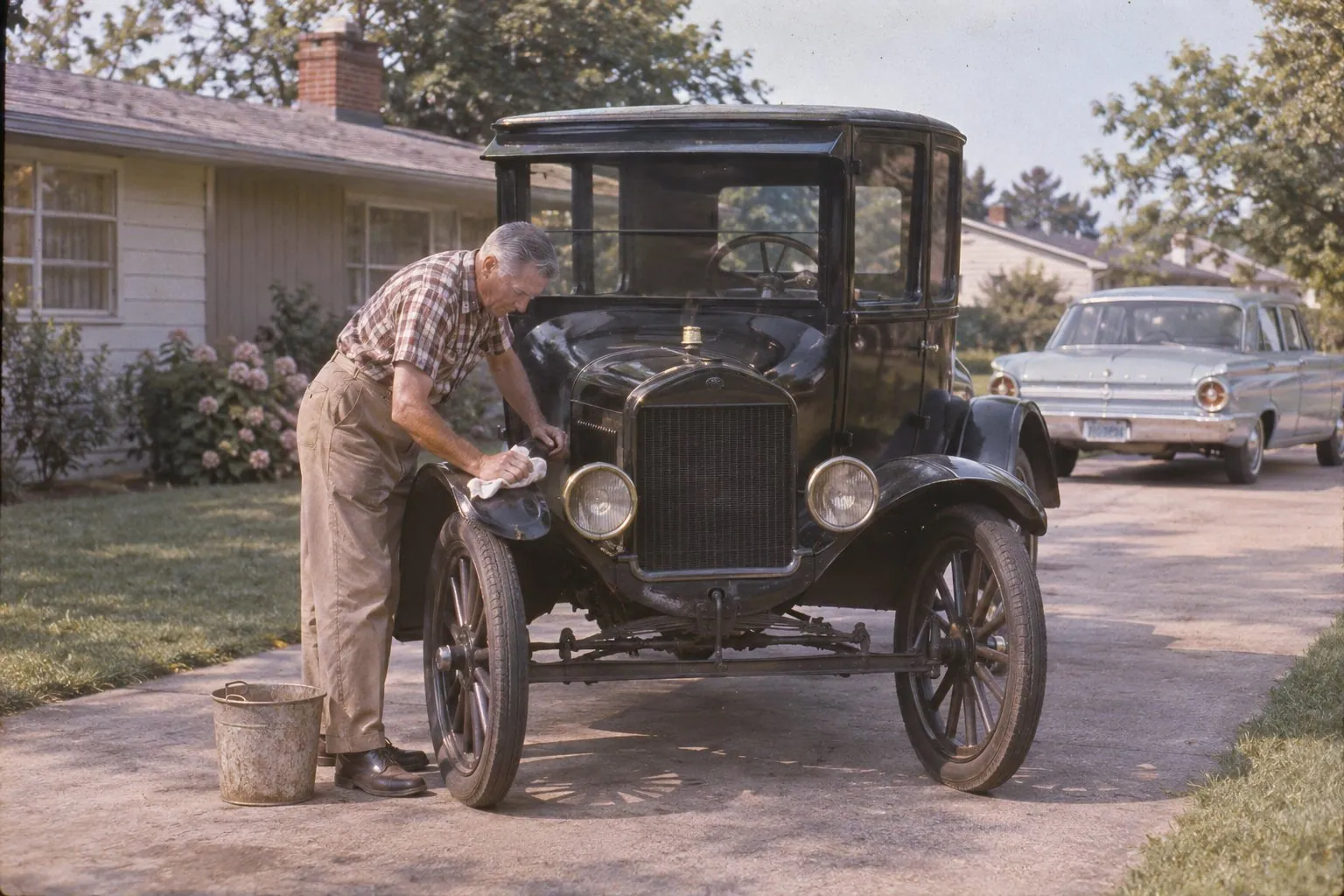
Ford sold the Model T in open bodies and closed bodies. The runabout and the roadster are the same open two-seater with a folding top, the coupe is a two-seater with a solid roof and roll-up glass, the touring car is an open five-seater, and the Tudor and Fordor are closed sedans with two or four doors.
You probably saw plenty of them rolling down Main Street in Fourth of July parades in the '50s and '60s. The men who'd owned one could name a Ford T coupe from a block away just by its tall, boxy roof. Here's how to do it yourself, body by body, with prices from the Ford Archives as gathered by the Model T Ford Club of America.
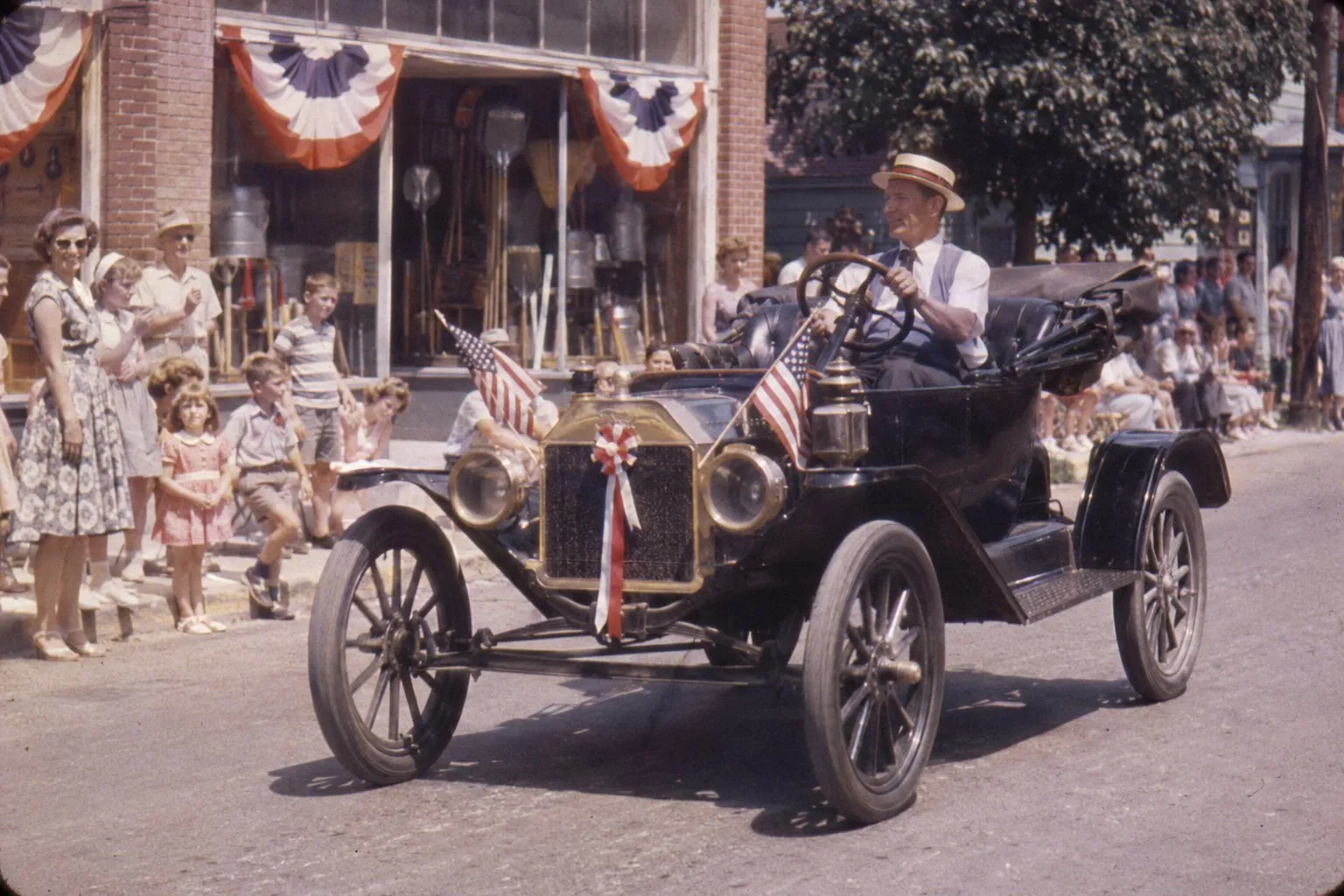
The open cars: touring, runabout and roadster
The touring car
The touring car was the workhorse. It had two rows of seats, room for five, a folding top and side curtains you snapped on when it rained. When the Model T came out, the touring car listed at $850 for 1909. The government's price index only goes back to 1913, but even measured from 1913, that's roughly $27,000 or more in today's money. According to the Model T Ford Club of America's encyclopedia, Ford built 7,728 of them that first season.
By 1925 the same basic car cost just $290 (about $5,200 today), the club's 1925 Ford Archives price list shows. The touring cars had one odd feature people still argue about at car shows. Walk around one and count the front doors.
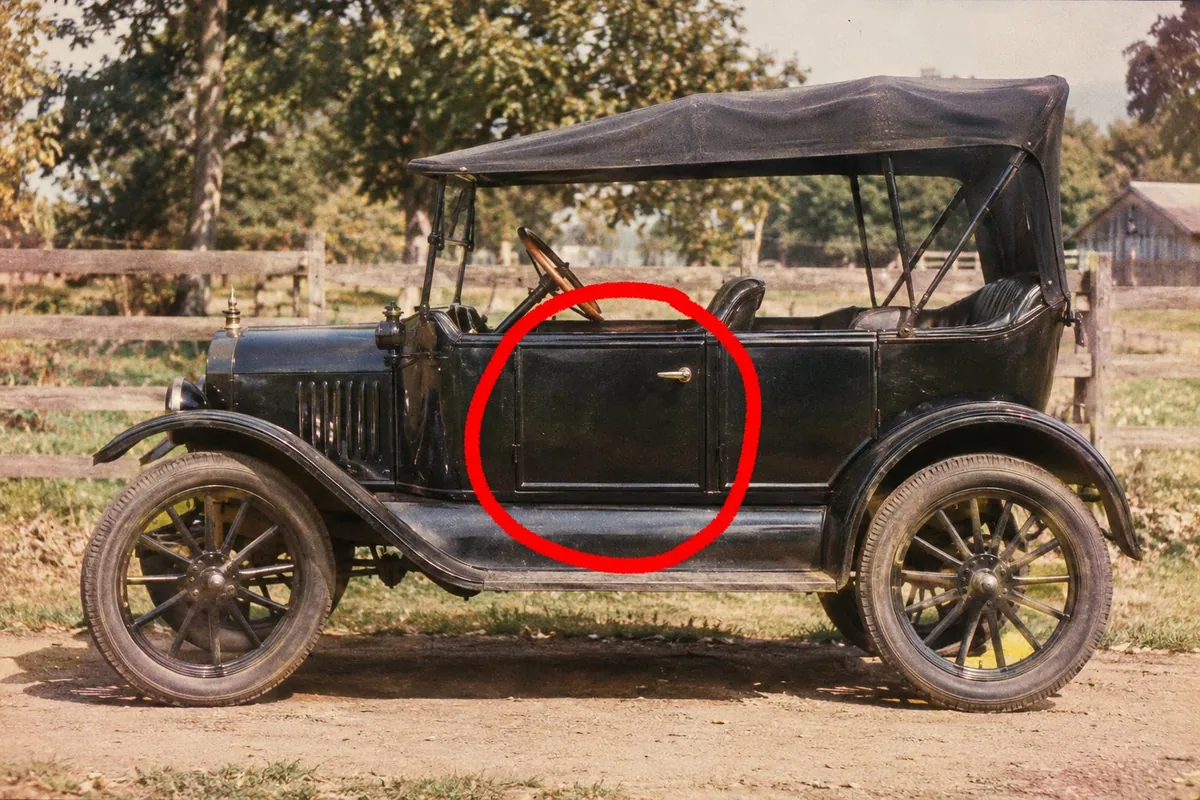
On many Model Ts, why couldn't the driver get in through THIS door?
Runabout or roadster? Same car
Ford's own price lists called it the "Runabout." Most people called it a roadster. Either way, it was a two-seater with a folding top and a rounded "turtle deck" trunk behind the seat. The 1909 runabout listed at $825 (roughly $26,000 or more today, measured from 1913).
Mass production kept pushing the price down. In 1925 the runabout sold for $260 (about $4,700 today), the lowest price it ever had, Classic Cars Arena notes. That price didn't include a starter. Adding the electric starter cost another $65 in 1925 (about $1,200 today), so a lot of farmers kept cranking by hand.
Read more: The 1950 Studebaker Bullet Nose: Coming or Going?
How to spot a Ford T coupe
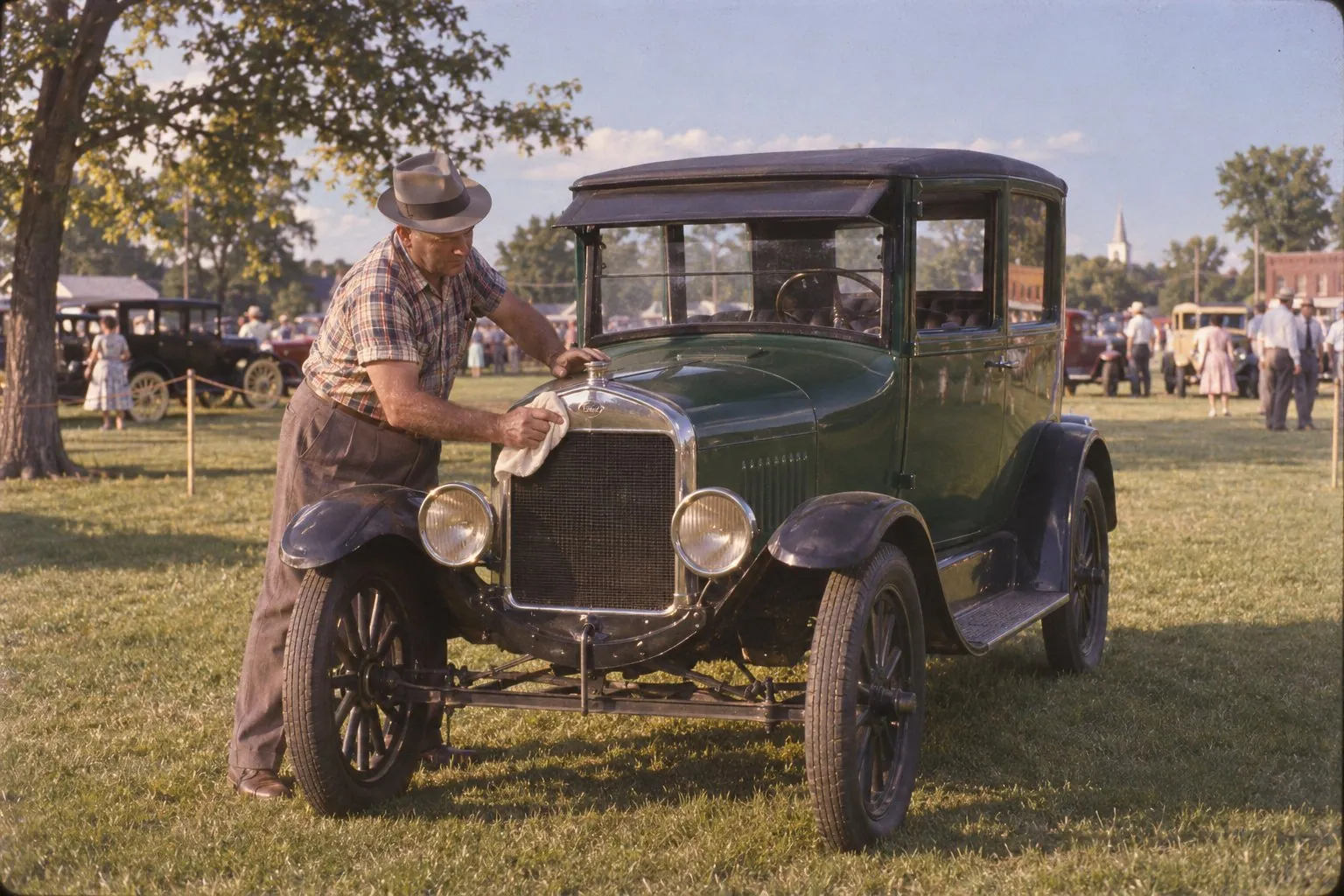
The coupe is easy to spot once you know the trick. Like the roadster, it seats two people, but it has a fixed roof, glass windows and real doors. On the earlier cars, the roof sits so high it looks like a phone booth on wheels.
It started out as a rich man's car. The 1909 coupe listed at $950 (roughly $30,000 or more today, measured from 1913), and the Model T Ford Club of America records only 47 built that year. In the mid-1910s Ford also sold a "coupelet," a coupe with a top that folded down.
By 1925 the Ford Model T coupe had become a common sight. It cost $520 (about $9,300 today), with the starter and demountable rims included as standard equipment, the club's 1925 records show. Ford built 343,969 of them in calendar year 1925. Model T Ford Fix points out that made it the second most popular body style that year.
Color is another clue. When Ford announced its "Improved Fords" on Aug. 26, 1925, it said the coupe and the Tudor would come in deep channel green, the club's encyclopedia records. The runabout and touring car stayed black.
Tudor and Fordor: the family sedans
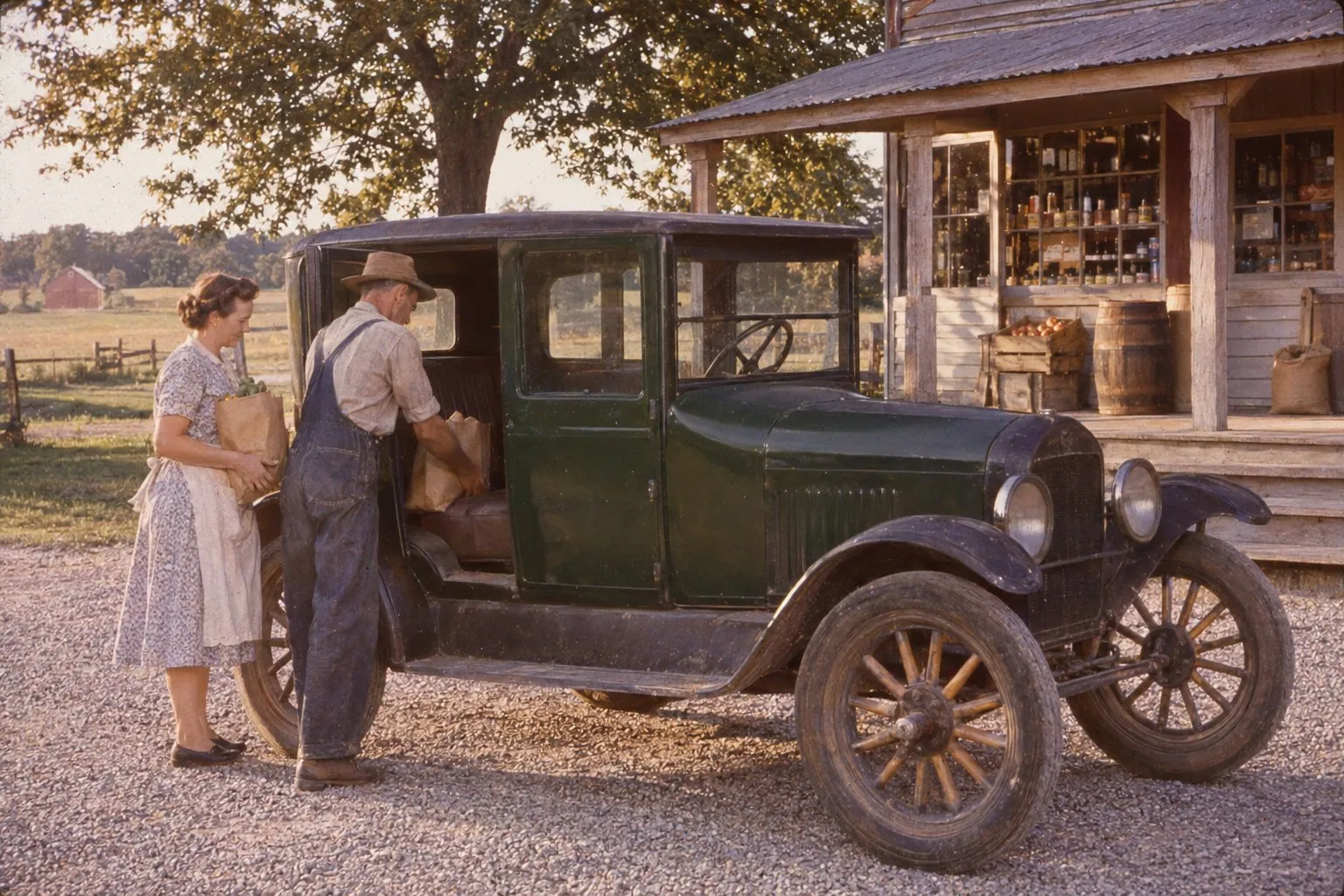
Ford had a little fun with the names. "Tudor" just meant two doors, and "Fordor" meant four doors. Before those came along, Ford built a tall "center-door" sedan, where you climbed in through a door in the middle of the side.
According to the Ford Archives figures, the 1925 Tudor sold for $580 (about $10,400 today) and the Fordor for $660 (about $11,800 today). The cheaper Tudor sold far better. The club's 1925 production table shows 195,001 Tudors and 81,050 Fordors built that year.
The Fordor was the one people wanted when cold weather came. Dealers "could and did often mark the price up for these desirable cars as winter approached," Model T Ford Fix explains. For the Improved Fords, the Fordor came in Windsor Maroon. Ford's own news release said the bodies, "in four types, have been completely redesigned and built lower."
Town cars, landaulets and pickups
Early on, Ford also sold two fancier bodies. The town car had an open seat up front for the driver and a closed compartment in back for the passengers. The landaulet had a folding top over the rear seat. In 1909 the town car listed at $1,000 (roughly $31,700 or more today, measured from 1913) and the landaulet at $950 (roughly $30,000 or more), the club's encyclopedia shows. Neither one sold many.
The working bodies stuck around much longer. The roadster-pickup arrived in about April 1925, according to the Model T Ford Club of America. It was a runabout with a small steel box in place of the turtle deck, priced at $281 (about $5,000 today). You could also buy a bare chassis for $225 (about $4,000 today) and have a local body shop build whatever you needed on it, from a delivery van to a depot hack.
Speedsters, rumble seats and the hot rods you remember
Ford never sold a Model T speedster. Owners built their own. They stripped off the body, lowered the car and bolted on a pair of bucket seats with a round gas tank behind them. Accessory companies sold speedster bodies and parts by mail. Others added fold-up rumble seats to the turtle deck so a roadster could carry two more people.
By the '50s, hot rodders were cutting T roadster bodies down even further and dropping in V-8 engines. You might have seen one at the drag strip or in a magazine like Hot Rod. Driving a stock T was something else entirely. The floor had three pedals, and none of them worked the way they did in your '57 Chevy.
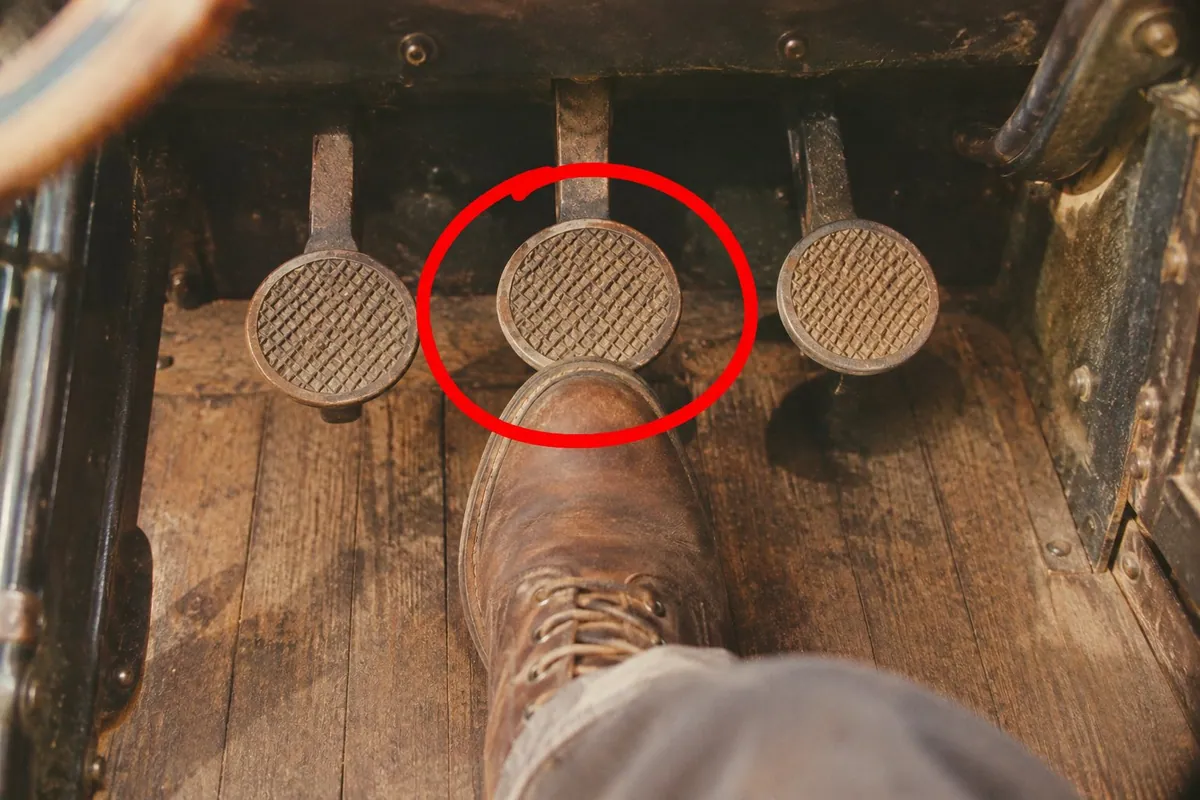
On a Ford Model T, what did the middle pedal do?
The 1925 cars were the last Model Ts with three pedals all shaped alike, Model T Ford Fix notes.
What each Model T cost, then and now
These are Ford's list prices from the Model T Ford Club of America's archive records. The 1925 prices are converted using U.S. Bureau of Labor Statistics consumer price index averages (1925 and 2024). The government index starts in 1913, so 1909 prices are measured from 1913 and are low estimates.
| Body | Year | Price then | About today |
|---|---|---|---|
| Touring | 1909 | $850 | $27,000+ |
| Runabout | 1909 | $825 | $26,000+ |
| Coupe | 1909 | $950 | $30,000+ |
| Touring | 1925 | $290 | $5,200 |
| Runabout | 1925 | $260 | $4,700 |
| Coupe | 1925 | $520 | $9,300 |
| Tudor | 1925 | $580 | $10,400 |
| Fordor | 1925 | $660 | $11,800 |
Frequently asked questions
What is the difference between a Model T roadster and a runabout?
There's no difference. Ford's price lists called the open two-seater a "Runabout," and most people called it a roadster. In 1925 it sold for $260 (about $4,700 today).
How much did a Ford Model T coupe cost?
The 1909 coupe listed at $950, roughly $30,000 or more today. By 1925 the price was down to $520 (about $9,300 today), with the starter included, according to Ford Archives figures compiled by the Model T Ford Club of America.
Did Ford build a Model T speedster?
No. Ford never sold a speedster body. Owners made their own by stripping a T down to the frame and adding low seats, and accessory companies sold speedster bodies and parts.
What do Tudor and Fordor mean?
They were Ford's names for the two-door and four-door closed sedans. In 1925 the Tudor sold for $580 (about $10,400 today) and the Fordor for $660 (about $11,800 today).
Sources
- 1925 – Ford Archives prices and Improved Ford news release, Model T Ford Club of America
- 1925 – Body types, prices and production, Model T Ford Club of America
- Model T Encyclopedia, Model T Ford Club of America
- The 1925 Model T Ford, Model T Ford Fix
- Ford Model T and Model A: Henry Ford's Cars, 1908 to 1931, Classic Cars Arena
- Consumer Price Index for All Urban Consumers, annual averages, U.S. Bureau of Labor Statistics
Related Stories
Love a trip down memory lane?
Get a fun quiz every morning. Free · One email a day · Unsubscribe anytime