How to Put Together an Authentic '50s Style Outfit
Poodle skirts and leopard print? We wore the real thing. Here's what made a '50s outfit look right, and which famous clichés never did.
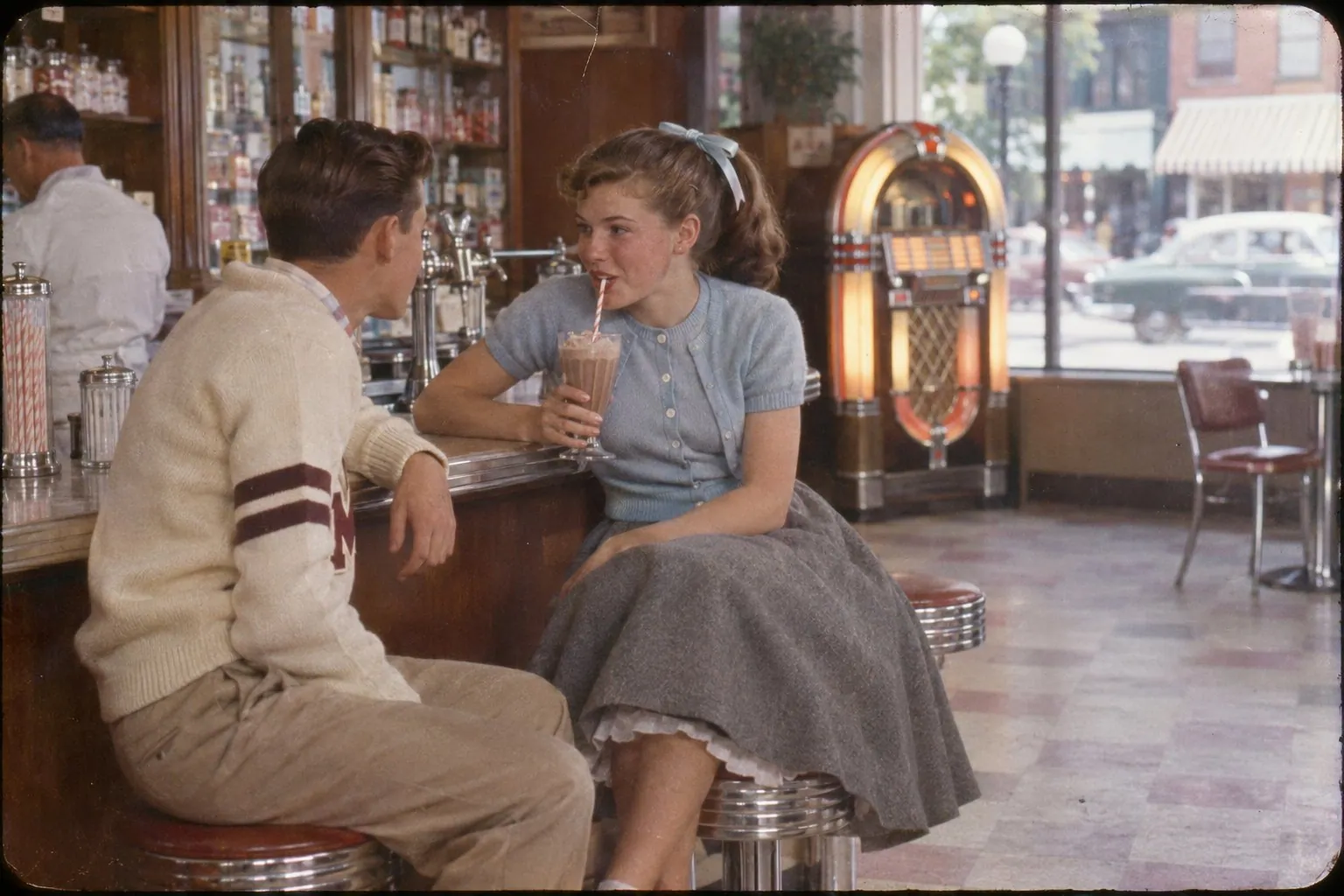
To put together an authentic '50s style outfit today, start with the shape of the clothes, not the costume. For a woman, that means a fitted waist with a full or slim skirt falling to mid-calf; for a man, high-waisted pants with a cuff, a collared shirt and short, neat hair. Add a few true details, like saddle shoes, a cardigan, a narrow belt and white socks, and leave the felt poodle, the red bandana and the leopard print at the costume shop.
You probably remember how ordinary those clothes felt at the time. Nobody thought of a cardigan as a "look." It was what your mother bought at Sears or the local department store, and you wore it until the elbows went thin.
So here's how to dress for a sock hop or a theme party so you look like the people who were really there.
Start with the shape, not the props
Nearly every woman's outfit of the decade goes back to one Paris fashion show. La Galerie Dior dates Christian Dior's first collection, the one the press named the New Look, to February 12, 1947. The Metropolitan Museum of Art sums up the shape as prominent shoulders, rounded hips and a small waist.
The best-known piece from that show is the "Bar" suit. Smithsonian Magazine describes it as a natural shantung jacket in ecru over a black pleated wool crepe skirt. Pattern companies and department stores copied that shape for years.
What matters for your outfit is the waist. If the waist sits at your real waist and the skirt flares out or falls straight to mid-calf, you're most of the way there. A short, hip-length skirt gives the game away at once.
Read more: Motown Records: How Berry Gordy Built Hitsville on $800
The details that make it look real
The Fashion History Timeline at the Fashion Institute of Technology points out a split in 1950s clothing. Men's and boys' clothes were getting more casual, while women's and girls' clothes stayed formal and polished, with matching accessories. Keep that in mind and your outfit will look right.
For the women
- A sweater set or a blouse with a Peter Pan collar. A short-sleeved shell under a matching cardigan, often with a single strand of pearls, showed up in yearbook photos all over the country.
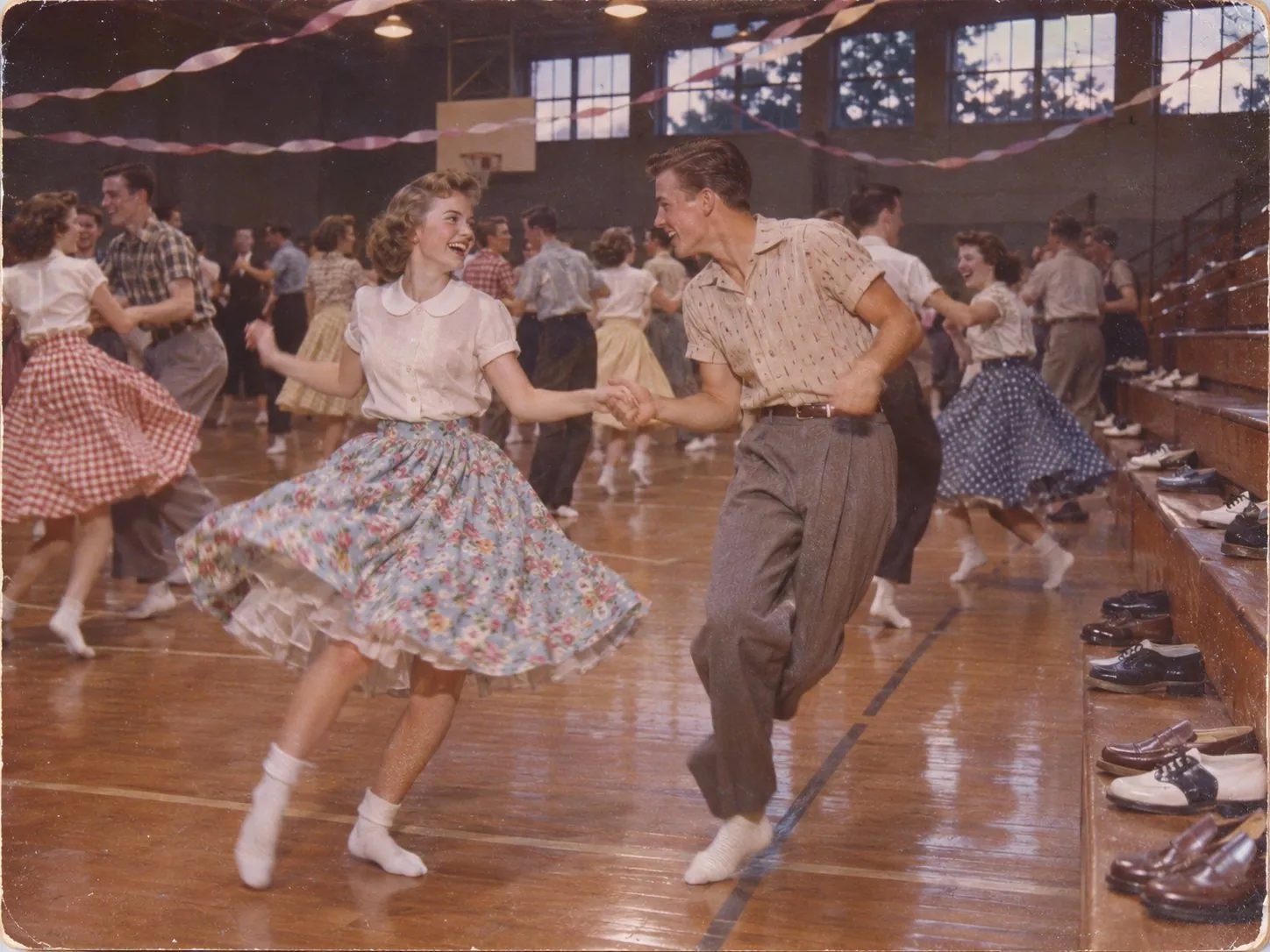
- A full skirt held out by a petticoat. A plain wool or cotton circle skirt was far more common than one with a poodle on it. Some girls stiffened their crinoline petticoats with sugar water so they'd stand out on the dance floor.
- A narrow belt to mark the waist, often in a contrasting color.
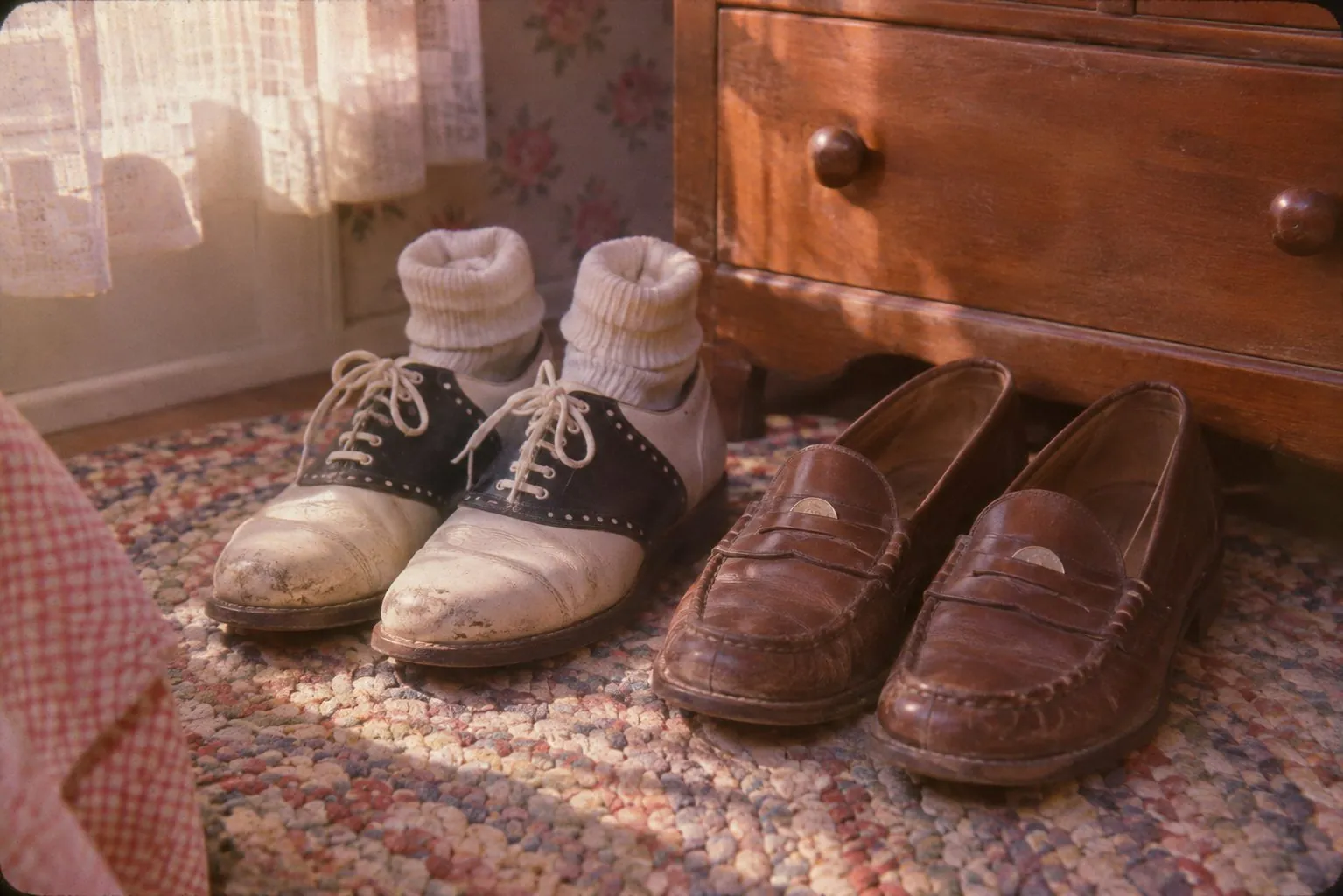
- Saddle oxfords or flats with white socks folded down. That's where the word "bobby-soxer" came from. Sears sold its own saddle oxfords under the Kerrybrooke name, as The People History shows in its collection of catalog pages.
- A ponytail tied with a scarf or ribbon, or short, set curls for a grown woman.
In many school districts, girls weren't allowed to wear slacks to class, so a skirt is the safe choice. Pedal pushers or capri pants with flats were weekend and backyard clothes.
For the men
- High-waisted pants: gray flannel, khaki chinos or pleated slacks with a cuff, worn with a thin belt.
- A collared shirt: a short-sleeve sport shirt, a button-down oxford, or a knit shirt with a collar. A letter sweater or a cardigan goes on top.
- Loafers or plain lace-ups, with white or argyle socks.
- Short hair: a flattop, a crew cut, or hair combed back with a little Brylcreem. You probably remember the jingle: "A little dab'll do ya."

Jeans, leather jackets and the rebel look
Jeans are allowed, but they weren't what most boys wore to school. Levi's in-house historian Tracey Panek told Fashionista that the pants started out as tough work clothes for miners near the Comstock Lode in Nevada. Plenty of schools and parents still saw them that way in the '50s.
The movies changed that. Marlon Brando wore 501s as a motorcycle gang leader in The Wild One in 1953, as Yahoo Lifestyle notes in its history of the jean. The company's own history of the 501 says Levi's added a zipper version, the 501Z, in 1954, and that the word LEVI'S began appearing on both sides of the little red tab in the early '50s.
To get the look, wear dark, stiff denim with the cuffs rolled up a couple of inches, a plain white T-shirt and black engineer boots or work boots. Add a leather jacket only if you're going as the tough kid. In most yearbook pictures, he's the exception, not the rule.
The clichés that never were
Most theme-party costumes miss the mark in three places.
The poodle on every skirt. The poodle skirt was real. The New York Times obituary of its creator, Juli Lynne Charlot, who died in 2024 at 101, traces it back to a felt circle skirt she made in 1947 for a Christmas party in Los Angeles. Felt was cheap, and a circle skirt needed only basic sewing. But it was a fad item, not something every girl wore. Many skirts had other appliqués or none at all, and the poodle-on-every-girl idea owes more to Happy Days and Grease in the '70s.
The pin-up look. Victory-roll hairdos, red bandanas tied on top of the head, heavy winged eyeliner and leopard-print wiggle dresses are 1940s wartime style and later rockabilly revival. Put them on a girl at a 1956 sock hop and the photos look wrong to anyone who was there.
Pants that are too tight and too short. Even the boys who greased their hair wore their pants at the waist. Low-slung, skinny modern jeans ruin an otherwise good outfit.
Dressing like the grown-ups
Not every party calls for teenagers. If you want to dress like your parents did, you'll need a little more effort.
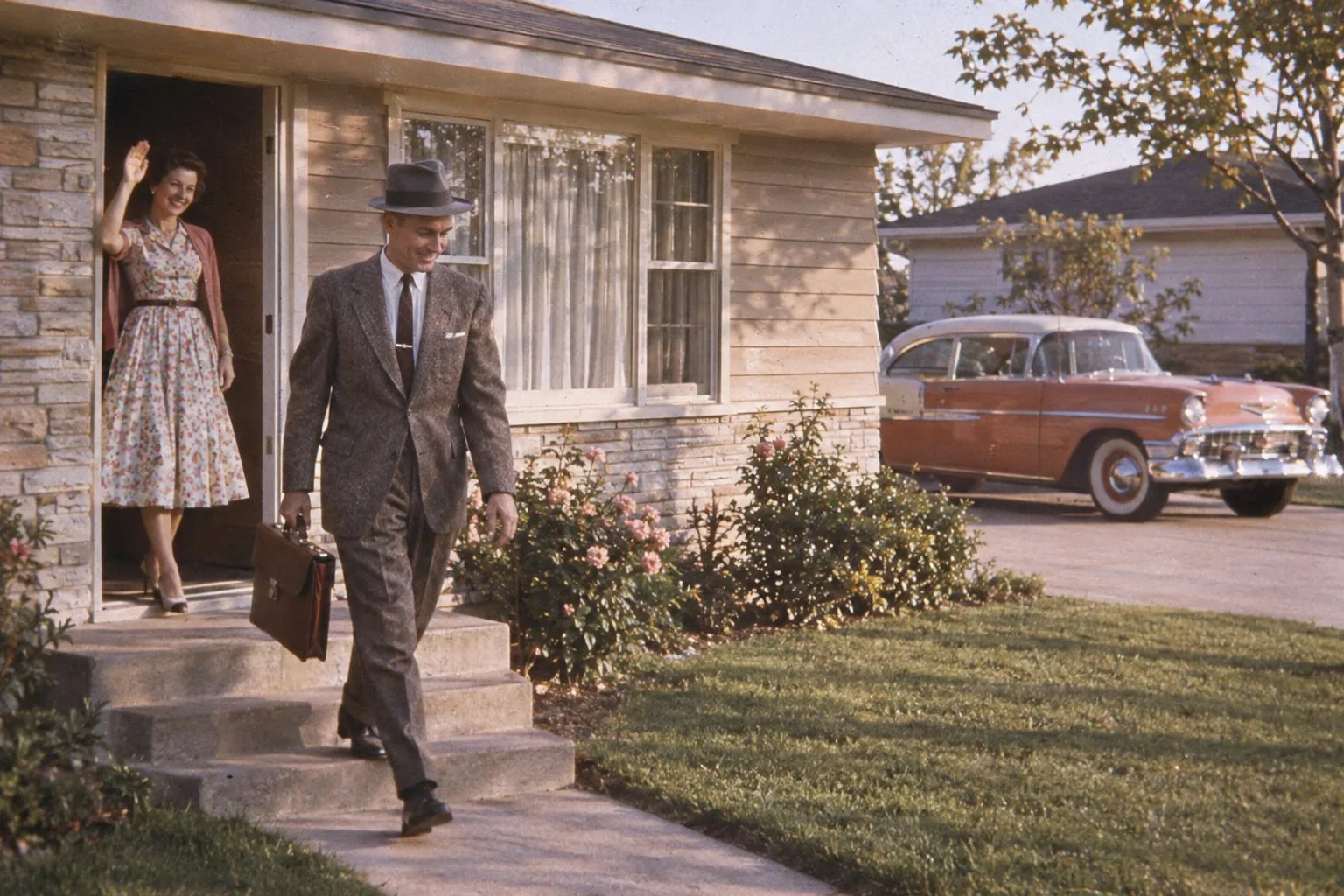
For a man, that means a gray or brown suit with a white shirt, a fairly narrow tie and a felt hat with a short brim. Sloan Wilson's 1955 novel The Man in the Gray Flannel Suit gave that office uniform its name. Shoes were polished. Handkerchiefs were folded in the breast pocket.
For a woman, a shirtwaist dress with a full skirt is the look you remember from church, the grocery store and the PTA. Add short white gloves, a small hat, a handbag that matches the shoes, and stockings with a seam up the back. The FIT timeline's point about "perfectly matched accessories" applies most to grown women.
Where to find '50s clothes today
Real vintage pieces still turn up at estate sales, church rummage sales and thrift stores, especially men's cardigans, ties and women's sweater sets. Check the labels: old department-store labels, union tags and metal zippers are good signs of the real thing.
If you can't find vintage, new clothes in a '50s style work fine as long as the shape is right. A high-waisted pair of slacks, a plain cardigan and saddle shoes, which are still made, will look truer than any costume in a bag.
Frequently asked questions
What is 1950s style clothing for women?
It's built around a fitted waist, with either a full skirt worn over a petticoat or a slim pencil skirt, both falling to about mid-calf. Add a sweater set or a blouse with a rounded collar, a narrow belt, and saddle shoes or flats for girls, or gloves and a matching handbag for grown women.
Were poodle skirts really worn in the '50s?
Yes. Juli Lynne Charlot made the first felt circle skirt in 1947, according to her New York Times obituary, and poodle skirts became a teenage fad. They were never everyday wear for every girl, though, and the costume version owes a lot to Happy Days and Grease.
What should a man wear to a '50s sock hop?
High-waisted chinos or flannel slacks with a cuff, a short-sleeve sport shirt or button-down, a cardigan or letter sweater, and loafers with white socks. Keep the hair short and neat, combed back or cut in a flattop.
What's the difference between 1950s retro clothing and real vintage fashion?
Vintage means clothing actually made in the 1950s. Retro or '50s-inspired fashion is new clothing cut in the old style. Either one works for a party if the waistline, hem length and fabrics match the period.
Is pin-up style the same as '50s style?
Not really. Victory rolls, bandanas and leopard-print wiggle dresses come mostly from 1940s wartime fashion and the later rockabilly revival. For an authentic '50s style outfit, a ponytail, a sweater set and a full skirt are closer to what people wore.
Sources
- Christian Dior (1905–1957), The Metropolitan Museum of Art, Heilbrunn Timeline of Art History
- The New Look, La Galerie Dior
- 1950–1959, Fashion History Timeline, Fashion Institute of Technology (SUNY)
- History of Levi's 501 Jeans, Levi Strauss & Co.
- Juli Lynne Charlot, Creator of the Poodle Skirt, Dies at 101, The New York Times, 2024
- Fashion History Lesson: Levi's 501 Jeans, Fashionista, 2023
Related Stories
Love a trip down memory lane?
Get a fun quiz every morning. Free · One email a day · Unsubscribe anytime