1950s Dance Songs: Sock Hop and Diner Jukebox Favorites
The upbeat records that packed the gym floor and the diner jukebox, and the dance that went with each one, from the jitterbug to the Stroll.
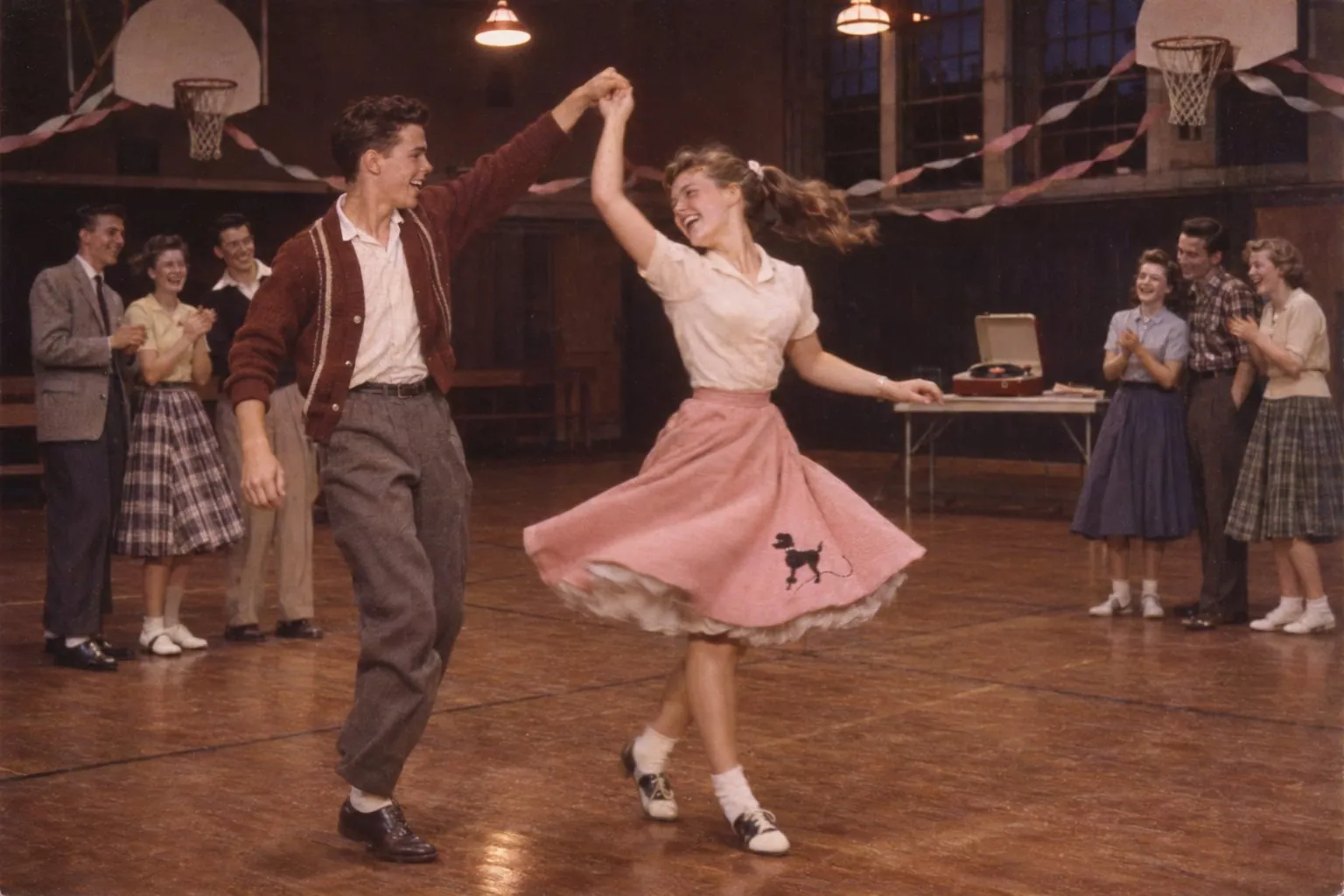
The best upbeat 1950s dance songs were records like Bill Haley & His Comets' "Rock Around the Clock," Danny & the Juniors' "At the Hop," the Diamonds' "The Stroll," Elvis Presley's "Jailhouse Rock" and Chuck Berry's "Johnny B. Goode." Each one came with its own way of moving, from the fast jitterbug to the slow, strutting line of the Stroll.
You probably remember the dance before you remember the label on the record. You remember the gym smelling of floor wax, the crepe-paper streamers sagging from the basketball hoops and the scratch of the needle before the drums kicked in.
This is a look at those records and the steps that went with them, at the school dance and at the corner diner.
The 1950s dance songs that filled the gym floor
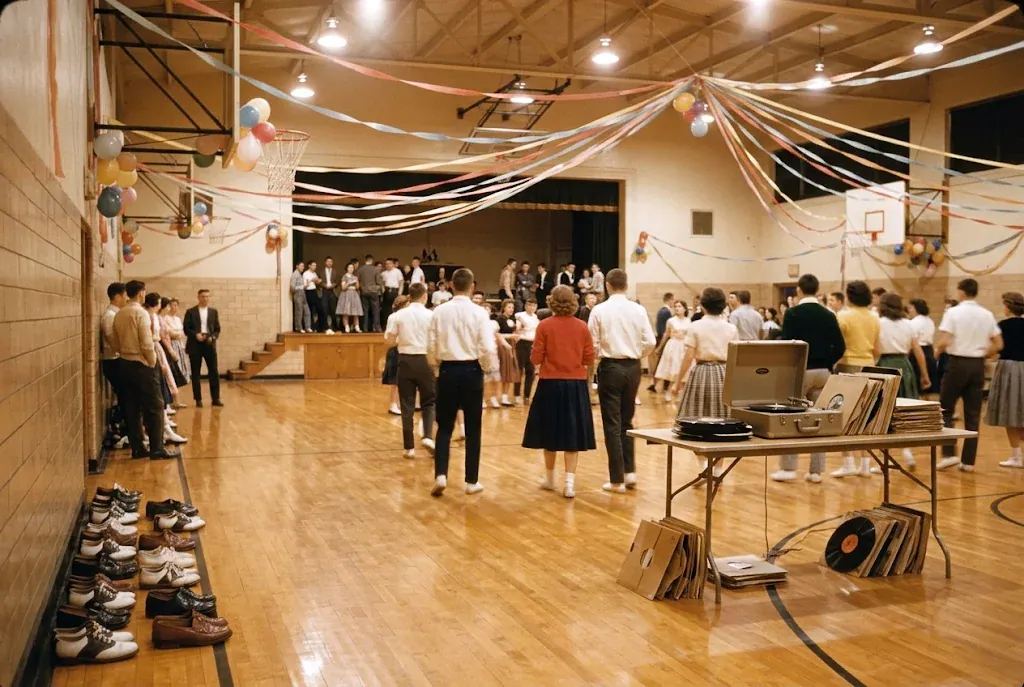
Most schools held their dances right in the gymnasium, often after a home basketball game. The coaches cared more about the varnished floor than about the music, so there was one strict rule about footwear before anyone stepped onto the boards.
What were school dances in the gym called, where everyone took their shoes off?
That rule gave the sock hop its name. Saddle shoes and penny loafers got lined up along the bleachers, and kids danced in their socks. A teacher or a student with a stack of 45s ran the record player, and since there was no live band to pay, a school could hold a dance almost any Friday night.
The music was the same 50s upbeat music you heard on the radio all week: fast rock 'n' roll for dancing as couples, and a slow one now and then so the boys could work up their nerve.
Read more: How to Put Together an Authentic '50s Style Outfit
The record that made rock 'n' roll No. 1
Before the summer of 1955, the top of the pop charts mostly belonged to crooners, vocal groups and orchestras. Then a band with a slapped bass and a honking saxophone broke through, and the charts never sounded the same.
In 1955, which song became the first rock 'n' roll record to hit No. 1?
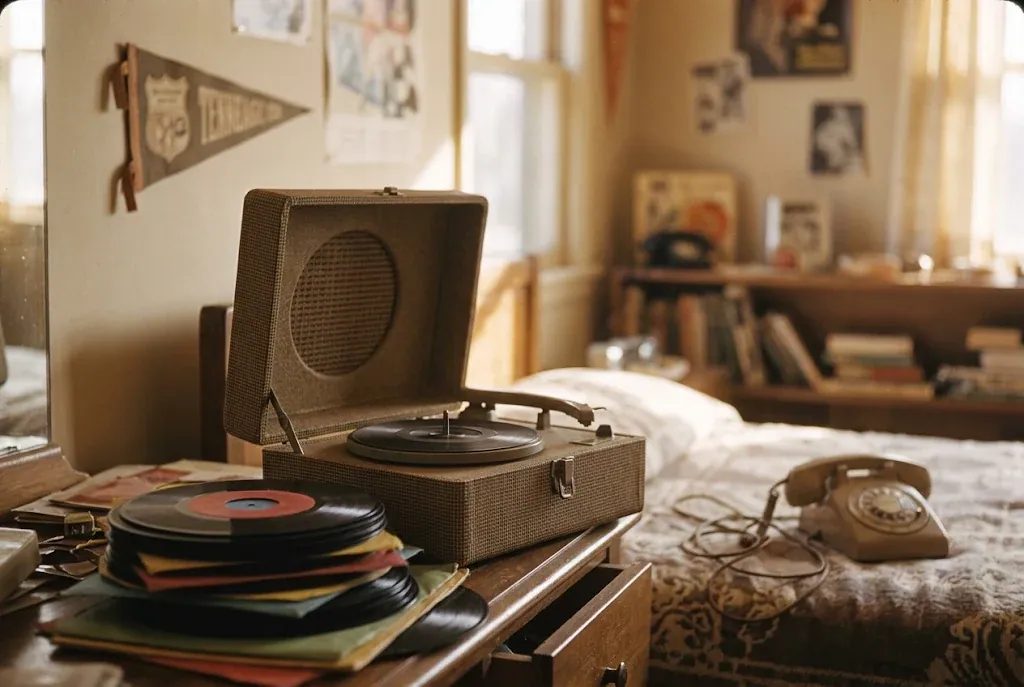
It was "(We're Gonna) Rock Around the Clock." Billboard calls it the first rock 'n' roll record to top its leading pop chart, then called Best Sellers in Stores. It hit No. 1 on the chart dated July 9, 1955, and held on for eight weeks. Haley was 30 years old and a native of Highland Park, Michigan, Billboard noted.
The song had been around for a while. Haley recorded it on April 12, 1954, at his first session for Decca, Songfacts reports. It finally took off after it played over the opening of "Blackboard Jungle," which premiered in March 1955, American Songwriter recalled. According to the same article, Decca had at first sold the record as a "novelty foxtrot."
Nobody at the sock hop did a foxtrot to it. Couples jitterbugged: the boy swung the girl out, pulled her back and spun her under his arm. These were the same swing steps older brothers and sisters had learned to big-band records a decade before, only faster.
"At the Hop" and the dance named for the dance
If any record was written for the gym floor, it was "At the Hop." Danny & the Juniors, a vocal group from Philadelphia, took it to No. 1 on Billboard's Best Sellers in Stores chart dated January 6, 1958. It stayed on top for seven weeks, longer than any other song that year, Songfacts says. For four of those weeks it kept Jerry Lee Lewis's "Great Balls of Fire" out of the top spot.
Critic Stephen Thomas Erlewine of AllMusic wrote that the song worked as "the soundtrack to many high school dances and sock hops." The lyrics name-check the dances kids were doing, so the record told you what to do while you did it.
Most couples jitterbugged or did the bop, a bouncy step done in place that suited a crowded floor. Two minutes and change of that piano and you were out of breath.
The Stroll: a dance even shy kids could do
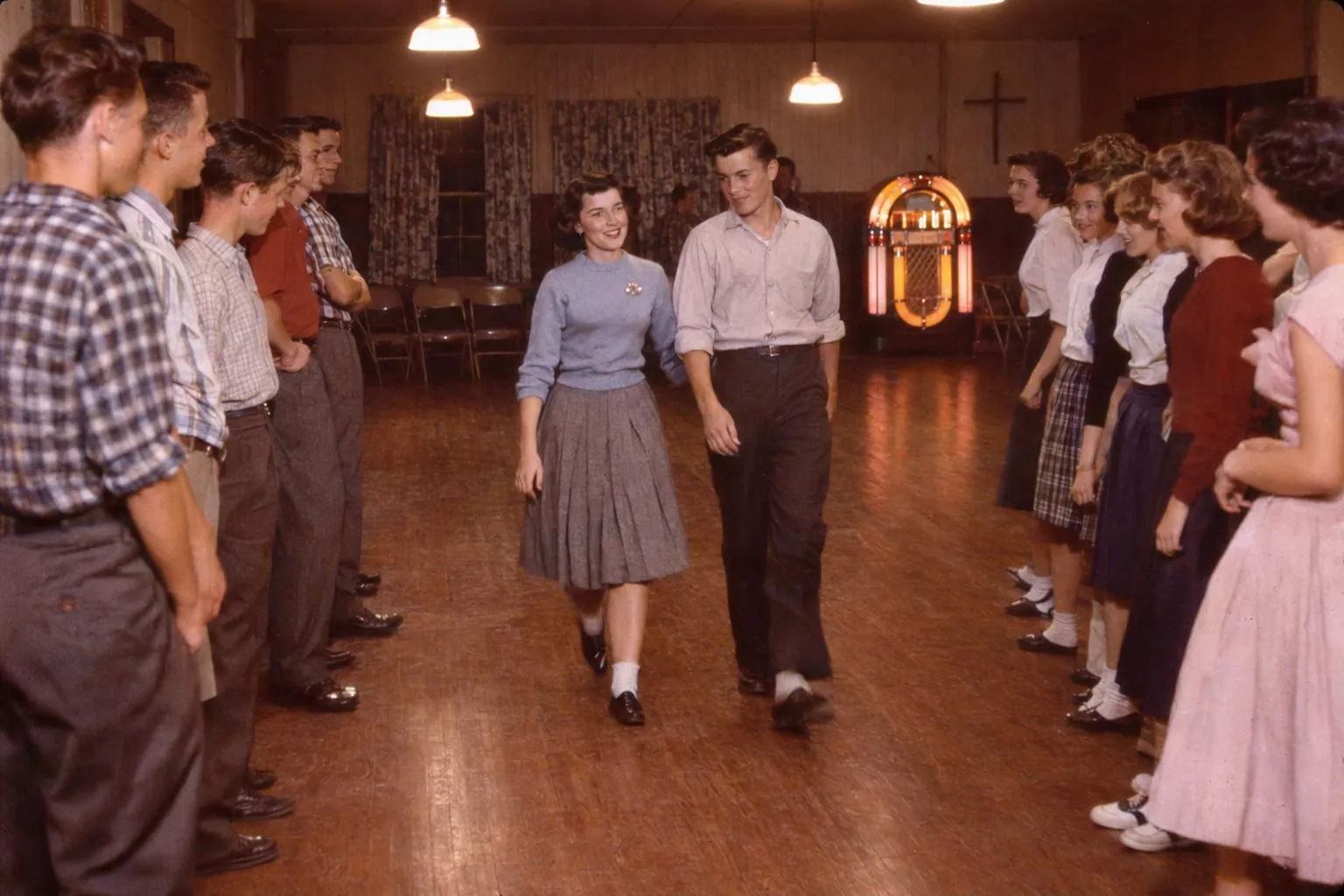
Not every boy could jitterbug, and the Stroll rescued plenty of them. Boys lined up on one side and girls on the other, facing each other. One couple at a time stepped into the aisle between the lines and strutted slowly down to the end, showing off a little on the way.
The Diamonds, a Canadian vocal group, recorded "The Stroll," written by Clyde Otis and Nancy Lee. Songfacts calls it "a mellow slide-step dance" and says the record was played constantly on ABC's "American Bandstand." Local TV dance shows picked it up too. One surviving clip shows teenagers doing the Stroll on an Idaho program in February 1958.
The dance didn't start on Bandstand. Historian Matthew F. Delmont, in his 2012 book "The Nicest Kids in Town," cites accounts that white Bandstand dancers watched "The Mitch Thomas Show," a Black teen dance program out of Wilmington, Delaware, to learn new dances, the Stroll among them. The pancocojams music blog reprints excerpts from the book.
What played on the diner jukebox
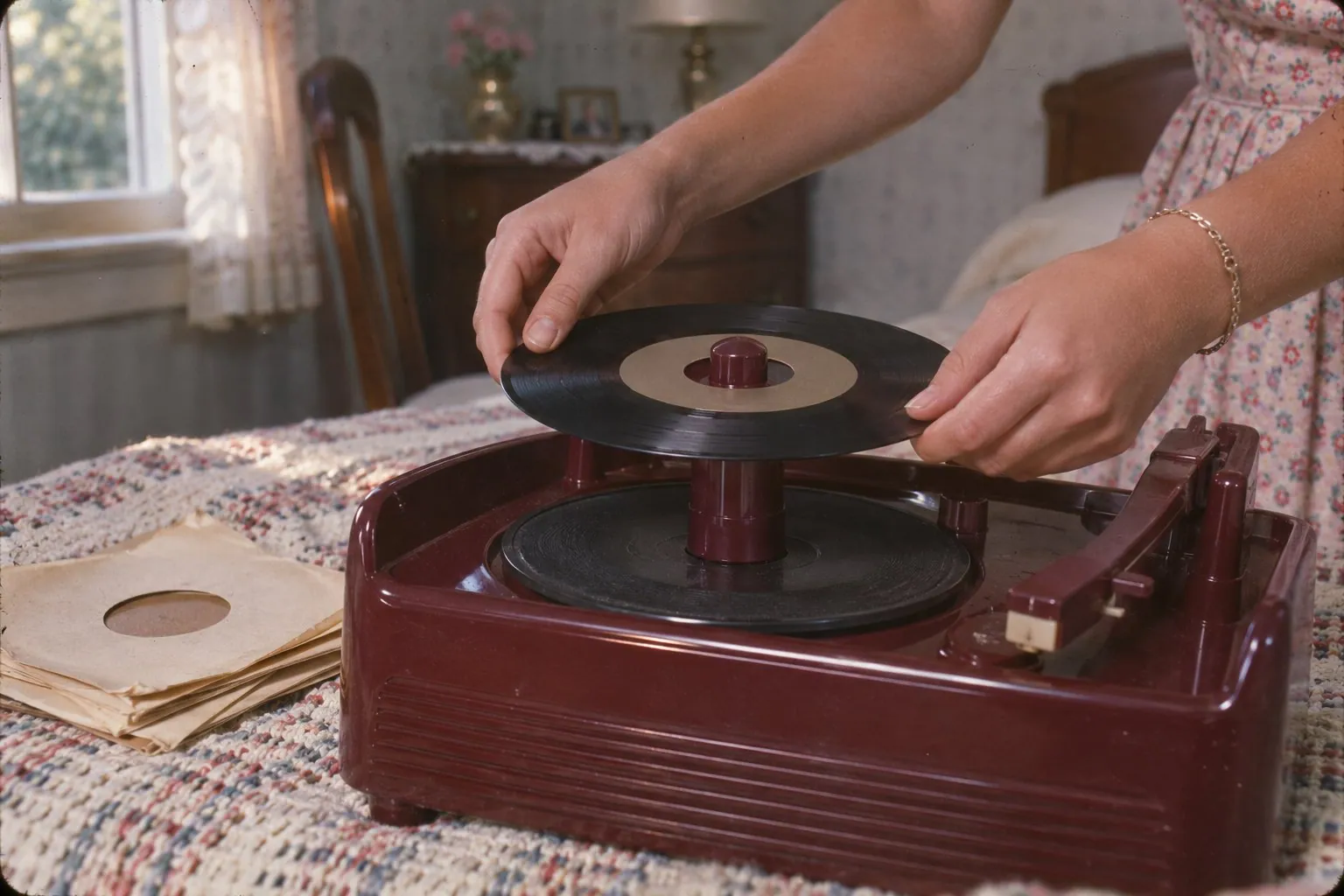
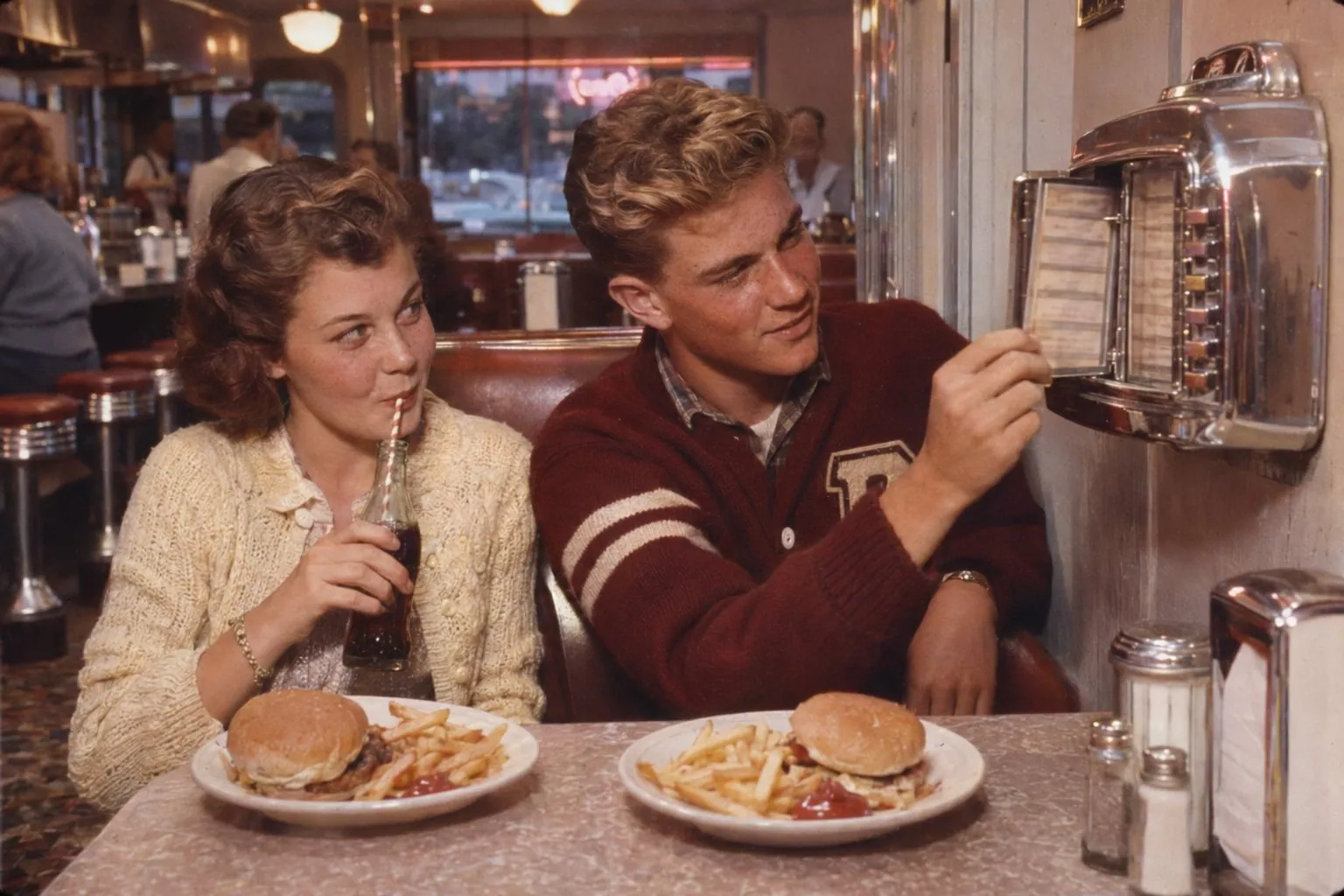
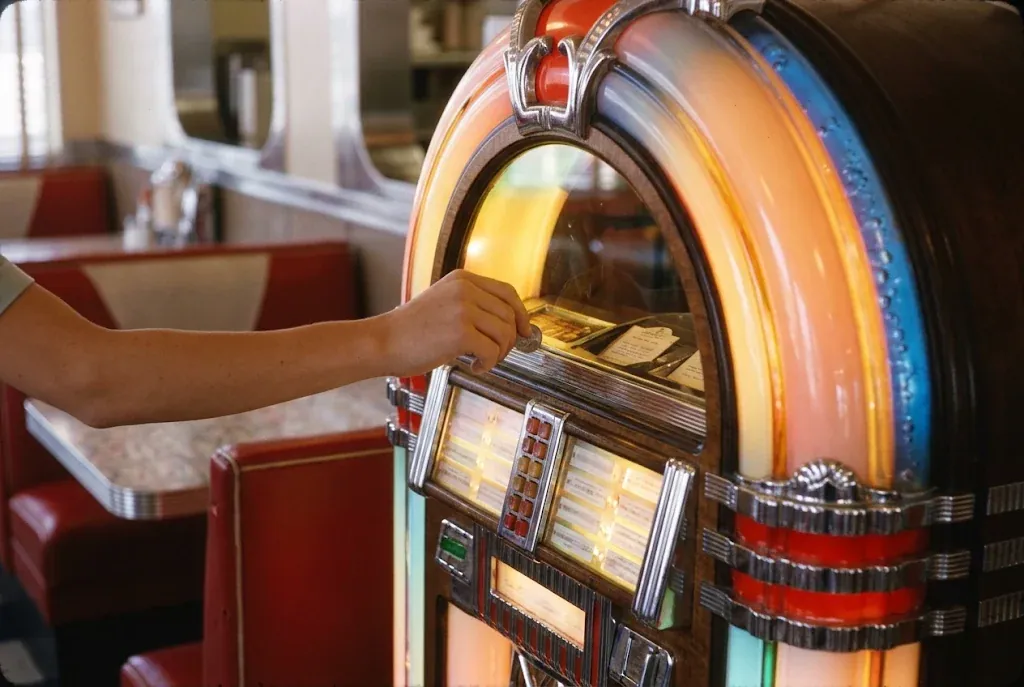
Out at the diner, the dance floor was the space between the counter and the booths, and the DJ was whoever had change in his pocket. Many diners had a big Wurlitzer, Seeburg or AMI machine glowing by the door. Some booths had a small chrome selector on the wall, so you could flip through the title cards without leaving your burger and Coke.
In the early 1950s, a nickel in the diner jukebox bought how many songs?
In the early 1950s a jukebox play cost a nickel, about 65 cents in today's money. Prices crept up as the decade went on and varied from one machine to the next. That nickel bought a single song, which explains why the kid who fed the machine felt entitled to pick it.
50s diner music was mostly the same 50s happy music as the sock hop: Haley, Elvis, Chuck Berry, Little Richard and the Coasters, with Fats Domino's rolling piano to fill in. Nobody pushed the tables back very often. But plenty of couples did a quick jitterbug in the aisle before the waitress waved them back to their seats.
When the sock hop rolled into the '60s
The dances kept coming after 1959. In 1960, Chubby Checker's record of a Hank Ballard song started a craze you could do alone, without a partner, and the dance floor changed for good.
Then came "The Loco-Motion." Little Eva, whose real name was Eva Boyd, was working as a nanny for songwriters Carole King and Gerry Goffin when she sang it. The record went to No. 1 on the Billboard Hot 100 chart dated August 25, 1962, and stayed one week, American Songwriter reports. Like the Stroll, it got the whole room into a line. This time everybody held the waist of the person in front and chugged around the gym like a train, and the song itself called out the steps.
| Song | Year it hit | The dance most kids did |
|---|---|---|
| "Rock Around the Clock" | 1955 | Jitterbug |
| "At the Hop" | 1958 | Bop and jitterbug |
| "The Stroll" | 1958 | The Stroll (line dance) |
| "The Loco-Motion" | 1962 | Train-style line dance |
Frequently asked questions
What were the biggest 1950s dance hits?
Two of the biggest were "Rock Around the Clock," No. 1 on Billboard's Best Sellers in Stores chart for eight weeks starting July 9, 1955, and "At the Hop," which spent seven weeks at No. 1 in early 1958. "The Stroll," "Jailhouse Rock" and "Johnny B. Goode" filled dance floors too.
What 1950s dance music did they play at a sock hop?
Mostly fast rock 'n' roll on 45s for jitterbugging and the bop, plus a few slow ballads. Line-dance records like "The Stroll" let the whole room join in at once.
What was 50s diner music like?
It was whatever was on the jukebox, usually the same rock 'n' roll and rhythm and blues hits teenagers heard on the radio. Early in the decade a single play cost a nickel, about 65 cents in today's money.
What are good 50s party songs and 50s upbeat songs to play today?
"Rock Around the Clock," "At the Hop," "The Stroll," "Great Balls of Fire" and "Johnny B. Goode" still work at any party. If the crowd wants to keep going past 1959, add "The Loco-Motion" and get everybody into a line.
Sources
- Chart Rewind: In 1955, Bill Haley Ushered In the Rock Era, Billboard, 2015
- On This Day in 1962, a Babysitter Became a One-Hit Wonder When "The Loco-Motion" Hit No. 1, American Songwriter, 2025
- 71 Years Ago, the Controversial Movie That Launched the First-Ever Rock and Roll No. 1 Premiered in the United States, American Songwriter, 2026
- At the Hop: Song Review by Stephen Thomas Erlewine, AllMusic
- At The Hop by Danny & the Juniors, Songfacts
- The Stroll by The Diamonds, Songfacts
Related Stories
Love a trip down memory lane?
Get a fun quiz every morning. Free · One email a day · Unsubscribe anytime