Studebaker V8: The 232, 259, 289 and the R1 to R5
Before Chevy had a small-block, South Bend built its own V8. Here is how it grew, got a supercharger and set speed records on the salt.
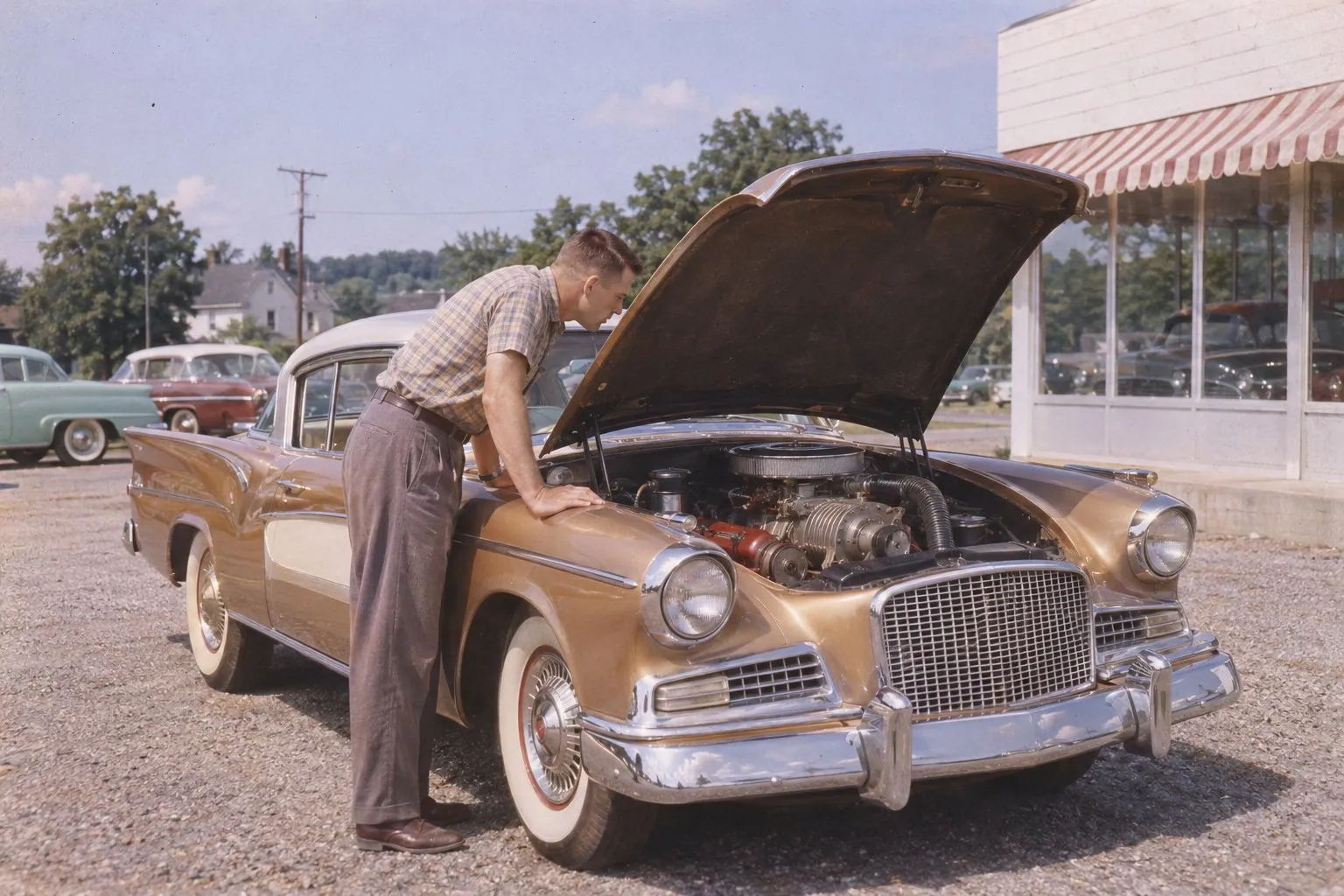
Studebaker built one family of V8 engines from 1951 to 1964, starting at 232 cubic inches and growing to 259 and then 289. The R1 to R5 were high-performance versions of that same V8 from the early '60s: the R1 had a hot four-barrel, the R2 and R3 had Paxton superchargers, the R4 was a bigger engine without a blower, and the R5 was an experimental record-breaker.
If you grew up near a Studebaker dealer, you may remember the hood badges and the big "V" on the trunk. You might also remember the low whine of a supercharged Hawk pulling away from a light. This is the plain story of the Studebaker V8, the engine behind both.
It was a tough, heavy engine built by a small company that had to fight Ford and GM with far less money. It still left a mark, from a dirt track in South Carolina to the Bonneville Salt Flats in Utah.
How the Studebaker V8 got started in 1951
Studebaker brought out its overhead-valve V8 for 1951, only two years after the 1949 Cadillac and Oldsmobile V8s, Curbside Classic notes. According to the Red River Valley Chapter of the Studebaker Drivers Club, Studebaker's own engineers designed it under Stanwood W. Sparrow. It went into the Commander in place of the old L-head six.
That first engine measured 232.6 cubic inches and made 120 hp at 4,000 rpm, the same club history says. It had solid lifters, mild 7.0-to-1 compression and a stout crankshaft running in five main bearings. HowStuffWorks calls it "really the first of the small-block engines," even though Chevy and Ford usually get the credit.
Studebaker's styling in those years was as unusual as the engine. One model from just before the V8 arrived still turns heads at car shows.
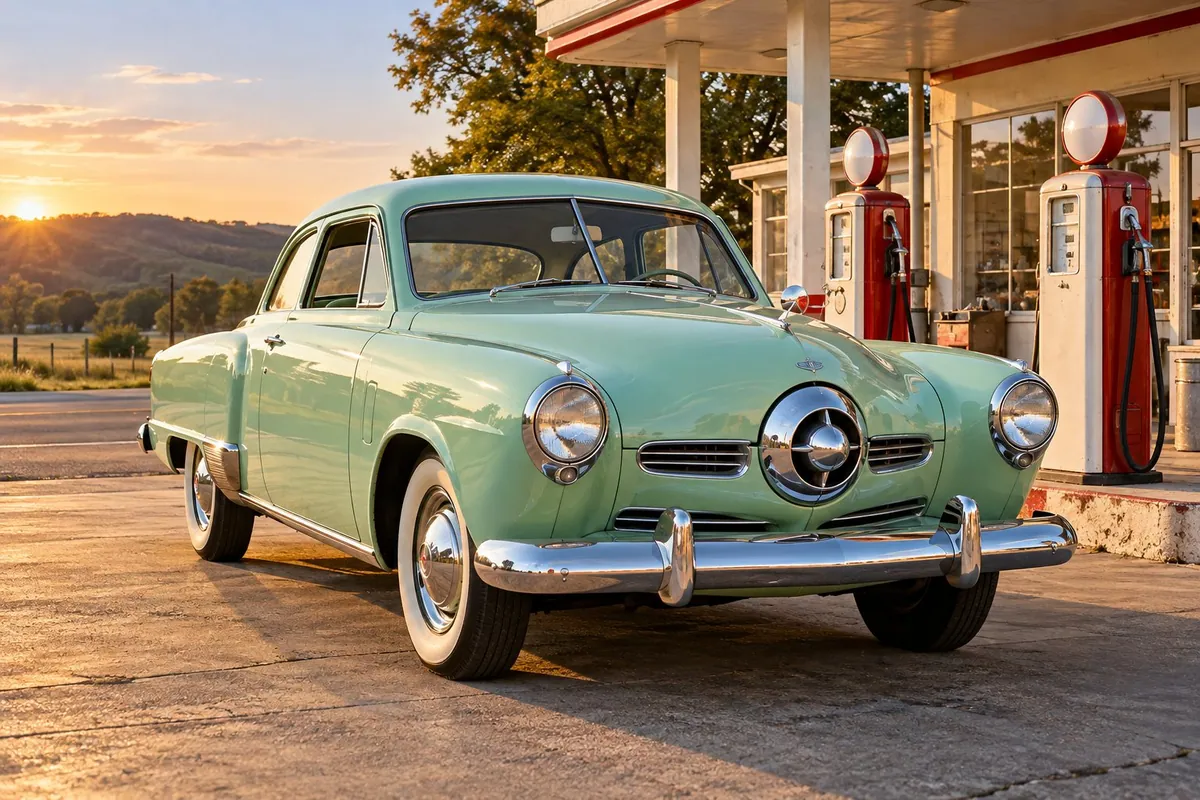
Its "bullet nose" made it look like an airplane. Which 1950 car is this?
Read more: Studebaker Truck Guide: Coupe Express to Champ and Transtar
From 224 to 259 to 289
For 1954, compression went up to 7.5-to-1 and output rose to 127 hp, and the 232 also went into Studebaker trucks, the Red River Valley chapter history says. Then, in 1955, the engine was bored out to 259.2 cubic inches. That same year Studebaker also offered a small 224.3-cubic-inch economy version, Mac's Motor City Garage reports.
In 1956 the 289 arrived, according to Mac's Motor City Garage. Through the late '50s, the 259 and the 289 were the two Studebaker V8s you would find under the hood of a President, a Commander, a Hawk or a pickup. In the early '60s, the same two engines went into the Lark.
People who owned them tend to remember the same things. The engine was heavy, it was built like a truck motor and it was very hard to wear out. The ClassicCars.com Journal points out that its main bearings had more surface area than the Chrysler Hemi's. Curbside Classic is less kind, arguing that the extra weight and the design's focus on economy kept the engine from reaching its full potential.
The supercharged Golden Hawk
The 1956 Golden Hawk used a big Packard 352 V8. For 1957, Studebaker switched to its own 289, which was rated at only 225 hp. To close the gap, the company made a McCulloch VS57 centrifugal supercharger standard equipment, Mac's Motor City Garage reports. The '57 Golden Hawk was rated at 275 hp, the same as the '56.
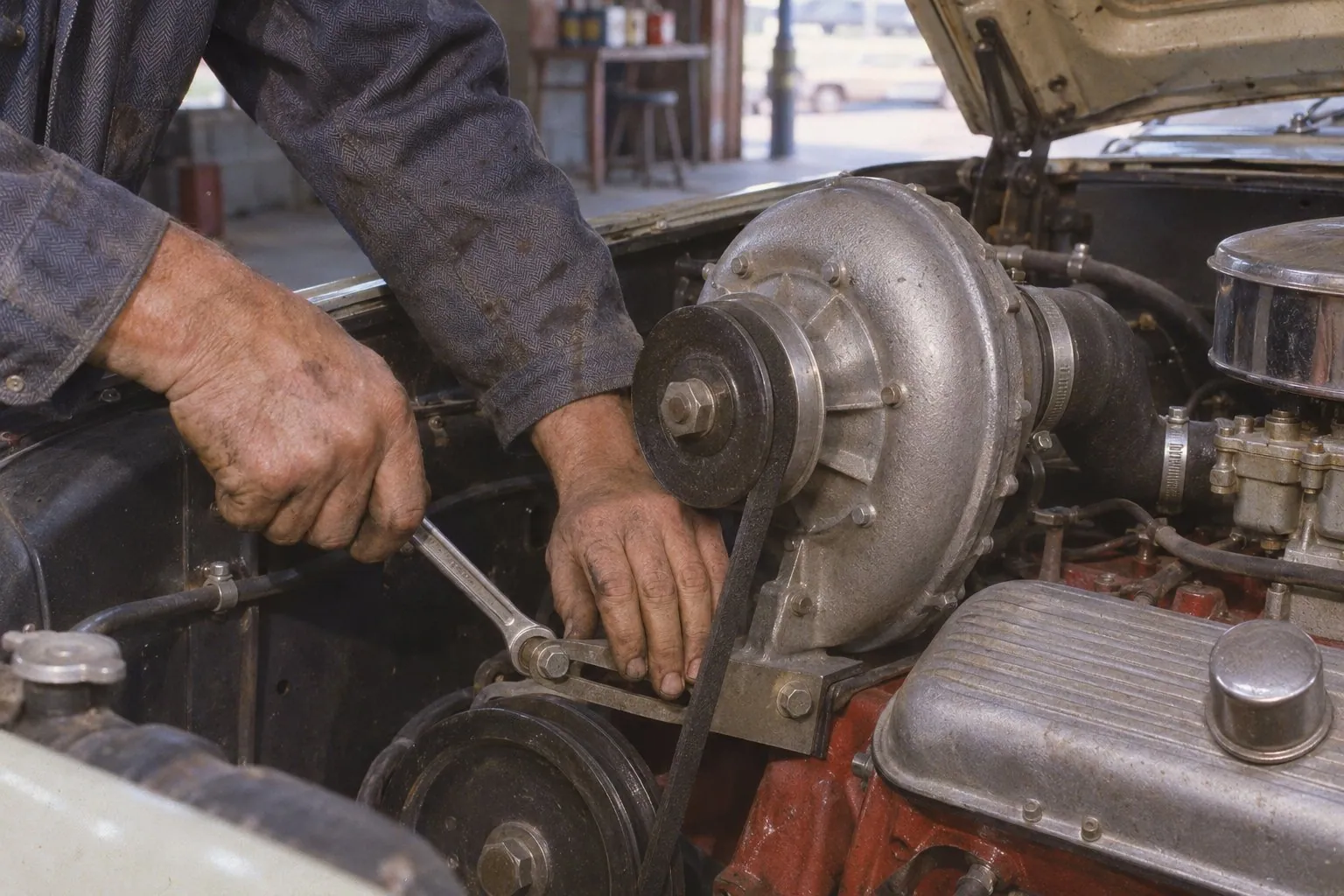
The supercharger was belt-driven, which is why that car had its own sound. Studebaker kept the blower on the Golden Hawk for 1958, and both the model and the supercharged V8 were dropped for 1959, Mac's Motor City Garage adds. HotCars puts 1957 production at 4,356 Golden Hawks, the model's best year.
You will hear the blower called both a McCulloch and a Paxton. That is because McCulloch set up a separate Paxton supercharger division in the '50s. Race promoter Andy Granatelli later bought Paxton, and by the time of the R2 it was a Studebaker division, Mac's Motor City Garage says.
The R1, R2, R3, R4 and R5 in plain words
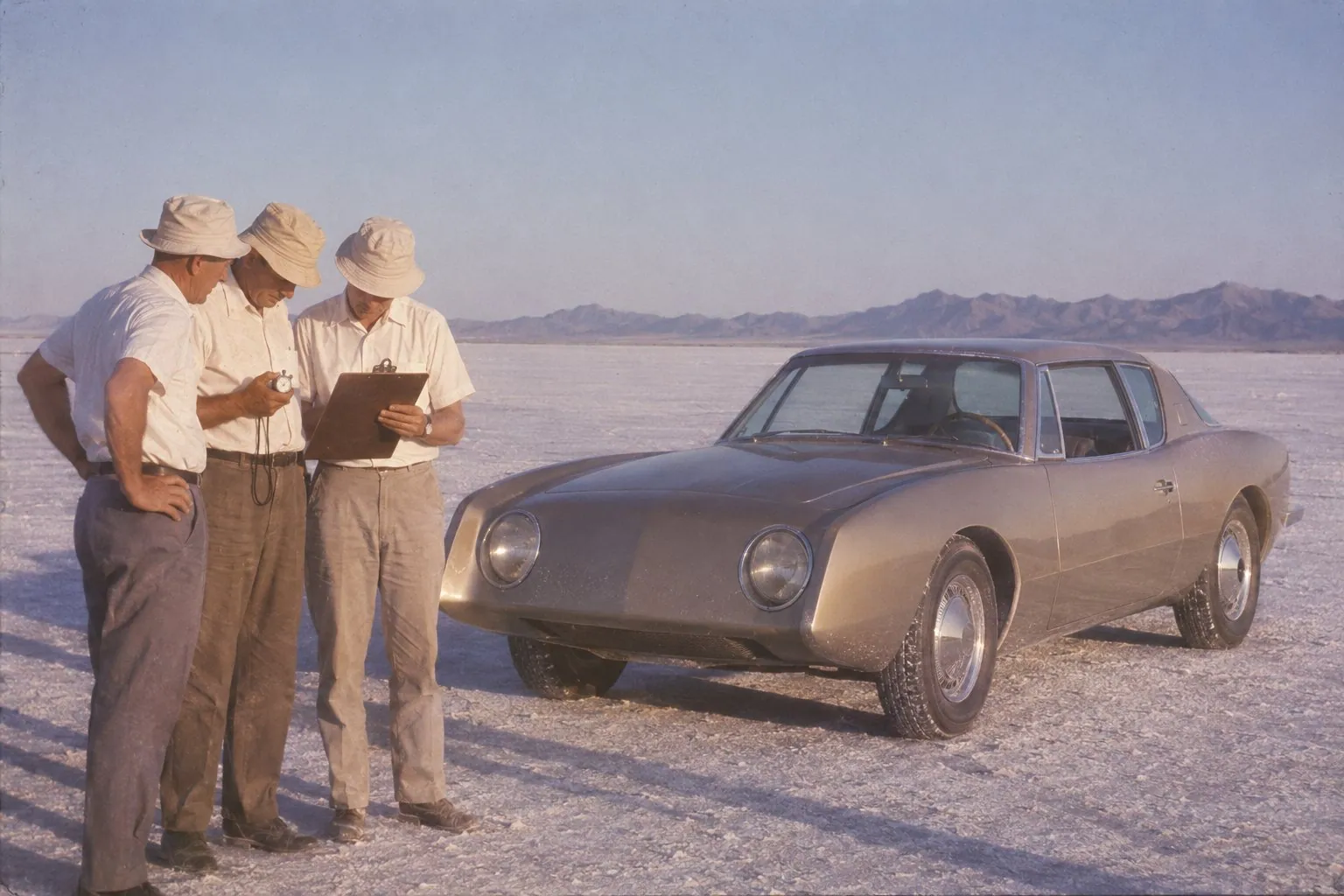
The R-series engines came along with the Avanti, the fiberglass coupe Studebaker unveiled at the 1962 New York Auto Show, SlashGear reports. They were soon offered in the Lark and the Gran Turismo Hawk too. Power ratings differ from one source to the next, so the table below names a source for each figure. It describes the engines and does not rank them.
| Engine | Size | What made it different | Rated power (source) |
|---|---|---|---|
| R1 | 289 | Four-barrel carb, 10.25:1 compression, hotter cam | 240 hp (Over-Drive Magazine) |
| R2 | 289 | Paxton SN-60 supercharger | 289 hp (ClassicCars.com Journal) |
| R3 | 304.5 | Supercharged, bigger valves, special heads | 305 hp (Over-Drive) or 335 hp (SlashGear) |
| R4 | 304.5 | High-performance engine without a supercharger | 280 hp (Over-Drive Magazine) |
| R5 | Experimental | Built for record runs | Not a production engine |
Studebaker R2
The R2 is the one you were most likely to see. Per the ClassicCars.com Journal, it made 289 hp at 4,500 rpm, one horsepower per cubic inch. SlashGear says the supercharger cost $210 on the Avanti, about $2,160 in today's money.
Studebaker R3
For the R3, Granatelli bored the 289 out to 304.5 cubic inches, TheAvanti.com explains. It also says only nine R3 Avantis were built. Vince Granatelli, Andy's son, says the engines made 400 gross horsepower on the dyno. TheAvanti.com treats that number with caution, suggesting that about 300 hp is more realistic.
Even with these engines, Studebaker had little time left. Mac's Motor City Garage notes that the company's V8 died with its South Bend plant in 1964. The last Studebakers, built in Canada for 1965 and 1966, used Chevrolet engines.
Salt flats and stock car tracks
Long before the R-series, Studebaker had a short run in NASCAR. The NASCAR Hall of Fame lists three premier series wins for the brand, all in 1951, the year the V8 arrived. Frank Mundy won two of them: one at Columbia Speedway in South Carolina on June 16, 1951, and the season finale at Lakeview Speedway in Mobile, Alabama, on November 25, 1951, according to the Hall's list of lost automakers. Danny Weinberg won the third, in October 1951 at Marchbanks Speedway in Hanford, California. The same page says Harold Smith finished 31st in a Studebaker in the first Daytona 500 in 1959.
The R-series made its real name at Bonneville. In late 1962, Andy Granatelli drove a supercharged R3 Avanti to 29 speed records on the Bonneville Salt Flats, The Truth About Cars reported in his 2013 obituary. On a later trip, the same kind of car went past 170 mph, MSN reported.
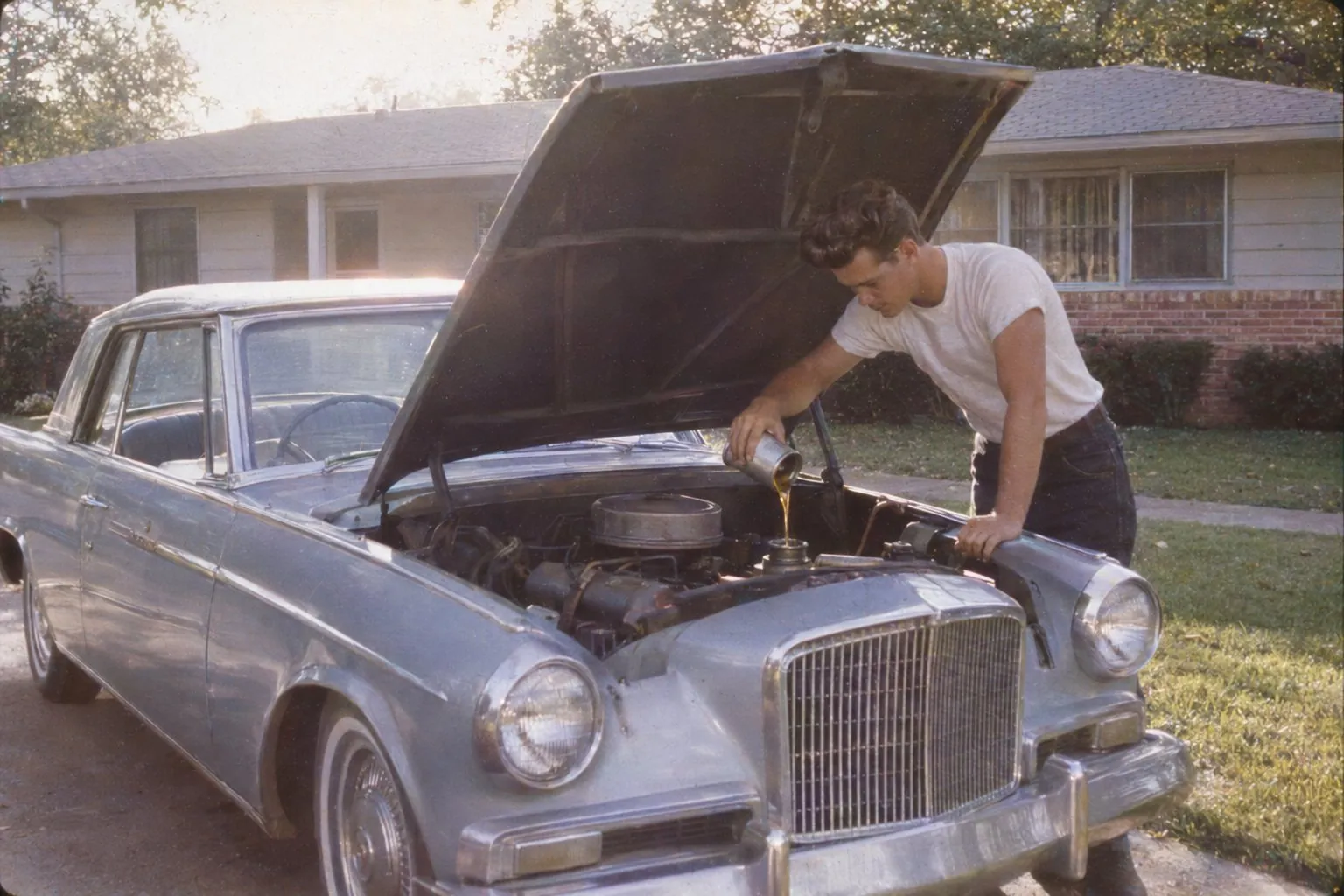
The record car from the 1963 runs is a gold Avanti numbered 9. It is on display at the California Automobile Museum in Sacramento, according to Bob's Studebaker Resource Website. The same site says a special Avanti called the Due Cento ran the R5 engine and aimed for 200 mph. It reached 198 mph on wet salt but could not get enough traction to go faster.
Granatelli's success with the Avanti also led Studebaker to put him in charge of its oil additive company, STP, The Truth About Cars notes. If you ever squeezed a can of STP into your crankcase, you have a small connection to those Bonneville runs.
Frequently asked questions
What size engines did Studebaker V8s come in?
The V8 started at 232.6 cubic inches in 1951. In 1955 it grew to 259.2, with a small 224.3 economy version that year, and in 1956 it reached 289. The R3 and R4 engines of the early '60s were 304.5 cubic inches.
Is the Studebaker 289 the same as the Ford 289?
No. The Studebaker 289 V8 came out in 1956 and was designed in South Bend. Ford's 289 was a different and lighter engine from the '60s. The two simply have the same displacement.
What is a Studebaker R2 engine?
It is a supercharged Studebaker 289 with a Paxton blower and a four-barrel carburetor, rated at 289 hp according to the ClassicCars.com Journal. It was offered in the Avanti, Lark and Gran Turismo Hawk in 1963 and 1964.
How rare is a Studebaker R3?
Very rare. TheAvanti.com counts only nine R3 Avantis built. Power ratings for the R3 range from 305 to 335 hp depending on the source.
Did Studebaker ever win in NASCAR?
Yes, three times, all in 1951, according to the NASCAR Hall of Fame. Frank Mundy won two of those races and Danny Weinberg won the third.
Sources
- Long Gone NASCAR Automakers, NASCAR Hall of Fame
- V8 Engines, Red River Valley Chapter, Studebaker Drivers Club
- The Studebaker V8 Engine – Why It Punched Below Its Weight, Curbside Classic, 2026
- Secrets of the 1951-64 Studebaker V8, Mac's Motor City Garage
- Studebaker Avanti R3 Engines, TheAvanti.com
- Andy Granatelli, R.I.P. – A Supercharged Life, The Truth About Cars, 2013
Related Stories
Love a trip down memory lane?
Get a fun quiz every morning. Free · One email a day · Unsubscribe anytime