Studebaker Truck Guide: Coupe Express to Champ and Transtar
The Coupe Express, the M5, the 2R, the Transtar and the Champ: here's how to tell every Studebaker pickup from the 1930s to the '60s by its face.
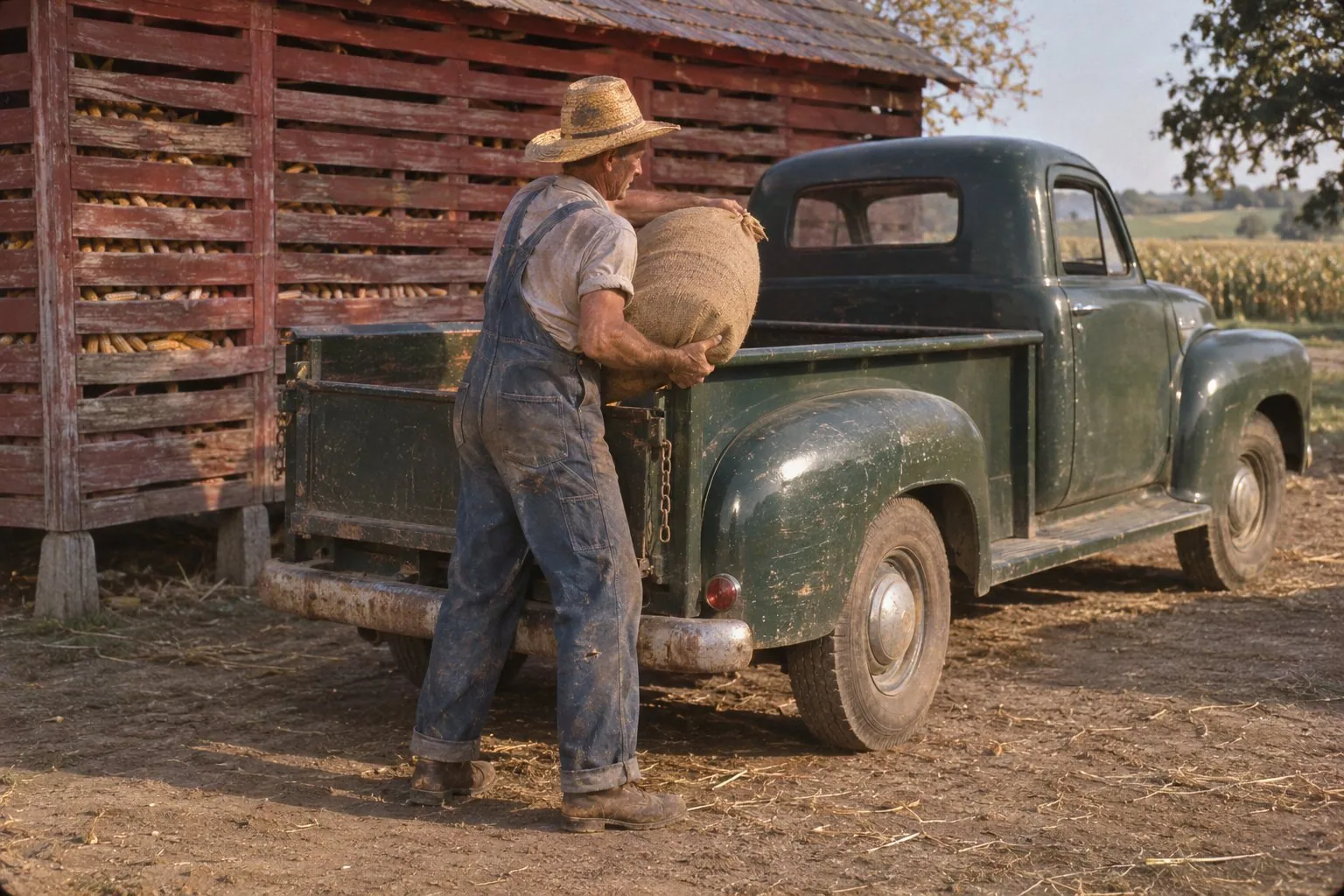
Studebaker's pickups came in five families: the car-based Coupe Express (1937–1939), the M-series (1941–1948), the 2R and 3R (1949–1954), the E-series that took the Transtar name (1955–1959) and the Champ (1960–1964). The Studebaker truck you remember tells its year by its face: a car nose is a Coupe Express, separate fenders and running boards mean an M-series, smooth slab sides mean a 2R or later, and a front end straight off a Lark means a Champ.
You probably remember one parked by a corn crib or a feed store. It was rounder than a Ford and quieter than a Chevy, with the South Bend name on the hood. On a lot of farms, one Studebaker hauled hogs, seed corn and Sunday groceries for 15 or 20 years.
Here's how to tell them apart, year by year.
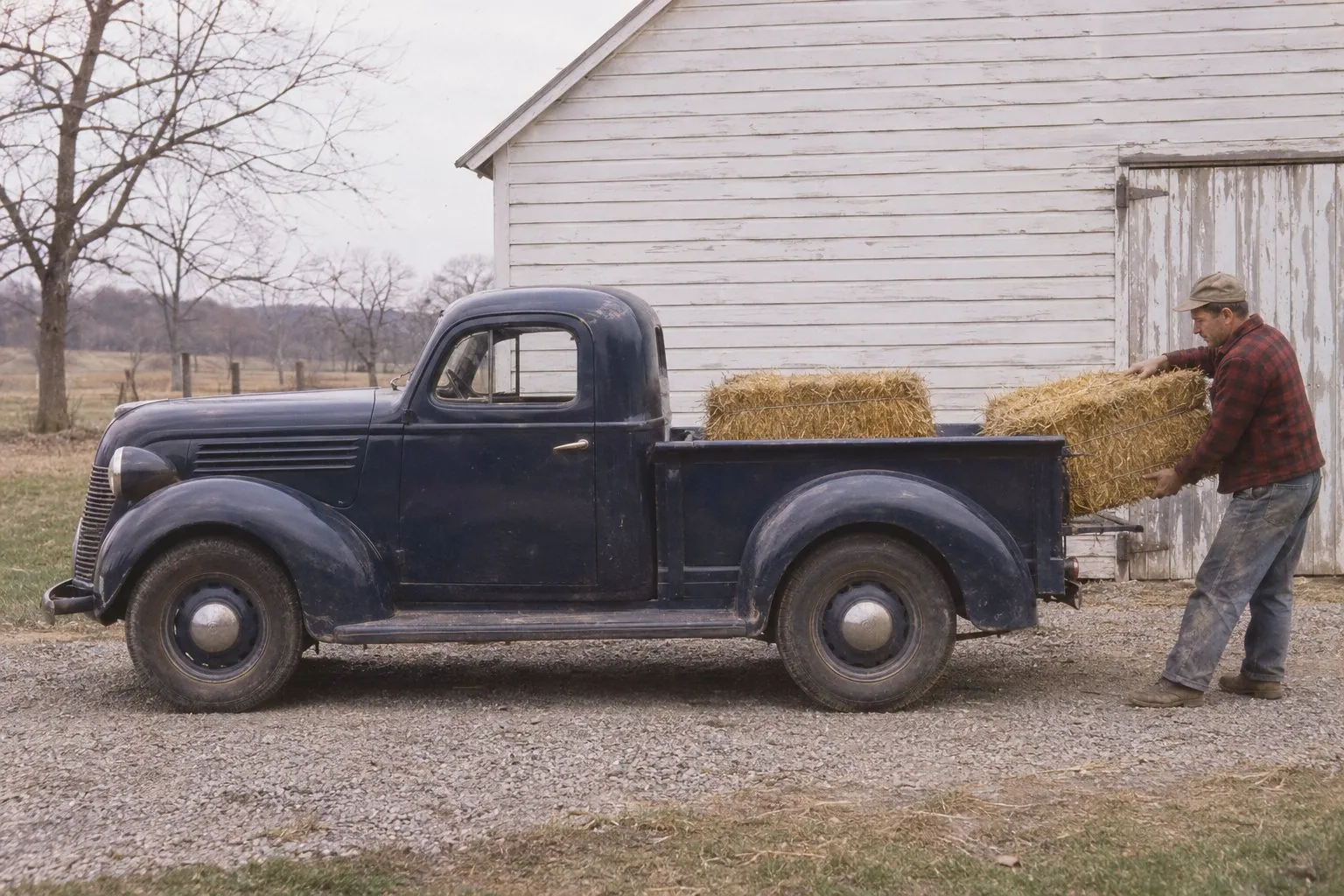
Before the war: Coupe Express and the M-series
Studebaker was building commercial vehicles long before most of us were born. Its first electric delivery wagons went together in 1902, and the gasoline models followed in 1912, automotive historian Robert Tate wrote for MotorCities National Heritage Area.
The one people remember from the '30s is the Coupe Express. Tate points to the 1937 Model J5 half-ton as one of Studebaker's most popular trucks. Up front it was a passenger car, with a pickup box behind the cab.
If you're hunting for a 1940 Studebaker truck, you won't find a Coupe Express. Studebaker dropped it after 1939 and had no light pickup to replace it for 1940. The M-series pickups came in for 1941, with separate fenders, running boards and a tall, rounded nose.
During the war, South Bend's truck lines built big six-wheel-drive army trucks, and civilian M-series production waited until after the war. In 1946 a new M15A one-ton pickup replaced the M15, and Tate notes the M-series sold very well after the war. A 1948 Studebaker truck from early that year is usually one of these older M-series models.
Read more: Studebaker: From Covered Wagons to the Last Car Built
The 2R Studebaker truck that changed the look
The truck most farm families remember came out in 1948. The Studebaker Drivers Club's production-records history says the 2R series went on sale in early 1948 as a 1949 model and stayed in production right through December 1953.
That's why you'll meet owners who swear theirs is a 1948. The club's forum has heard that argument for years. Several state registries titled early 2Rs as 1948s because they still went by the old rule that new models arrived in September. Studebaker made January 1, 1950, the official changeover from 1949 to 1950 trucks, according to the Drivers Club history.
The 2R had no running boards. Hagerty's price guide credits designer Bob Bourke with the styling and says the 2R had the industry's first double-wall cargo box. The inner wall kept a load of fence posts from denting the outside of the bed.
Under the hood of the half-ton 2R5 was the same 170-cubic-inch flathead six used in the Champion car, Hagerty says. It was the least powerful pickup engine of 1949, but it was thrifty in the half-ton.
Telling a 1949, 1950 and 1953 apart
Mostly you can't, at least not by looking. A 1949 Studebaker truck, a 1950 Studebaker truck and a 1953 Studebaker truck wear essentially the same body. The title and the serial plate settle it. Studebaker's car designers took bigger chances in those same years, and one of their 1950 models looked as if it belonged on an airport runway.
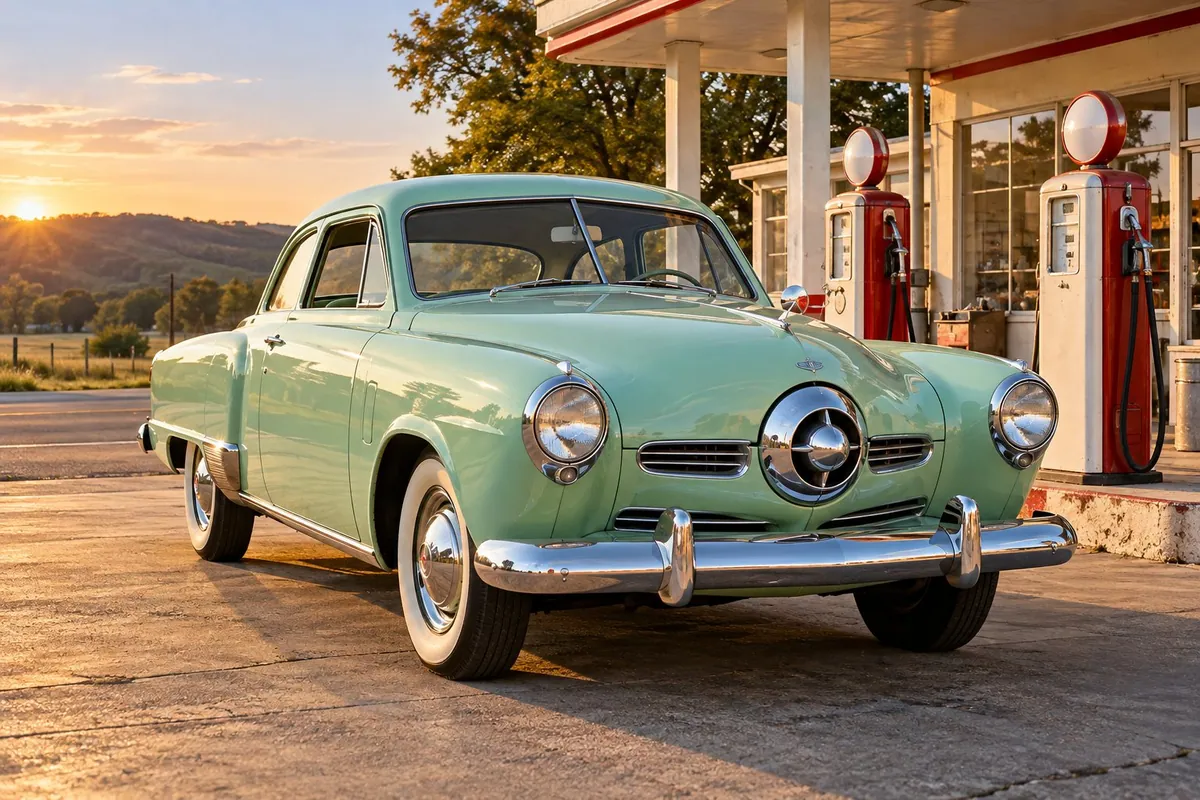
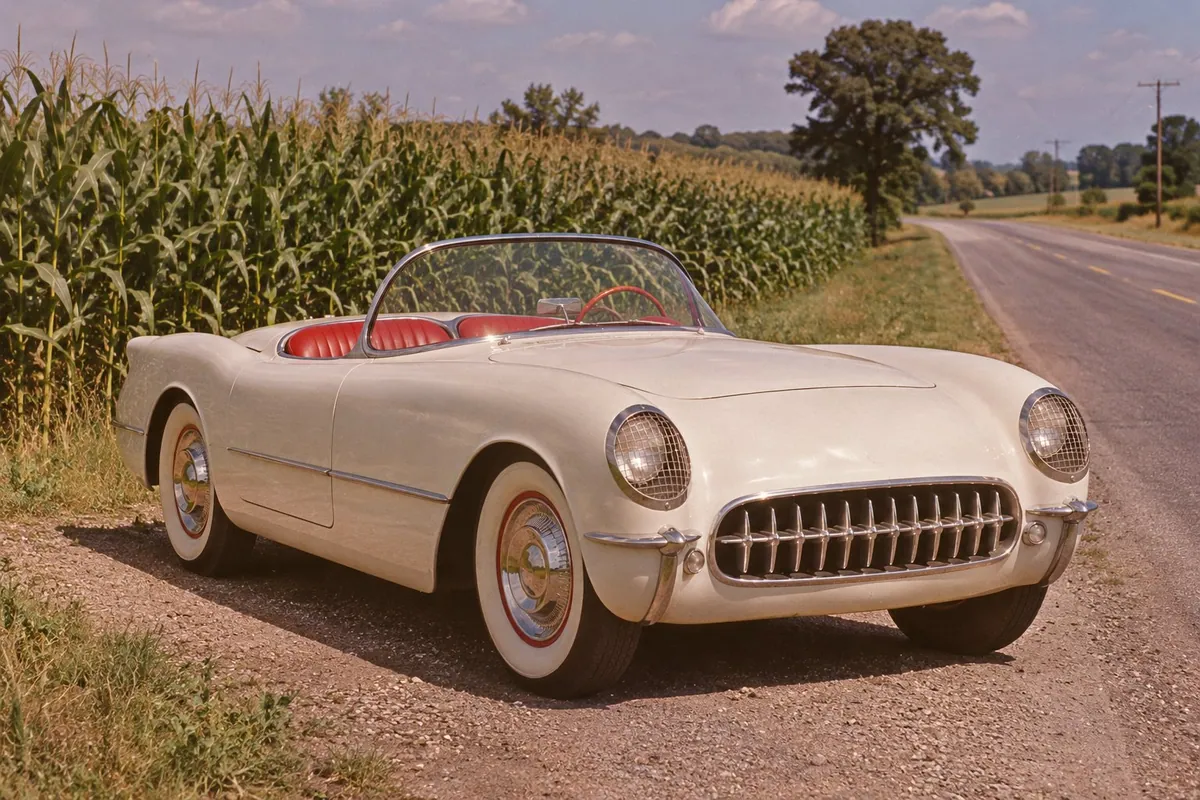
Its "bullet nose" made it look like an airplane. Which 1950 car is this?
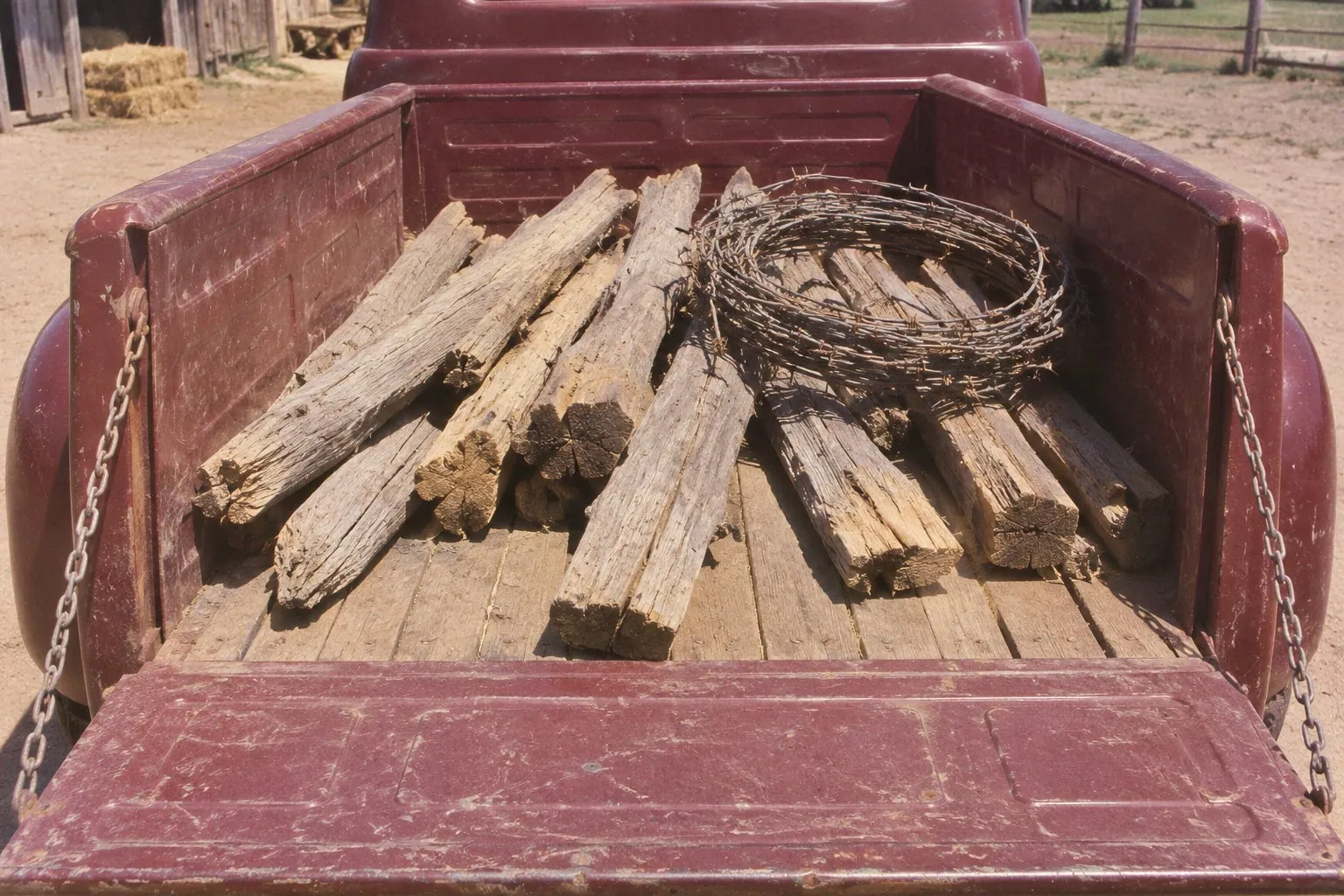
Out in the field with a Studebaker pickup
You probably remember the ride. The steering was heavy and the bench seat was hard. The six-cylinder hummed along, and the gearshift came up through the floor. The cab smelled of oil, wet burlap and whatever the dog had rolled in.
A lot of Studebaker pickups went to work during harvest. They idled along at a walking pace beside the wagon while somebody threw bales up into the bed. Plenty of trucks from those years had a row of pull knobs on the dash, and farm kids learned early which one to pull and when.
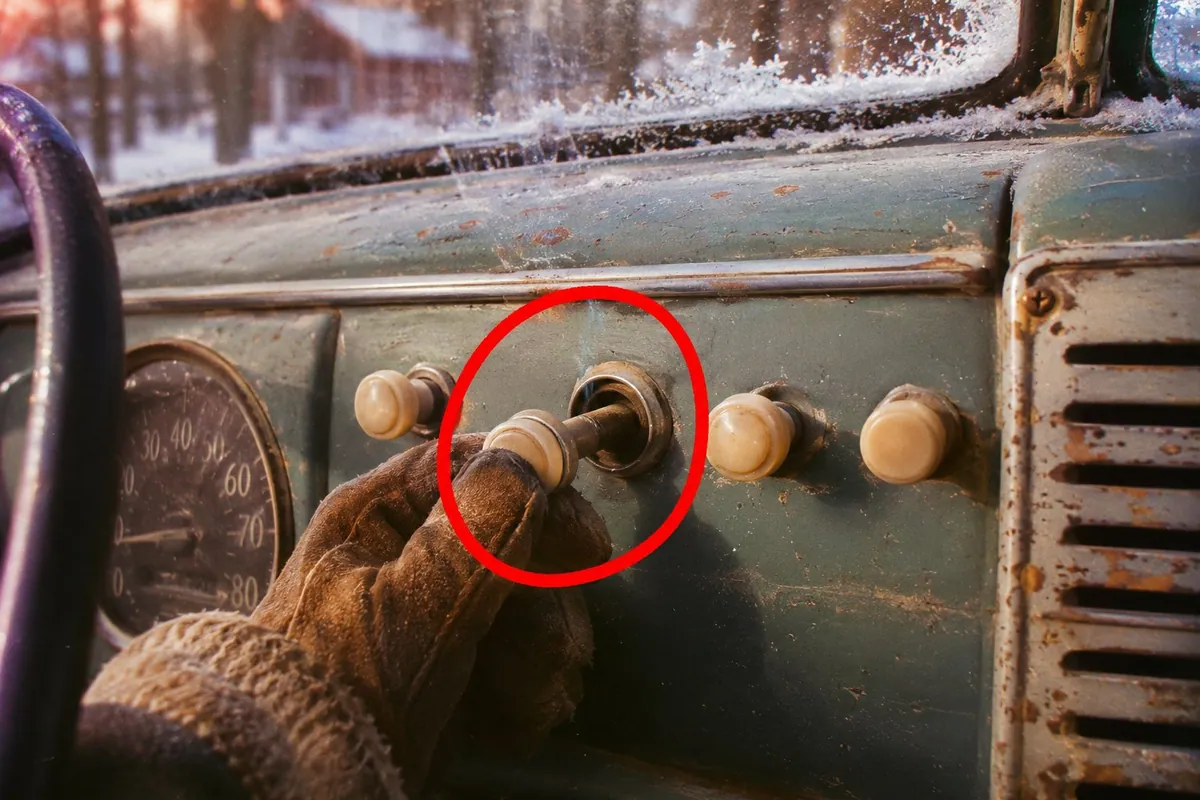
What did the "Throttle" knob on the dashboard of many older cars and trucks do?
Transtar years: the E-series and the Scotsman
The 1954 3R carried on the 2R shape with a new grille and a one-piece windshield. A year later the 1955 Studebaker truck became the E-series. The E5 was the half-ton, and look for "E" in the model code on the serial plate. The E-series also came in bigger sizes, all the way up to two-ton trucks.
The Transtar name showed up in the middle of the decade. Sources disagree on the exact year. Some date the first Transtar pickups to 1956, and Autoevolution says Transtar became the official name in 1957. The easiest one to spot is the 1957 3E with its massive full-width Fiberglas grille, Hagerty notes.
In 1958 Studebaker also sold the bare-bones Scotsman, which Autoevolution calls America's lowest-price truck that year. Hagerty describes it as basically a stripped-down 2R5, which makes it a contender for the first retro-styled truck. If you see an old-style 2R face with almost no chrome, think 1958.
The Champ: a Lark up front, a truck out back
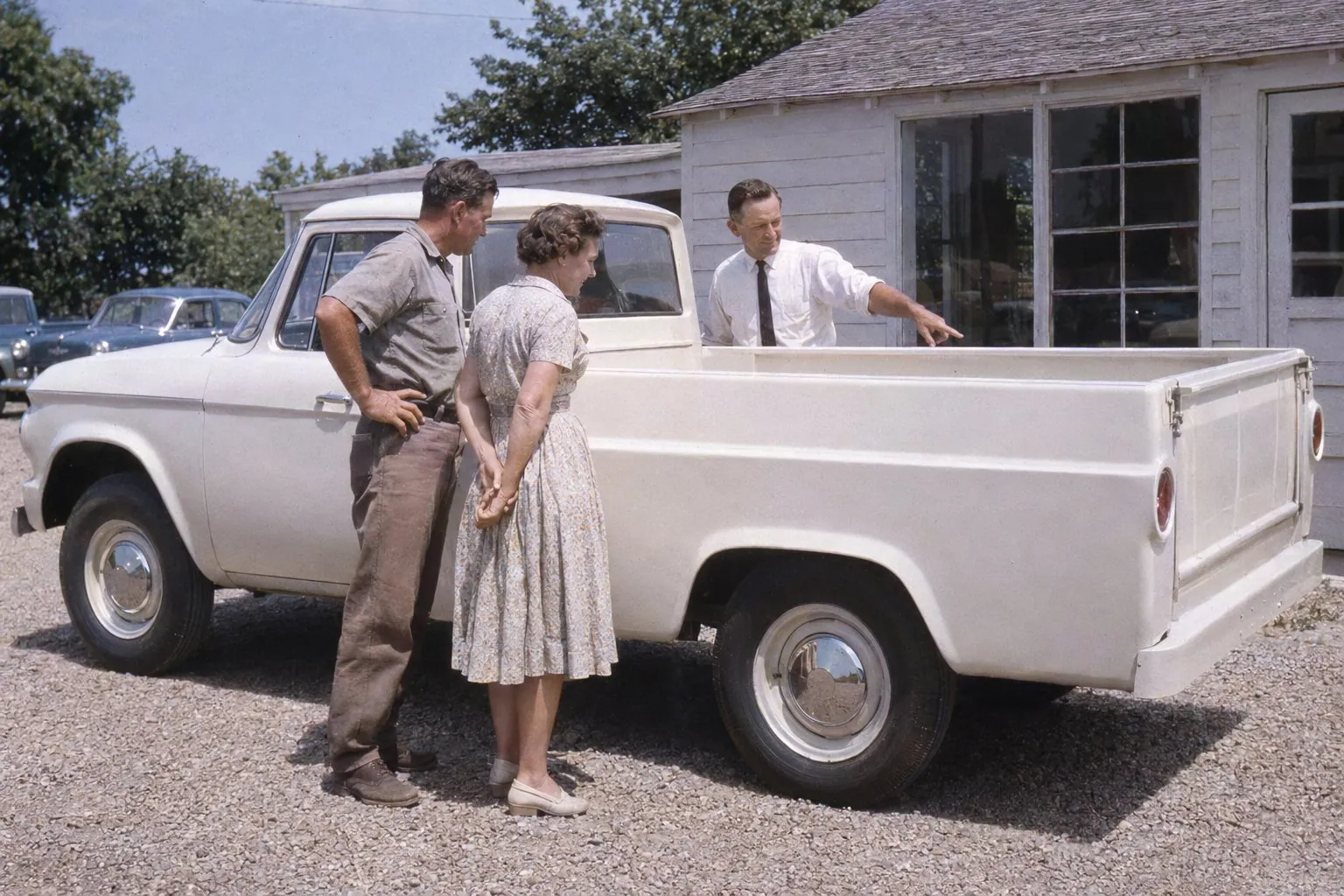
By 1960 Studebaker couldn't afford an all-new truck. Autoevolution says the company set aside a budget of about $900,000 for the Champ. That was small for a new truck, so the Champ rode on the old E-series frame. ClassicCars.com Journal explains the trick: Studebaker sliced a four-door Lark sedan behind the front doors and set that front end on the truck chassis.
The doors, cowl, dashboard and front clip all came from the Lark, styled under design chief Duncan McRae, according to Mac's Motor City Garage. The Champ name came from Studebaker's Champion car. A 1960 Champ started at $1,875, about $19,900 today, according to a Hagerty auction listing.
At first the Champ came only with the old fender-side box. The next year Studebaker added the smooth-sided Spaceside box, built on tooling bought from Dodge's 1958–60 Sweptline bed, Hagerty says. Tate calls the Champ "great-looking." He also writes that manufacturing problems held back production.
The bigger trucks got only V8 engines, and diesels came in 1962, Tate writes. Then on Monday, December 9, 1963, Studebaker closed the South Bend plant, which ended its truck building in the U.S. That's why the last Champs carry 1964 titles.
Studebaker truck spotter's chart
The chart has one row for each light-pickup series, in the order they were built.
| Years | Series | How to spot it |
|---|---|---|
| 1937–1939 | Coupe Express | Passenger-car front end and cab with a pickup box |
| 1941–1948 | M-series (M5, M15) | Separate fenders, running boards, tall rounded nose |
| 1949–1953 | 2R | Smooth sides, no running boards, double-wall bed |
| 1954 | 3R | 2R shape with a new grille and a one-piece windshield |
| 1955 | E-series | "E" in the model code; sizes up to two tons |
| 1956–1959 | 2E–4E, Transtar | 1957 brought a full-width Fiberglas grille |
| 1958 | Scotsman | Plain 2R-style face with almost no chrome |
| 1960–1964 | Champ | Lark car front end; Spaceside box offered after 1960 |
Frequently asked questions
What years did Studebaker make pickups?
Studebaker built the Coupe Express from 1937 to 1939 and M-series trucks from 1941 to 1948. The 2R and 3R ran from 1949 to 1954, the E-series and Transtar from 1955 to 1959, and the Champ from 1960 until South Bend closed on December 9, 1963.
Is a 1948 Studebaker truck an M-series or a 2R?
It could be either one. The 2R came out in early 1948 as a 1949 model, the Studebaker Drivers Club says, but some states titled those early trucks as 1948s.
What's the difference between a 1949 and 1953 Studebaker truck?
On the outside, very little. The 2R body ran almost unchanged from 1949 through December 1953, so the serial plate and the title are the surest way to tell the year.
What was the Studebaker Champ?
It was Studebaker's last pickup, made by putting the front half of a Lark sedan on the E-series truck frame. A 1960 Champ started at $1,875, or about $19,900 today, according to a Hagerty listing.
Sources
- A Brief History of Studebaker Trucks: An Analysis of Production Records, Studebaker Drivers Club, 2020
- A Look Back at the History of Studebaker Trucks, MotorCities National Heritage Area, 2024
- 1949 Studebaker 2R5 1/2 Ton Value and Model Description, Hagerty, undated
- Innovative merger: 1960 Studebaker Champ pickup wears a Lark front end, ClassicCars.com Journal, 2019
- Tougher Than The Job: 1960-64 Studebaker Champ, Mac's Motor City Garage, undated
Related Stories
Love a trip down memory lane?
Get a fun quiz every morning. Free · One email a day · Unsubscribe anytime