Antique Blue Milk of Magnesia Bottle: History and Value
That cobalt bottle in Dad's medicine cabinet has a story, and you can read its age in the glass. Here's how to date it and what it's worth now.
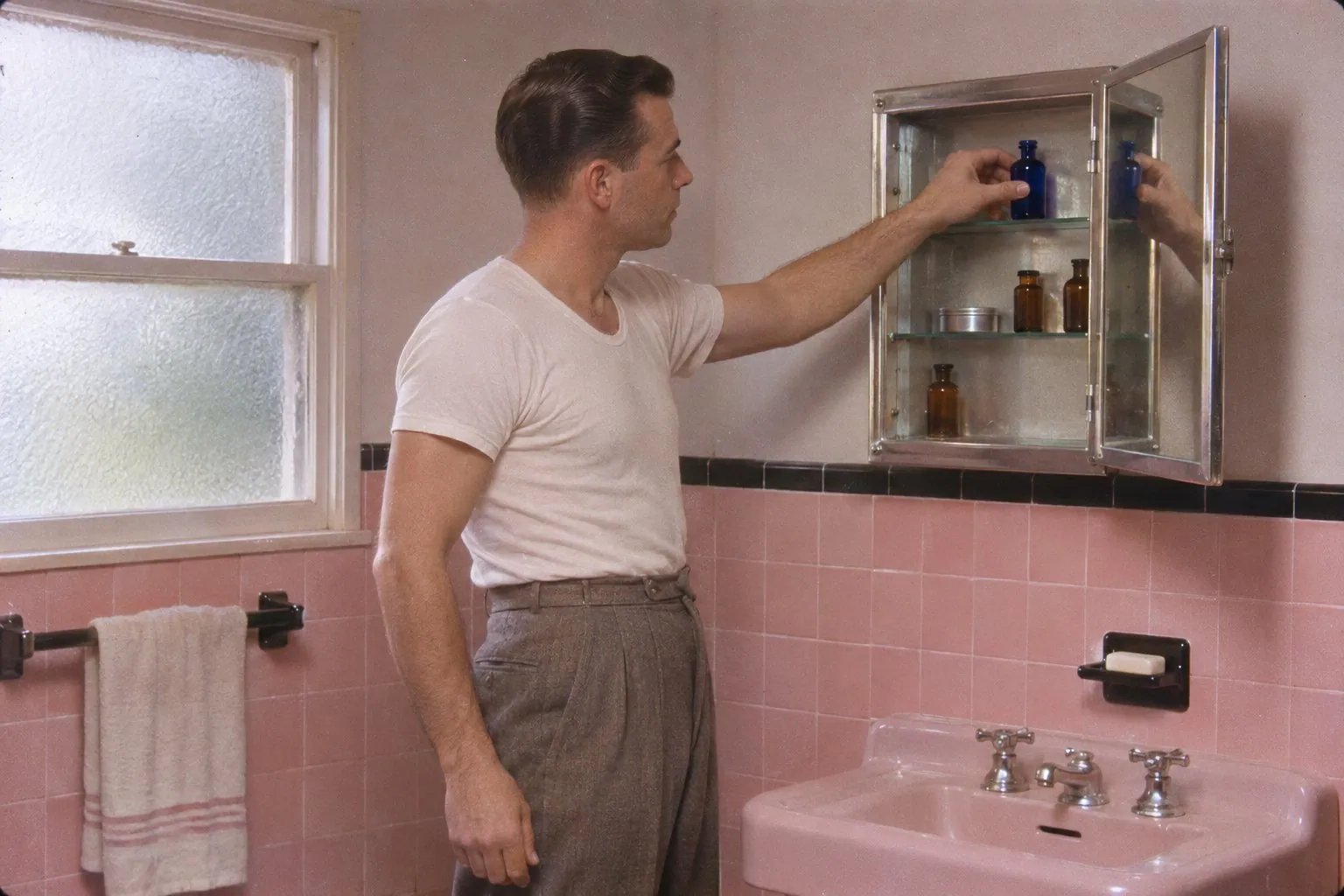
Phillips' Milk of Magnesia came in cobalt blue glass because the deep blue color made the bottle easy to spot on a drugstore shelf. Over time the color became the brand's trademark look. Today most antique blue milk of magnesia bottles from the 1930s to the '60s are worth only about $10 to $20, while older or unusual ones can bring several times that.
You probably remember where yours sat: on the glass shelf of the bathroom medicine cabinet, next to the Mercurochrome and a tin of aspirin. The milky liquid was chalky and cold, and the spoon was always sticky. Most of us remember the blue glass better than the taste.
Many of those bottles survived, and you can still date one by reading the glass itself.

Where milk of magnesia came from
The product began in Connecticut. According to a history of Phillips bottles on the Society for Historical Archaeology's bottle research site, Charles Henry Phillips patented an 8% suspension of magnesium hydroxide in water in 1873. He called it Milk of Magnesia because it was milky white.
His firm became the Chas. H. Phillips Chemical Co. in 1885, the same study notes. Besides milk of magnesia, the company sold cod liver oil, cocoa and quinine products. The Connecticut History project traces the business to Stamford, where the company had its works in the Glenbrook section.
The patent record is still available. Google Patents has the scan of U.S. Patent 159,446, "Improvement in manufacturing milk of magnesia."
Read more: The Classic Recipe for Orange Fluff, Straight From the '70s
In 1955, what did a quart of milk from the milkman cost?
Why the bottle was blue
There's no surviving company memo that explains the choice. But the reason is easy to see. In the days of the corner drugstore, a deep blue bottle stood out from the brown and clear glass around it. A shopper could find it without reading the label.
The bottle wasn't always that dark. The SHA study found that the earliest mouth-blown bottles were colorless or a pale blue. It credits the Tibby family's glassworks with first giving the glass a light blue tint. The deep cobalt color came later, along with machine-made bottles.
By the time you were a kid, the blue was part of the brand. Phillips also sold milk of magnesia in other countries. A 1960s blue bottle made by Phillips, Scott & Turner in Ireland, photographed on Flickr, looks much like the American ones.
How to date a milk of magnesia old bottle
Collectors date these bottles in three ways: how the bottle was made, what words are raised on the glass, and the small marks on the base. You don't need any tools beyond a good light and your thumbnail.
Look at the seams and the lip
Run your finger up the side seam. On a mouth-blown bottle, the seam stops below the neck and the lip looks added on, sometimes a little lopsided. A bottle like that usually dates to the early 1900s or before.
On a machine-made bottle, the seam runs all the way up through the lip. Most of the blue bottles from the 1920s on were machine-made.
Read the embossing
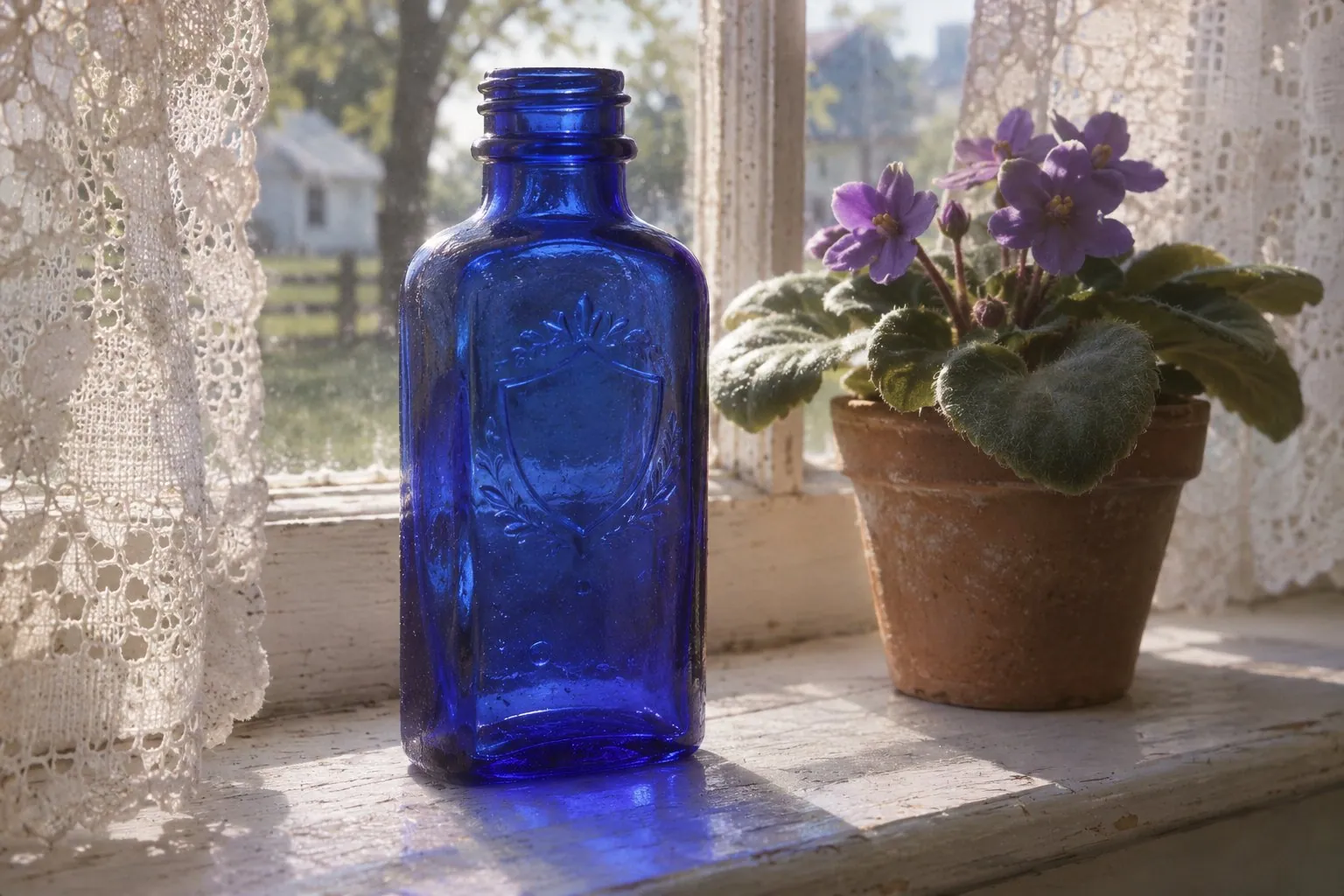
The SHA researchers list the raised lettering on a common cobalt design. It reads PHILLIPS across the top, then MILK OF, a belted shield, MAGNESIA, and REG'D IN U.S. at the bottom. The earliest designs had a monogram logo with the letters CHP.
Many bottles also carry the date Aug. 21, 1906. People often mistake that for the year the bottle was made. It is a registration date that stayed in the mold for years. A bottle showing it could easily have been made in the 1920s or '30s.
The SHA study also found that the word "PHILLIPS" disappeared from the top of some of the last designs. If your bottle has the shield but no Phillips name across the shoulder, it is probably one of the later ones.
Check the base
Turn the bottle over. Many were made by big glass companies that molded their own marks into the base.
- Owens-Illinois: an "I" inside an "O", sometimes on a diamond. There is often a plant number on one side of the mark and a single date digit on the other.
- Hazel-Atlas: a small "H" sitting over an "A".
- Numbers alone: usually mold or plant codes. They don't give a date on their own.
A single date digit can stand for more than one decade. A "5" could mean 1945 or 1955, for example. Read it together with the maker's mark and the style of the lettering.
The tablets bottle, too
You might remember the small bottle of Phillips' Milk of Magnesia tablets better than the liquid. They were chalky mint wafers for an upset stomach. They came in a small cobalt jar with a metal cap. A collector's blog, Old Glass Bottles and Items of Antiquity, describes one that stands about 3.5 inches tall.
The vintage Phillips milk of magnesia tablets bottle is dated the same way as the liquid bottle: by seams, lettering and base marks. An original cap or a bit of the paper label adds interest, because most were thrown away.
What it cost new, and what it's worth now
Drugstores set their own prices, and the price changed with the bottle size. Phillips sold several sizes at the same time. I couldn't confirm one national price for any single year, so I won't guess. If you want the price your town paid, check a local newspaper ad from that year. The 1955 Phillips magazine ads sold today by dealers such as Ads to Collect show how the product was sold back then.
The value is easier to pin down, and it is modest. Millions of these bottles were made, and many survived in barns, dumps and family cabinets. One machine-made blue bottle with the 1906 date was listed on eBay at $11.20, according to a PicClick archive of the listing. An older, bubbly bottle with the same date was offered on Etsy for $60, marked down from $75.
Those two are asking prices, not proof of what a buyer paid. Still, they show the usual range. Common cobalt bottles from the 1930s to the '60s sell for pocket money. Early mouth-blown bottles, pale blue ones with the CHP monogram, and bottles with the original label bring more. Chips, cracks and cloudy "sick" glass inside lower the value quickly.
What makes one worth keeping
To most of us, the bottle in the cabinet was worth about what the medicine inside cost. What counts now is age, condition and anything unusual.
- Older is better: mouth-blown, pale blue or CHP-monogram bottles.
- Complete is better: a paper label, the original cap or the box.
- Clean glass: no chips at the lip and no haze inside.
- Odd sizes: small sample bottles and the tablet jars.
If yours has none of those, it may not be worth much in dollars. It still sits nicely on a sunny windowsill, where the cobalt glows the way it did when you were a kid.
Frequently asked questions
How old is my milk of magnesia vintage blue bottle?
Check the seams first. A seam that runs through the lip means the bottle was machine-made, usually in the 1920s or later. Then look for a glassmaker's mark and a date digit on the base. The Aug. 21, 1906 date on the side does not tell you when the bottle was made.
What is an antique Phillips milk of magnesia bottle worth?
Most common cobalt bottles sell for about $10 to $20, like the one listed on eBay at $11.20. Older mouth-blown or pale blue bottles, or ones with labels, can bring more, such as an Etsy listing at $60. Damage cuts the value sharply.
Why does my bottle say 1906?
Aug. 21, 1906 is a registration date that was kept in the bottle molds for years. That's why bottles made long after 1906 still carry it.
Was milk of magnesia always in blue glass?
No. The Society for Historical Archaeology's bottle study found that the earliest mouth-blown bottles were clear or pale blue. The deep cobalt became standard later.
Who invented milk of magnesia?
Charles Henry Phillips, a Connecticut chemist, patented the formula in 1873. His company became the Chas. H. Phillips Chemical Co. in 1885.
Sources
- The Bottles of Phillips Milk of Magnesia, Society for Historical Archaeology / Historic Glass Bottle Identification & Information Website
- Phillips' Milk of Magnesia Originated in Stamford, ConnecticutHistory.org (Connecticut Humanities)
- US159446A – Improvement in manufacturing milk of magnesia, U.S. Patent Office via Google Patents
- Phillips' Milk of Magnesia, Glenbrook, CT, Old Main Artifacts, 2014
- 3.50" Phillips' Milk of Magnesia Tablets Cobalt Glass Bottle, Old Glass Bottles and Items of Antiquity, 2012
Related Stories


Love a trip down memory lane?
Get a fun quiz every morning. Free · One email a day · Unsubscribe anytime