1950s Fashion: What Women Really Wore, Monday to Saturday
From the snap-front house dress to the Sunday hat and gloves, here is the 1950s week your mother actually dressed for.
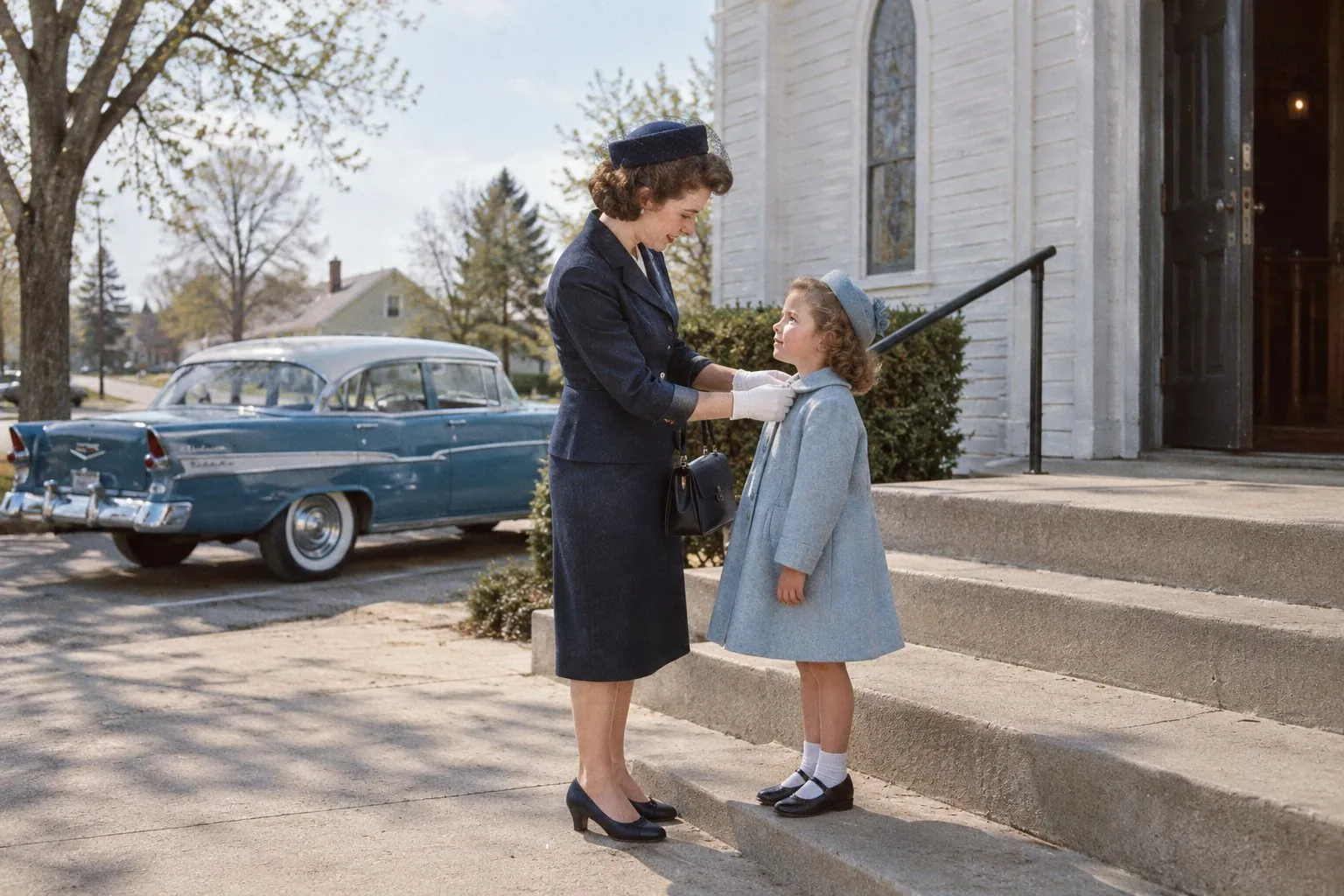
In the 1950s, most women wore a dress or a skirt almost every day of the week. For housework it was a cotton house dress, for church or downtown a suit with a hat and gloves, and for Saturday night a full-skirted dress or a slim sheath. That is the real story of 1950s fashion, and it looks very little like the poodle-skirt outfits sold at costume shops.
You probably remember how it went at home. On Monday the wringer washer ran, and by Tuesday the ironing board was up with a sprinkle bottle beside it. Clothes had to hold up to all that washing and pressing, and the whole week was planned around it.
So let's walk through that week one day at a time, from the kitchen to the dance floor.
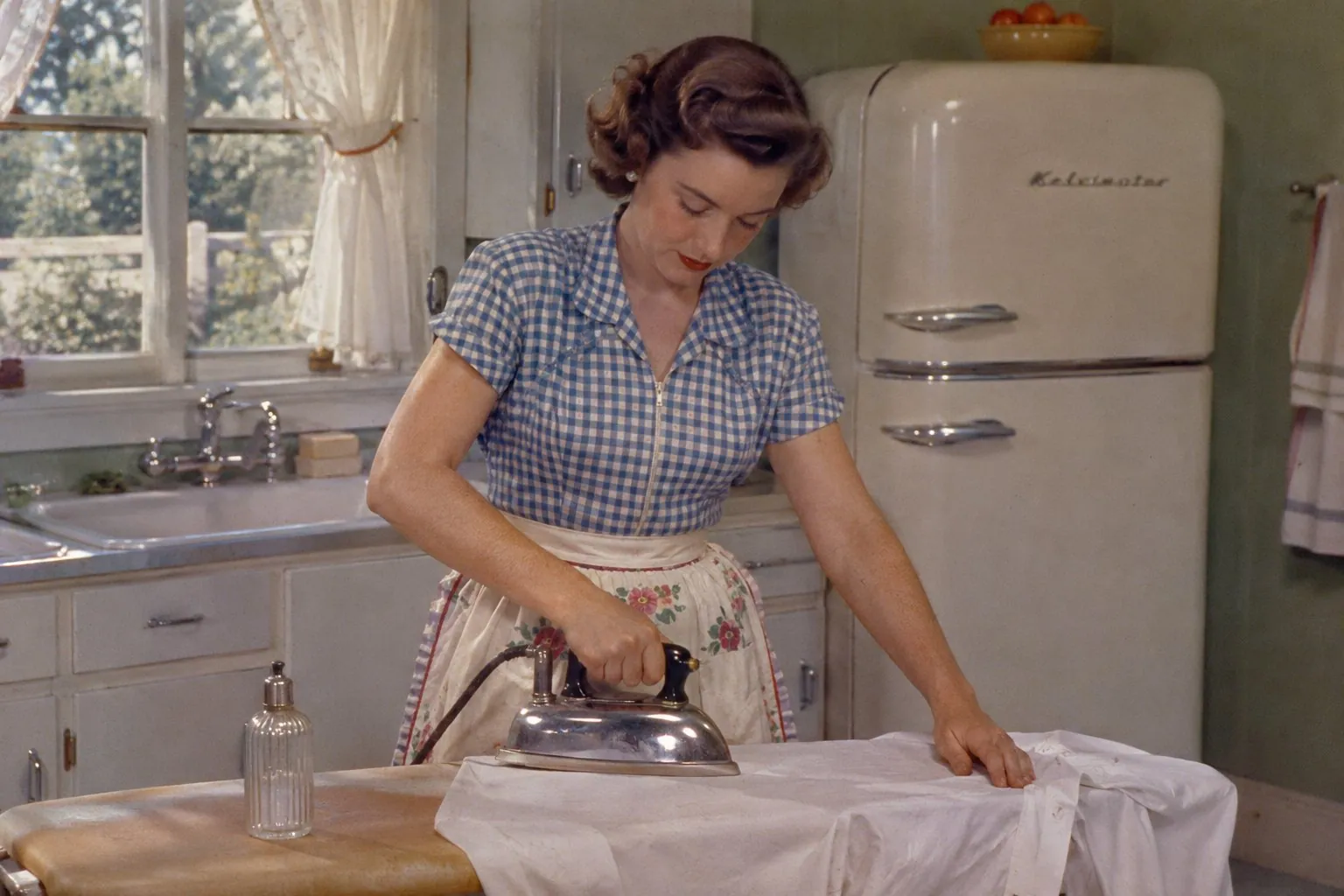
Monday Through Friday: The House Dress
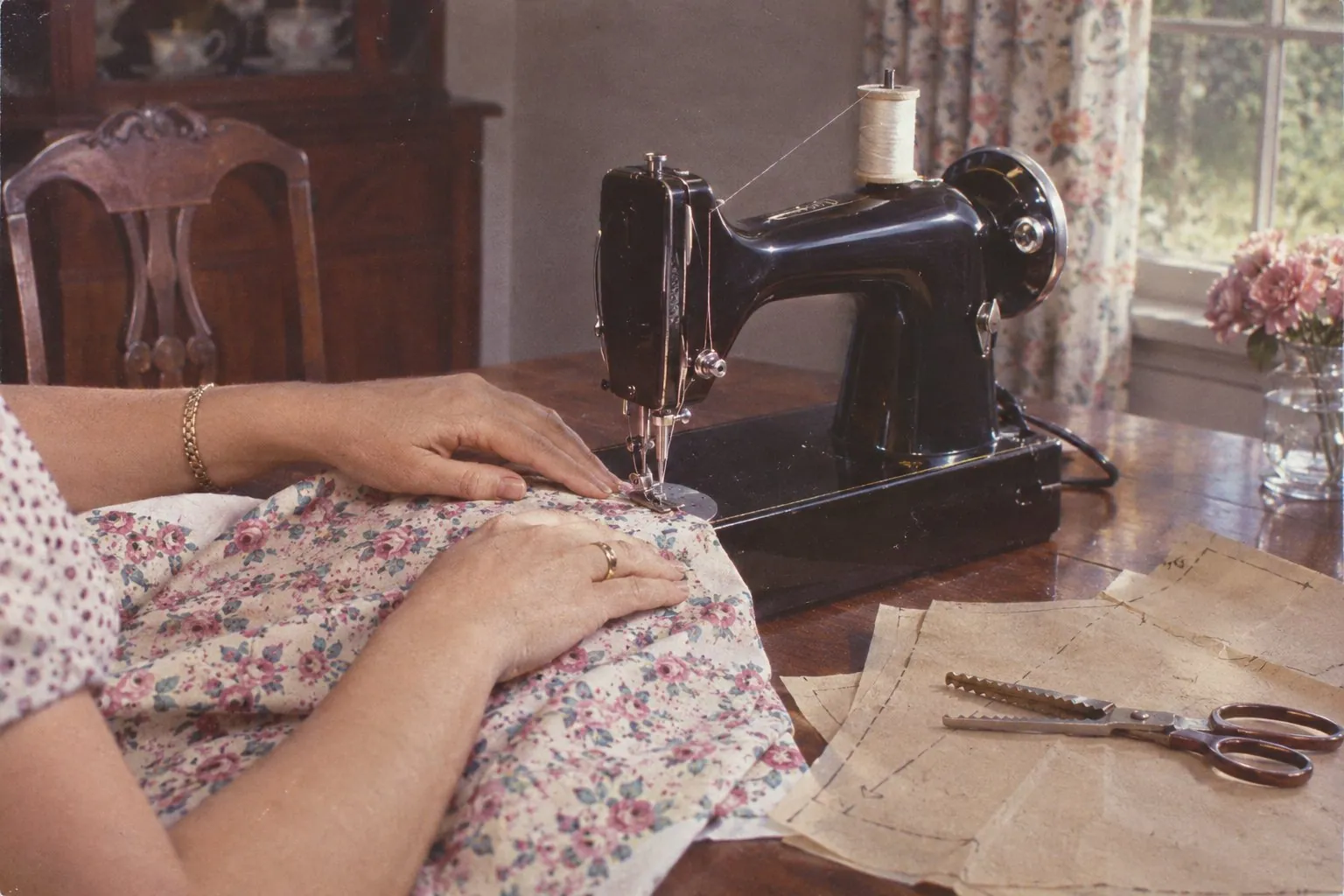
The working clothes of a 1950s home were cotton house dresses, usually with a zip or snap front so you could get in and out of them fast. They came in checks, stripes and small flowers, and most had a pocket for clothespins. Many women also wore a bib apron on top to save the dress from grease.
These were clothes you wore until they gave out, so not many survived. The Smith College Historic Clothing Collection holds a 1940s house dress from Nelly Don, the Kansas City maker, and Apollo magazine described it in a review of the collection's show at the New-York Historical Society. The same show had farm wives' house dresses "frayed and faded," in the reviewer's words.
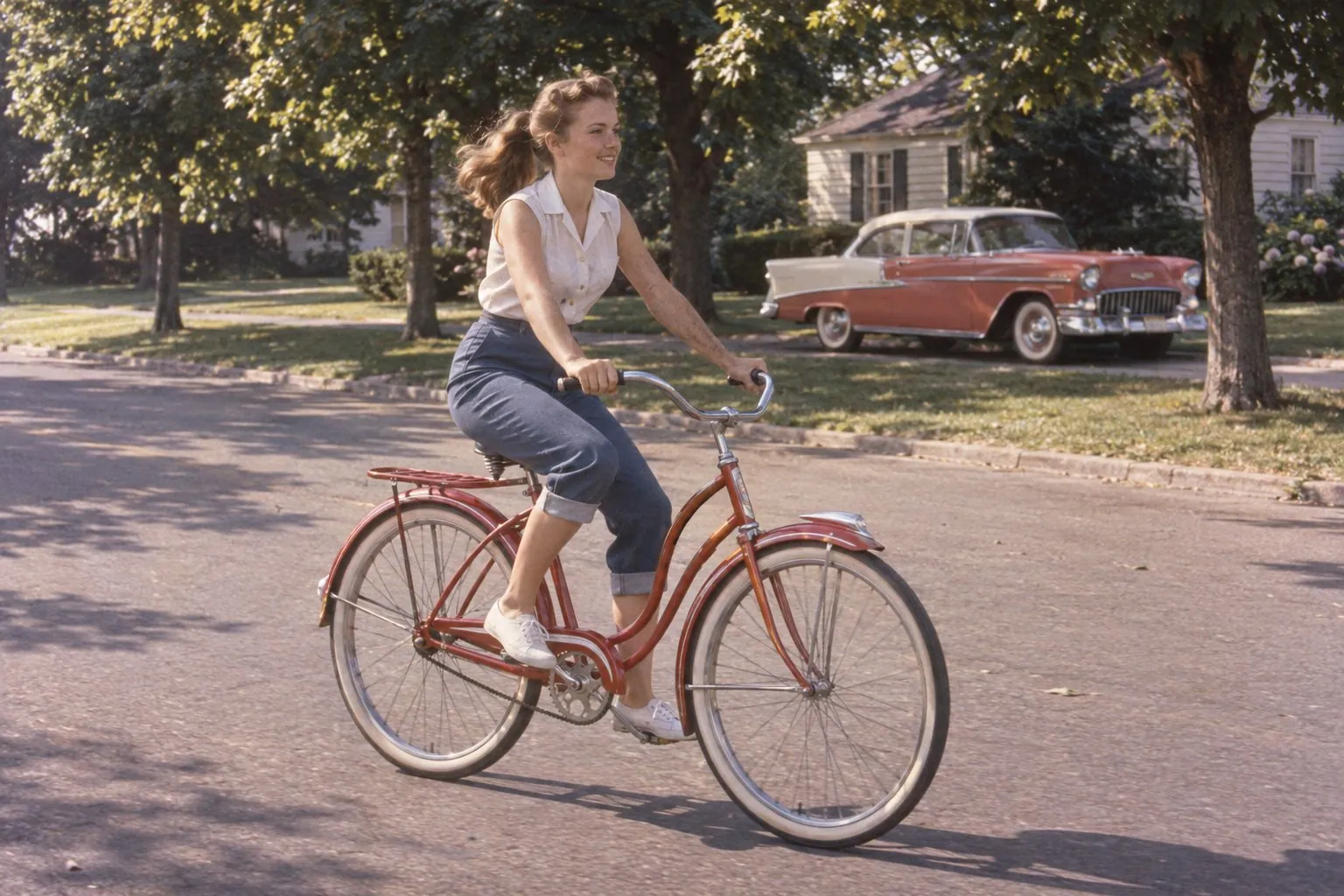
On ironing days, plenty of women put on pedal pushers or slacks to do the chores. They seldom wore them downtown or to church, though.
Popular fabrics in the 1950s
Cotton was the everyday fabric: gingham, percale, seersucker, and in farm country, flour and feed sacks printed with patterns so they could be sewn into dresses. Rayon was the cheaper dressy choice, and wool covered suits and skirts.
Then came the new fibers. The first polyester clothes for sale were men's suits from Hart, Schaffner & Marx, introduced May 8, 1951, according to the Hagley Museum and Library. The Science History Institute reports that DuPont surveyed younger women about the fibers and found they hated the daily ironing. Fabrics like Dacron and Orlon promised to cut it down.
Read more: The Classic Recipe for Orange Fluff, Straight From the '70s
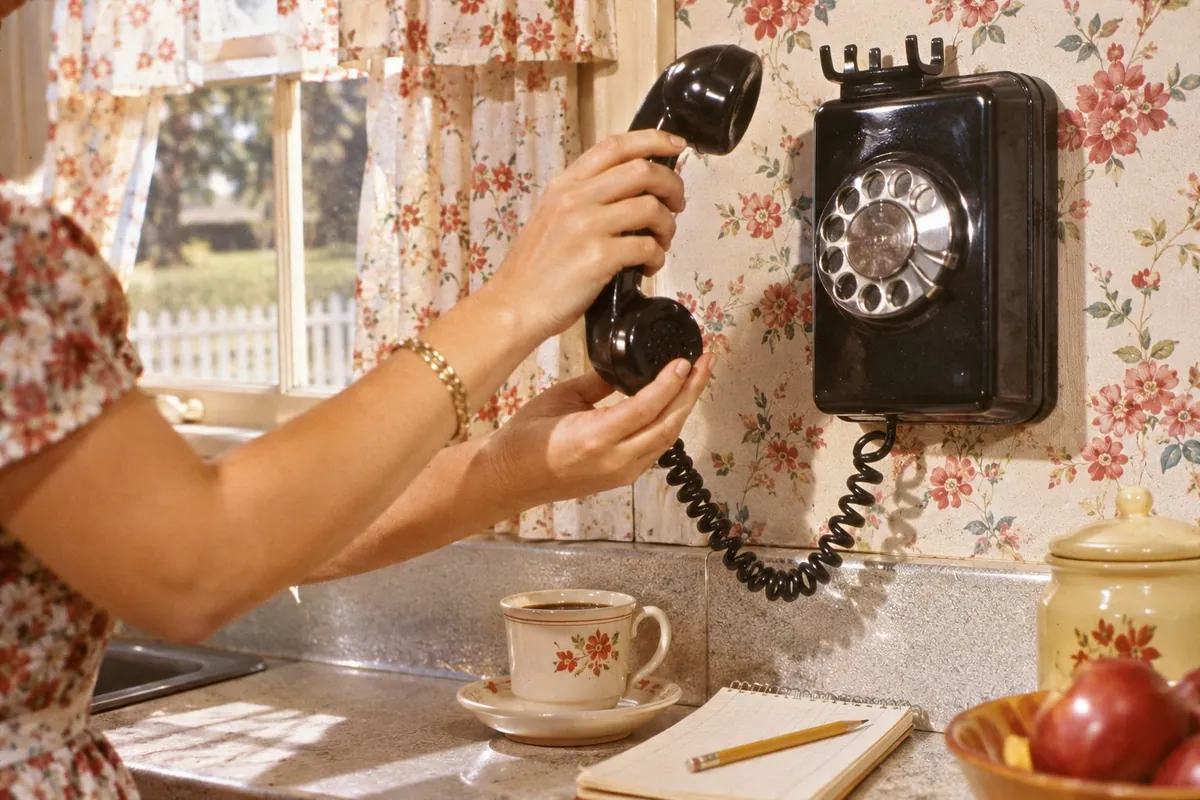
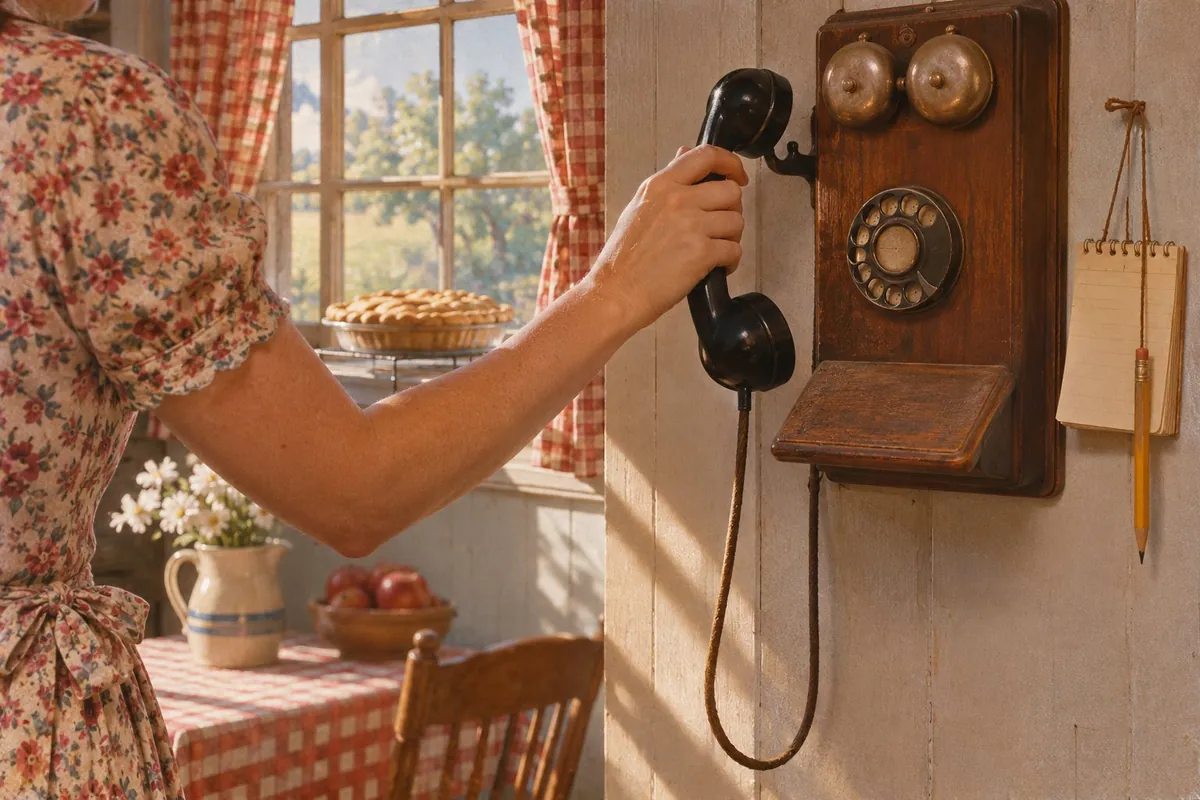
Many homes had a "party line" telephone. What did that mean?
What Went On Underneath
A finished outfit sat on a full set of foundations. That meant a structured bra, a girdle or panty girdle, and nylon stockings with a seam up the back, held up by garters clipped to the girdle. Pantyhose didn't catch on until the 1960s.
Under a full skirt you'd find a stiff net or crinoline petticoat, and sometimes two. If you sat behind one in a church pew, you remember the rustle.
Sunday Best: The Church Suit
On Sunday a woman wore the best thing she owned. Most often that was a fitted suit with a nipped-in jacket, or a good dress with a matching coat. On top went a small hat, often with a little veil, and short white cotton gloves in warm weather. Her purse and shoes usually matched.
The same outfit worked for shopping downtown, a ladies' luncheon or a trip to the bank. Getting dressed up to go to town was simply what people did.
Saturday Night and the Dior Look in 1950s Fashion
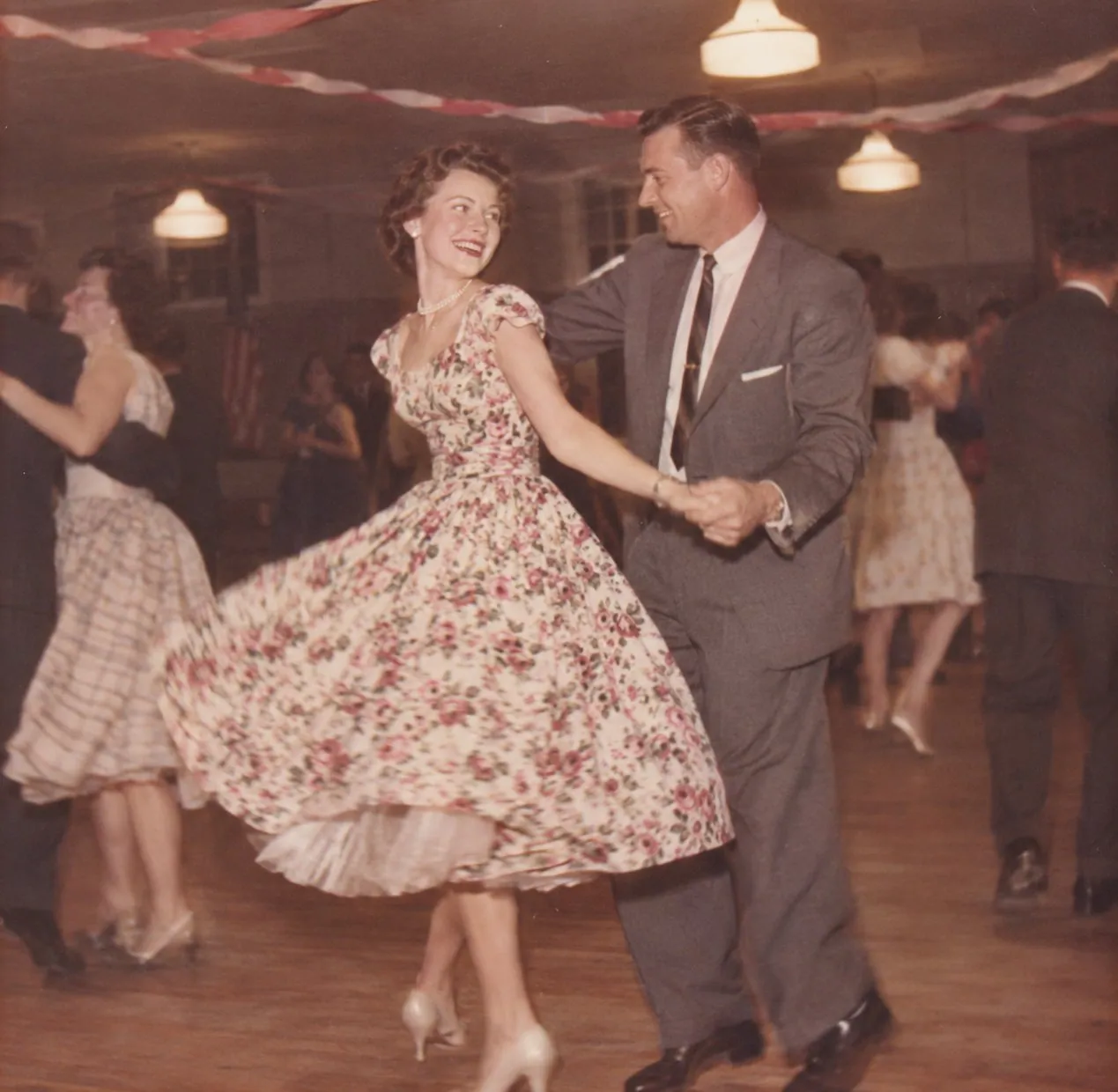
For Saturday night out, the shape came from Paris. Christian Dior showed his first lines in February 1947, and the fashion press named them the New Look. The Avenir Museum at Colorado State University, in an exhibition curated by Katie Knowles, called those designs a "radical departure from World War II styles." Dior ran his house only from 1947 until his death in 1957, the museum notes, and still set the look for the whole decade.
American stores sold that shape at every price. It came in two versions: a full skirt over a petticoat with a cinched waist, or a slim sheath that called for a girdle. Add a strand of pearls, a stole or cardigan and a pair of pumps, and she was ready for the supper club or the VFW dance.
Maternity wear in the 1950s
The standard maternity outfit was a wide, tent-shaped smock top over a slim skirt. Many of those skirts had a cutout or adjustable panel at the front so the waist could grow. Marie Claire notes that Lucille Ball made the smock-and-separates look famous when she wore it on I Love Lucy in 1952 and 1953.
What People Often Get Wrong About the '50s Wardrobe
- Poodle skirts: Felt circle skirts were mostly a teenage fad. Grown women in most towns didn't wear them.
- Polyester double-knit: Dacron arrived in 1951, but the stretchy double-knit pantsuit is a 1970s look.
- Pants: Women did wear slacks, capris and pedal pushers, but mainly at home, in the yard or on vacation.
- Pantyhose: These weren't part of the '50s at all. Stockings and garters were the rule.
What Women Wore Out Around Town
Early telephone operators
The job went back to Emma Nutt, who became the first woman telephone operator in Boston in 1878. By the 1950s, women ran the switchboards across the Bell System, wearing headsets and plain office dresses.
Old phone booth photos
If a woman in an old phone booth photo is wearing a hat and gloves, she was probably downtown. Depending on the town, a call cost a nickel or a dime in 1955, about 59 cents to $1.17 today.
County fair history
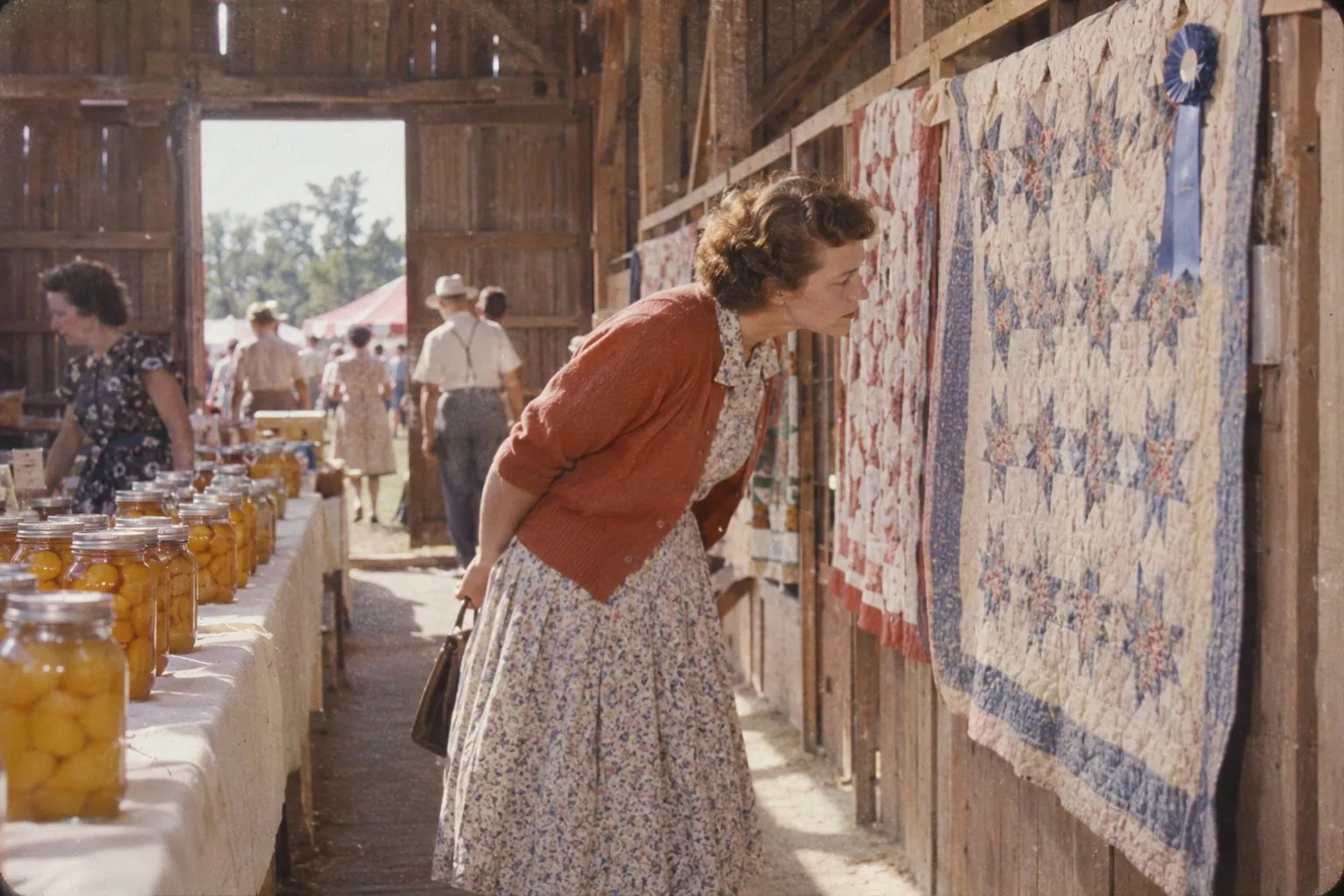
Elkanah Watson's 1811 cattle show at Pittsfield, Massachusetts, is usually counted as the start of the American county fair. In the 1950s, the women's exhibit hall was full of quilts, preserves and dresses sewn from feed-sack cotton, all competing for blue ribbons.
Photos of Palisades Amusement Park
Palisades sat on the cliffs above the Hudson in Cliffside Park and Fort Lee, New Jersey, and closed after the 1971 season. Its summer photos show sundresses and one-piece swimsuits around the big saltwater pool.
Amusement parks that no longer exist
A few you may remember: Riverview in Chicago, which closed in 1967; Freedomland in the Bronx, open only from 1960 to 1964; and Palisades. Pictures from all three show women in cotton dresses and flat shoes, which was what people wore for a day at the park.
Vintage Little League photos
Carl Stotz started Little League in Williamsport, Pennsylvania, in 1939, and girls were let in to play in 1974. In older photos, look for the mothers in the bleachers wearing headscarves and pedal pushers.
How the Look Changed by the '70s
1970s yearbook pictures
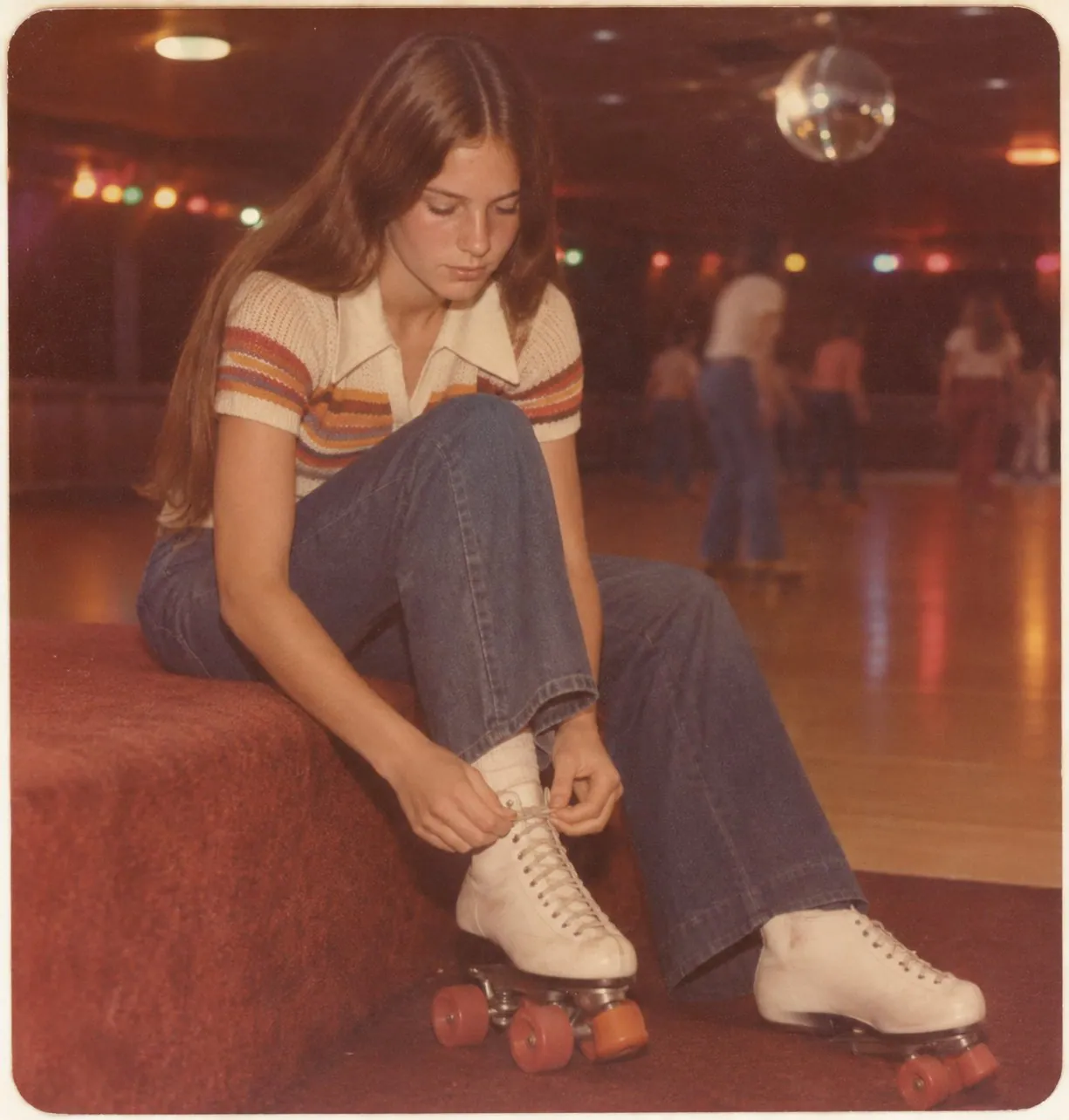
Look through your kids' 1970s yearbook pictures and you'll see long straight hair, wide collars and knit tops. Not a girdle or a white glove in sight.
Was roller skating popular in the '70s?
Yes. Roller disco took off in the late 1970s, and the 1979 movie Roller Boogie, starring Linda Blair, was built around it.
The 1980 Empire Strikes Back lunch box
By 1980, school lunch boxes like King-Seeley Thermos's metal Empire Strikes Back box went to school with kids in jeans and sneakers. A generation earlier, their grandmothers had packed lunches wearing a house dress.
Frequently asked questions
What was a typical woman's outfit in the '50s?
On a weekday it was a cotton house dress and apron. On Sunday it was a suit or good dress with a hat, gloves and a matching purse. Underneath were a girdle and seamed nylon stockings.
Did women wear pants in the 1950s?
Yes, but mostly at home, in the yard or on vacation. Slacks, capris and pedal pushers were common for chores and picnics, but most women still wore skirts to church, to the office and downtown.
Why were metal lunch boxes discontinued?
By the mid-1980s, makers had switched almost entirely to molded plastic, which cost less to make. Collectors often tell a story about safety complaints from Florida parents, but it's hard to confirm that it caused the change.
What 1950s attire is easiest to spot in old photos?
Look for small hats, short white gloves, cinched waists and full skirts with a petticoat. A seam running up the back of the stockings is another sure sign.
Sources
- Dior's "New Look" in the Everyday American Closet, Avenir Museum of Design and Merchandising, Colorado State University, n.d.
- This week marks a milestone in the history of textiles, Hagley Museum and Library, n.d.
- Synthetic Threads, Science History Institute, n.d.
- Orlon! Dacron! Antron! The Great American Knits of Fall 1965, Smithsonian Magazine, n.d.
- What real American women have worn at home, at work and in wartime, Apollo magazine, n.d.
- How Maternity Style Has Changed Over the Years, Marie Claire, n.d.
Related Stories
Love a trip down memory lane?
Get a fun quiz every morning. Free · One email a day · Unsubscribe anytime